
The Underground Geography of the Thermal Capital
Budapest rests upon a privileged geological fault line where over a thousand karst-origin springs emerge at temperatures ranging from 21 to 78 degrees Celsius. This subterranean flow, fed by ancient percolations descending from the Buda hills, nurtures a network of aquatic complexes whose function transcends contemporary leisure. Hydrotherapy in this region is not a modern tourism invention, but a historical continuity deeply rooted in the overlapping Roman, Turkish, and Austro-Hungarian influences that have shaped the city’s character.
Unlike the commercial wellness centers of Northern Europe, historic Hungarian venues operate under an architectural and functional rigor that prioritizes contemplation and silence. The waters—rich in minerals such as sulfates, calcium, magnesium, and bicarbonates—emerge with specific therapeutic properties that local physicians continue to prescribe for rheumatological ailments and circulatory system conditions. Comprehending this aquatic ecosystem requires delving into the morphology of its oldest structures, where carved stone and zenithal light act as vehicles for mental decompression.
The Ottoman Legacy and the Geometry of Light at Rudas Bath
Originally constructed in 1550 under the vizierate of Sokollu Mustafa Pasha, the Rudas Bath stands as one of the best-preserved testimonies of Ottoman bath architecture in Central Europe. Its core is dominated by an octagonal hall crowned by a ten-meter-diameter dome, supported by eight robust pillars. This roof is punctured by small circular ocoli covered with colored glass that project beams of natural light onto the floating vapor, creating an atmosphere of mystical inwardness unaltered for nearly five centuries.
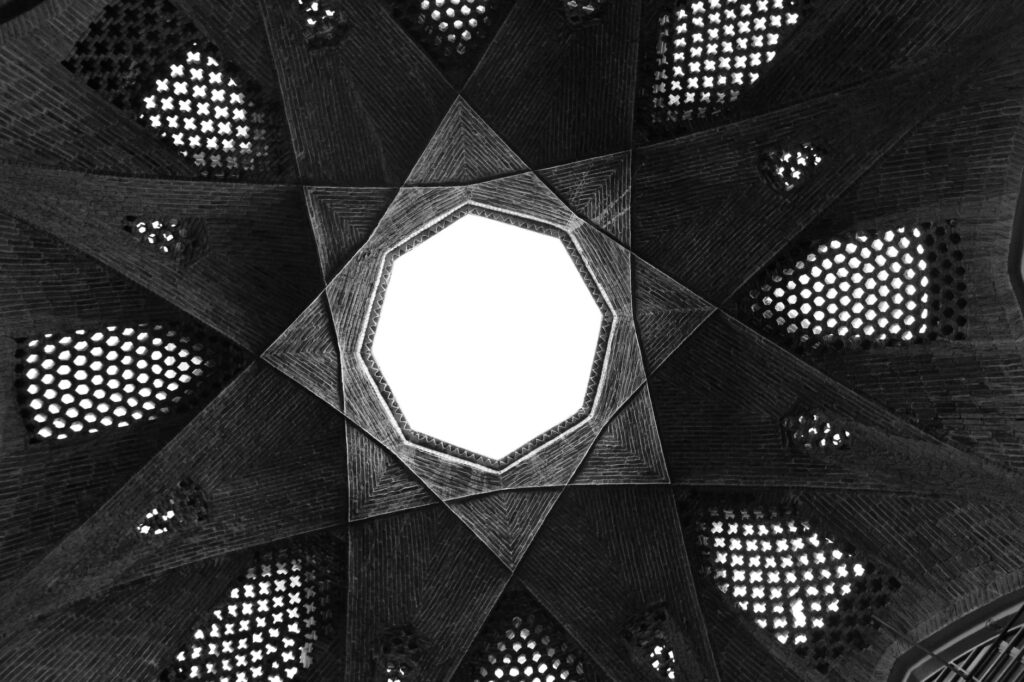
Within this space, water gushes at 42 degrees Celsius in the main octagonal pool, flanked by four smaller immersion pools with contrasting temperatures. The design responds to a precise constructive philosophy: water acts as a unifying element that dissolves social hierarchies inside the enclosure. Visitors move through masonry corridors where the thickness of the limestone walls completely insulates the urban bustle outside, generating a microclimate where breathing matches the slow pace of droplets condensing in the heights of the dome.
The Silent Resistance of Király Baths
A short distance from the Danube, the Király Baths represent another fundamental variant of the city’s hydrothermic heritage. Their construction began in 1565 by order of Arslan Pasha of Buda and was completed by the Hungarian König family—whose surname was adapted into Hungarian as Király. Unlike other facilities situated directly above the springs, Király is supplied via a clay pipe conduit from the area of the current Lukács spa, an engineering solution devised by the Ottomans to guarantee the supply of healing water within the castle walls during a siege.
The building has undergone multiple restorations yet retains its asymmetrical layout and sober ochre-toned facade intact. Inside, the central thermal pool maintains the Ottoman typology of a hemispherical dome and stellar openings that filter a dim light conducive to introspection. The walls display the traces of passing time and 20th-century wartime impacts, integrated into an aesthetic of authenticity that prioritizes material conservation over superficial luxury. Remaining in its waters is an exercise in historical reading through touch and temperature.
Karstic Mineralogy and the Chemistry of Wellness
The therapeutic value of Budapest’s historic baths lies in the physicochemical composition of their thermal waters, certified by hydrological laboratories since the 19th century. The water feeding the pools of Rudas and Király originates from deep sources that take thousands of years to complete their filtration cycle through the limestone layers of Mount Gellért and the Buda hills. This natural process enriches the liquid with highly soluble anions and cations that the skin gradually absorbs during prolonged immersion.
Balneotherapy specialists recommend a strict protocol of exposure times and thermal contrasts to maximize physiological benefits. Alternating between hot baths and cold water pools stimulates peripheral vasoconstriction, favoring venous return and reducing cortisol levels accumulated from urban stress. Far from being a fast-paced aesthetic wellness service, this practice demands a receptive attitude and rigorous respect for the silence rules prevailing in the historic halls, where the use of electronic devices is strictly prohibited.
The Transition Toward Functional Modernity
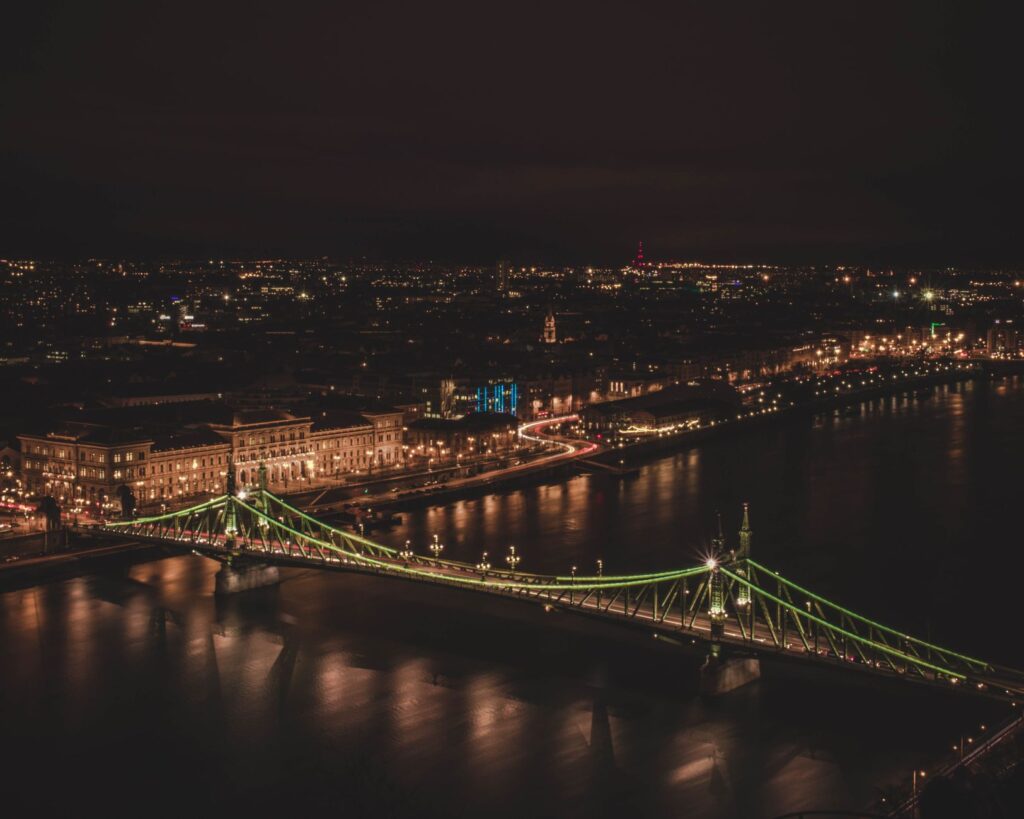
At the dawn of the 21st century, Budapest’s municipal administration undertook an ambitious rehabilitation plan to integrate these centennial monuments into the mobility and accessibility demands of the contemporary traveler. In the case of the Rudas complex, the architectural intervention added a modern wing equipped with a panoramic rooftop pool, from which bathers can contemplate the curves of the Danube river and historic bridges while floating in warm water. This architectural duality establishes a fascinating dialogue between the Ottoman past and 21st-century structural design.
Nevertheless, the expansion of tourism services has forced visitor caps to be regulated and differentiated schedules established to preserve the traditional experience. The days of exclusive male or female access in the historic sections of Rudas remain a tribute to the original bathing custom, allowing purists to enjoy an environment free from overcrowding. The integration of advanced filtration systems that do not alter the mineral composition of the water guarantees the hygienic sustainability of these high-heritage-value spaces.
Social Dimension and the Everyday Ritual
For local residents, the thermal baths do not constitute a tourist attraction, but an essential component of their hygienic and social routine. It is common to observe pensioners and professionals in the pools of Király or the most secluded corners of Rudas holding quiet conversations in low tones while immersed up to their chests. This everyday reality adds a layer of anthropological authenticity that enriches the rigorous traveler’s stay, steering them away from the artificial bubble of international hotel complexes.
Thermal water in Budapest is not a consumable recreational resource, but a liquid archive where the city’s history continues to flow with the same temperature and constancy since the Ottoman Empire.
Respect for the unwritten rules of these enclosures—such as the mandatory use of bathing caps in certain pools, moderation in movement, and strict observation of silence in the vaulted halls—shapes a temporary community based on tranquility. This silent coexistence contrasts sharply with the accelerated pace of contemporary European capitals, turning the visit into a regenerative pause of profound psychological depth.
Practical guide
How to get there: Ferenc Liszt International Airport connects with central Budapest via bus 100E, which operates directly to Deák Ferenc tér. From there, the metro network (lines M1, M2, and M3) and riverside trams provide easy access to the main thermal complexes located alongside the Danube.
When to go: Autumn months (October and November) and early spring (March and April) offer the ideal combination of crisp outdoor temperatures and lower visitor influx during morning opening hours.
Access rules: The use of non-slip bathing footwear and personal towels is mandatory. In some historical sections of the Rudas bath, gender-segregated access days are maintained, so checking the official calendar before planning the visit is recommended.
Pricing and reservations: Tickets for the historical sections and combined modern zones range between 22 and 35 euros depending on the day of the week. Acquiring passes in advance through official web platforms is advised to avoid long lines at the ticket counter.
Recommended accommodation: Opting for human-scaled hotels or boutique apartments located in District I (Várkerület) or District V (Belváros) allows walking access to historical bridges and springs without relying on private vehicles.
Epilogue in the Twilight of Vapor
When the afternoon declines over the Buda hills and the first flickers of streetlamps reflect upon the gentle surface of the Danube, the traveler leaving the thermal enclosure experiences a singular sensory metamorphosis. The weight of the journey and the urgency of the contemporary agenda dissolve into the muscle memory of a body that has inhabited the architecture of stone and warm water for hours. At that threshold where street cold clashes with persistent skin humidity, Budapest’s baths reveal their true nature: they are not mere museum-piece monuments, but living refuges where human time recovers its unhurried pace, reminding us that well-being is, above all, an exercise in attention to silence and inner space.