
Crossing the Australian continent from south to north is not merely an exercise in geographical movement; it is a deep immersion into one of the most hostile and magnetic landscapes on Earth. The Ghan, a railway whose name pays homage to the pioneering Afghan cameliers who opened trade routes in the 19th century, unfolds as a steel spine connecting temperate Adelaide to the tropical heat of Darwin. Spanning nearly three thousand kilometers, this iron giant defies the void of the Red Centre, offering a privileged perspective on a territory where time seems to have frozen in a remote geological era.
This report explores the technical complexity of maintaining a railway line in an environment of extreme temperatures and unstable soils, as well as the profound cultural weight carried by every carriage. From the vineyards of South Australia to the red dust plains of the Northern Territory, The Ghan is more than just a luxury train; it is a testament to human ambition in taming the untamable and a necessary bridge between coastal cities and the spiritual heart of the island continent.
The Echo of Pioneers: The Genesis of a Rail Legend
The history of The Ghan begins long before the first steel rail was laid. In the mid-19th century, the Australian interior was a terra incognita for European settlers, a labyrinth of dust and heat that swallowed entire expeditions. The solution came not from Europe, but from the Middle East and Central Asia. Cameliers, erroneously called Afghans, introduced the only means of transport capable of surviving the droughts: the dromedary. Without their knowledge of desert routes, the construction of the transcontinental telegraph and, later, the railway, would have been a pipe dream.
The first section of the train, originally known as the Cameliers’ Railway, opened in 1929, connecting Quorn to Alice Springs. That «Old Ghan» was a temperamental creature; tracks were often laid on dry riverbeds which, during a sudden storm, turned into raging torrents that washed away bridges. Travelers of the era recalled journeys that could last weeks due to floods or locust plagues that made the locomotive wheels spin uselessly on the tracks. It was a constant struggle against a nature that refused to be domesticated.
«The Ghan is not a means to reach a destination, but the destination itself; a reminder that in the desert, speed is an illusion and endurance is the only valid currency.»
Today, the modern route, completed as recently as 2004 to reach Darwin, avoids the most critical flood zones, but the essence of the journey remains intact. As Adelaide’s hills fade in the rearview, the passenger feels civilization dissolve, giving way to an immensity that overwhelms with its silence and its palette of ochre and violet hues.
Survivalist Engineering in the Red Centre
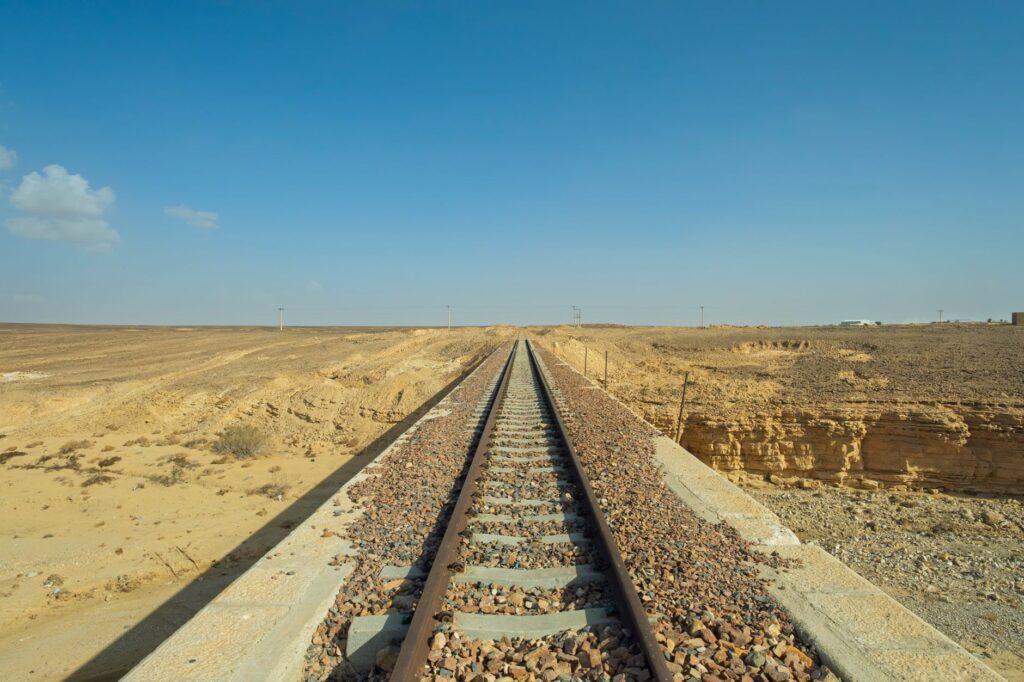
Maintaining a 2,979-kilometer railway line in central Australia is a civil engineering challenge without parallel. The primary enemy is not distance, but thermal stress. In the Australian summer, temperatures in the Simpson Desert can soar above 50 degrees Celsius (122°F), causing steel rails to expand and warp—a phenomenon known as «sun kinks.» To mitigate this, continuously welded rails are used with a specific tension that allows them to absorb temperature variations without compromising safety.
The soil also presents significant hurdles. Much of the track crosses floodplains and reactive clay deposits that expand and contract drastically with rain and drought cycles. Engineers must use high-density ballast and sophisticated drainage systems to ensure the track bed does not sink. Furthermore, maintenance logistics are a military-grade operation: specialized teams travel to remote sections where there is no road access, carrying everything needed to repair faults in total isolation.
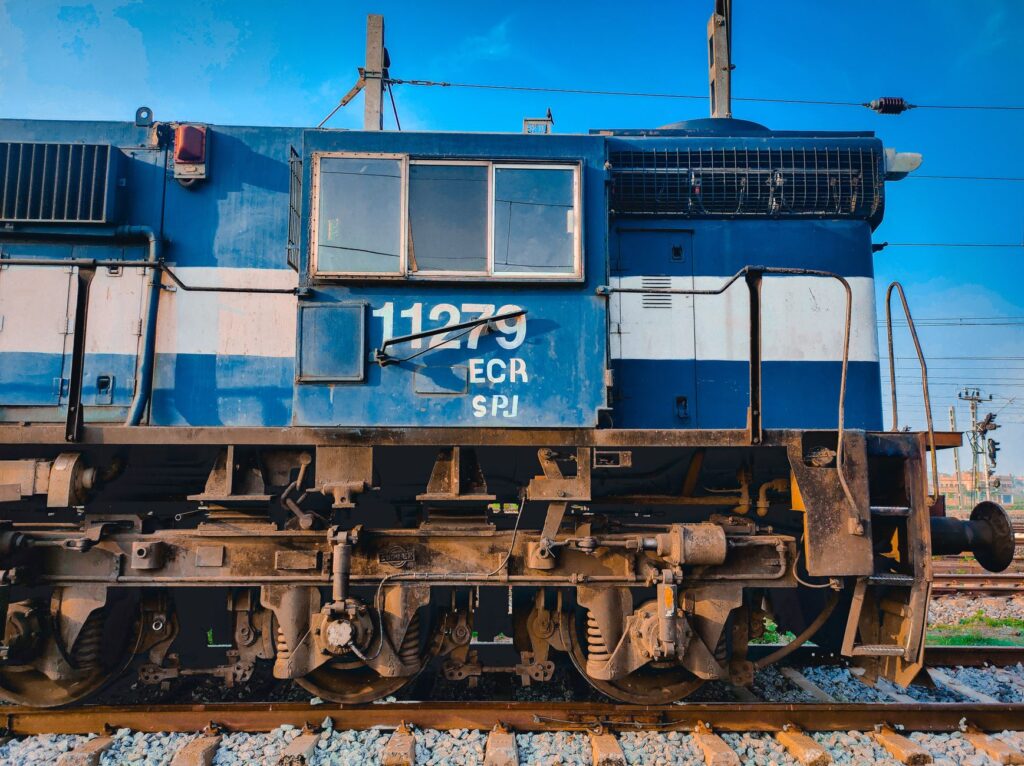
The current train is a behemoth nearly a kilometer long, powered by potent NR-class diesel-electric locomotives. These machines are designed to operate in extreme dust, with reinforced air filtration systems that prevent desert sand from destroying internal engine components. It is a dance of brute force and fine technology that allows the luxury of the interior—air conditioning, hot showers, and high-end kitchens—to function seamlessly while the thermometer outside registers prohibitive figures.
The Choreography of Iron: Life and Logistics on Board
On board The Ghan, life follows a rhythm dictated by the rhythmic clatter over expansion joints. The Platinum and Gold services redefine the concept of slow travel. Each carriage is a capsule of comfort where Australian hospitality manifests in minute details. The onboard staff not only manage the logistics of dining and accommodation but also act as interpreters of a landscape that, to the untrained eye, might seem monotonous.
- The Queen Adelaide Restaurant: An Art Deco space serving dishes based on local ingredients like barramundi, kangaroo, or desert succulents.
- The Outback Explorer Lounge: The train’s social hub, where travelers share stories while watching the horizon shift from olive green to a burning red.
- Waste Management: A closed-loop system ensures that nothing is discharged into the fragile desert ecosystem during the journey.
Coordination is key. The train must synchronize its stops with off-train excursions in places where infrastructure is minimal. In technical stops like Marla, in the middle of absolute nowhere, the train halts at dawn so passengers can watch the sun rise over the red earth—a safety-critical operation requiring strict logistics to ensure no one is lost in the vastness of the Outback.
Alice Springs: The Continental Spiritual Pivot
At the halfway point lies Alice Springs, a town that exists thanks to the telegraph and the train. For The Ghan, this is the most significant stop. Here, the landscape of infinite plains is broken by the spectacular MacDonnell Ranges, whose red quartzite ridges look like the spines of sleeping dragons. Alice Springs is not just a logistical hub; it is the meeting point between modern Australia and the Arrernte Aboriginal culture, which has inhabited these lands for tens of thousands of years.
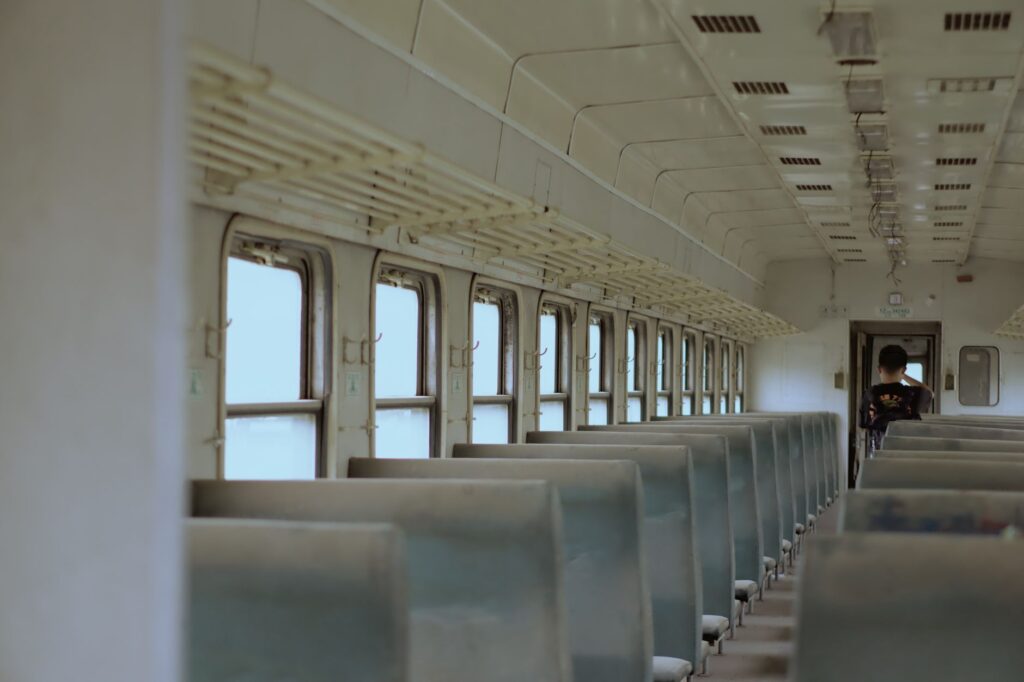
The traveler stepping off in Alice Springs faces the reality of a frontier Australia. The town serves as a base for exploring Uluru, though the monolith is several hundred kilometers away. The multi-hour stop allows for an understanding of the train’s importance in supplying goods and providing connectivity to a community that would otherwise rely exclusively on massive freight trucks, the famous «road trains.»
«Crossing the MacDonnells is entering a dimension where geology becomes sacred; every crack in the rock tells a creation story that the train barely brushes as it passes.»
Leaving Alice Springs heading north marks the beginning of the transition toward the Tropics. The air becomes denser, vegetation shifts from low scrub to taller trees, and the sky, previously an electric blue, begins to show the towering clouds that herald the proximity of the Top End.
Katherine and the Roar of Water at Nitmiluk
As The Ghan pushes further north, the desert yields to tropical savanna. The stop in Katherine offers a radical contrast to the aridity of the journey’s start. Here, the Katherine River has carved thirteen deep gorges into the sandstone, forming the Nitmiluk National Park. It is a place of overwhelming beauty where water, a scarce commodity during previous days, becomes the absolute protagonist.
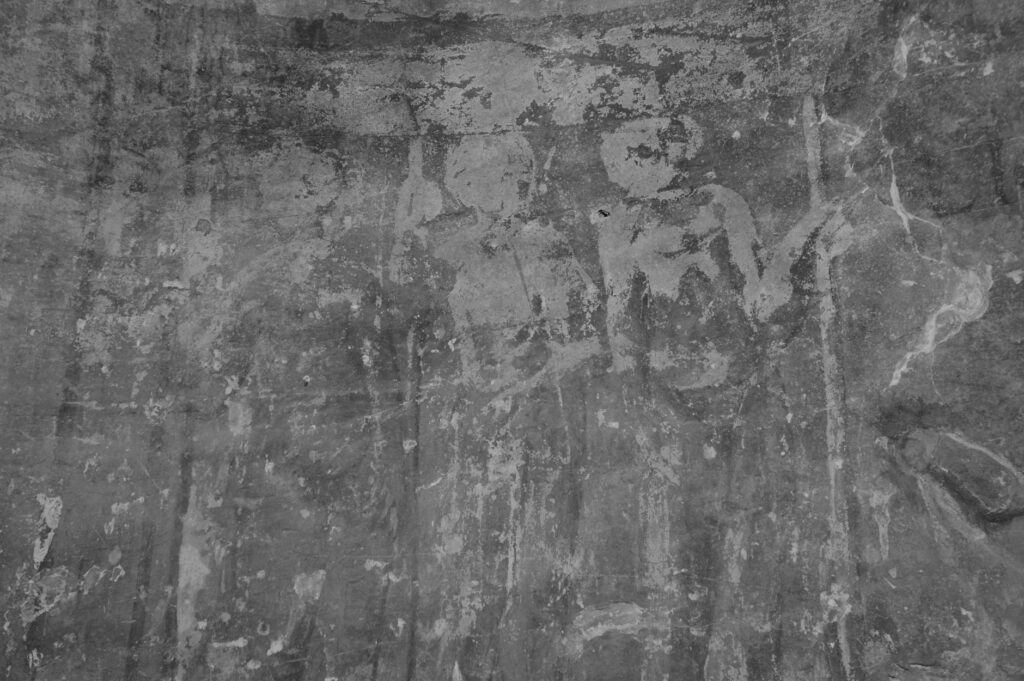
Boat excursions through the gorges allow for a close-up view of ancient Jawoyn rock art and local wildlife, from freshwater crocodiles to red-tailed black cockatoos. For the railway system, this area represents another challenge: the monsoon season. During the «Top End Wet,» rainfall can be so intense that river levels rise meters in a few hours, requiring constant monitoring of rail bridges to ensure piers do not suffer structural scouring.
Shifting Palettes: From Red Dust to Emerald Green
The final hours of the journey toward Darwin are a lesson in botany and climatology. The landscape transforms into a tapestry of intense greens, giant termite mounds rising like mud cathedrals, and wetlands harboring astonishing biodiversity. The dry heat of the center is replaced by a humidity that clings to the skin, reminding us we are entering Australia’s gateway to Asia.
Arrival in Darwin, a city that has been rebuilt several times following cyclones and bombings, marks the end of an epic traverse. The train comes to a halt at the Berrimah terminal, and passengers disembark with the sense of having crossed not just a country, but an entire world. Engineering has fulfilled its purpose: uniting two oceans across a void that, for centuries, was considered impassable.
Practical Guide
To undertake The Ghan adventure, meticulous planning is essential, as demand often exceeds supply months in advance.
- Seasons: The best time to travel is during the dry season (May to August), when temperatures are more moderate and skies are clear. In the wet season (December to March), some services may be altered, but the landscape is at its greenest and most lush.
- Direction of Travel: The Adelaide to Darwin (northbound) route is the classic, but the reverse (southbound) offers different sunset views and often has slightly better availability.
- Luggage: Due to limited space in cabins, it is recommended to carry a small bag with essentials for the three days and check the rest of your luggage into the power van.
- Health: While the train has basic medical assistance, it is vital to stay hydrated during desert stops, even if you do not feel thirsty.
The Ghan is an investment in memory. It is not cheap transportation, but rather a rail cruise experience that includes all meals, beverages, and excursions. It is advisable to book at least six months in advance to secure your preferred dates.
The Final Horizon: A Reflection on Immensity
At the journey’s end, when the last echo of the locomotive’s whistle fades into Darwin harbor, one image remains etched in the mind: a solitary tree silhouetted against a starlit sky in the middle of the Tanami Desert. That tree, surviving on the bare minimum in a harsh environment, is the perfect symbol of what this train represents.
The Ghan teaches us that connectivity is not just a matter of cables or satellite signals, but of physical presence. In a world obsessed with immediacy, spending three days crossing a continent is an act of rebellion and an opportunity to reconnect with the true scale of our planet. The iron of the train may rust over time, but the mark it leaves on the traveler’s spirit is as permanent as the red rock of Uluru.