
As the convoy pulls away from Xining Station, the landscape begins to stretch into an infinite horizontality that defies human perception. This is not merely a journey of transportation; it is an ascent into a dimension where air becomes scarce and engineering becomes a tool for survival. The Tibet Express, formally known as the Qinghai-Tibet line, represents one of the most audacious milestones of modern infrastructure, linking the heart of China with mystical Lhasa across a territory that, for centuries, was considered impenetrable for railways.
This report unravels the layers of a project that challenged not only the laws of physics but also the biological limits of those who built it and those who travel it today. From ground-cooling systems designed to prevent track collapse to pressurized cabins that emulate the atmosphere of a commercial aircraft, the journey is a testament to technical tenacity. Yet, beyond the steel and concrete, the train is an umbilical cord carrying dreams, faith, and a modernity that clashes head-on with the millenary stillness of Himalayan monasteries.
The Cryogenic Challenge: Tracks Over Eternal Permafrost
The primary obstacle for engineers was not the altitude per se, but the instability of the ground. Approximately 550 kilometers of the route traverse zones of permafrost—a layer of permanently frozen soil that acts as a foundation. However, permafrost is extremely sensitive to thermal changes. The heat generated by passing trains and rising global temperatures could melt this underground ice, turning the solid base into an unstable sludge that would derail any structure.
To solve this dilemma, an unprecedented passive cooling system was implemented. If you look closely from the window, you can see thousands of metal tubes driven into the embankments. These are thermosiphons, devices containing liquid ammonia. During winter, ground heat evaporates the ammonia, which rises to the top of the tube, cools against the outside air, and flows back down as a liquid, extracting heat from the earth and keeping the permafrost at a constant freezing temperature. This technique ensures the track remains level and safe even during the plateau’s warmest summers.
In addition to the thermosiphon system, elevated bridges were built in the most critical areas. Instead of laying tracks directly on the ground, engineers opted for kilometers of viaducts that allow air to circulate underneath, minimizing heat transfer. This solution not only protects the train’s integrity but also respects the migratory routes of local wildlife, such as the Tibetan antelope, which can cross under the structures without interrupting its life cycle.
Oxygen on Board: A Pressurized Capsule in the Clouds
As the train exceeds 4,000 meters in altitude, the human body begins to experience hypoxia. The partial pressure of oxygen drops drastically, which under normal conditions would trigger the dreaded altitude sickness. To prevent passengers from suffering pulmonary or cerebral edema, the carriages of the Tibet Express function similarly to a commercial aircraft cabin, albeit with specific nuances for land transport.
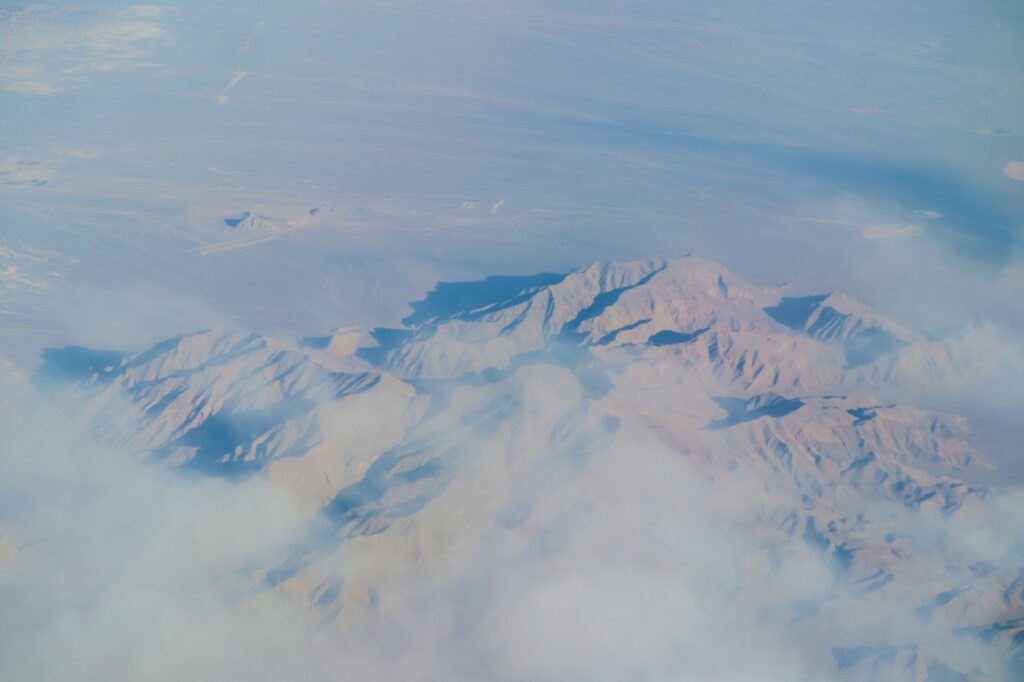
Each train is equipped with a dual oxygen supply system. On one hand, the oxygen concentration in the ambient air of the entire carriage is increased through the air conditioning system. On the other, every seat and sleeper berth features an individual oxygen outlet where passengers can connect nasal cannulas if they feel dizziness or extreme fatigue. Maintaining oxygen saturation is vital, especially when the train reaches its peak at the Tanggula Pass.
“The train does not just transport people; it transports an artificial atmosphere that allows life where air is a luxury.”
The train’s windows are also pieces of advanced engineering. They are made of double glazing that includes a protective filter against the intense ultraviolet radiation of the high mountains. Furthermore, they are designed to withstand violent sandstorms and sudden pressure changes that occur when entering and exiting the numerous tunnels carved into the living rock of the Kunlun and Tanggula mountain ranges.
Tanggula Pass: The Five-Thousand-Meter Threshold
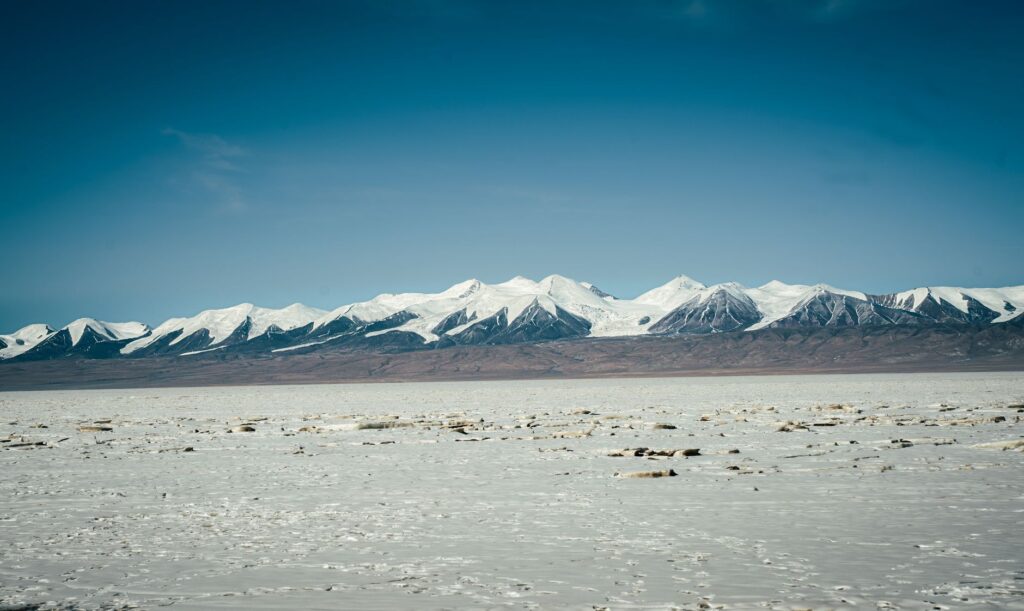
The journey’s climax occurs upon reaching Tanggula Station, situated at 5,068 meters above sea level. It is the highest railway station in the world, a place where the sky seems within reach and the landscape is reduced to a mineral purity of whites and ochres. Here, the power of the locomotives is put to the test. The train utilizes high-power diesel engines manufactured by General Electric, specifically modified to operate in low-oxygen environments.
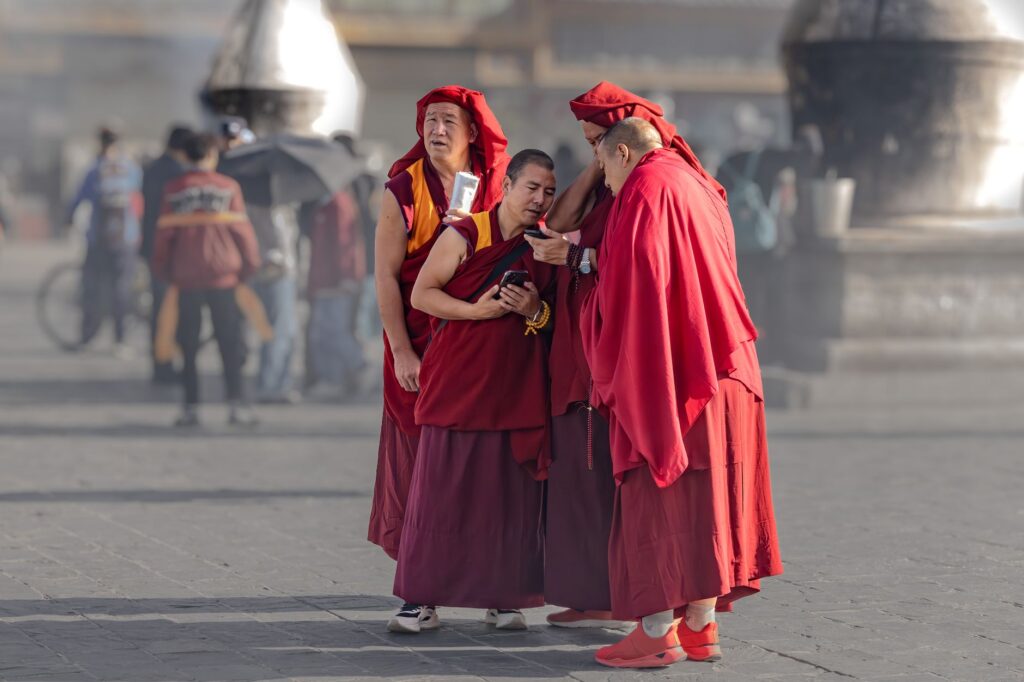
Combustion at these altitudes is inefficient, so the machines require high-capacity turbochargers to inject enough air into the cylinders. Watching the train advance steadily across this invisible frontier is a display of brute force. Despite the beauty of the surroundings, the stop at Tanggula is purely technical; passengers do not usually disembark due to the extreme risk of altitude sickness, but the view from the panoramic windows offers a perspective of the world that few human beings have ever witnessed.
The Architecture of Emptiness: Stations in the Middle of Nowhere
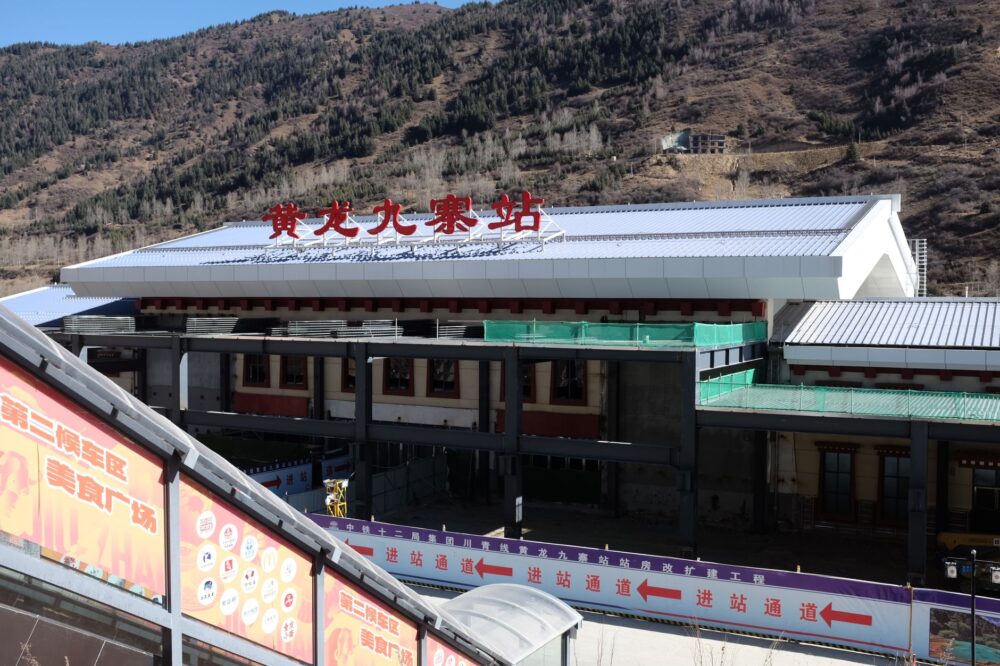
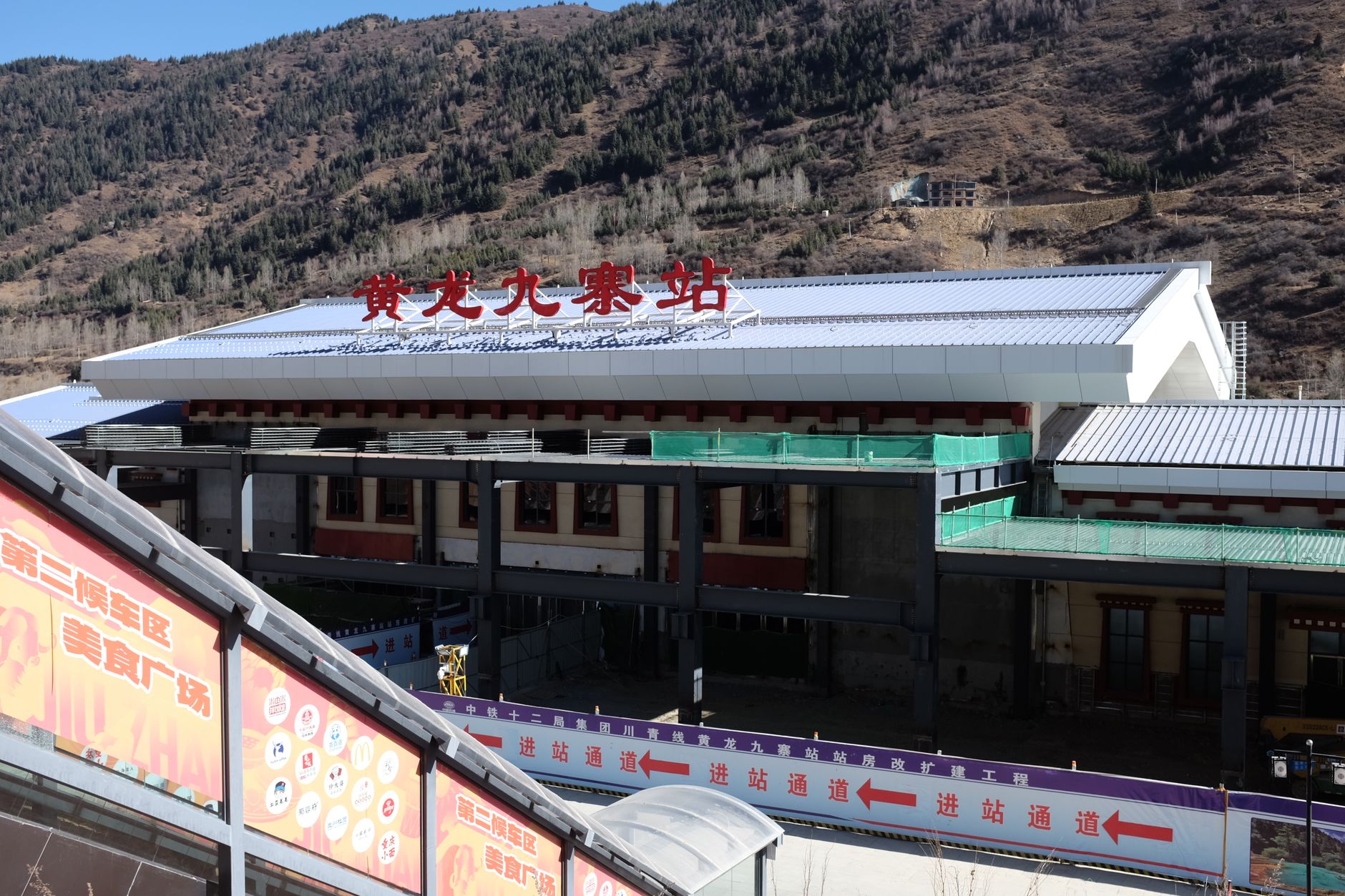
Along the route, the stations are not mere stopping points but bastions of human presence in the high-altitude desert. Many of them, such as Nagqu or Amdo, feature architecture that attempts to reconcile functional brutalism with Tibetan aesthetic elements. The sloped roofs and red-and-white colors evoke the structure of dzongs (fortress-monasteries), integrating the iron of the train into the region’s cultural fabric.
The construction of these stations was a massive logistical challenge. All materials, from cement to reinforcing steel, had to be transported by road across perilous mountain passes before the tracks were operational. Workers lived in camps with medical oxygen supplies and under strict health protocols. It is said that there were no deaths from altitude sickness during the most intense phase of construction, a fact that highlights the project’s almost military planning.
The Human Pulse: Between Tourism and Devotion
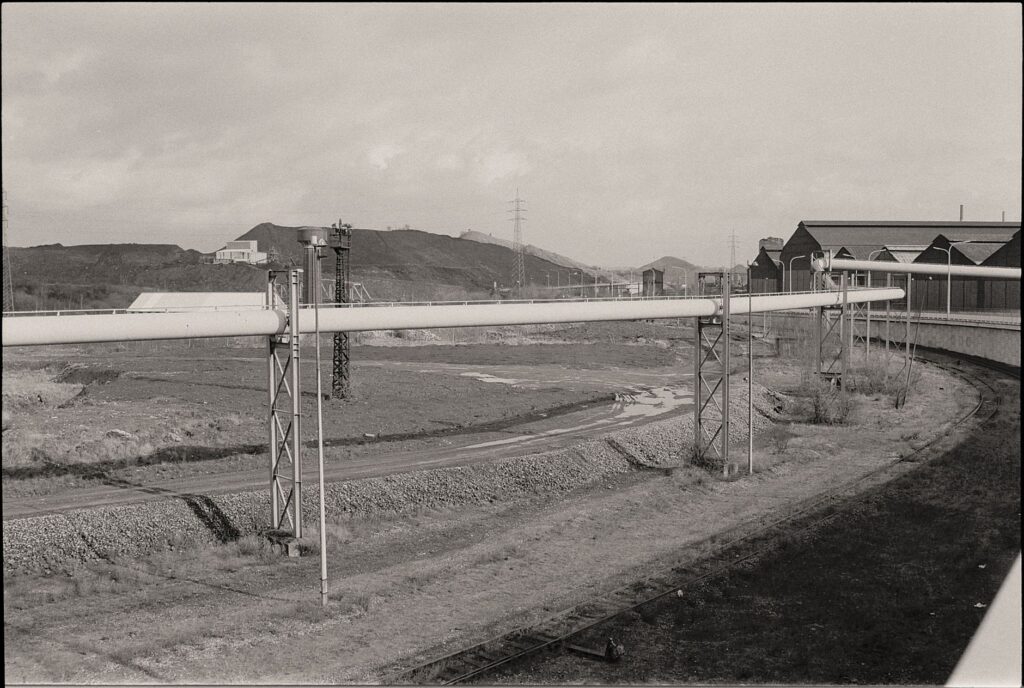
Inside the train, the atmosphere is a fascinating blend of profiles. In the ‘Soft Sleeper’ carriages, you find international tourists and Chinese entrepreneurs with their laptops, taking advantage of the connectivity that, surprisingly, remains throughout much of the journey. In the ‘Hard Seat’ carriages, the reality is different: Tibetan families returning to their villages, saffron-robed monks chanting mantras in low voices, and migrant workers seeking opportunities in growing Lhasa.
For Tibetans, the train has changed the perception of time and distance. What was once a weeks-long journey by bus or truck is now resolved in less than 24 hours from Xining. This connectivity has facilitated pilgrimages to Lhasa’s sacred sites, such as the Jokhang Temple, but it has also accelerated the influx of goods and people from other provinces, sparking a constant debate about preserving cultural identity in the face of advancing railway globalization.
“The train’s whistle on the plateau is the sound of a future arriving without asking permission, transforming silence into movement.”
It is common to see local passengers sharing food and yak butter tea with foreign travelers. Despite language barriers, the train acts as a space of forced coexistence where mutual curiosity softens borders. The gaze lost on the horizon, where herds of yaks graze indifferent to the passing iron giant, is the common denominator for everyone occupying these carriages.
High-Altitude Logistics: Operating the World’s Highest Railway
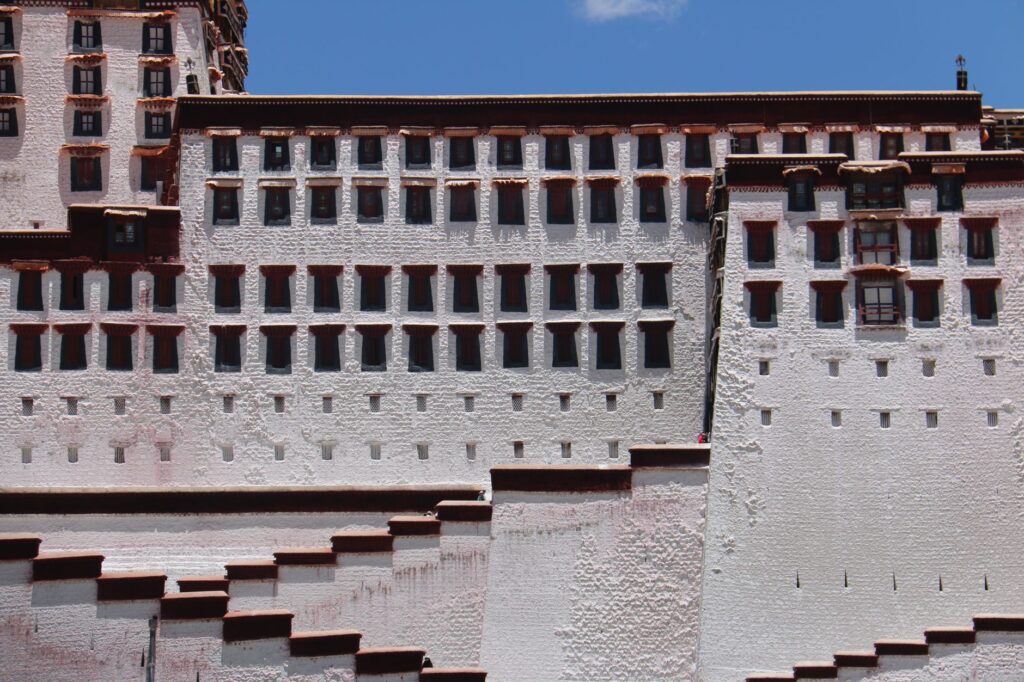
Operating a 1,956-kilometer line (from Xining to Lhasa) requires mathematical precision. Track maintenance is carried out with specialized machinery that can operate in extreme cold. Inspection teams traverse the permafrost sections daily to detect even the slightest variation in rail geometry. An error of just a few millimeters could be catastrophic at the speeds the convoy reaches.
Power supply and communications are managed through a fiber-optic network running parallel to the tracks. This allows the control center in Xining to monitor the location, speed, and status of each train’s oxygen systems in real-time. Safety is the absolute priority, with emergency protocols including medical evacuation points strategically distributed along the route, coordinated with helicopters prepared for high-altitude rescue.
Practical guide
- Required Permits: To travel to Tibet, foreign citizens require not only a Chinese visa but also the Tibet Travel Permit (TTP), which must be arranged through an authorized travel agency at least 20 days in advance.
- Routes and Schedules: The most popular train departs from Xining (the official start of the high-mountain section), but there are direct connections from Beijing, Shanghai, Chengdu, and Guangzhou. The Xining-Lhasa journey takes approximately 21 hours.
- Travel Classes: ‘Soft Sleeper’ (4-berth compartments with a door) is highly recommended for greater comfort and privacy. ‘Hard Sleeper’ (6-berth open compartments) is a budget-friendly and social option but offers less personal space.
- Health and Acclimatization: It is essential to consult a doctor before the trip. Although the train is pressurized, spending a couple of days in Xining (2,200m) is recommended to begin acclimatization. Avoid alcohol and stay hydrated during the journey.
- Best Time to Visit: From May to October, the weather is milder and the landscape is greener, though it is peak season. Winter offers a desolate beauty and fewer crowds, but temperatures can be extreme.
- Luggage: Bring thermal clothing even in summer. Solar radiation is very strong; do not forget high-factor sunscreen and UV-protection sunglasses.
At the end of the journey, as the train descends gently into the Lhasa River valley, the silhouette of the Potala Palace emerges from the clouds like a mirage of stone and gold. The traveler, still under the spell of altitude and technical wonder, realizes that this railway is more than a means of transport. It is a bridge between two worlds, a steel scar that has joined the unreachable with the everyday. Stepping onto the platform, the fresh evening Tibetan air fills the lungs, and the feeling of having crossed a border—not just geographic, but spiritual—settles in the traveler’s heart, as the last ray of sun illuminates the tracks returning to the infinite.