
Emerging from the deep waters of the Mozambique Channel, the Comoro archipelago stands as a volcanic bastion where geographical isolation dictates the rhythm of daily life. Comprising Grande Comore, Mohéli, Anjouan, and the disputed island of Mayotte, this insular territory represents one of the most complex logistical challenges on the African continent. The absence of major deep-water port infrastructure and the capricious topography of its volcanic cones turn travel between islands into an exercise in navigational precision and mechanical endurance. Here, connections do not rely on the automated standards of global metropolises, but rather on a network of artisanal balances and coastal fleets that sustain the social and economic lives of thousands of inhabitants.
Understanding mobility in this corner of the Indian Ocean requires looking beyond tourist brochures to delve into the intrepid spirit of local operators. From tiny airstrips carved out of basalt rock to makeshift jetties where fiberglass boats battle heavy swells, the Comorian transport system is a living organism beating to the rhythm of the monsoons. In this report, we examine how this survival network is woven, what structural challenges regional aviation faces, and how experienced travelers manage to navigate one of the most beautiful and complex archipelagos in the world.
The Geography of Isolation: When the Mozambique Channel Sets the Rules
The Comorian archipelago stretches for some three hundred kilometers at the northern entrance of the Mozambique Channel, one of the busiest yet most perilous shipping lanes in the Southern Hemisphere. Ocean currents, driven by trade winds and seasonal cyclones, shape rugged coasts where coral reefs act as both a natural barrier and a death trap for deep-draft vessels. Each island possesses a distinct geological personality that radically conditions its transport options. While Grande Comore, the largest of the group, is dominated by the imposing presence of Mount Karthala and its recent lava flows, which hinder the construction of sheltered ports, Mohéli hides behind a crown of protected islets requiring pinpoint navigation.

This territorial fragmentation has prevented the development of a unified road network or inter-island bridges, forcing reliance on a strictly intermodal model. Goods arriving at main ports must be broken down into smaller barges to reach isolated coastal settlements. The lack of draft in traditional docks means international cargo ships must drop anchor miles offshore, transferring containers and passengers via a chain of lighters and rowing boats. This process, repeated day after day under a relentless sun, defines Comorian transport economics: a choreography of human effort where the margin for error is minimal and logistical costs permanently stifle local development.
Wings Over Basalt: Regional Aviation and the Short-Runway Challenge
Air transport in the Comoros is the invisible thread preventing total disconnection between the islands, though keeping it operational demands constant technical effort. Prince Said Ibrahim International Airport, located on the outskirts of Moroni on Grande Comore, features a runway just long enough to receive narrow-body aircraft from regional hubs like Nairobi, Dar es-Salaam, or Saint-Denis de la Réunion. However, the true aviation challenge lies in domestic connections, historically operated by short-haul airlines using turboprop aircraft adapted for takeoffs and landings in confined spaces.
The airstrips of Anjouan (ANI) and Mohéli (MOH) are flanked by volcanic hills and open sea, generating constant wind shear turbulence and crosswinds that test crew expertise. Compounding this is the complex maintenance of lighting and night navigation systems, frequently limited by outages in island power grids. Aviation in this archipelago is not a luxury service, but an essential public utility transporting everything from urgent medical samples to government ministers and teachers, turning every flight into a community event where luggage weight limits are strictly enforced to guarantee takeoff safety.
The skies and seas of the Comoros show no mercy to improvisation; every route is a fragile pact between human skill and the fury of Atlantic and Indian elements.
The Coastal Fleet: Barges, Speedboats, and the Straits Crossing
For the vast majority of the local population, flying remains an unattainable luxury, making coastal maritime transport the true backbone of archipelagic mobility. The so-called ‘kwassa-kwassa’ and motorized fiberglass boats powered by heavy outboard engines make daily runs between Anjouan and Mayotte, or Grande Comore and Mohéli, defying a sea that rarely stays calm. These crossings, lasting between three and six hours depending on weather conditions, serve as both a vital trade route and a stage of constant human and economic tension.
Larger cargo and passenger ships, locally known as ‘chalandes’, connect the ports of Moroni, Mutsamudu, and Fomboni, carrying everything from SUVs to sacks of rice and building materials. However, safety aboard these vessels has historically concerned international maritime authorities. Chronic overloading, a shortage of life jackets, and a lack of modern weather radar force captains to navigate based on generational experience and an intuitive reading of the sky and water color. Despite the risks, these passenger- and cargo-packed decks are the beating heart of Comorian economic life.
Infrastructure at the Limit: Unsheltered Ports and Erosion-Prone Roads
Investing in transport infrastructure in a volcanic insular environment is a titanic and financially draining task. The port of Mutsamudu in Anjouan, the country’s only facility capable of receiving moderate container ships via a direct docking pier, periodically suffers from silting and structural fatigue. On Grande Comore, the situation is even more precarious; Moroni’s port lacks an effective protective breakwater, leaving moored ships at the mercy of heavy swells generated by channel storms, sometimes forcing the suspension of all port activity for weeks.
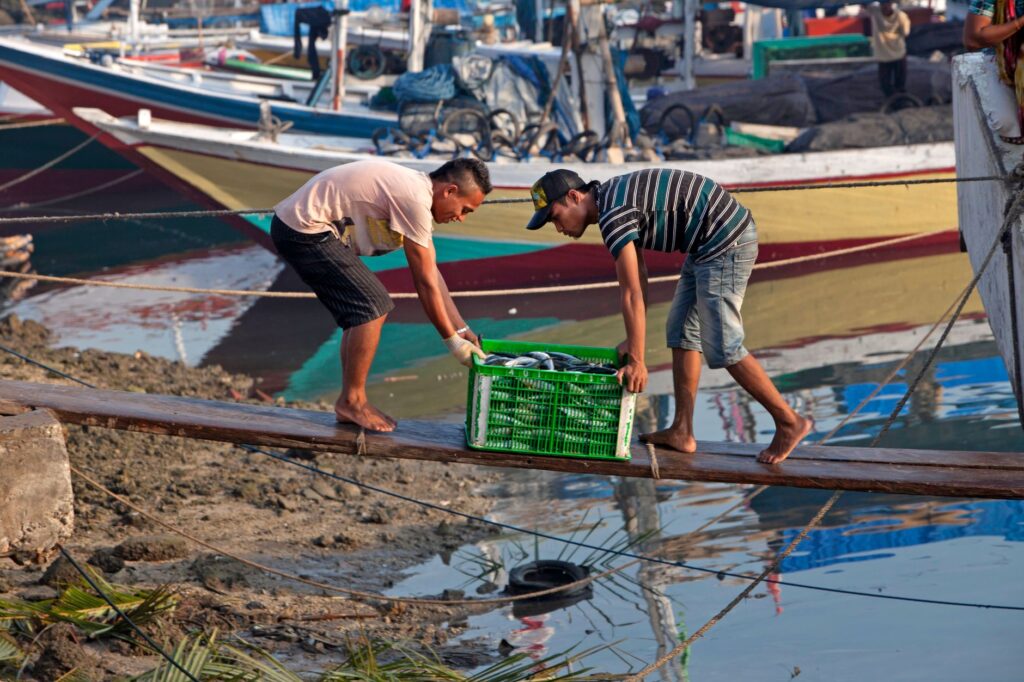
On land, the road network presents a similar panorama of vulnerability. The main ring road circling Grande Comore is constantly threatened by advancing ancient lava flows undercutting the asphalt and marine erosion eating away at coastal foundations. During the rainy season, landslides block mountain passes connecting the agricultural interior with urban markets, isolating entire communities for days. The lack of heavy machinery for continuous maintenance and the rising cost of imported building materials turn every repair into a race against tropical natural decay.
The Human Factor: Operator Resilience and the Travel Culture
Beyond asphalt, concrete, and steel, the true engine keeping Comorian transport running is the patience and resilience of its people. Transport operators, from collective taxi drivers packing their vehicles to mechanics keeping thirty-year-old engines alive with adapted parts, possess irreplaceable empirical knowledge. At bush taxi stations and makeshift jetties, time is measured differently: a bus or boat departure time is never a fixed number on a clock, but the exact moment the last seat fills and cargo is tightly secured.
For Western travelers, this reality demands a radical shift in mindset. International travel agencies often advise against informal maritime routes due to unpredictable schedules and risks associated with night sailing. Yet those who venture into this intermodal circuit discover overwhelming hospitality and a view of travel as an act of communal coexistence. Sharing space on a boat deck during an equatorial downpour or debating local politics in the backseat of a shared taxi reveals the authentic pulse of a society that has turned distance overcoming into its core identity.
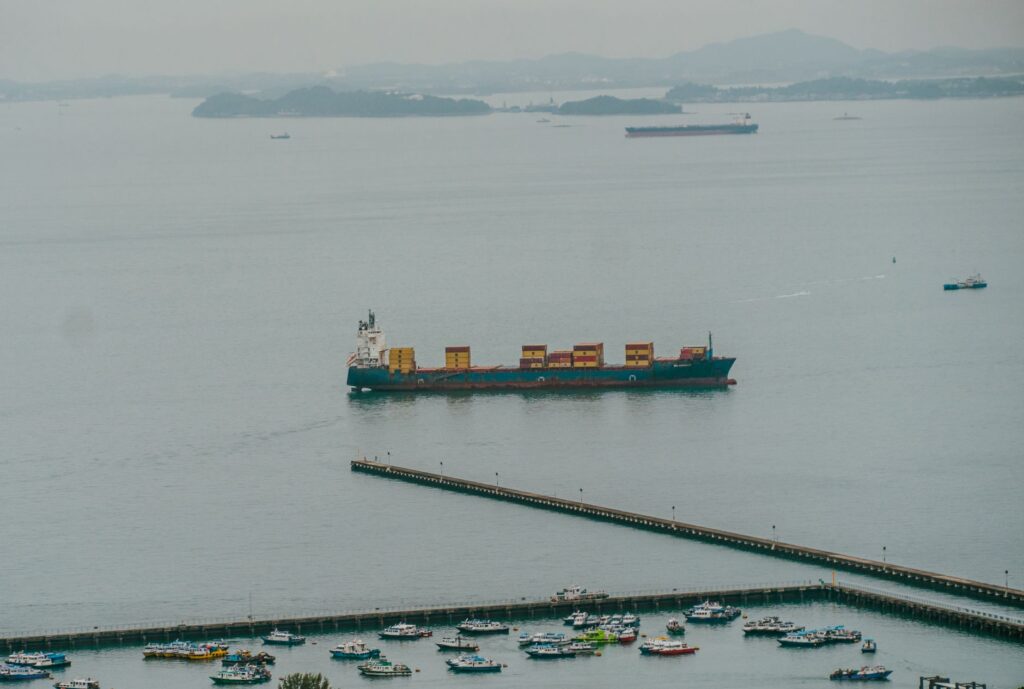
On Comorian routes, haste is an unnecessary luxury; true travel is measured by the ability to adapt to the relentless rhythm of ocean and volcanic earth.
Practical Guide
Getting There: Main international flight connections operate through Prince Said Ibrahim International Airport (HAH) on Grande Comore, featuring regular flights from African hubs like Addis Ababa (Ethiopian Airlines), Nairobi (Kenya Airways), and connections via Réunion and Mauritius.
Inter-Island Transport (Air): Regional carrier Interîles Air operates regular short-haul flights connecting Grande Comore, Anjouan, and Mohéli. Confirming schedules in advance is essential, as weather and technical conditions can alter departures without notice.
Inter-Island Transport (Sea): Speedboat and cargo barge services run between the islands. Tickets must be purchased directly at the ports of Moroni, Mutsamudu, and Fomboni. Travelers should use only authorized operators and avoid night crossings without prior local cabotage experience.

Documentation and Visas: All foreign visitors require a valid passport with at least six months’ validity and a visa, generally processed upon arrival at Moroni airport, requiring cash payment of fees (preferably in Euros or US Dollars).
Safety and Health: Yellow fever vaccination is mandatory when arriving from an endemic country. Malaria prophylaxis and consuming exclusively bottled water are strongly advised. Purchasing travel insurance with emergency medical evacuation coverage is strictly necessary due to local healthcare limitations.
Visual Epilogue: The Last Glimmer in Moroni Harbor
At dusk, as Mount Karthala’s silhouette melts into the deep purple of the Indian Ocean twilight, Moroni harbor acquires an almost ghostly stillness. Coastal fishermen mend nets under the flickering light of a kerosene lamp, while the latest fiberglass boats secure their moorings after a day battling channel waves. In this forgotten corner of global routes, mobility is not an acquired comfort, but a daily act of faith and resistance. The traveler contemplating this scene understands the Comoros are not an easy destination, but a territory where every kilometer traveled holds a profound lesson on the dignity of human effort against the vastness of the sea.