
Located more than four hundred kilometers south of New Zealand’s South Island, the Auckland Islands constitute one of the most desolate and geographically complex marine and terrestrial environments on the planet. This volcanic archipelago, perpetually lashed by westerly winds and subantarctic circumpolar currents, represents a monumental challenge for any strategy of human connectivity. Here, there are no commercial airports, paved roads, or regular passenger ferry lines; mobility depends strictly on authorized scientific expeditions, steel-reinforced hull vessels capable of enduring violent seas, and complex weather windows that dictate the rhythm of life and transit in this southern outpost.
The analysis of the transport system in the Auckland Islands cannot be approached through the conventional parameters of tourist or commercial logistics. We find ourselves before a natural infrastructure where survival and scientific research depend on a highly restricted supply chain, monitored by the New Zealand Department of Conservation. Understanding how travel operates in this hostile environment unravels the dynamics of biosphere reserve management and the intrinsic fragility of oceanic island ecosystems.
The Geography of Isolation and the Absence of Conventional Infrastructure
The Auckland Islands archipelago is composed of the main island, Auckland Island, alongside Enderby Island, Adams Island, and a series of smaller islets sculpted by Miocene volcanic activity and subsequent glacial erosion. The topography is abrupt, characterized by steep basaltic cliffs plunging sheer into the ocean, boggy plateaus covered in tussock vegetation, and deep fjords carved into the bedrock. This physical configuration completely precludes the construction of terrestrial transport infrastructure or conventional landing strips.
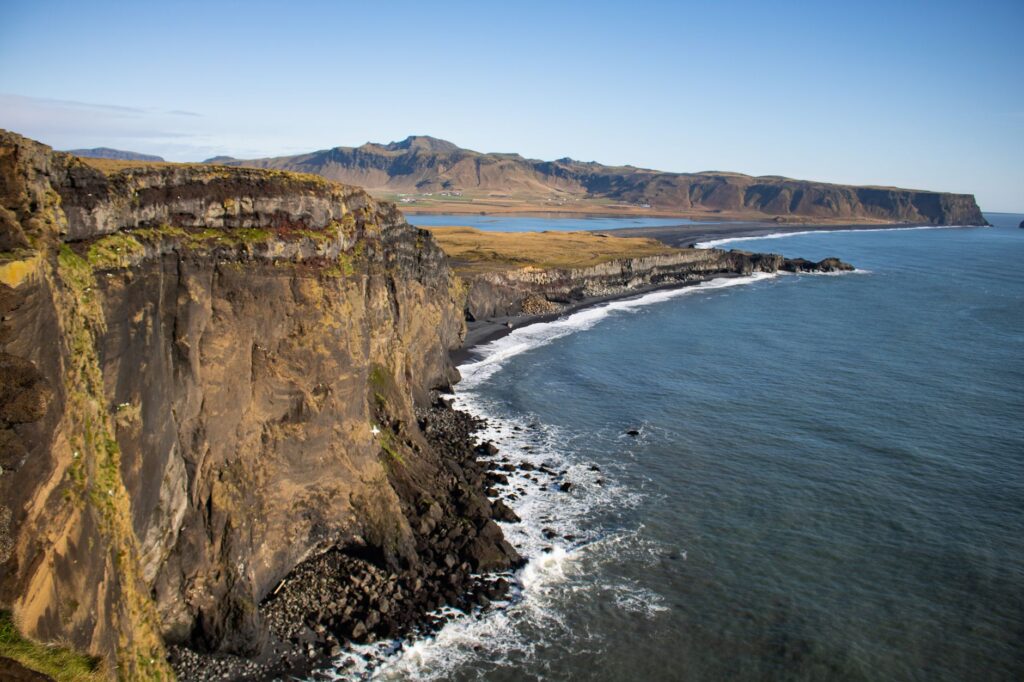
Unlike other subantarctic island regions where small gravel strips have been cleared for light aircraft links, the Auckland Islands lack stable, sufficiently dry flat surfaces to allow regular air operations with a minimum margin of safety. The strong katabatic winds descending from the plateaus and severe turbulence generated by the mountainous relief turn any aerial approach into an unacceptable risk. Consequently, air transport is strictly limited to emergency medical operations or rescues via long-range helicopters embarked on Royal New Zealand Navy ocean patrol vessels.
The Austral Maritime Route: The Umbilical Cord of Expedition Vessels
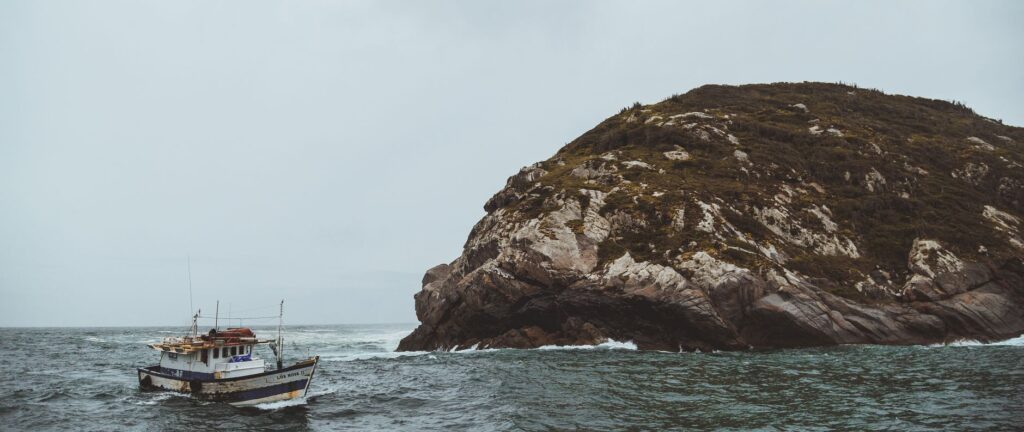
Given the impossibility of utilizing air transport, the waters of the South Pacific Ocean become the sole route of access and communication with the archipelago. Journeys typically depart from the port of Bluff or Dunedin on New Zealand’s South Island, confronting a stretch of sea considered among the most dangerous in the world: the crossing of the roaring forties and furious fifties. The vessels employed are not conventional cruise ships, but oceanographic research vessels, steel-reinforced polar sailing yachts, and logistic support boats operated under strict navigation protocols.
These ships must be equipped with dual-band satellite navigation systems, high-precision weather radars, and variable ballast tanks to counteract the force of the Antarctic swell. The average duration of the voyage ranges between thirty-six and forty-eight hours, depending on the intensity of the cold fronts moving up from the white continent. Arrival at the main island is accomplished through sheltered anchorages historically known by nineteenth-century whalers and shipwreck survivors, such as Carnley Harbour or Port Ross, where deep waters offer temporary respite from the fury of the open sea.
Terrestrial Transport on Foot: The Realm of Boardwalks and Boggy Terrain
Once expedition members or environmental managers disembark on the shore, mobility is drastically reduced to human traction. In the Auckland Islands, there are no roads, conditioned paths, or permanent all-terrain vehicles, owing to a strict conservation policy aimed at preventing the introduction of invasive seeds and the compaction of fragile soils. Movement overland is carried out exclusively on foot, following traditional ridge routes or utilizing staked paths in areas where soft peat accumulation poses a sinking hazard.
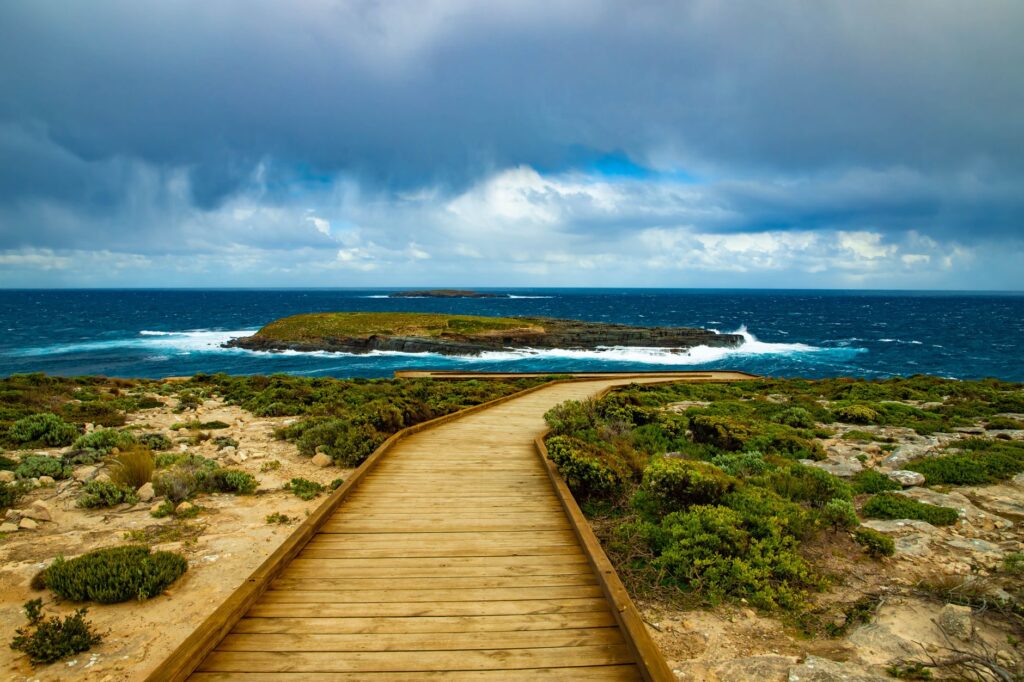
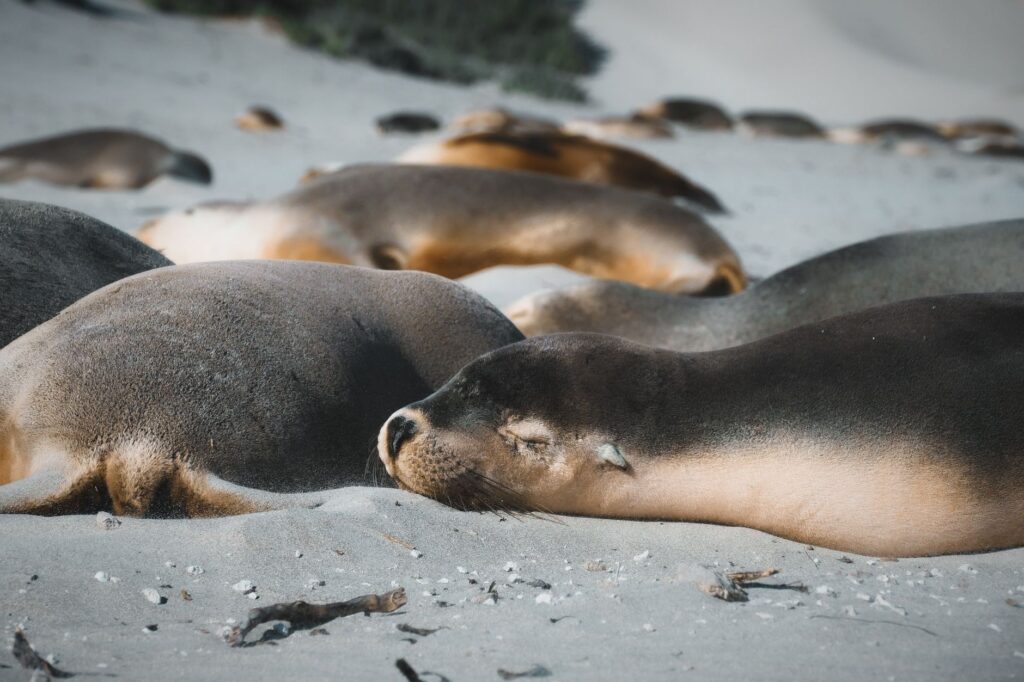
New Zealand authorities temporarily install treated timber boardwalks at ecologically sensitive points on Enderby Island to protect endemic vegetation and breeding sites for New Zealand sea lions. However, on the main island, transit demands specialized waterproof footwear, high gaiters, and excellent physical fitness to navigate dense rata scrub and impenetrable mudflats. Internal logistics rely on self-supporting rucksacks, compelling scientific teams to carry dehydrated rations, VHF radio communication systems, and water purification setups for weeks at a time.
The sovereignty of nature in the Auckland Islands manifests in its absolute rejection of mechanical footprints; here, every kilometer advanced is a temporary concession granted by the rigor of the austral climate.
The maintenance of these pedestrian transit routes is minimal and meticulously planned to minimize disruption to the habitat of threatened seabirds, such as the Auckland shag or the Auckland rail. Any heavy equipment required for the restoration of historic huts or biological monitoring must be backpacked from the beach landing points, a constant reminder that modern infrastructure is unviable in this ecological sanctuary.
The Logistics of Restrictions: Permits, Quarantine, and Biosecurity
The transport system toward the Auckland Islands is governed by a network of administrative regulations as rigorous as its climatology. No one can simply charter a vessel and drop anchor off its shores. The Department of Conservation requires special access permits months in advance, conditioned upon the submission of rigorous environmental impact plans and biosecurity protocols. Before setting sail from New Zealand, every kilogram of equipment, every boot sole, and every tool case undergoes an exhaustive disinfection process to prevent the introduction of rodents, insects, or fungal pathogens that could decimate native fauna.
This biosecurity control acts as an invisible yet impassable filter that forms part of the travel logistics chain. Quarantine protocols mandate the freezing or vacuuming of cold-weather gear, and vessels must temporarily anchor in designated inspection zones where environmental officers verify the absence of stowaway species. Connectivity is therefore measured not merely in terms of speed or transport frequency, but in the capacity to maintain a protective wall around an ecosystem that has evolved in absolute isolation.
Practical Guide
Planning an expedition or study trip to the Auckland Islands requires understanding the legal, logistical, and safety channels demanded by New Zealand authorities.

Official Authorizations: Securing an access permit through the Department of Conservation (DOC) is essential at least six to nine months in advance, justifying the scientific, educational, or management purpose of the trip.
Departure Point and Operators: Maritime departures are coordinated from the ports of Bluff or Dunedin. Only accredited naval operators with experience in subantarctic navigation are authorized to carry out these crossings.
Biosecurity Protocols: All passengers must comply with mandatory equipment inspections, backpack vacuuming, chemical boot washing, and thorough clothing reviews to rule out seeds and soil.
Personal Equipment: High-end multi-layer waterproof technical clothing, high-traction mountain boots, satellite GPS navigation systems, and emergency position-indicating radio beacons (EPIRBs) are required.
Medical Self-Sufficiency: Given the absence of health infrastructure on the islands, each expedition must carry an onboard physician, a comprehensive advanced first aid kit, and a contingency aero-medical evacuation plan.
The Final Echo of the Journey in the Oceanic Outpost
Contemplating the rugged coastlines of the Auckland Islands from the deck of a vessel after overcoming the stormy passage of the Tasman Sea transmits a profound sense of humility. Here, transport is not a commercial service intended for the traveler’s comfort, but an exercise of endurance, respect, and deep caution in the face of the implacable grandeur of the southern nature. The wakes left by research ships as they depart these remote fjords dissolve rapidly in the immensity of the Pacific, leaving behind a sanctuary where the only permitted connection with the outside world is the distant whisper of the wind and the patient passage of the tides.