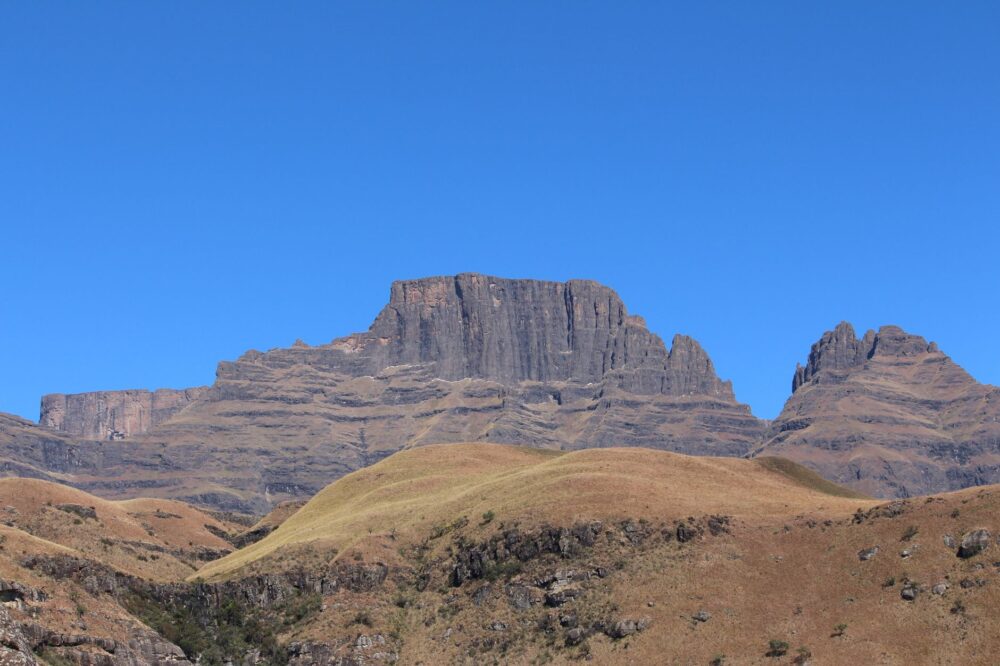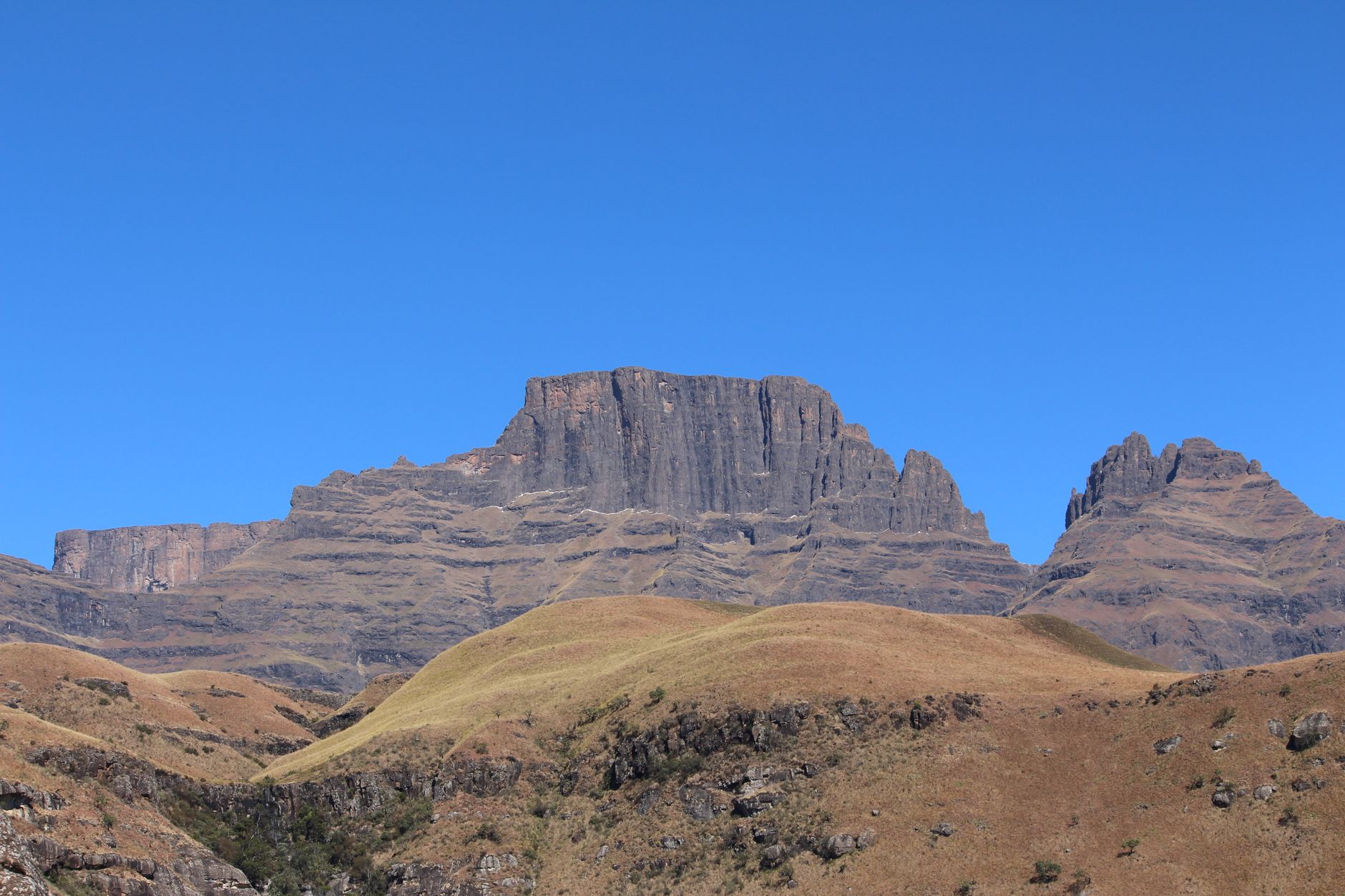

The Drakensberg, known in the Zulu language as uKhahlamba —the barrier of spears—, represents one of the most imposing and challenging geological formations on the African continent. This gigantic basaltic escarpment, which frequently exceeds three thousand meters in altitude, acts not only as a natural border between South Africa and the Kingdom of Lesotho, but also as a geological sanctuary where high-altitude trekking demands rigorous technical preparation, logistical autonomy, and profound respect for southern weather patterns. Across its crests sculpted by millennia of erosion, the trekker enters a territory of infinite plateaus, dizzying drop-offs, and rock shelters adorned with San rock art, where each day of hiking tests adaptability and physical endurance in a wild environment devoid of conventional trail markers.
Undertaking a multi-day traverse through this mountain range requires understanding that the mountains do not offer the comforts of European or North American alpine infrastructure. Here, progression takes place across a desolate high plateau where water must be carefully purified and navigation depends entirely on map-reading skills and the precise use of satellite positioning systems. This report examines the anatomy of a self-supported expedition in the northern Drakensberg, breaking down physical challenges, historical heritage, interactions with local herders, and the practical tools indispensable for transforming the adventure into a safe and transformative experience.
The Geological Architecture of the Great Escarpment
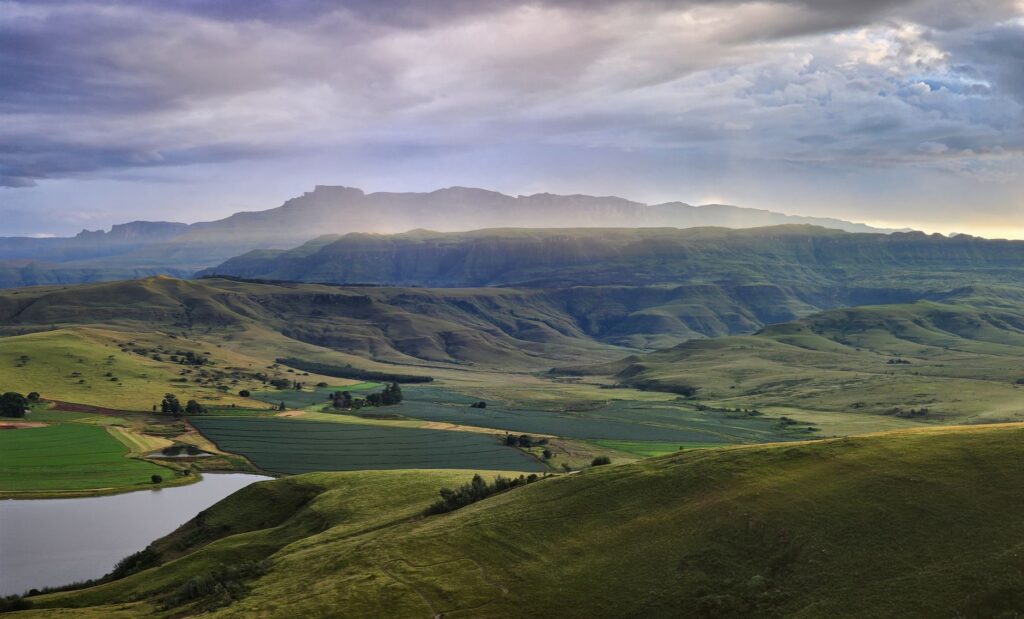
The genesis of the Drakensberg dates back to colossal volcanic processes that occurred approximately one hundred and eighty million years ago, when the breakup of the supercontinent Gondwana released massive basalt flows that, upon cooling, exceeded fifteen hundred meters in thickness over a Clarens sandstone base. This superposition of strata has given rise to a characteristic landscape of impassable vertical walls and rolling upper plateaus, where rivers carve deep valleys before plunging toward the Indian Ocean via monumental waterfalls such as Tugela, considered among the highest in the world.
For the mountaineer, this geological configuration implies a dual technical challenge. On the one hand, overcoming the lower wall requires ascending steep gullies or passes—known locally as passes—where loose scree, rockfall, and steep gradients demand absolute balance and the strategic use of trekking poles. On the other hand, once the summit is reached, the upper plateau unfolds as a flat yet treacherous tabletop, where sudden fog, known as escarpment mist, can disorient even the most experienced expedition member within minutes.
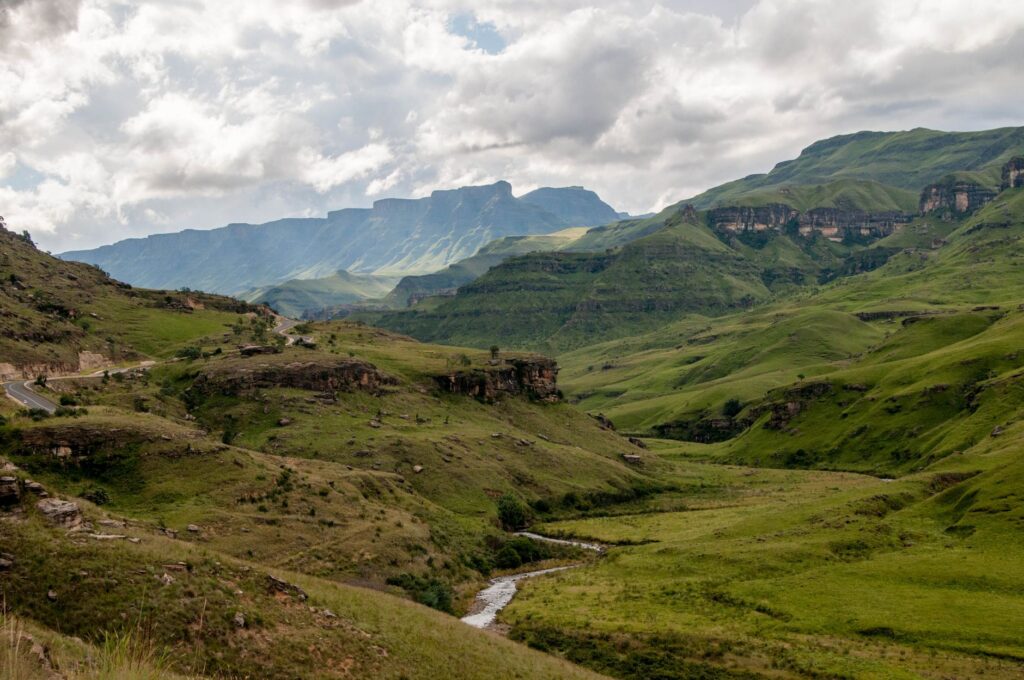
The stability of the basaltic terrain varies considerably according to wind exposure and seasonal precipitation. The upper plateaus accumulate moisture during the summer months, turning certain depressions into high-altitude bogs that hinder rapid marching. Therefore, footwear selection must prioritize high-traction soles and robust waterproofing, combined with technical gaiters to prevent fine gravel and damp sediments from entering during high-altitude meadow crossings.
Ancestral Heritage: San Rock Art and Zulu Mythology
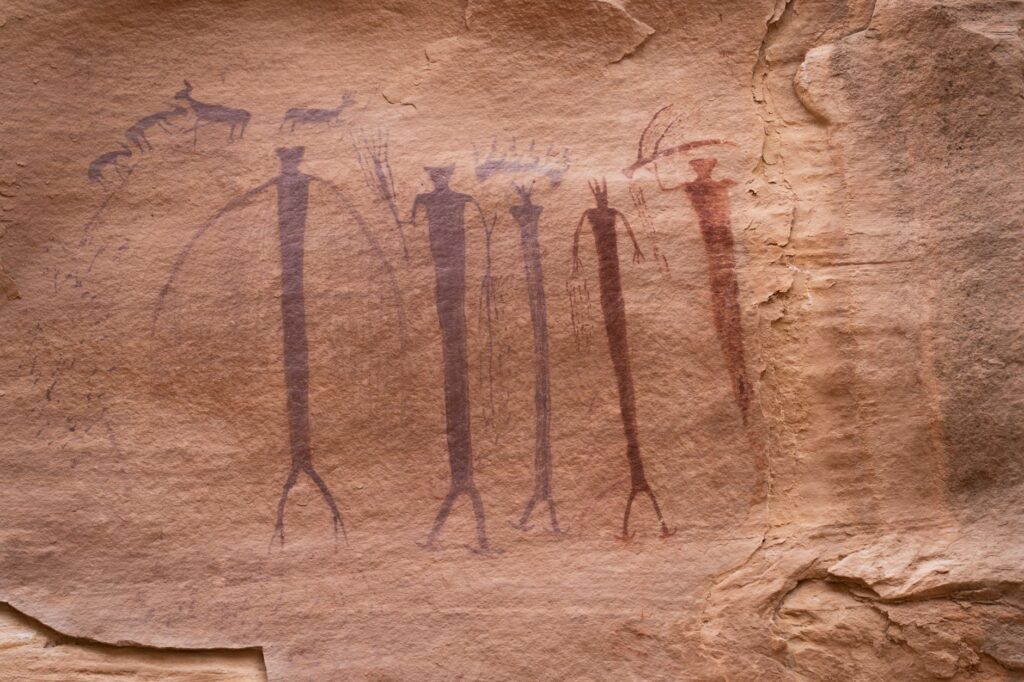
Walking through the Drakensberg is walking through an open-air archaeological archive. The sandstone rock shelters situated in the foothills of the escarpment house thousands of rock paintings left by the San people—also known as Bushmen—who inhabited these caves for at least four millennia before the arrival of Nguni pastoralists and European settlers. These pigments, crafted from mineral oxides, blood, and animal fat, depict hunting scenes, shamanic rituals, and visions of the spiritual world where the eland antelope holds a central place as a sacred animal.
Access to these archaeological sites is strictly regulated by national park conservation authorities and provincial reserves in order to protect the pigments from degradation caused by humidity and human contamination. Observing these works in their original context, silent and protected by the immensity of the landscape, adds an indispensable anthropological dimension to the journey, reminding the expeditioner that this seemingly pristine nature has been inhabited and endowed with spiritual significance since time immemorial.
Meanwhile, Zulu oral tradition interprets these peaks as the abode of ancestors and protective spirits. The names of the peaks and gorges reflect legends of battles, migrations, and extreme weather phenomena. Listening to the stories narrated by local guides around the fire at dusk provides a deep understanding of the cultural connection linking valley populations with these basalt masses, moving the traveler away from a purely sporting view and immersing them in a rich and complex worldview.
Logistical Autonomy and Stone Cave Management
Unlike the Alps, where serviced refuges offer beds and hot meals every few hours, overnight stays in the high Drakensberg rely primarily on natural rock shelters known as caves, complemented by wild camping under strict conservation regulations. These shelters are simply deep recesses beneath basalt ledges, very rudimentarily adapted by generations of hikers with small stone walls to break the wind.
Planning a self-supported five- or six-day traverse across the ridge requires calculating backpack weight with millimeter precision. All camping equipment, a sleeping bag with a sub-zero temperature rating —nights on the plateau can experience severe frosts even in spring—, water purification systems, and freeze-dried food must be carried without external support. Water sources in the upper section are typically streams from snowmelt or high-altitude springs, but the livestock grazed in the area by Lesotho herders makes chemical purifiers or high-efficiency membrane filters imperative to avoid stomach pathogens.
The true luxury on the high Drakensberg plateau is not measured in material comforts, but in the lightness of the backpack and the certainty of reaching a firm rock shelter before the afternoon thunderstorm shakes the summit.
Managing cooking fuel also requires foresight. Wood is practically nonexistent in the upper plateau due to altitude and alpine climate, so expeditioners must carry technical gas stoves adapted for high-altitude performance and low temperatures, ensuring sufficient reserves to melt ice or heat water during the coldest mornings.
Extreme Weather and Safety in Open Terrain
The climate of the Drakensberg is notoriously fickle and represents the greatest risk factor for any expeditioner. During the southern summer season —from November to March—, thunderstorms are almost daily occurrences, characterized by high-intensity lightning due to altitude and the mineral composition of the basalt rocks. The golden rule during this season is to start marching at dawn and complete exposed ridge sections before noon, seeking refuge in lower areas or enclosed shelters before atmospheric discharges begin.
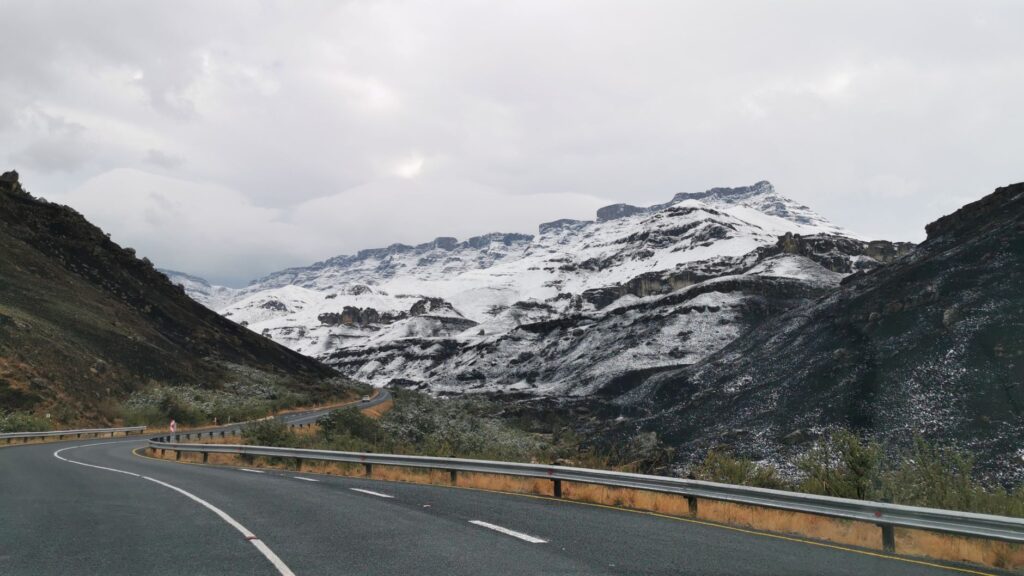
During winter —from June to August—, conditions change drastically: skies are usually clear and blue, but nighttime temperatures drop drastically below zero, and sudden snowfalls that block mountain passes and completely alter terrain visibility are not uncommon. In this scenario, the KwaZulu-Natal Mountain Rescue team emphasizes the obligation to register planned itineraries at park offices before departing and to carry two-way satellite communication devices.
Hypothermia is a latent risk even in mild months if a hailstorm and gusty wind surprise the group without proper waterproof clothing. The three-layer system —breathable, thermal, and windproof waterproof— is non-negotiable, as is the use of high-protection gloves and thermal beanies to prevent rapid body heat loss on ridges whipped by southern winds.
Cultural Immersion with Basotho Communities
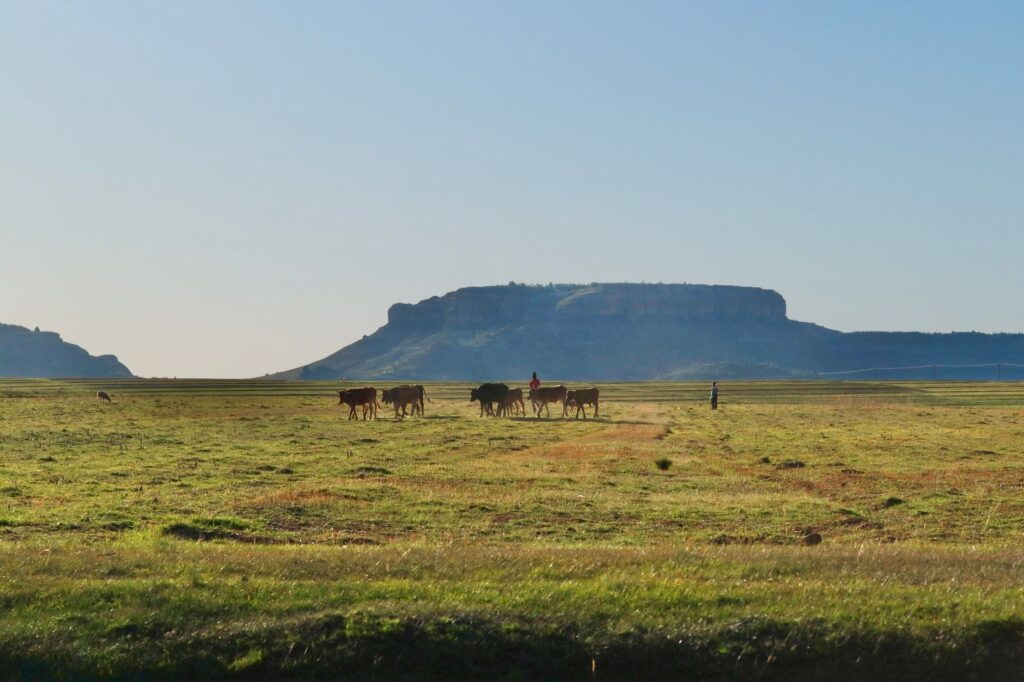
The southern border of the high plateau places the trekker in the territory of Lesotho, a country entirely landlocked within South Africa and characterized by its mountainous geography. At these extreme altitudes, Basotho herders tend their flocks of sheep and goats dressed in traditional colorful woolen blankets and waterproof ponchos, braving a merciless climate for entire months in temporary stone shelters known as *maloti*.
Interacting with these communities adds a fascinating human layer to the traverse. Despite language barriers, a respectful greeting and the exchange of basic provisions or tobacco open the door to genuine and silent hospitality. These encounters provide insight into the harshness of rural life on the roof of southern Africa, where a pastoral subsistence economy faces the challenges of climate change and seasonal migration to South African mines.
Respectful hikers must avoid intrusive photography and remember that the mountain is the permanent home of these families, not a mere amusement park for adventure tourism. Hiring local porters and guides from valley communities not only stimulates the regional economy but provides encyclopedic knowledge of the terrain, hidden water sources, and safe shelters in the event of weather emergencies.
Practical guide
How to get there: The main access point for the northern Drakensberg sector is Royal Natal National Park, located about a four-hour drive from Johannesburg or Durban. Renting an all-terrain vehicle or SUV is recommended, as the final stretches toward certain lodges and trailheads are unpaved dirt tracks.
Best time to visit: April to May (southern autumn) offers stable conditions, clear skies, and pleasant hiking temperatures. June to August (winter) provides dry days but extreme nighttime cold and snow potential. November to February (summer) brings warm temperatures dominated by frequent afternoon thunderstorms.
Permits and fees: Overnight stays on the high plateau require trekking permits processed at Ezemvelo KZN Wildlife offices at park entrances. Fees vary by expedition duration and a per-person nightly conservation fee is charged for trail upkeep and waste management.
Mandatory equipment: 60-70 liter technical backpack, sleeping bag with a -10°C comfort limit, high-density sleeping pad, four-season tent (if not using caves), gas stove with adapter, filtration or chemical water purifier, advanced first aid kit, satellite communication device, and layered technical clothing featuring a high-end waterproof membrane.
Health and safety precautions: No special vaccinations are required for the mountain zone, though comprehensive international travel insurance covering high-altitude helicopter rescue and emergency medical evacuation is essential.
Epilogue on the Windy Ridge
When the final rays of the sun fade over the immensity of the escarpment, dyeing the basalt walls a deep and silent copper-red, the traveler grasps the true magnitude of this southern frontier. The Drakensberg promises neither easy trails nor artificial comforts, but an intimate communion with primal geology and human resilience. Descending toward the green valleys, with the echo of distant storms resonating in memory and red dust clinging to boots, remains the indelible certainty of having walked the spine of an ancient world, where earth and sky establish an eternal dialogue that challenges and transforms those who dare to listen.