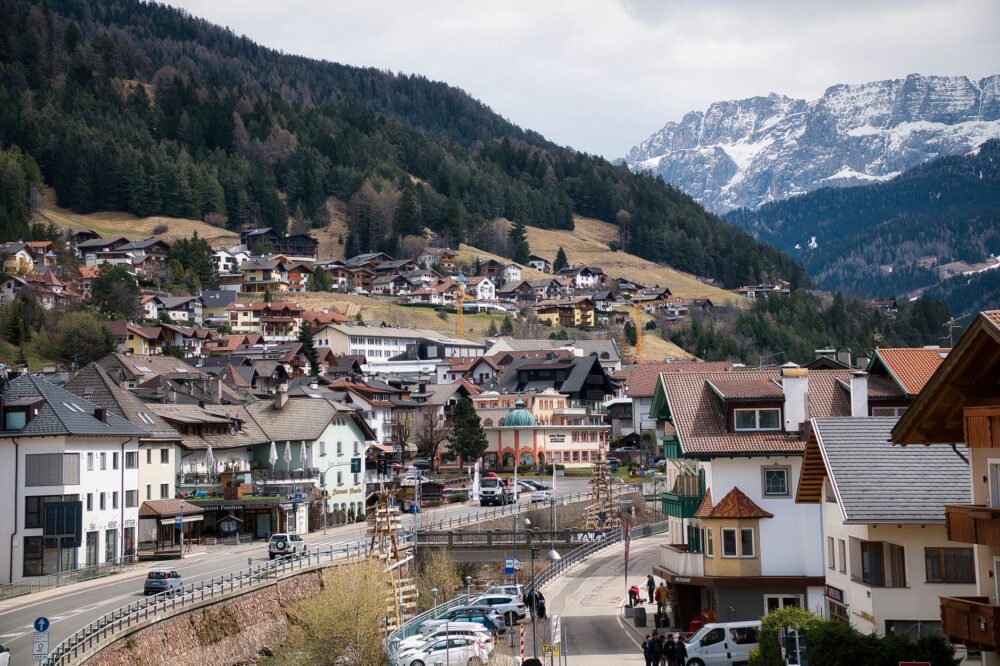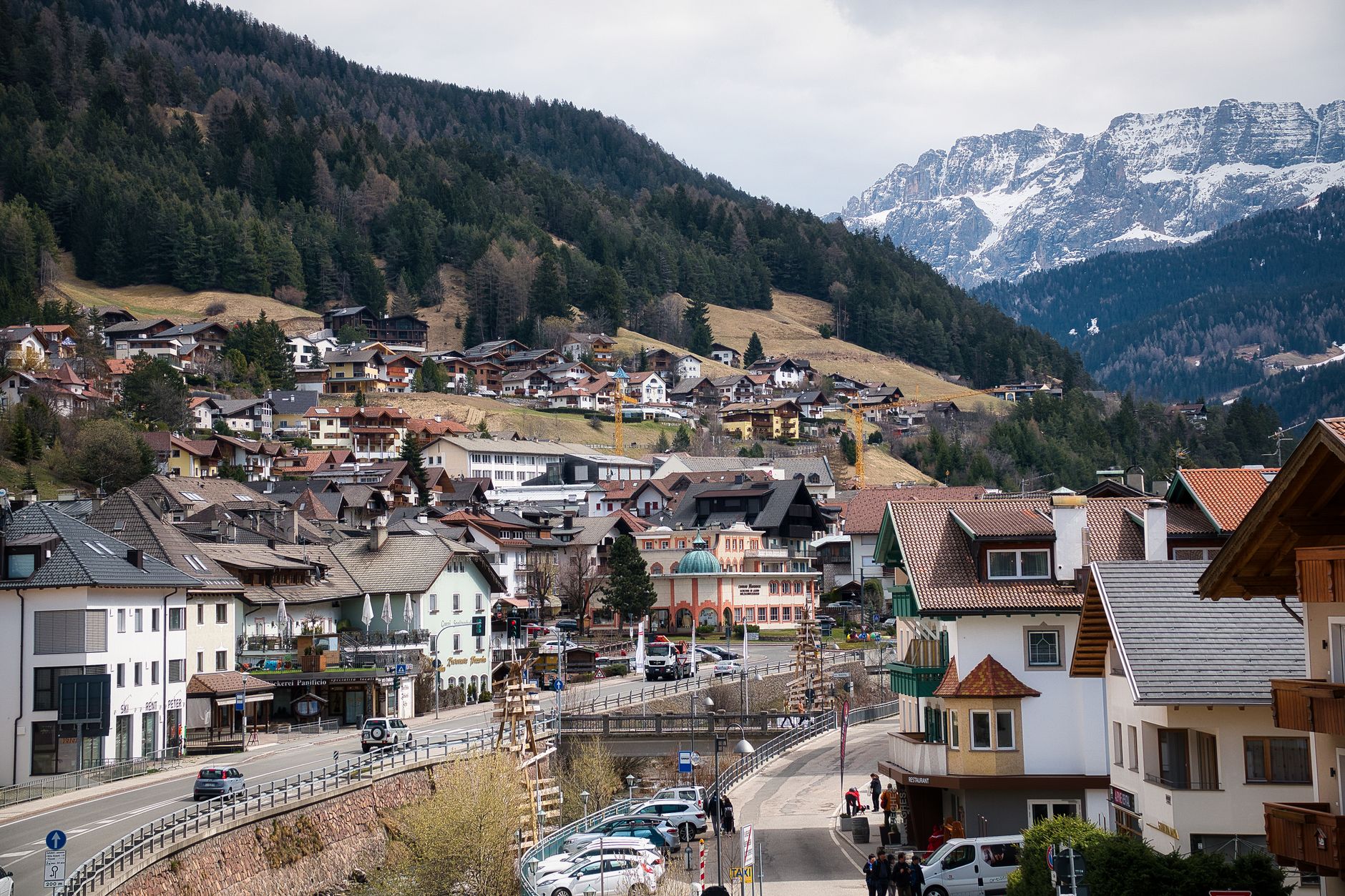

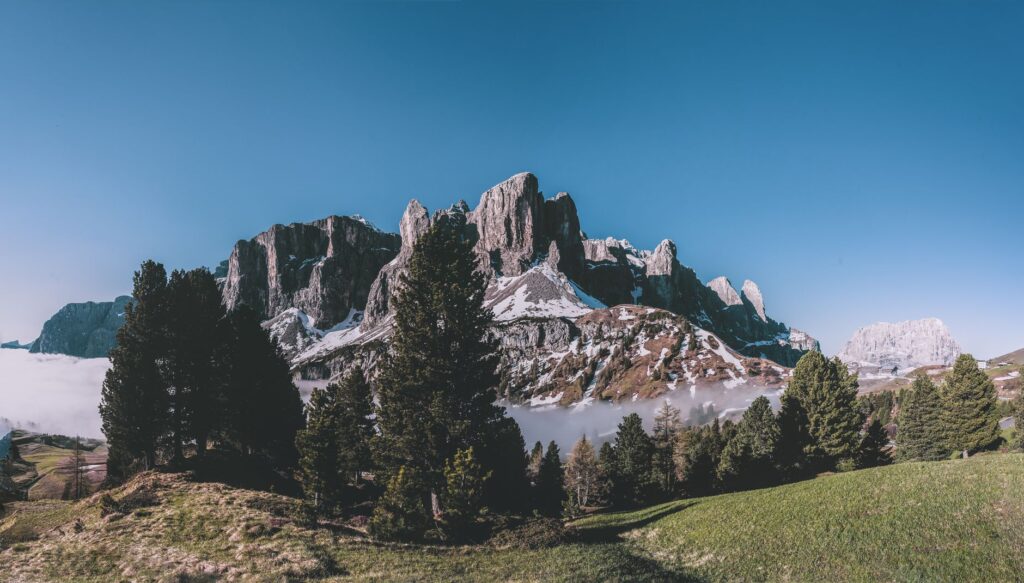
In the heart of the Dolomites, where vertical limestone walls slice the sky with relentless geometry, time is measured not in hours, but in layers of linden and spruce. Val Gardena, an alpine valley in the autonomous province of Bolzano in northern Italy, is home to one of the densest and most sophisticated woodcarving traditions in Europe. Here, the freezing air descending from the peaks contrasts with the dense, warm atmosphere of the workshops, where the scent of fresh wood shavings and beeswax permeates every corner. This is not mere folkloric craftsmanship destined for seasonal tourist consumption, but a living cultural system that has evolved since the 17th century, when long, isolated winters compelled farmers to turn timber into devotional imagery and articulated wooden toys.
This report delves into the backstage of this intangible heritage, examining how the heirs of a carving lineage engage today with contemporary design, robotics, and the rigorous demands of the global art market. Through interviews with master sculptors and young creators trained at the prestigious art school in Ortisei, this journey seeks to answer a fundamental question: how does a precise manual discipline survive in an era dominated by digital reproduction and plastic immediacy?
The Geography of Isolation and the Birth of a Lineage
To comprehend the magnitude of carving in Val Gardena, one must decipher its geography. For centuries, this Ladin valley—whose inhabitants speak a unique Rhaeto-Romance language—remained virtually cut off from the rest of the world during the snowy months. Shepherds and farmers found an inexhaustible pantry of raw material in the surrounding forests of Swiss pine, linden, and maple. The earliest documented pieces were small religious figures intended for household altars and mountain churches.
Over generations, this intuitive talent transformed into a highly specialized guild structure. Families began to organize themselves by technical divisions: some specialized in rough-hewing, others in facial features and garment folds, and the most seasoned veterans in finishing and polychromy. This system of family workshops allowed technical knowledge to be passed down from parent to child without written manuals, entrusting the survival of the art to muscle memory and direct observation of the master.
The Raw Material: The Intimate Dialogue Between Gouge and Grain
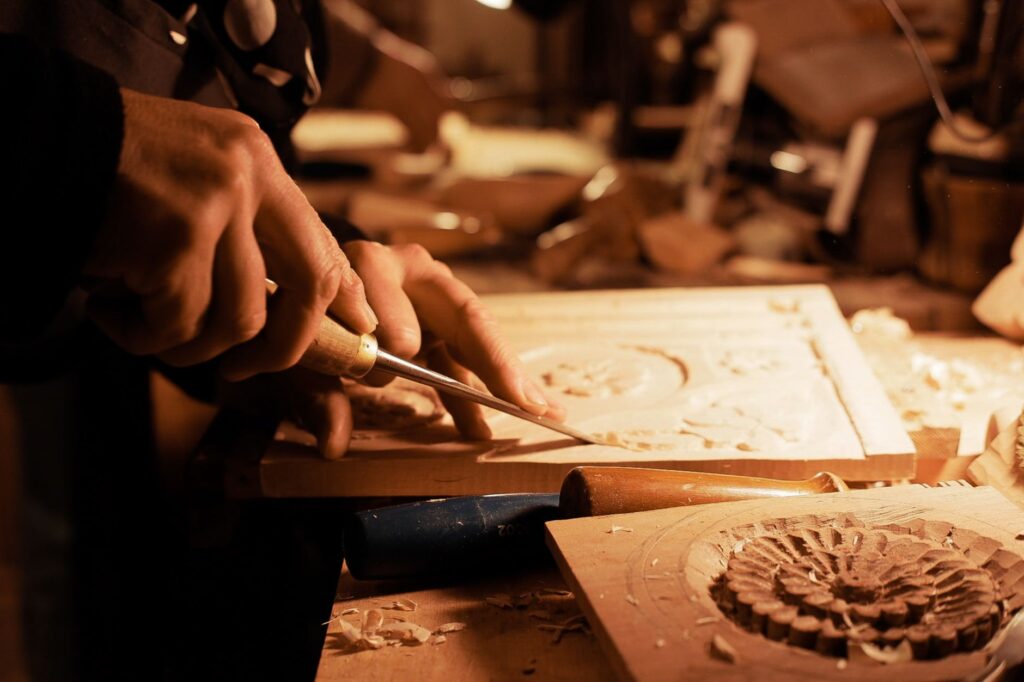
Entering a traditional workshop in locations such as Ortisei, Santa Cristina, or Selva di Val Gardena demands silence and respect for the rhythm of the material. Wood is not an inert support; it is an organism that respects its own internal tensions. Master sculptors personally select the logs, seeking specimens of linden (*Tilia cordata*) that have grown slowly on north-facing slopes, where the cold slows growth and endows the grain with uniform density in all directions.
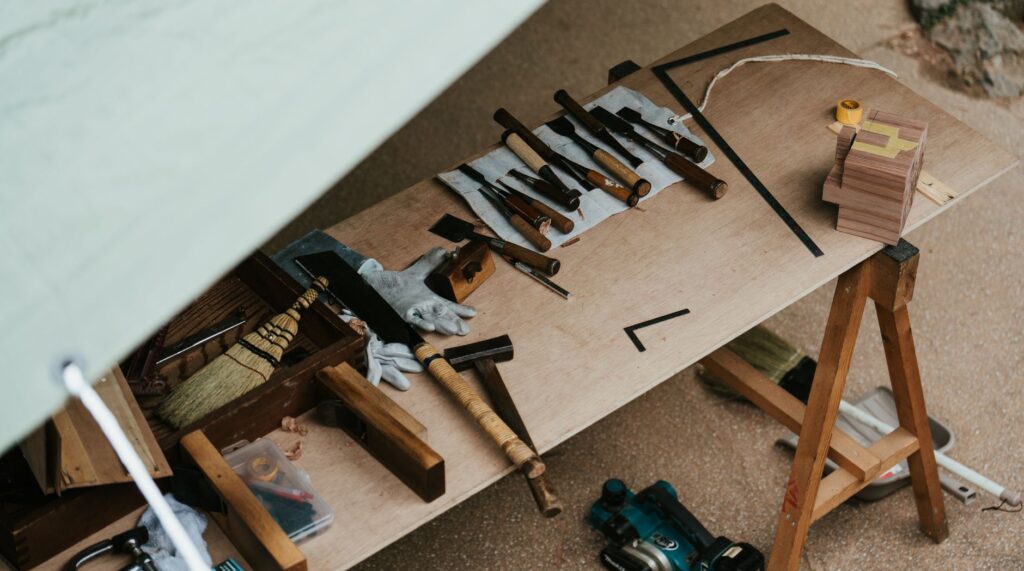
The workbench is the altar where this ritual is performed. Dozens of gouges with capricious shapes line its surface: flat, semicircular, V-shaped, and angular blades, each designed to extract a specific shaving without tearing the cellular structure of the wood. The carver does not impose their will upon the block; rather, they engage in a silent negotiation where the grain dictates the boundaries of form. A miscalculation of millimeters, a hammer blow delivered with too much enthusiasm, can fracture weeks of meticulous labor.
From Sacred Statuary to Contemporary Design
During the 19th and much of the 20th centuries, Val Gardena’s production shifted massively toward the export of sacred art to parishes worldwide. The catalogues of large workshops offered everything from small ten-centimeter Madonnas to imposing life-sized crucifixes. However, the turn of the millennium brought a profound identity crisis and generational handover that forced local artists to rethink their artistic language.
Today, the landscape is radically hybrid. Alongside workshops that continue to masterfully reproduce classic forms, contemporary art studios thrive where wood sculpture engages with conceptual art and industrial design. These young creators use numerical control pantographs for heavy roughing, yet reserve final sanding, epidermal textures, and emotional expressiveness—which no machine can replicate—for the human hand.
The Role of the Art School and the Transmission of Knowledge
None of these transformations would have been possible without the valley’s educational infrastructure. The *Scuola d’Arte* in Ortisei, founded in the late 19th century, remains the epicenter where the elite alpine sculptors are trained. Here, students learn not only artistic anatomy and life drawing, but also natural pigment chemistry, art history, and workshop management.
blockquote class=»editorial-quote»>«Wood teaches us the patience we have lost in the digital world; every knot is a resistance that forces us to think before we strike.»
Instructors emphasize that technique without conceptual rigor is merely decorative craftsmanship. Therefore, students must master both traditional gouge techniques and three-dimensional digital design software, understanding that technology is an empowering tool rather than a substitute for tactile sensitivity.
Color and Soul: The Art of Polychromy
A Val Gardena sculpture is rarely presented in its purely raw state if it belongs to the grand devotional or decorative tradition. The process of polychromy is an autonomous art requiring advanced knowledge of chemistry and pigmentation. Traditionally, tempera colors mixed with egg yolk and fish glue were applied over a thin layer of gesso and size.
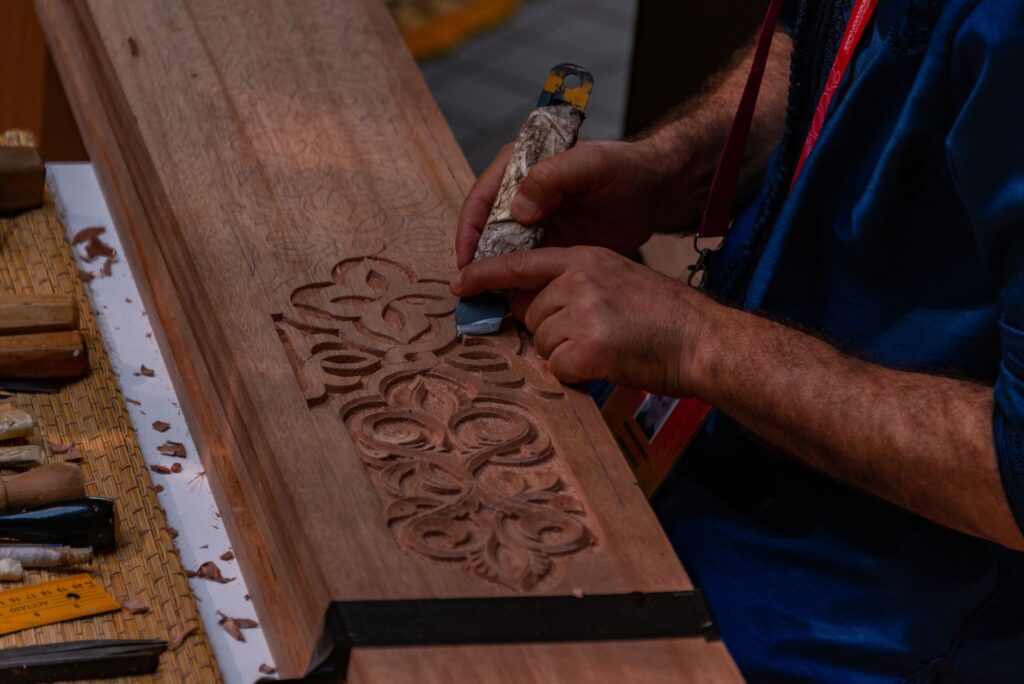
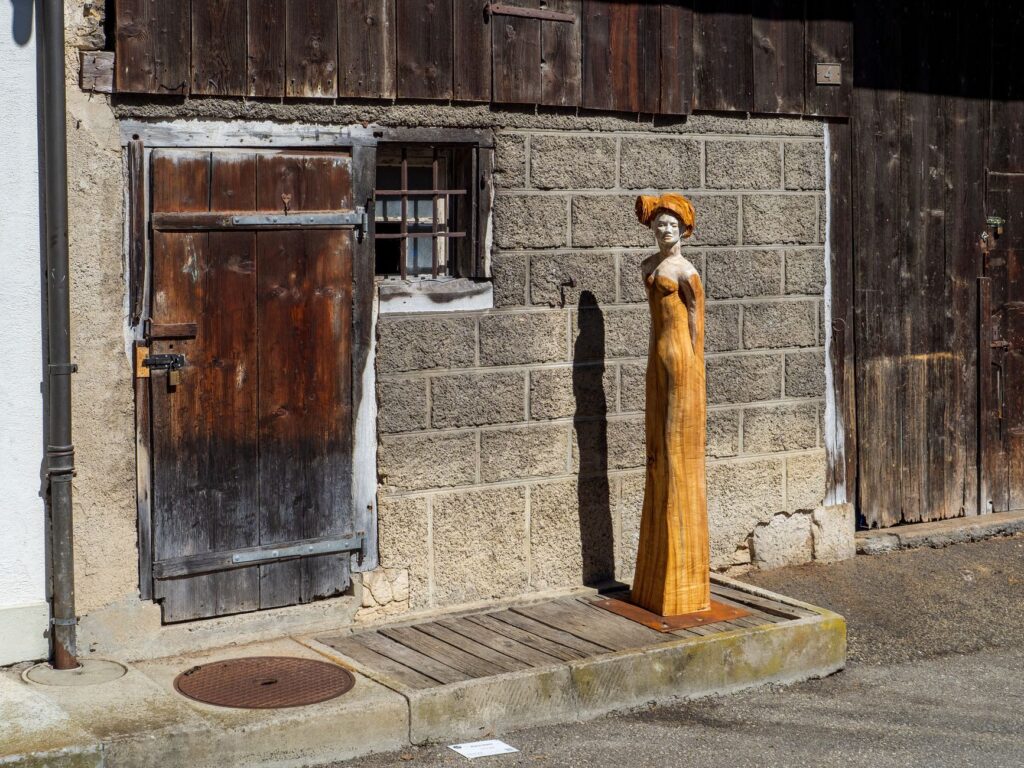
Master polychromers apply overlapping translucent layers to endow the figures’ skin with realistic warmth, simulating blood circulation beneath the surface. In contemporary art pieces, by contrast, the use of color has evolved toward radical monochromy, hand-applied gold leaf, or surface charring to create carbonized textures that evoke the relentless passage of time and fire.
The Impact of Cultural Tourism and Workshop Economy
Travelers arriving in Val Gardena today seek far more than ski slopes and summer hiking trails. A growing current of specialized visitors explores open studios during events such as the *Unika* fair, the annual showcase where local sculptors display their most ambitious works. This high-end cultural tourism sustains a local economy that might otherwise have succumbed to alpine real estate speculation.
blockquote class=»editorial-quote»>«Purchasing a piece from Val Gardena is not acquiring a souvenir; it is adopting a fragment of forest carved with the pulse of multiple generations.»
Workshops keep their doors open to the curious by appointment, turning the visit into an educational experience where travelers understand the real value of manual labor versus mass industrial standardization.
Practical guide
How to get there: The nearest airports with international connections are Innsbruck (Austria), located about 120 kilometers away, and Verona (Italy), roughly 200 kilometers away. From both, travelers can take a train to Chiusa/Klausen or Bolzano station, completing the journey via regular regional buses.
Best time to visit: The autumn months (September and October) offer a perfect respite without tourist crowds, featuring forests in full chromatic transformation. Spring (May and June) also provides an opportunity to experience the workshops in a quiet working atmosphere before the winter bustle.
Must-visit workshop trail: It is recommended to explore the center of Ortisei, where historic studios are concentrated. Booking visits in advance through the local tourist office is advisable to access private workspaces.
Recommended accommodation: The valley features an excellent network of family-run lodgings (*garnì* and alpine design hotels) integrated into energy sustainability and bioclimatic architecture criteria.
Reading and museums: The Gherdëina Museum in Ortisei offers an exceptional collection of antique carved toys, local fossils, and historical sculptures that contextualize the evolution of the craft.
Workshop etiquette: When entering an active workshop, keep mobile phones on silent, do not touch tools without explicit permission, and avoid interrupting the master while precision cutting is underway.
Epilogue: The Indelible Imprint in Wood
At dusk, when the Dolomite masses are tinged with that intense pink known as *enrosadira*, Val Gardena’s workshops slowly extinguish the lights on their workbenches. The wood shavings swept from the floor are collected to be used as fuel in household stoves, closing a perfect cycle of resource utilization and respect for nature.
In every completed sculpture—whether a modern geometric abstraction or a traditional serene Madonna—beats the certainty that human beings still require physical contact with matter to explain themselves. In this elevated corner of northern Italy, the gouge and the grain continue to write, stroke by stroke, one of the most beautiful and resilient chronicles of human patience.