
The Geometry Beneath the Pavement of the Eixample
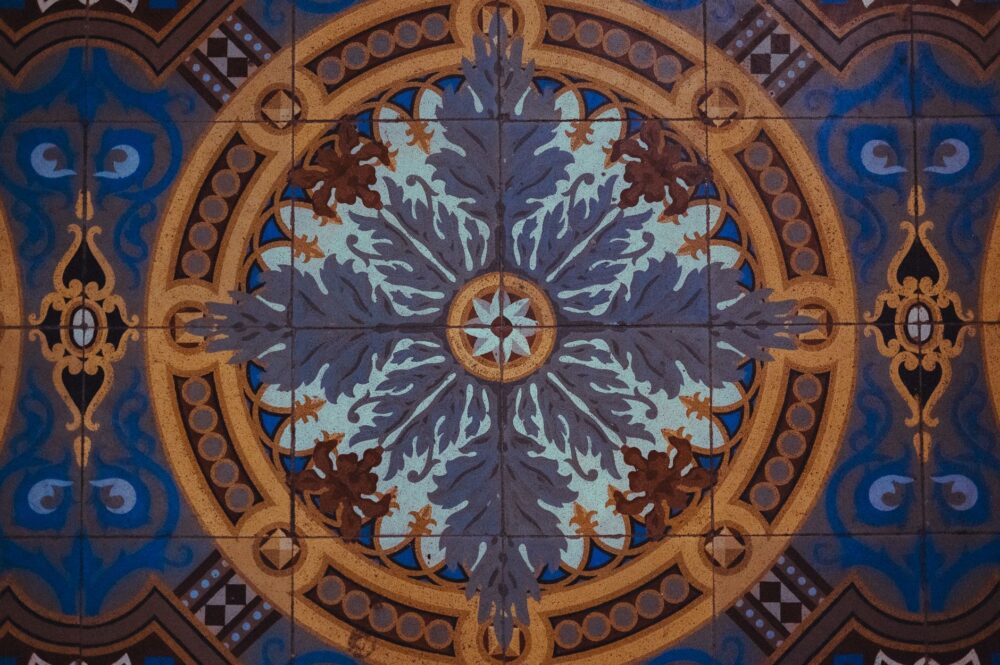
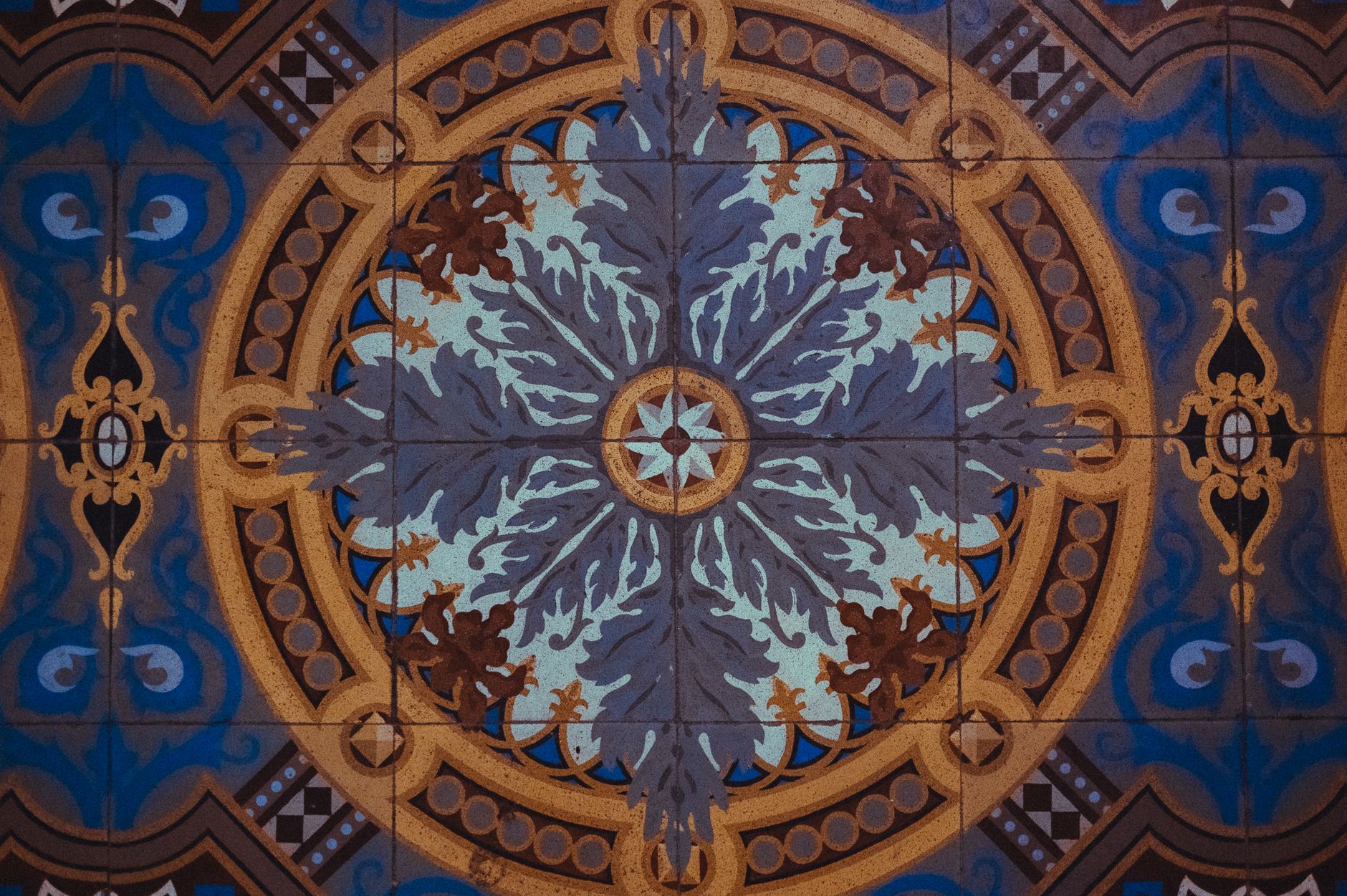
Barcelona conceals beneath its roofs and thresholds a heritage that is rarely contemplated with the attention it deserves. It is not found in the towers of the Sagrada Familia nor in the friezes of the Palau de la Música, but rather at ground level. Hydraulic mosaic—that pigmented cement tile that paved the bourgeois dream of the Eixample in the late nineteenth century—continues to beat in discreet workshops where time seems to be measured by the forging of metal molds and patient outdoor drying. In an era dominated by large-format industrial porcelain and digitally imitated stoneware, stepping into the workshops that still manufacture these pieces one by one is an exercise in material and aesthetic resistance.
The history of this flooring is not that of a minor decorative whim, but the technical response to an urban urgency. With the expansion of Barcelona designed by Ildefons Cerdà, the city required a noble, durable, hygienic, and locally produced material that could replace expensive marble and wooden parquet in the humid main apartments. Drawing on the tradition of stone mosaic and improvements in the handling of Portland cement, Catalan industrialists perfected a mechanical and artisanal procedure that allowed for vibrant colors and symmetrical designs without high-temperature firing, lowering costs without losing plastic dignity.
The Architecture of the Press and the Mold
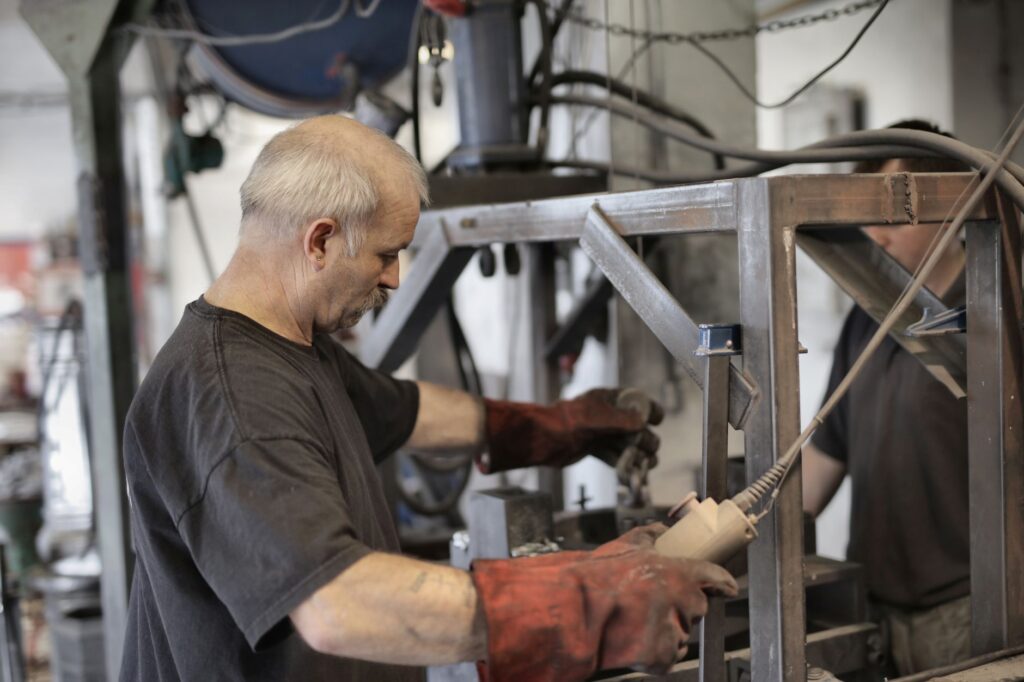
The heart of any hydraulic tile workshop is the manual or hydraulic press, a mass of cast iron that exerts tons of pressure on a brass mold known as ‘la llonga’ or dividing template. This is the key element of the process. Master artisans place the template over a metal tray and fill each compartment with a liquid mixture composed of white cement, fine-grained sand, marble dust, and imported mineral pigments, mainly metallic oxides that guarantee color permanence against wear and sunlight.
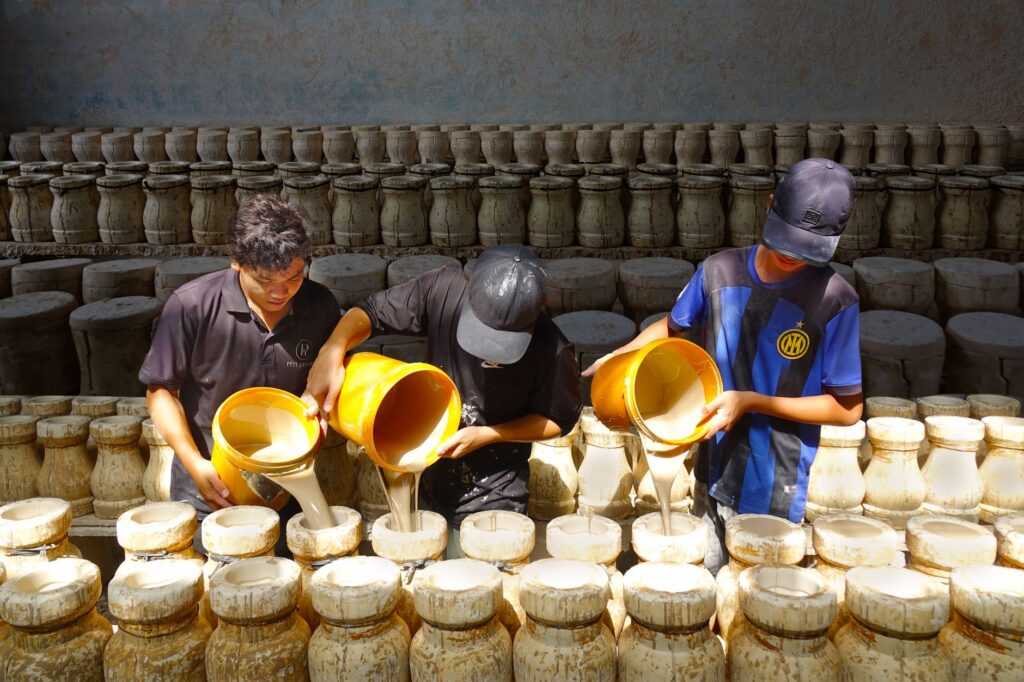
Each color is poured with a small pitcher featuring a fine spout, a task requiring nearly surgical precision and an unwavering pulse. The slightest distraction ruins the symmetry of the floral or geometric motif. Once the design is completed on the visible face, which is barely a few millimeters thick, the metal template is carefully removed, and the structural base is filled with a drier, coarser mixture of cement and sand, intended to give strength and thickness to the tile.
The hydraulic floor is not a mere coating; it is a precision cartography where the chemistry of oxides and the force of the press ally to defy time.
The Silent Chemistry of Curing
Following compression under pressures exceeding one hundred tons in modern presses—while more traditional workshops maintain human arm strength over iron levers—the newly formed tiles are demolded with extreme delicacy. At this point, the tile is extremely fragile. The curing process then begins, a phase where haste is strictly prohibited. The tiles are submerged in clean water tanks or kept in humid chambers for several days so the cement can complete its exothermic hydration reaction.
This bath is not a mere formality; it is the moment when the calcium silicate acquires its definitive hardness. Afterward, the pieces are moved to natural drying racks for at least a month. During this period, the tile loses residual water and stabilizes its internal stresses. It is an avant-la-lettre ecological process: by requiring no firing kilns fueled by gas or coal, the energy footprint of traditional hydraulic tile production is infinitely lower than that of contemporary industrial ceramics.
From Workshop to Modernist Catalog
The heyday of this technique coincided with the splendor of Catalan Modernism and Noucentisme. Architects of the stature of Lluís Domènech i Montaner, Josep Puig i Cadafalch, and Antoni Gaudí understood that flooring formed an integral part of spatial discourse. Gaudí, for example, designed for Casa Batlló and later for Passeig de Gràcia a famous hexagonal mosaic of marine tones and motifs that broke with the traditional orthogonality of rooms, forcing manufacturers to develop specific six-sided molds.
In the archives of Barcelona’s historic workshops, thousands of zinc molds are preserved, recording the aesthetic taste of a century. There are borders with Pompeian motifs, geometric carpets of Islamic inspiration, typically Secessionist floral compositions, and organic stylizations mimicking the movement of algae or chestnut leaves. These catalogs printed on kraft paper are today primary ethnographic documents, consulted both by restorers of cataloged estates and interior architects seeking to recover spatial authenticity in urban rehabilitation projects.
Generational Turnover and the Threat of the Substitute
However, the current landscape of Barcelona’s workshops is a constant balancing act on a tightrope. Mass tourism and gentrification have provoked a painful paradox: while requests to restore original hydraulic floors in boutique hotels and luxury homes multiply, local production suffers unfair competition from ceramic imitations manufactured in Southeast Asia and printed with digital technology.
These industrial copies imitate the worn appearance of the original, but completely lack its texture, its breathability, and its ability to regain brilliance through mechanical polishing. Faced with this offensive, the few workshops resisting in the metropolitan area of Barcelona have opted for radical specialization, close collaboration with avant-garde design studios, and origin certification to guarantee the buyer that every tile carries hours of real craftsmanship and raw materials with European traceability.
Restoration: Bringing the Marble Grain Back to Life
When a historic hydraulic floor is recovered, it is not replaced; it is polished and treated. This process, requiring as much mastery as its initial manufacturing, consists of removing surface layers of dirt, oxidized wax, and overlapping mortars using progressively finer grits, from industrial diamond to the natural shine obtained by friction. Local restorers insist that the most common mistake is applying synthetic resins or plastic varnishes that suffocate the material.
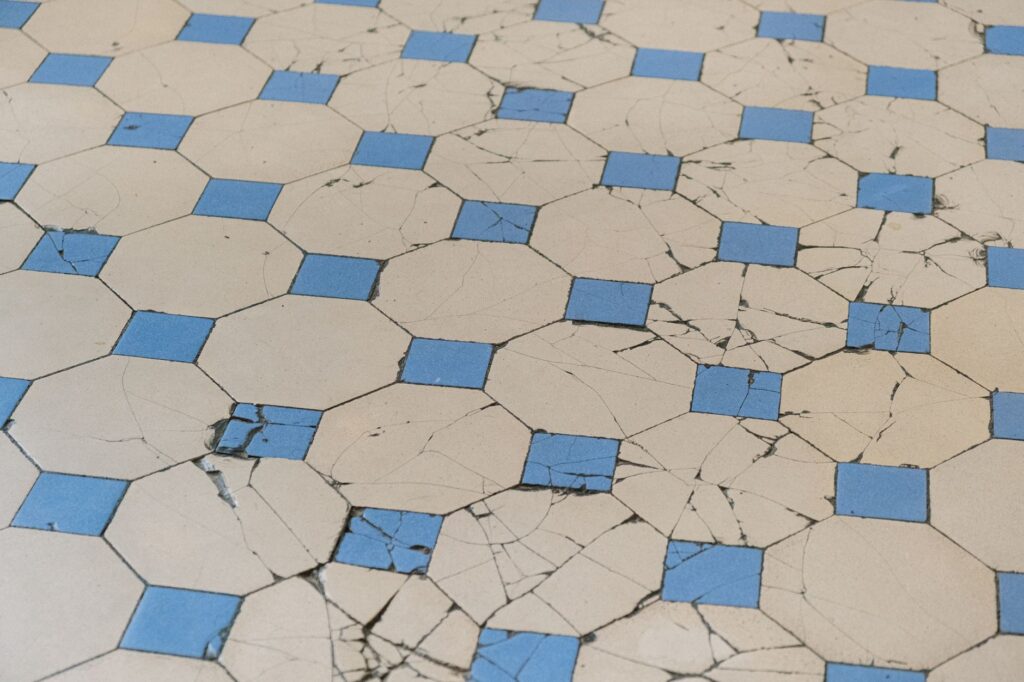
The hydraulic mosaic needs to breathe. By removing the damaged surface layer, the original colors, dulled by decades of footsteps and neglect, emerge with vibrant intensity. It is the moment when the marble dust contained in the top layer of the tile reflects light similarly to a Venetian terrazzo, revealing the small imperfections that betray its manual origin and turn every square meter into an unrepeatable work of art.
Practical guide
How to get there: Barcelona boasts an excellent public transport network. Most artisanal workshops and heritage recovery studios are located in districts such as the Eixample, Gràcia, and Poblenou, accessible via metro lines L1, L2, L3, and L4, as well as the TMB urban bus network.
When to visit: Active workshops and specialized studios are best visited between October and May, when artisanal activity is most intense and open-door days tied to events like Architecture Week or European Heritage Days are scheduled.
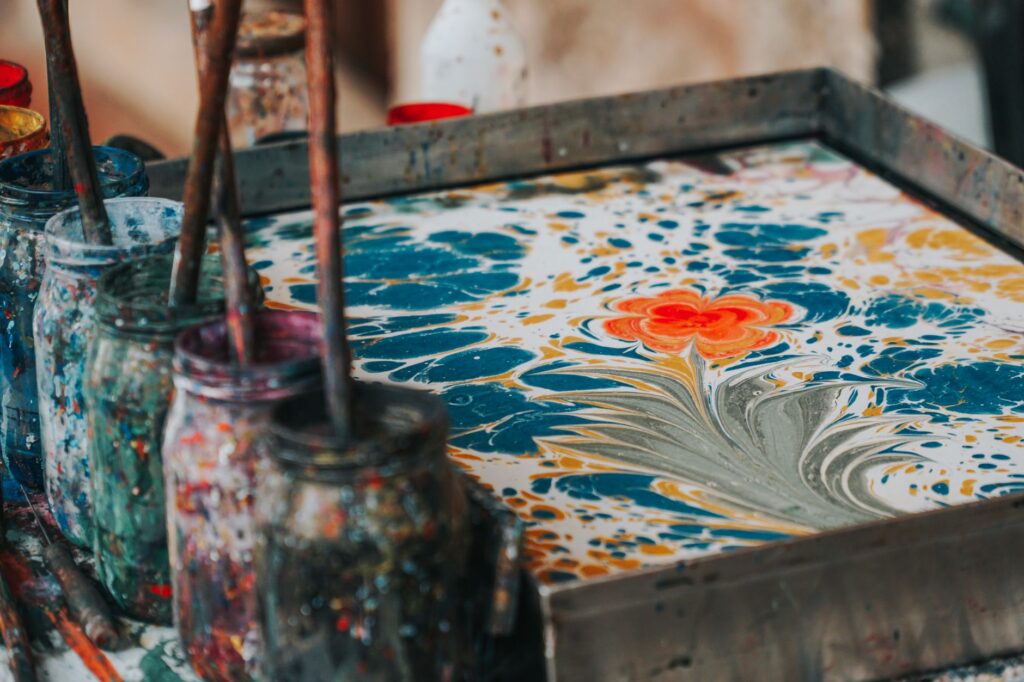
Reservations and visits: Visiting the workshops requires prior booking due to the demanding nature of production processes. These are not static museums, but functioning industrial spaces where the safety and concentration of master artisans are paramount.
Buying and conservation tips: If you acquire original pieces or new artisanal production, always request the curing certificate. For daily cleaning, avoid acidic detergents, bleach, and abrasive products; use neutral soaps and colorless natural waxes to maintain the porosity and flexibility of the cement.
The Last Whisper of the Brass Mold
At the back of the workshop, as afternoon light enters obliquely through whitewashed windows, the master artisan reviews the day’s last mold with a dry cloth. There is no rush anymore. The scent of damp marble dust and fresh cement pervades the air, a harsh and mineral aroma that has accompanied the Catalan bourgeoisie and working class for over a century. Far from the commercial noise of big-box stores, this corner of Barcelona proves that true modernity does not consist in discarding the past, but in knowing how to press it with enough force so that the floor we walk on retains, intact, the memory of our finest hands.