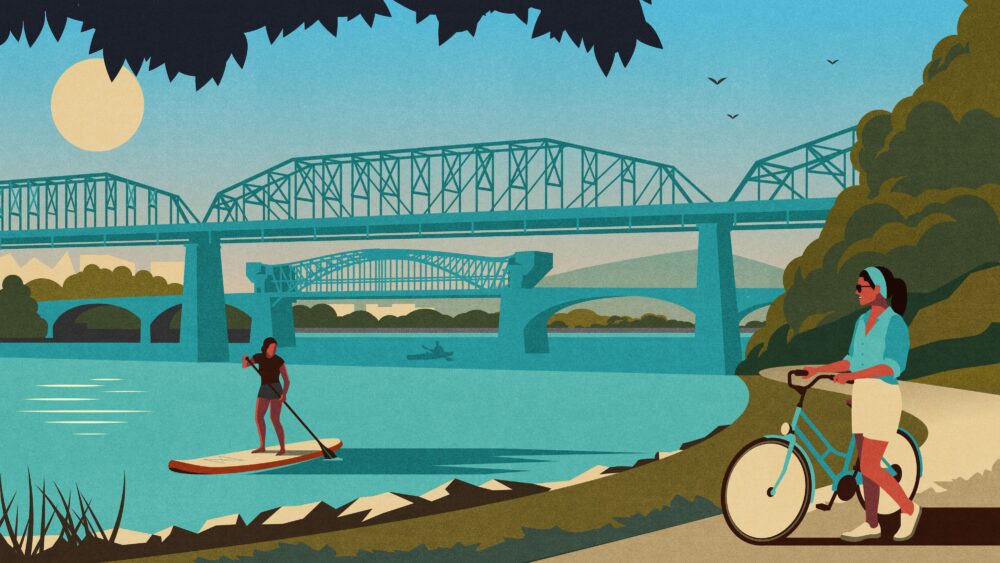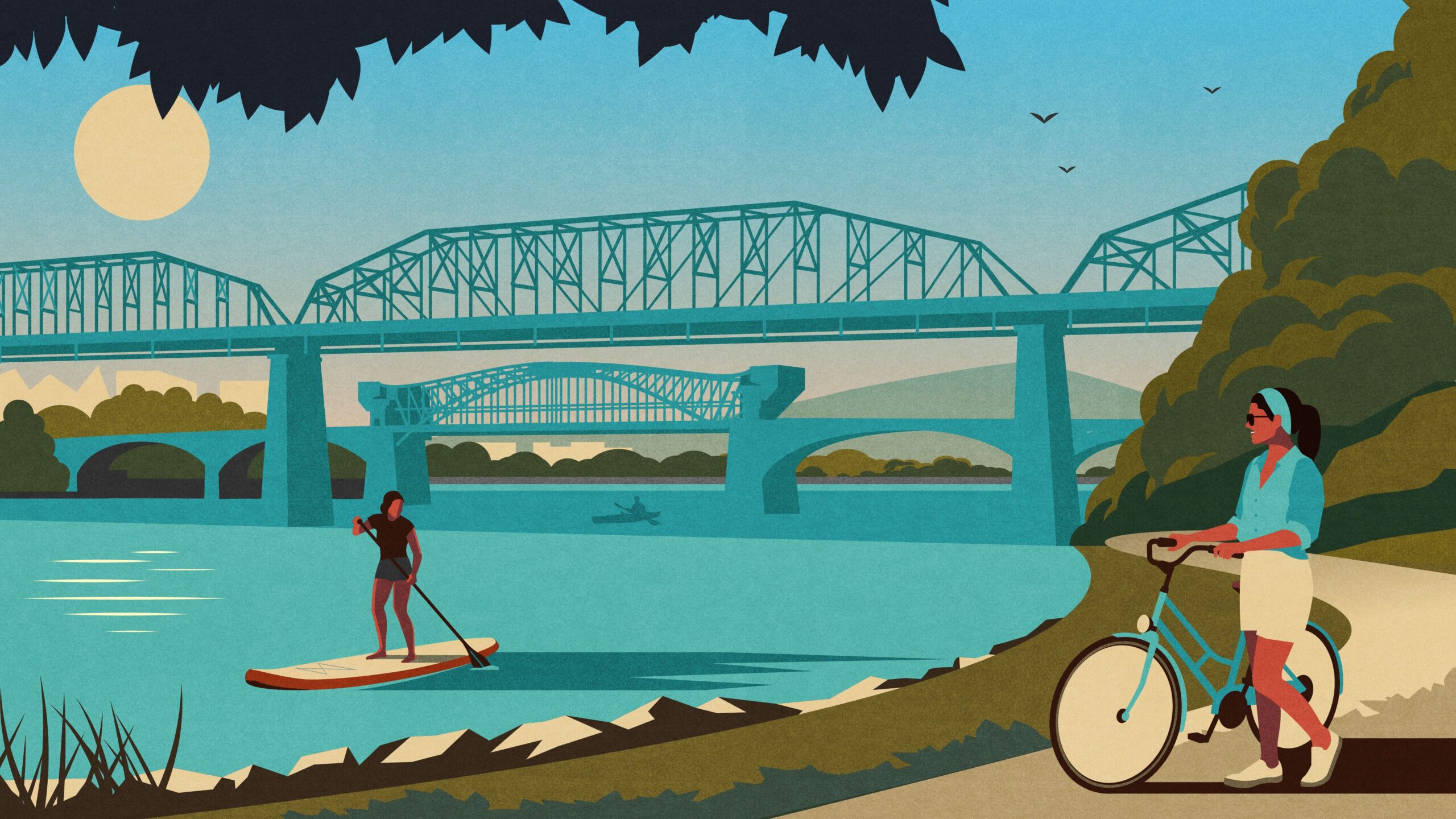

In the heart of the American Southeast, where the Tennessee River carves a majestic curve flanked by the rugged ridges of the Appalachians, lies a territory that defies conventional urban boundaries. Chattanooga, a mid-sized city in Tennessee, has entered modern history not for its industrial past of steel and soot, but for an unprecedented achievement on the continent: becoming officially America’s first National Park City. This international recognition, backed by the global urban park network, is far more than an honorary title; it is the culmination of ecological healing and civic vision that took over three decades to solidify.
To grasp the magnitude of this transformation, one must look back to the mid-20th century, when heavy industry and the region’s bowl-shaped topography turned Chattanooga into an atmospheric pollution sink. In 1969, a federal study formally cataloged it as the city with the dirtiest air in the entire United States. Longtime residents recall having to turn on car headlights at noon because of the thick soot blocking the sunlight. Steel foundries and chemical plants dumped industrial waste unchecked into the Tennessee River, a vital waterway considered biologically dead in several urban stretches. Today, walking along the riverfront or watching bald eagles glide over crystal-clear water, it is hard to believe this vibrant landscape was once on the brink of ecological collapse.
The Dawn of Civic Consciousness and Urban Renewal
The turning point did not stem from a federal mandate imposed from Washington, but from a deep collective dissatisfaction that sprouted from grassroots efforts in the late 1980s. Faced with economic decline caused by industrial flight and environmental decay, local leaders and residents decided Chattanooga’s future could no longer rest on industrial foundations. In 1984, under the guidance of local visionaries through a pioneering process known as Vision Chattanooga, over a thousand citizens gathered in community halls to debate the kind of city they wanted to leave to future generations. The result was a bold master plan prioritizing sustainability, waterfront reclamation, and the seamless integration of natural spaces into daily life.
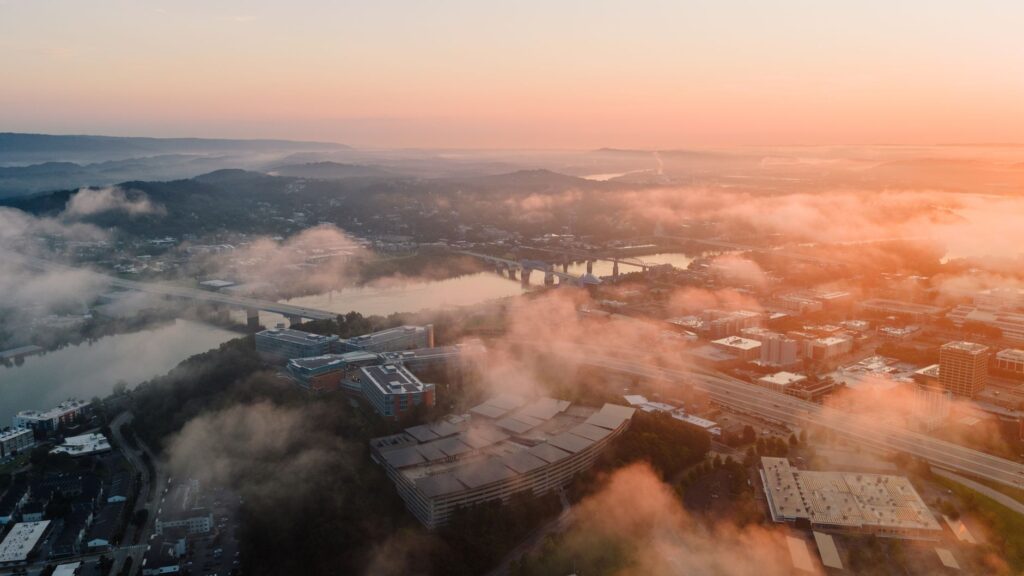
The first major victory in this green crusade was the construction of the Tennessee Aquarium, opened in 1992. Farther from being mere entertainment, the institution was designed as an economic and educational anchor to revitalize the blighted downtown core. Public parks, bike lanes, and pedestrian promenades quickly sprouted around it, reconnecting the urban fabric with the river. Abandoned industrial warehouses were repurposed into cultural venues, museums, and mixed-use housing. This urban development strategy demonstrated that environmental protection and economic prosperity were not mutually exclusive, but mutually dependent.
Redesigning Mobility: Innovation on Rails and Pavement
As the city reclaimed its natural surroundings, it became clear that the traditional car-centric transit model choked the community’s ecological aspirations. Chattanooga adopted a trailblazing approach to sustainable mobility that would serve as a blueprint for similar-sized cities. In the late nineties, the local transit authority introduced a complete fleet of zero-emission electric buses, becoming national pioneers in mass electric public transit adoption. Concurrently, city planners fostered a multimodal transportation network combining restored historic streetcars with an extensive grid of separated bike lanes.
The transformation of public space also meant challenging the tyranny of urban highways that fractured historic neighborhoods. Soft engineering projects and traffic calming returned streets to pedestrians, sharply reducing carbon emissions and improving public health. Integrating active mobility with the natural trail network descending from surrounding mountains created a continuous system where commuters can travel from the financial district to the foot of rocky cliffs without touching a motor vehicle.
The Wilderness Sanctuary at the Doorstep
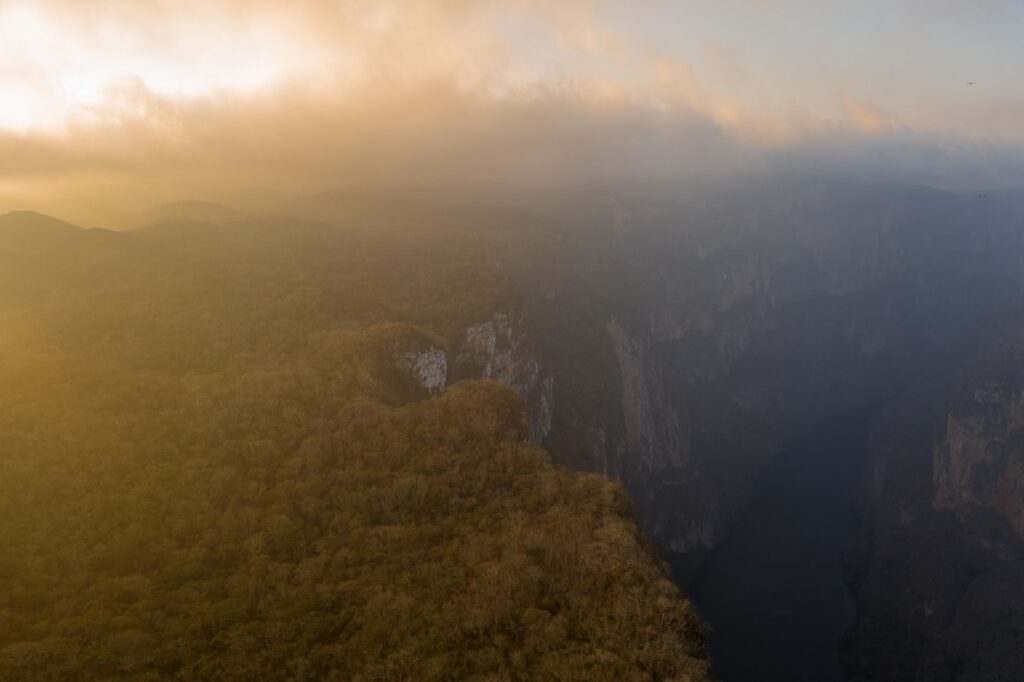
What sets Chattanooga apart from other cities with advanced green policies is the scale and immediacy of its wild natural surroundings. The foothills of the Appalachian Mountains cradle the valley, creating a green amphitheater where biodiversity thrives minutes from downtown. Iconic landmarks like Lookout Mountain, Signal Mountain, and the Tennessee River Gorge harbor complex ecosystems ranging from hardwood forests to dramatic sandstone geological formations that draw naturalists and rock climbers worldwide.
The National Park City designation formally recognizes this symbiotic link between urban setting and wilderness. It is not a park enclosed by institutional fences, but a philosophy of territorial stewardship where every green space, from large metropolitan parks to small rooftop pollinator gardens, forms part of an interconnected ecological corridor.
Nature here is not a decorative weekend amenity; it is the connective tissue defining the community’s daily identity and well-being.
This network allows native wildlife species, including deer, foxes, and numerous migratory birds, to roam freely near city margins.
Economic Sustainability and Regenerative Tourism
The success of Chattanooga’s ecological transition has redefined its economy, attracting a new generation of creative professionals, tech enterprises, and outdoor enthusiasts who value quality of life above all. Tourism has evolved from mass, seasonal models toward a regenerative approach, where visitors actively participate in trail conservation, river cleanup, and supporting local businesses. Small enterprises dedicated to ecotourism, gear rental, and farm-to-table dining have become the economic engine of surrounding neighborhoods.
This green economic boom, however, has brought complex challenges, particularly concerning gentrification and rising housing costs. Local authorities and community groups work tirelessly to implement affordable housing policies and ensure the benefits of urban renewal reach all historic communities, preventing long-term residents from being displaced by green real estate speculation.

Practical guide
Getting there: Chattanooga Metropolitan Airport (CHA) offers direct connections to major east coast hubs. For road travelers, the city sits at the strategic intersection of Interstates 24, 75, and 59, ensuring easy access from Atlanta, Nashville, and Birmingham.
When to go: Spring (April to June) and autumn (September to November) offer mild temperatures ideal for exploring natural trails without the intense heat and humidity of summer months.
Where to stay: The Bluff View Art District features historic charm and panoramic river views. For an immersive nature experience, numerous eco-lodges and upgraded campgrounds dot the slopes of Lookout Mountain.
Sustainable dining: Look for establishments committed to the local farm-to-table movement downtown, where chefs reinterpret traditional Southern cuisine using organic ingredients grown in surrounding Tennessee and Georgia valleys.
Outdoor ethics: The National Park City designation requires strict adherence to Leave No Trace principles. Littering, straying from marked trails in protected zones, and disturbing local wildlife are strictly prohibited.
Urban mobility: Utilize the electric city bus network and bike-share stations to navigate downtown and riverfront neighborhoods, minimizing your carbon footprint during your stay.

The Living Legacy of a Reclaimed Landscape
As evening falls, when the last rays of sunlight gild the Tennessee River and historic bridge lights begin to flicker, Chattanooga reveals the true scale of its transformation. In Coolidge Park, families stroll oblivious to the industrial past that once choked these same banks, while athletes squeeze in final daylight minutes along the river paths. This is not merely a city that cleaned its air and water; it is a living model proving environmental despair can be reversed through collective will, innovation, and political courage.
This metamorphosis is not an endpoint, but a dynamic, evolving process. Climate change and population growth continue testing urban ecosystem resilience, yet the community remains well-prepared to face them. Chattanooga stands today as a beacon of hope for metropolises worldwide caught at the crossroads of industrial development and ecological degradation, reminding us that the future of cities lies in fusing harmoniously with the nature that sustains them.
Source in English: Condé Nast Traveler – America’s First ‘National Park City’ is Chattanooga, Tennessee.