

The Autumn Sales Fever and Its Complex Ecological Backstory
The international e-commerce calendar has marked October 6 and 7, 2026, in red. With the arrival of the new autumn Amazon Prime Day, millions of consumers worldwide are bracing for a barrage of massive discounts designed to reactivate consumption ahead of the holiday season. However, behind the apparent simplicity of a click and the promise of twenty-four-hour delivery lies a colossal logistical machinery that mobilizes entire fleets of transport, millions of square meters of fulfillment centers, and an intense debate over the sustainability of this economic model. In a context where the climate crisis demands a rethinking of every link in the value chain, this event has become the ultimate thermometer for measuring how commercial immediacy and environmental urgency coexist.
The figures surrounding these events are staggering, but the true impact lies not merely in sales volume, but in the structural transformation they impose on the global retail fabric. While large corporations refine predictive algorithms to minimize transit time, local shops and proximity initiatives view with caution a phenomenon that alters traditional shopping habits. The overarching question facing the sector is whether the exponential growth of these macro-sales is compatible with the global decarbonization and emission reduction commitments demanded by the European Union and other international bodies for the coming decade.
Anatomy of a Logistical Macro-Operation: Between Efficiency and Carbon Footprint
To understand the magnitude of Amazon Prime Day, one must delve into the distribution centers operating around the clock during these two key days. These spaces, increasingly automated through artificial intelligence and advanced robotics, seek to reduce internal energy consumption and optimize storage. Nonetheless, the Achilles’ heel of global logistics remains the so-called last mile, the final journey a package takes from the distribution center to the buyer’s doorstep. In major cities, this continuous flow of delivery vans generates significant congestion and pollutant emissions, forcing companies to accelerate the transition toward electric fleets and alternative pickup points.

Route optimization through advanced software has saved millions of kilometers on European roads, yet the absolute volume of goods remains challenging. Transport companies face demand spikes that quadruple their usual operating capacity, often requiring the subcontracting of independent drivers and secondary fleets whose environmental standards are harder to audit. This tension between centralized efficiency and urban delivery dispersion raises fundamental questions about the real cost absorbed by the planet for consumer convenience.
The Packaging Dilemma: Material Innovation and the Zero-Waste Challenge
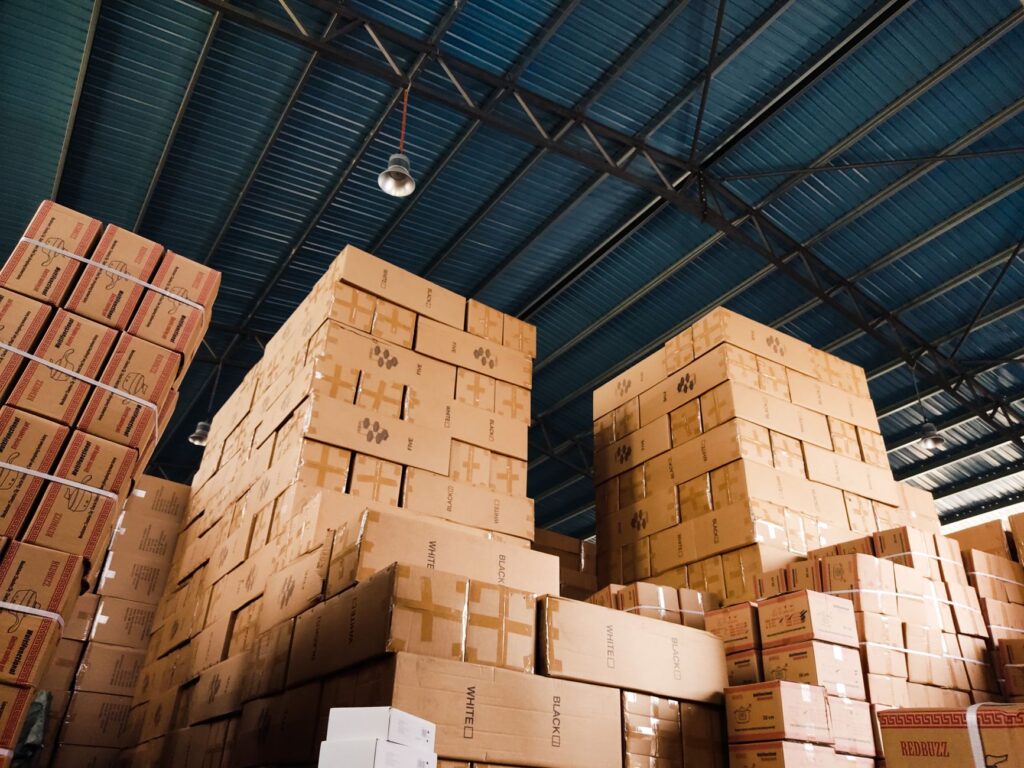
One of the most visible aspects of e-commerce’s environmental impact is the massive use of packaging materials. During events like the October Prime Day, the amount of cardboard, bubble wrap, and adhesive tape discarded skyrockets exponentially. Although substantial improvements have been implemented—such as replacing plastic with recycled paper and reducing box sizes to avoid shipping empty air—the total volume of waste remains a monumental challenge for municipal waste management systems.
Circular economy principles applied to packaging demand constant investment efforts that not all companies embrace at the same speed. Stricter European regulations are forcing tech giants to redesign their packaging to be 100% recyclable and biodegradable, but the sector is still in a transitional phase. Consumers, meanwhile, play a crucial role by demanding greater transparency regarding material origins and adopting more rigorous recycling practices upon receiving their purchases.

The Invisible Impact: Data Centers and Cloud Energy Consumption
Beyond delivery vans and cardboard boxes, Amazon Prime Day carries a colossal digital footprint that often goes unnoticed. Every search, every click, the constant updating of prices, and the management of millions of simultaneous transactions require unprecedented computing power. The data centers housing this infrastructure consume massive amounts of electricity, making thermal management and clean energy supply absolute priorities for tech operators.
Although companies like Amazon have signed multimillion-dollar agreements to source solar and wind energy, demand fluctuations during events of this scale occasionally force reliance on conventional fossil fuel-based power grids. This phenomenon proves that digital sustainability is not merely a matter of software design, but a physical and energy-related problem requiring massive investments in renewable sources and improved server efficiency.
Local Commerce Versus the Digital Giant: Strategies of Resistance and Value
While millions of users await the October discounts, small local businesses approach the event from a position of resistance and adaptation. Neighborhood shops and traditional markets cannot compete on price or delivery speed with a multinational, but they find their competitive advantage in personalized shopping experiences, expert advice, and a drastic reduction in the carbon footprint associated with long-distance freight transport.

The true luxury of the future will not be the immediacy of receiving a product at your doorstep, but the ability to consume locally, consciously, and with a recognizable human bond.
Merchant associations in various European capitals launch awareness campaigns during these exact dates to highlight the value of zero-kilometer commerce. These initiatives seek to remind consumers that every euro spent on the local fabric strengthens community identity and preserves urban life, standing against the standardization imposed by large global e-commerce platforms.
Toward Conscious Consumption: Decoding True Needs
The allure of massive discounts activates deep psychological triggers related to urgency and the fear of missing out. However, numerous consumer organizations and environmental collectives use Prime Day to promote campaigns reflecting on compulsive consumption. Buying electronic gadgets or clothing that are not genuinely needed, driven solely by a temporary markdown, generates an overproduction cycle feeding the global ecological crisis.
True sustainability begins before making the purchase, assessing whether the item is truly necessary and if its durability justifies the environmental impact of its manufacture and transport. Experts recommend drafting prior lists, investigating brand traceability, and prioritizing manufacturers who demonstrate a genuine commitment to emission reduction and labor welfare throughout their supply chain.
Practical guide
Planning participation in the Amazon Prime Day on October 6 and 7, 2026, requires strategy to avoid falling into impulsive consumption and to minimize the environmental impact stemming from unnecessary purchases.
- Prior needs list: Jot down only those items you have planned to buy in advance and verify whether you truly need to replace them at this time.
- Consolidated shipments: Use the grouped delivery options offered by platforms to receive all your orders in a single package and reduce the number of delivery trips.
- Research local alternatives: Before completing an online purchase, check if the same product or a similar alternative is available in shops in your neighborhood or city.
- Review return policies: Avoid buying multiple sizes or impulse products that must later be returned, as reverse logistics generates a very high carbon footprint.
- Responsible waste management: Ensure you properly separate cardboard, plastics, and other packaging materials to facilitate recycling in your municipal bins.
The Footprint We Leave: Final Reflections on the Future of Our Consumption Model
A calm analysis of events like the October 2026 Amazon Prime Day places us before an uncomfortable yet necessary mirror. Digital convenience and globalization’s immediacy have radically transformed our relationship with material goods, distancing us from a physical understanding of the resources we consume. Each package arriving at our doorstep is the final result of a lengthy chain involving raw material extraction, industrial assembly, digital energy consumption, and intensive transport.

The transition toward a truly sustainable future relies not only on the technological innovation of large corporations, but on recovering our critical capacity as citizens to decide what we value and what we are willing to sacrifice for the planet’s well-being.
As we approach October 6 and 7, the collective challenge consists of transitioning from consumerist euphoria toward a more mature balance, where technology serves to optimize resources rather than accelerate Earth’s exhaustion. The future of commerce will ultimately depend on our maturity to demand transparency, reward environmental responsibility, and understand that every purchasing decision is, in reality, a vote on the kind of world we wish to inhabit.
Source in EN: Condé Nast Traveler Spain