
The night sky on September 26, 2026, will host one of the most deeply rooted celestial spectacles in the human collective imagination and the agricultural cycle of humanity: the so-called Harvest Moon. This phenomenon, which astronomically coincides with the proximity of the autumnal equinox, is not merely a matter of poetic nomenclature, but a conjunction of orbital factors that alters our perception of nighttime hours in the northern hemisphere, offering unique illumination precisely when rural fields worldwide prepare for the year’s great gathering.
Understanding this event requires looking beyond simple aesthetic delight and delving into the celestial mechanics that govern our satellite. As summer yields to the first morning chills, the light of the full moon acquires an unusual prominence, extending the labor of past eras and gifting modern travelers and urban observers the opportunity to reconnect with the ancestral rhythms of nature during a key transitional moment for the planet.
The celestial mechanics behind the autumnal full moon
To understand why this specific full moon receives such attention, it is necessary to analyze the angle formed by the lunar orbit relative to the Earth’s horizon. For most of the year, the moon moves eastward at an average of about thirteen degrees daily, which causes its moonrise to be delayed by approximately fifty minutes each successive night.
However, in the vicinity of the autumn equinox, this orbital angle becomes very shallow relative to the horizon in the middle latitudes of the northern hemisphere. As a direct result of this celestial geometry, the delay in moonrise during the consecutive nights leading up to and following the full moon is remarkably reduced, amounting to just twenty or twenty-five minutes depending on the exact location of the observer.
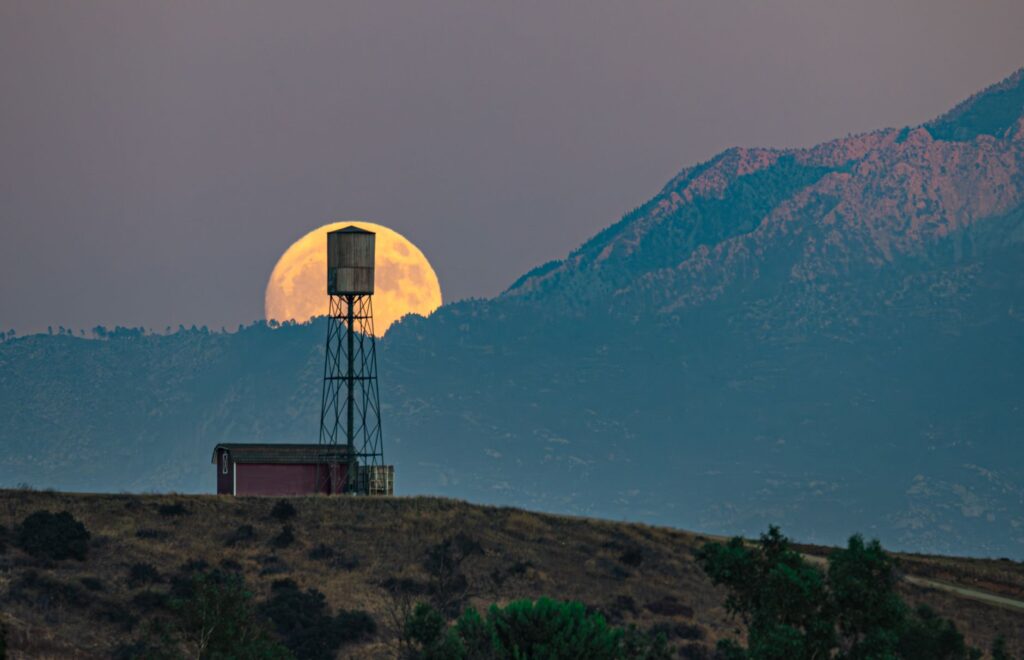
This physical peculiarity generates a sequence of several consecutive nights featuring prolonged twilight illumination and an extraordinarily early moonrise. For agricultural communities of the past, this meant having additional natural light right after dusk, a vital resource for completing the harvesting of grains and fruits before the first frosts threatened the crops.
The equinox and seasonal transition
The autumnal equinox, which this year officially marks the change of season just days before the full moon, represents the moment when the Sun crosses the plane of the celestial equator, equalizing the duration of day and night across virtually the entire globe. From that date onward, hours of darkness begin to surpass those of daylight in the northern hemisphere, inaugurating a period of introspection and landscape transformation.
The temporal coincidence between the equinox and the Harvest Moon amplifies the sensation of change. The Earth’s atmosphere at the end of September typically exhibits greater stability and lower presence of mist or suspended particles in certain mountainous or rural regions, favoring crisp visibility and a very characteristic chromatic tone in the satellite as it ascends over the horizon.
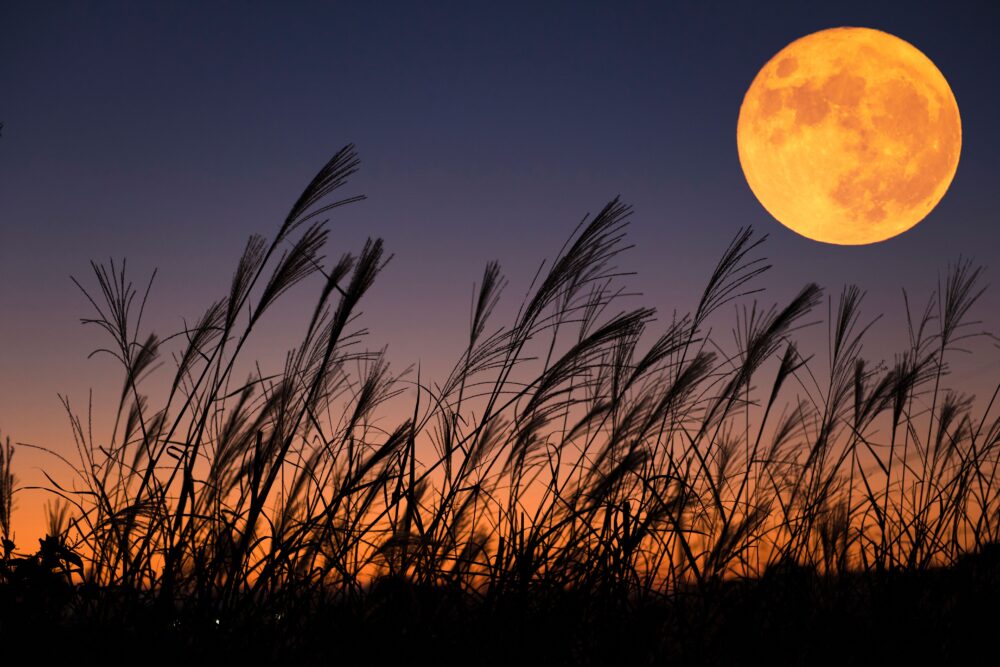
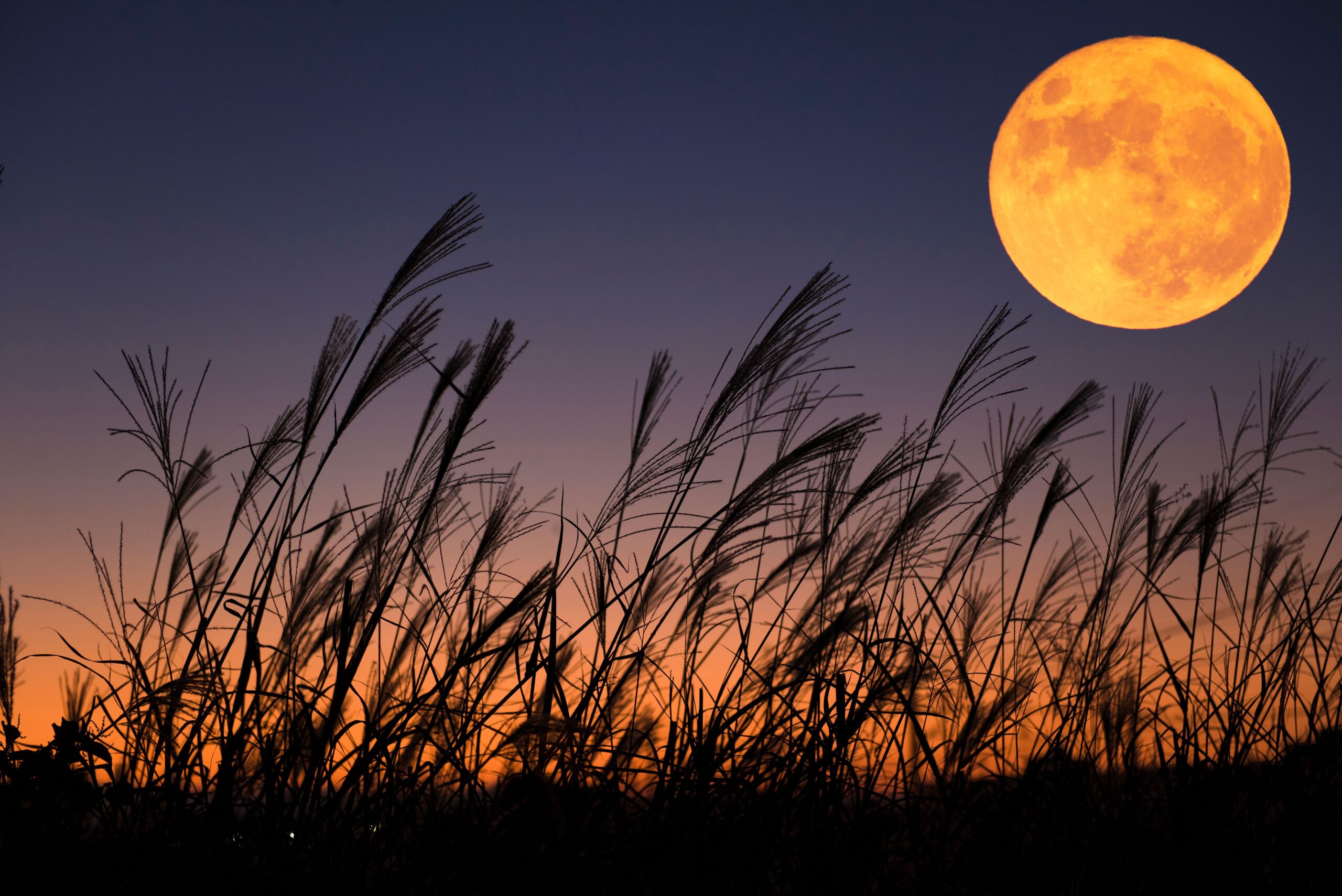
This optical phenomenon, which often endows the lunar disk with golden, amber, or even reddish hues when low in the sky, is due to the physical process of Rayleigh scattering. Light reflected by the moon must pass through a much thicker layer of atmosphere when the body is near the horizon line, scattering shorter wavelengths—blues and violets—and allowing warmer tones to pass through more easily.
Agricultural traditions and cultural heritage
Over the centuries, human societies have named the different full moons of the year according to the prevailing ecological or agricultural activities of each month. The term Harvest Moon, widely documented in the traditions of North American indigenous peoples and later adopted by European settlers, reflects a very close symbiotic relationship with the natural environment that modern industrialization has gradually diluted.
For generations, the arrival of this full moon was celebrated with rural fairs, thanksgiving festivals, and communal dances. In northern Europe and large rural areas of the Iberian Peninsula, the agricultural calendar depended on these celestial milestones to coordinate grape harvesting, apple picking, and grain storage.
The light of the September full moon is not merely a reminder of the passage of time, but the visible echo of an era when human survival depended millimetrically on the attentive reading of the skies.
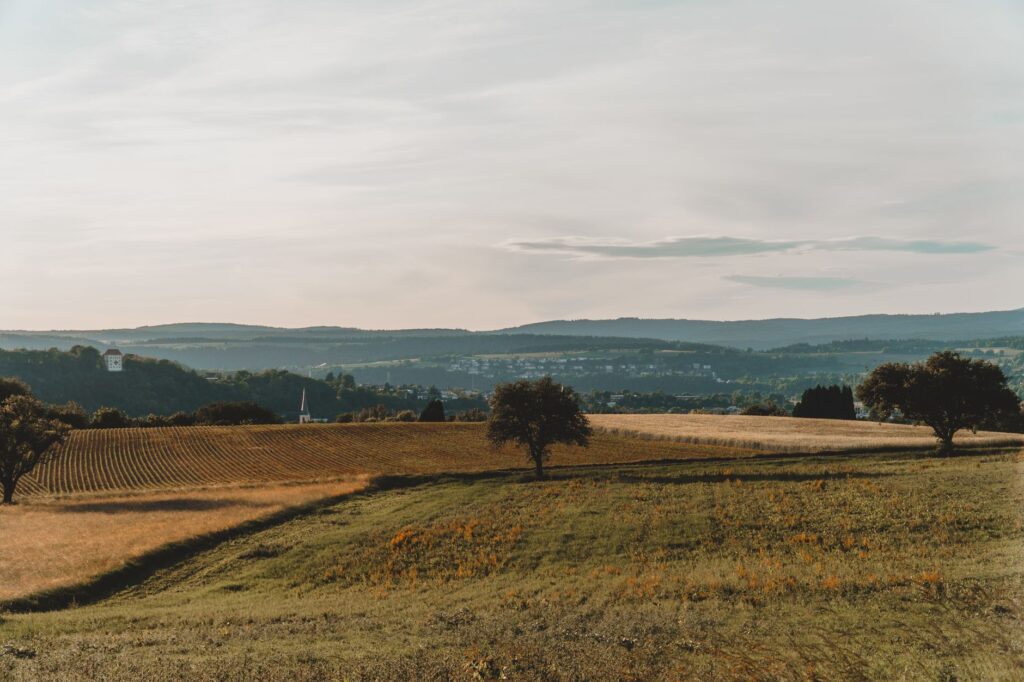
Today, although agricultural technology has completely transformed crop management, the cultural weight of this moon remains intact. It represents an annual invitation to slow down the pace and observe how the landscape changes its tones, replacing the intense greens of summer with the ochre, toasted, and copper palette characteristic of autumn.
The best natural enclaves for observation
Fully enjoying the phenomenon on September 26 requires choosing an appropriate location, preferably far from the light pollution of large cities. Protected natural areas, biosphere reserves, and elevated rural zones constitute the optimal settings to appreciate both the moonrise and the enveloping gloom of the autumnal landscape.
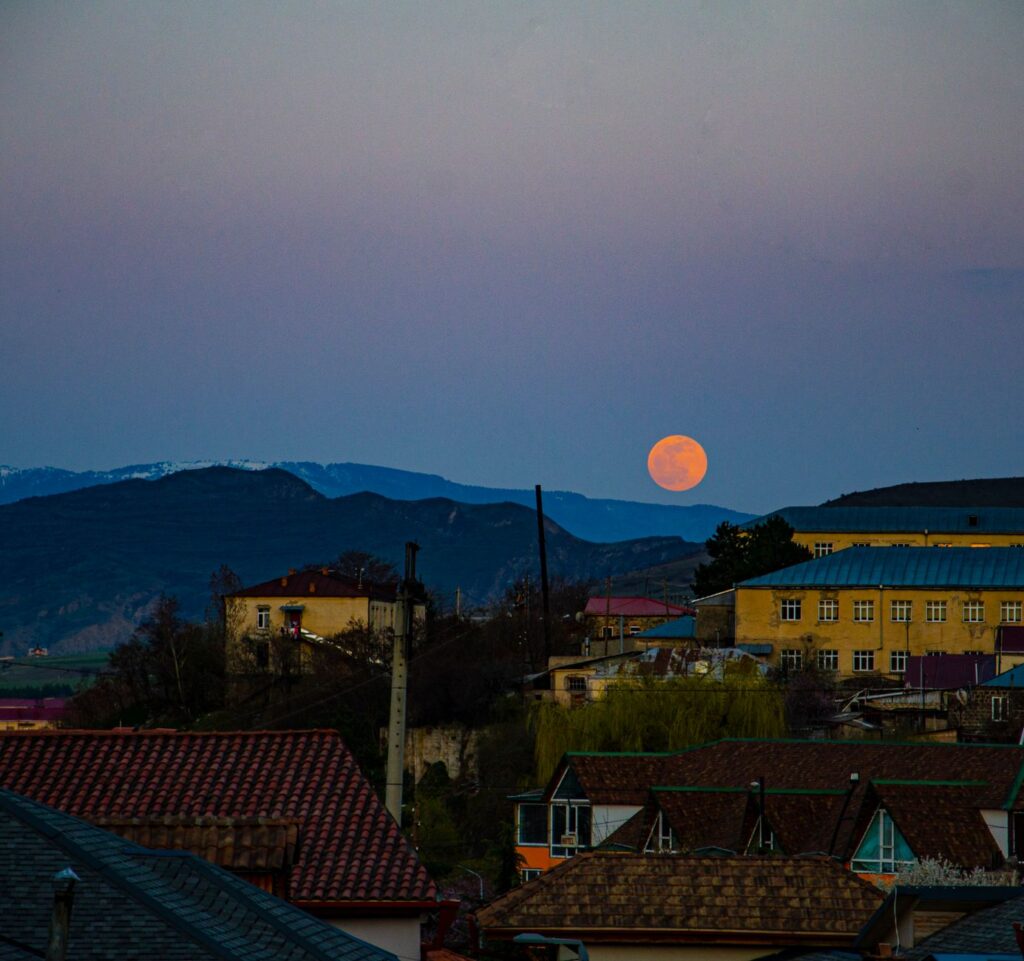
Destinations such as the mountain ranges of Spain, the Pyrenees, the volcanic landscapes of the island of La Palma—globally recognized for the quality of its night skies—or the vast cereal plains offer unobstructed horizons that allow viewers to contemplate the lunar ascent in all its magnitude.
- Always look for an eastern horizon completely clear of high mountains or dense buildings.
- Check local weather forecasts to ensure an atmosphere free of low cloud cover.
- Arrive at the observation point at least thirty minutes before the exact time of solar sunset.
- Allow your eyes to adapt to the darkness for at least twenty minutes without looking at bright screens.
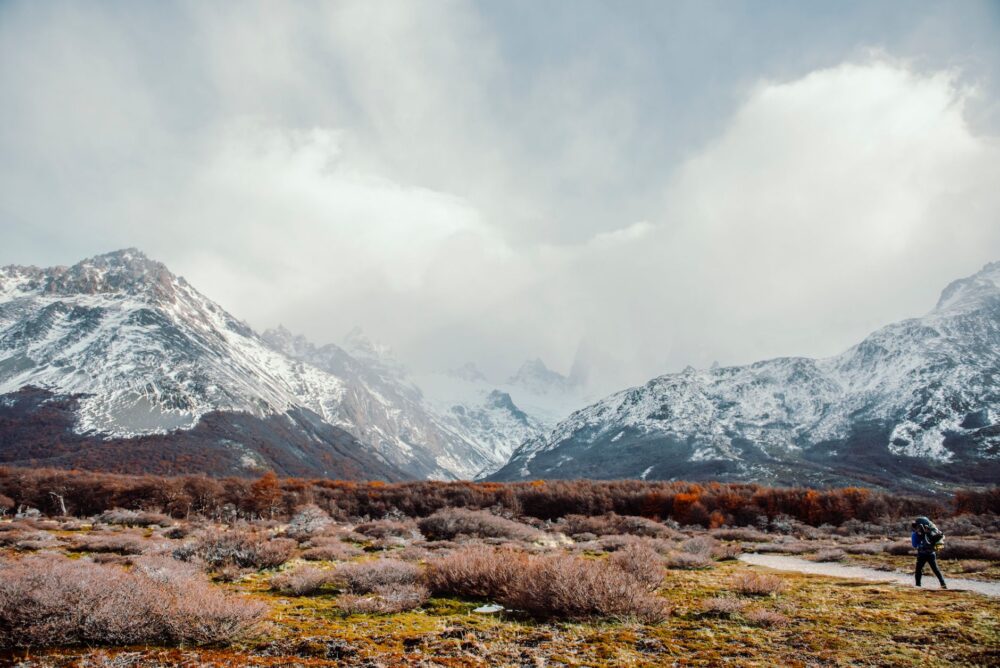
The choice of location also influences the sensory experience. While mountain peaks grant a sense of immensity and closeness to the celestial vault, river valleys and crop fields provide the historical and landscape context that gives meaning to the moon’s very name.
Astrological and landscape photography without artifice
Capturing the beauty of the Harvest Moon through photography requires a rigorous technical approach that respects the reality of the landscape. One of the most frequent errors among amateurs is using lenses with excessively long focal lengths without including terrestrial elements that provide scale and proportion to the photographic composition.

To achieve a balanced image, it is advisable to use cameras with full-frame or APS-C sensors mounted on a stable tripod, using moderate focal distances that allow the integration of the twilight-illuminated terrain alongside the lunar disk.
It is essential to remember that the moon is an extremely bright body illuminated directly by the sun. For this reason, attempting to photograph it at the same time as the surrounding landscape after sunset can generate a very difficult light contrast to manage without a good understanding of the sensor’s dynamic range or without resorting to precise schedule planning techniques.
Practical guide
Planning the observation of the Harvest Moon on September 26, 2026, requires attending to a series of practical recommendations to guarantee a satisfying, safe experience respectful of the natural environment.
The first step consists of verifying the exact time of moonrise for your specific geographic location through reliable astronomical applications or official meteorological bulletins. Given that the phenomenon occurs in the middle of the equinox, nighttime temperatures in mountain or plateau areas can drop sharply, making it essential to equip yourself with appropriate warm clothing, windbreakers, and mountain footwear.

Likewise, the use of headlamps equipped with red light is advised to preserve your own night vision and that of other observers in the area. If you decide to access protected natural areas, remember to respect local regulations on camping, avoid unnecessary noise that could disturb nocturnal fauna, and leave no trace of waste in the natural environment.
The whisper of autumn on the skin
When the night of September 26, 2026, finally settles over the fields and forests, and the golden disk of the Harvest Moon slowly ascends over the eastern horizon, the landscape will experience a subtle yet profound transformation. In that instant, the crisp air of the equinox will caress the skin, bringing with it the damp aroma of wet earth, dry leaves crunching under the season’s first steps, and the millenary silence of open spaces.
Observing this phenomenon is not a mere exercise in passive contemplation, but an opportunity to tune our biological clocks with the universal cycles that have guided life on Earth since the beginning of time. It is the tangible reminder that autumn is not merely a season of loss or decline, but a necessary time of rest, harvest, and preparation for future rebirth.
Source in EN: Condé Nast Traveler Spain