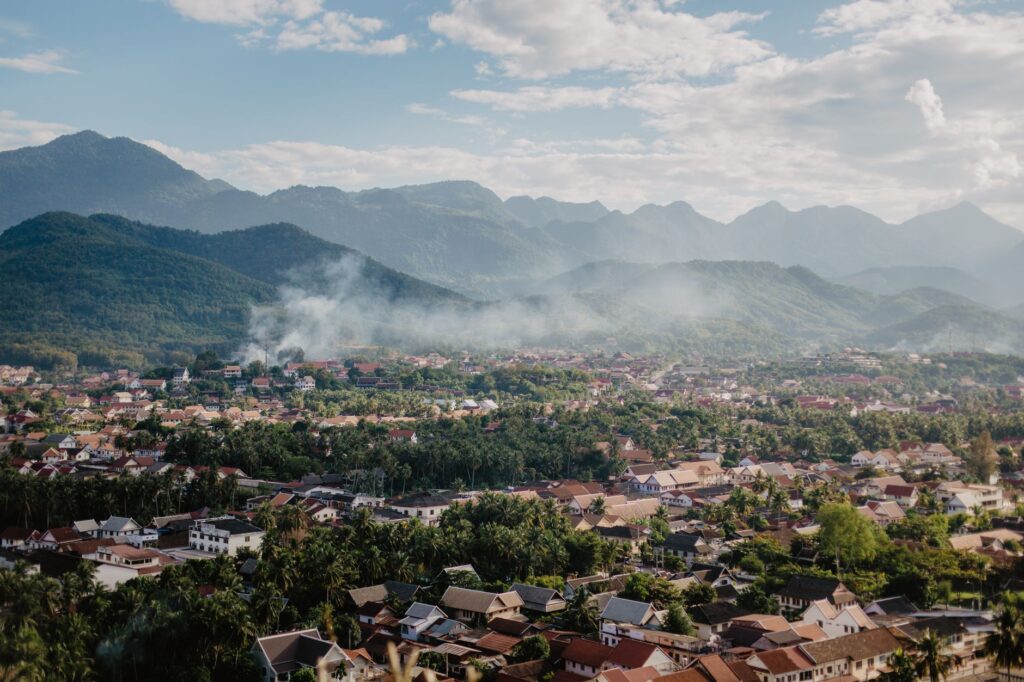
There are places in the world that one does not merely visit, but rather inhabits through an internal rhythm that defies the urgency of the digital age. Luang Prabang, the ancient royal capital of Laos protected by UNESCO, is one of those enclaves where the concept of slow travel is not a marketing trend, but a spiritual heritage rooted in the geography of the Mekong. Here, luxury is not measured by loud opulence, but by the quality of silence, the delicacy of hand-woven silk, and the golden light that bathes temple rooftops at sunset.
Inspired by the philosophy of leading lifestyle publications, we delve into this corner of Indochina to discover why patience is the greatest virtue of the contemporary traveler. Between the murmur of the Nam Khan and Mekong rivers, the city unfolds a choreography of French colonial architecture and traditional Lao structures that invite profound introspection. It is a destination for dreaming awake, where every step seems guided by an ancestral cadence that prioritizes human connection over the tourist checklist.
Dawn Mysticism: The Sacred Ritual of Tak Bat
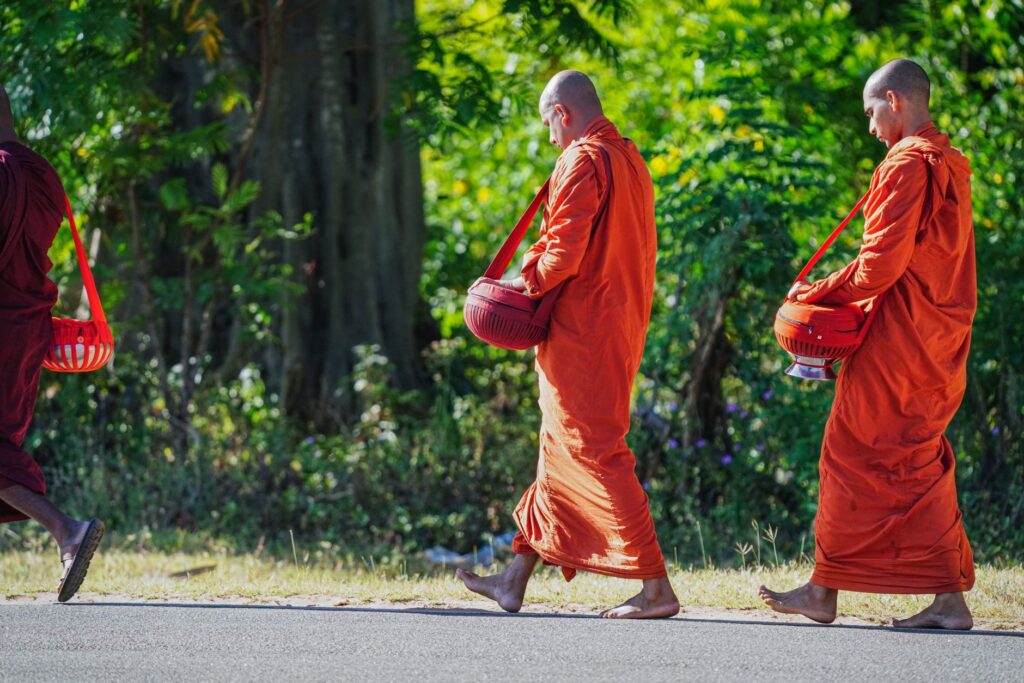
Before the sun manages to dissipate the mist descending from the limestone mountains, Luang Prabang awakens with a sacred silence. It is the hour of Tak Bat, the alms-giving ceremony that has defined the city’s identity for centuries. Hundreds of monks dressed in saffron robes walk barefoot in an infinite line, receiving portions of sticky rice from the faithful who wait on their knees. This act is not a performance for the camera, but an exchange of spiritual merit that sustains the community’s social fabric.
For the traveler, witnessing this ritual requires a special sensitivity. It is not about observing from a distance, but about understanding the interdependence between the sacred and the everyday. The elegance of the movements, the almost imperceptible sound of feet on the pavement, and the aroma of freshly cooked rice create an atmosphere of devotion that sets the tone for the rest of the day. It is the first reminder that in Laos, the most important things happen on the fringes of the visible.
True luxury in the 21st century is not about arriving first, but about having the capacity to stop and understand the weight of a tradition that has survived modernity.
Following the ceremony, the morning market comes to life. Unlike the night markets designed for visitors, this is the epicenter of local sustenance. Here you find fresh forest herbs, Mekong fish wrapped in banana leaves, and lotus flowers ready to be offered at altars. Walking through these aisles is a lesson in botany and culinary culture, where the freshness of the product is the only acceptable standard.
Architecture that Breathes: A Synthesis of Lan Xang and French Heritage
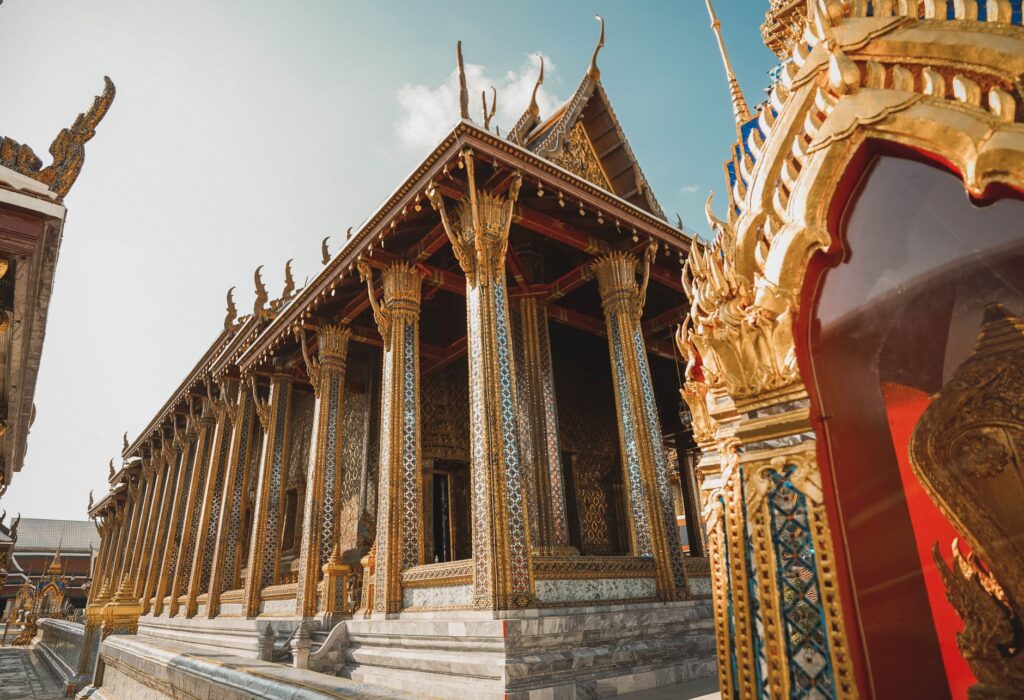
The physiognomy of Luang Prabang is a constant dialogue between two worlds. On one hand, the majesty of the ancient Kingdom of Lan Xang (the Kingdom of a Million Elephants), represented in temples like Wat Xieng Thong. With its roofs sweeping low to the ground in elegant curves and glass mosaics depicting the Tree of Life, this temple is the epitome of classic Lao aesthetics. Every detail, from the gilded wood carvings to the black and gold stencils, speaks of a craftsmanship that knows no shortcuts.
On the other hand, two-story colonial villas with wooden shutters and wrought-iron balconies add a layer of European sophistication that has organically integrated into the tropical landscape. Many of these structures have been exquisitely restored to house boutique hotels and cafes serving the finest coffee from the Bolaven Plateau. This architectural coexistence gives the city its unique character: a Mediterranean nostalgia transported to the shores of Southeast Asia.
The Art of Preservation
The UNESCO World Heritage designation in 1995 was not just a title, but a commitment to integrity. Regulations prohibit the use of aggressive modern materials and maintain a color palette that harmonizes with the surrounding nature. Walking through its streets, one perceives a visual coherence that is increasingly rare in Asian capitals. There are no neon signs or skyscrapers blocking the view of the palm trees; there is only harmony between brick, wood, and stucco.
The Mekong as a Vital Artery: Contemplative Navigation to Pak Ou Caves
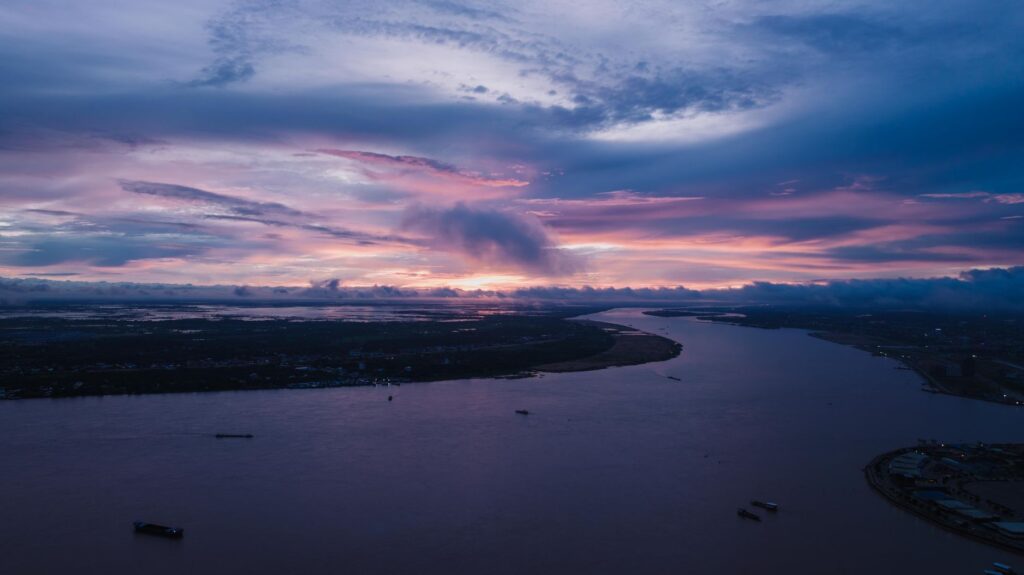
The Mekong River is much more than a transport route; it is the soul of the region. To understand Luang Prabang, one must navigate its brown, powerful waters. A journey on a traditional wooden boat toward the Pak Ou Caves offers a different perspective of the landscape. As the city is left behind, the mountains become steeper and the jungle closes in on the banks, revealing small villages where life follows the rhythm of the river’s rise and fall.
The Pak Ou Caves, located in a limestone cliff where the Nam Ou River meets the Mekong, house thousands of Buddha statues of all sizes. Left there by pilgrims over centuries, these figures create a sanctuary of overwhelming spiritual density. The ascent up the rock-carved stairs, surrounded by incense and the sound of water hitting the base of the cliff, is an experience that connects the traveler with the sacred geography of Laos.
- Slow Navigation: Opt for electric-powered boats or traditionally designed vessels to minimize acoustic impact.
- River Sunsets: The moment the sun hides behind the western mountains is the day’s most important natural spectacle.
- Artisanal Villages: Mandatory stops at Ban Xang Hai to learn about the production of local rice whiskey (lao-lao).
Silk and the Loom: The Renaissance of Artisanal Weaving
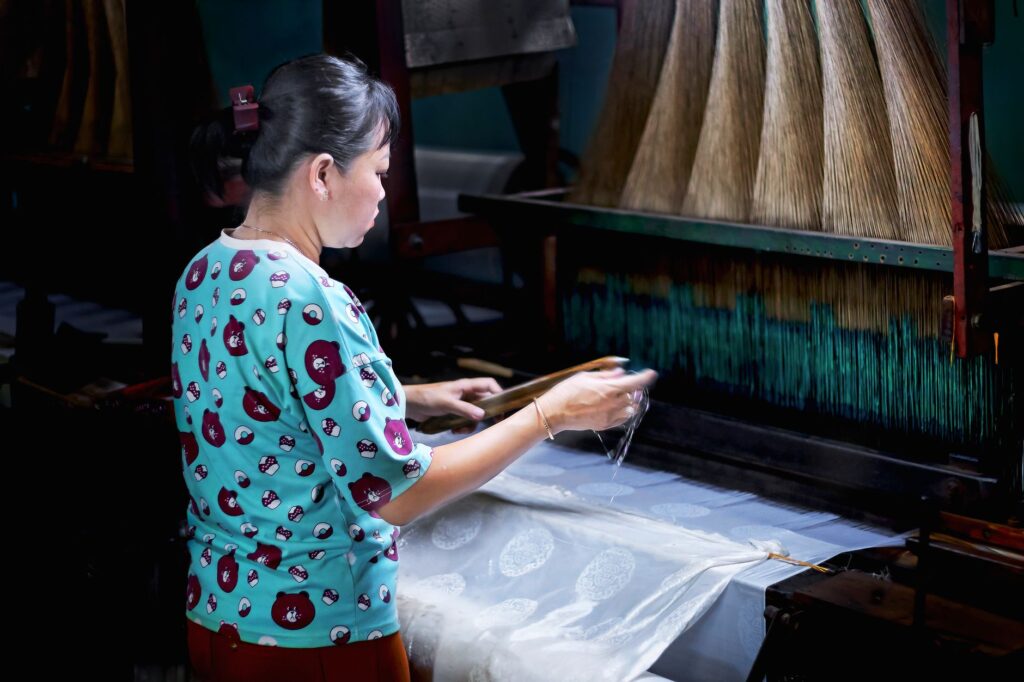
In Luang Prabang, craftsmanship is not a souvenir; it is a language. The Ock Pop Tok weaving center has become a global benchmark for how responsible tourism can revitalize ancestral traditions. Here, women from various Lao ethnic groups practice the art of the backstrap and foot-pedal loom, creating complex patterns that tell stories of mythology and nature. Lao silk, known for its rich texture and natural dyes extracted from bark, flowers, and roots, is among the most prized in the world.
Spending an afternoon learning about the spinning and dyeing processes is a way to honor the time required to create beauty. In a world of mass production, watching an artisan take weeks to complete a single piece of fabric returns a sense of proportion to the traveler. It is the luxury of the authentic, of that which has a name, a face, and a story behind every thread.
The artisan’s patience is the mirror in which the traveler must look to understand that haste is the greatest enemy of experience.
The Gastronomy of Patience: From Khao Piak Sen to the Aroma of Coffee
The cuisine of Luang Prabang is subtle, herbaceous, and deeply tied to the land. It does not seek the immediate impact of extreme spice but rather the balance of flavors. Or Lam, a traditional stew made with chili wood, local mushrooms, and meat, is the signature dish that requires hours of slow cooking. Each bite reveals layers of flavor that speak of the biodiversity of the Lao jungle.
Another fundamental element is Khao Niew (sticky rice), served in hand-woven wicker baskets. Eating with your hands, forming small balls of rice to scoop up sauces and Jeaw Bong (a chili and buffalo skin paste), is an act of communion with the local culture. For more refined palates, French influence has left a legacy of exceptional baking, where croissants compete in quality with those from the best boulangeries in Paris, yet enjoyed under the tropical sun.
Kuang Si: The Sacred Geometry of Turquoise Waters
A few kilometers from the city lies one of Southeast Asia’s most impressive natural monuments: the Kuang Si waterfalls. The water, laden with minerals, tumbles through multiple levels of travertine formations, creating natural pools of an almost surreal turquoise blue. The sound of water falling through dense vegetation creates a natural amphitheater of serenity.
However, the true beauty of Kuang Si lies in its management. The area includes a sanctuary for bears rescued from illegal trafficking, integrating wildlife conservation with the enjoyment of the landscape. Walking the trails surrounding the falls, away from the more crowded areas, allows for moments of solitude where nature manifests in all its geometric purity.
The Luxury of Silence: Retreats Redefining Exclusivity
Accommodation in Luang Prabang has evolved toward a hospitality model that prioritizes integration with the environment. From former royal palaces converted into grand luxury hotels to retreats hidden among rice paddies, the offering focuses on holistic well-being. Here, the spa is not an add-on but an extension of traditional Lao medicine, using herbs from the hotel’s own garden and massage techniques that seek energetic balance.
Sleeping in a room where teak wood and linen are the protagonists, waking up to the sound of gongs from nearby temples, and having breakfast facing the Mekong is the contemporary definition of exclusivity. It is a luxury that does not shout, felt in the softness of the sheets and the genuine smile of the staff, whose hospitality is famous for its warmth and lack of artifice.
Practical guide
To enjoy Luang Prabang with the spirit of slow travel, a minimum stay of five days is recommended. The best time to visit is between November and February, when the weather is dry and temperatures are pleasant for walking and exploring by bicycle.
Requirements and Transport
Most nationalities require a visa that can be processed upon arrival at the international airport or through the e-visa system. Once in the city, the most consistent transport with the environment is the bicycle or simply walking, as the historic center is compact and eminently pedestrian.
Etiquette and Cultural Respect
It is fundamental to dress modestly when visiting temples (shoulders and knees covered). During Tak Bat, maintain a respectful distance, avoid using flash, and do not interfere with the monks’ path. Silence is the best way to show respect for local practices.
Sustainability
Support the local economy by buying from artisan markets and avoiding single-use plastics. Many hotels offer water refill stations to reduce environmental impact in a region where waste management remains a challenge.
Luang Prabang is not just a destination on the map; it is a state of mind. At the end of the trip, what remains are not just photographs of golden temples, but the feeling of having recovered a time we thought was lost. It is the confirmation that sometimes, to move forward, it is necessary to learn to walk slower.
Source: ELLE Travel via Google News