
Introduction to the Boreal Horizon and the Urgency of Clean Transit
The Lofoten archipelago, situated above the Arctic Circle in northwestern Norway, represents one of the most breathtaking and fragile landscapes on the planet. Amid granite peaks rising vertically from the Norwegian Sea and deep blue waters churned by relentless marine currents, human life has historically depended on navigation and a visceral connection with the marine environment. Today, this Norwegian region stands at the forefront of a radical transformation in its transport system, driven by the pressing need to decarbonize mobility in an environment where climate change hits with particular severity. The transition from traditional combustion engines toward hybrid and electric navigation schemes is not merely an exercise in regulatory compliance, but a matter of cultural and ecological survival for communities numbering barely twenty-four thousand permanent residents yet receiving hundreds of thousands of visitors each year.
For decades, reliance on conventional diesel ferries and heavy vehicular traffic on narrow, winding roads—the famous European route E10—generated unsustainable pressure on fragile fjord ecosystems. Carbon dioxide emissions and underwater noise disrupted the migratory routes of fish and cetaceans, while seasonal congestion paralyzed local infrastructure. In response to this silent crisis, the municipalities of Moskenes, Vågan, Vestvågøy, and Flakstad, in close collaboration with the national maritime transport operator and naval engineering agencies, have designed a master plan that redefines inter-island connectivity. This model combines ferry fleets powered by high-density battery packs, fast-charging stations fueled by local hydroelectric power, and the reactivation of ancient coastal cabotage routes for freight and passengers.
The Maritime Backbone: Electrification and Offshore Efficiency
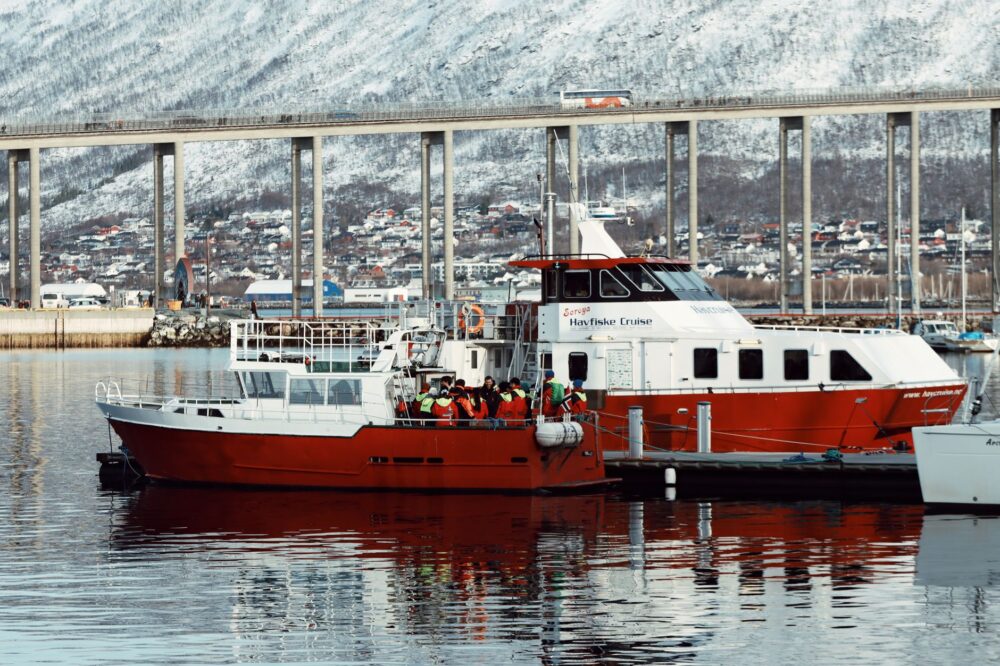
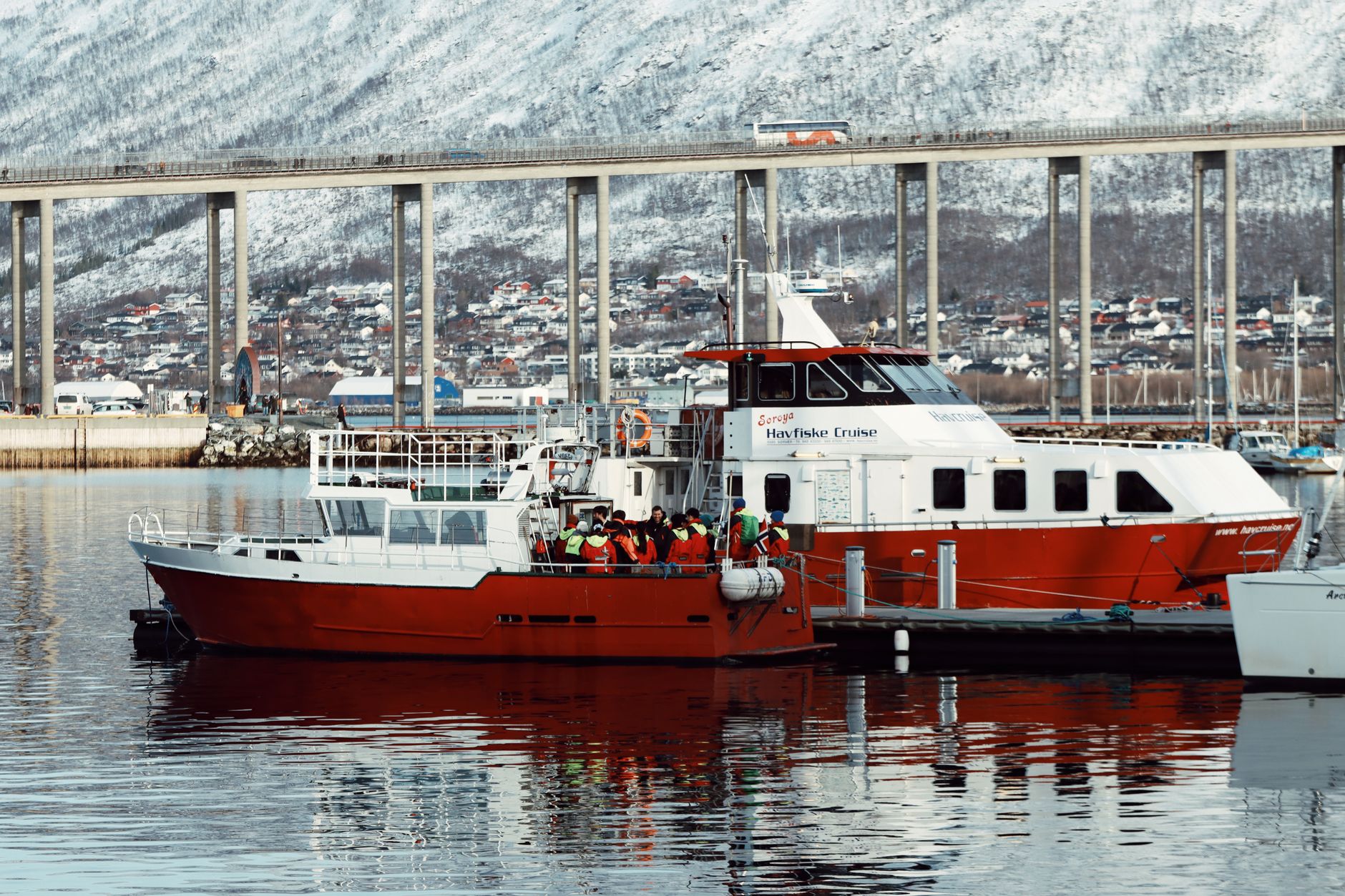
The heart of this transformation lies in the modernization of the ferry fleet linking the islands to the mainland, specifically the vital route connecting Bodø to Moskenes. For years, this four-hour crossing across the turbulent Vestfjorden consumed thousands of liters of marine gas oil daily. The introduction of 100-percent electric vessels and plug-in hybrid systems has completely altered this dynamic. These ships, designed with hydrodynamically optimized hulls to reduce resistance, store energy in massive lithium-ion battery banks that automatically recharge during port stays via high-power automatic connection plugs.

Naval engineers overseeing the project explain that the primary challenge lay not solely in propulsion, but in the thermal management of batteries amid winter temperatures frequently plunging well below freezing. To address this, waste heat recovery systems sourced from electrical transformers and onboard services were installed, optimizing the vessel’s overall energy consumption. Furthermore, the integration of flexible solar panels on upper decks provides a supplementary energy source for auxiliary lighting and navigation systems. This floating infrastructure demonstrates that zero-emission mobility is technically viable even under the harshest weather conditions in northern Europe.
The transition toward decarbonized maritime transport in the Arctic is not a statement of intent, but an applied engineering feat demonstrating the technical feasibility of operating large-tonnage ferries exclusively on accumulated energy.
The environmental impact of this technological substitution is immediate and verifiable. According to data compiled by the Norwegian Public Roads Administration, the operation of these electric ferries has reduced annual greenhouse gas emissions on the Lofoten route by more than eighty-five percent. Similarly, the dramatic reduction in underwater vibrations and noise has been praised by marine biologists from the Institute of Marine Research in Bergen, who have recorded a gradual return of porpoise populations and diving seabirds to fjord areas they previously avoided due to chronic acoustic pollution.
Land Infrastructure and Multimodal Corridors
Concurrently with the revolution on the water, land mobility across the islands has undergone a profound restructuring aimed at discouraging private combustion vehicle use and fostering multimodality. The backbone of this strategy is the optimization of the E10 route as a green corridor where green hydrogen buses, ultra-fast charging points for electric cars, and an expanded network of protected cycling and pedestrian paths—locally known as the dried cod trails—coexist.
These cycling routes are not mere lines painted on existing asphalt, but segregated pathways that reclaim ancient fisherman trails and historic service roads, allowing travelers to tour the archipelago without interfering with heavy traffic. For residents and visitors choosing to leave their cars behind, a unified digital platform has been implemented to manage combined tickets for ferries, buses, and electric bicycle rentals, simplifying journey planning and ensuring synchronized connections at major port hubs such as Svolvær and Reine.
Deploying an electric charging network in such isolated environments has required innovative technical solutions. Given that local grid capacity is limited in remote locations, stationary storage systems utilizing retired electric vehicle batteries have been installed. These units accumulate energy during off-peak hours—when hydroelectric generation exceeds demand—to release it rapidly during peak ferry arrival times. This circular approach not only resolves energy bottlenecks but exemplifies a closed-loop economy applied to transport infrastructure management.
Cabotage Economy and Proximity Logistics
Another foundational pillar of the new Lofoten transport model is the decentralization of freight supply through the revival of traditional cabotage. Over recent decades, the rise of road freight had saturated the archipelago’s scarce roads with large distribution trucks arriving from southern Norway, increasing accident risks across the narrow single-lane tunnels and bridges characteristic of local topography.
The institutional response has been to establish a network of intermediate port logistics centers equipped with automated cranes and high-efficiency refrigerated warehouses. Small hybrid-propulsion cargo vessels collect goods at major redistribution ports and deliver them directly to the docks of fishing villages like Henningsvær and Nusfjord. This system not only relieves pressure on the E10 highway but ensures that local products, such as the famous skrei fish, reach continental markets with a significantly lower carbon footprint and within competitive delivery times.

Local merchants and fishing cooperatives have embraced this initiative with enthusiasm, noting that the predictability of maritime transport against frequent winter road closures due to avalanches or severe gales provides long-sought economic stability. Logistics is no longer a vulnerability factor, but a resilient link strengthening the value chain of the traditional island economy.
Governance Challenges and Resistance to Change
Despite technical and environmental achievements, implementing this new mobility paradigm has not been free from political and social tensions. Port retrofitting and the installation of high-power chargers have required multimillion-dollar investments, sparking debates over equity in distributing public funds among municipalities. While tourist-heavy localities like Vågan have seen substantial service improvements, some smaller fishing communities fear being left behind if secondary ferry routes do not receive equal financial attention.
Likewise, seasonal saturation remains a complex problem to solve solely through transport infrastructure improvements. During July and August, the massive influx of motorhomes and private vehicles tests the carrying capacity of new systems. To mitigate this impact, local authorities have introduced dynamic congestion charges at vulnerable landscape hotspots and a mandatory reservation system for vehicle access to sensitive protected areas, encouraging visitors to park at peripheral hubs and use electric shuttle buses.
The ultimate test for any sustainable mobility model in extreme insular territories lies in its capacity to manage the balance between openness to the outside and the preservation of inhabitants’ daily peace.
Constant dialogue among island councils, fishing associations, tourism operators, and mobility engineers has served as the glue preventing social fracture during friction moments. This participatory governance model ensures decisions are not imposed from distant offices in Oslo, but spring from a deep understanding of local needs and absolute respect for the archipelago’s natural rhythm.
Practical guide
Getting There: Primary access to the Lofoten Islands is via Leknes or Svolvær airports for domestic flights from Oslo via Bodø, or via the Bodø-Moskenes electric ferry route, operating multiple daily departures year-round.
When to Visit: To experience sustainable mobility under optimal daylight and lower crowding conditions, May, June, and September offer an ideal balance between transport network operability and stable weather conditions.

Getting Around: Utilize the integrated public bus network powered by clean energy and the island transport digital platform to book combined ferry, bus, and electric bike rental passes across major logistics hubs.
Rules and Etiquette: Strictly respect designated peripheral parking areas established at the entrances of fishing villages. Overnight camping with vehicles outside authorized campsites is strictly prohibited to protect the fragile Arctic tundra and dune systems.
The Silent Pulse of the Norwegian Sea
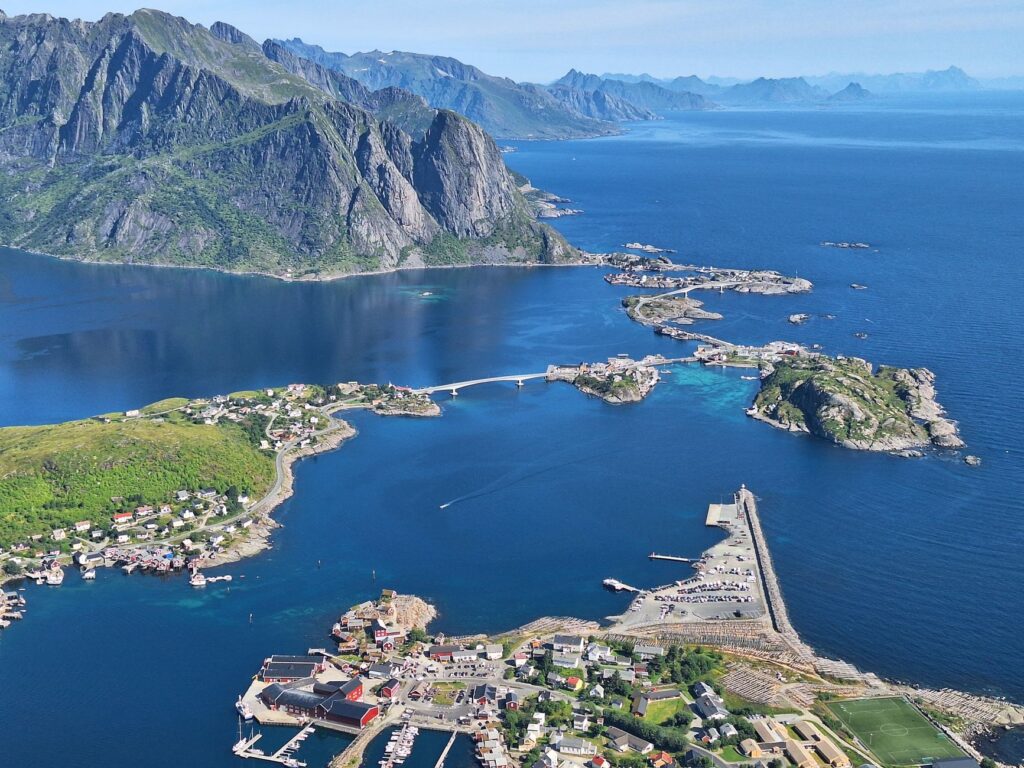
At dusk over the Reinefjorden, when the boreal sun grazes the horizon and paints rugged peaks in ochre and mauve tones, the silence enveloping the landscape is striking. The constant, deafening hum of old diesel engines that once dictated the pulse of these waters is gone. Instead, the gentle glide of an electric ferry crosses the marine surface with almost ghostly elegance, leaving behind only the foaming wake of its passage and the crystal-clear reflection of mountains. This silent transformation summarizes the essence of a territory that has understood its future depends on its ability to listen to the environment. The Lofoten Islands have not merely redesigned their transport; they have recovered harmony between human activity and the untamed majesty of the Arctic, proving to the world that technology and ecology can sail together toward a truly sustainable horizon.