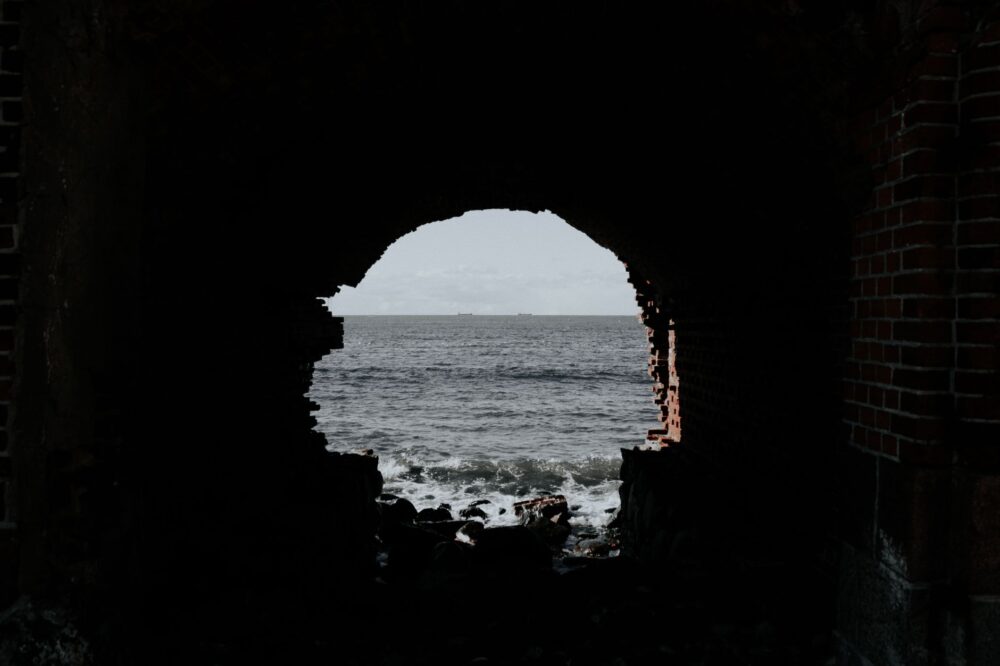
The waters of Lake Geneva have not always been the calm, sapphire mirror that tourists gaze upon from the manicured promenades of Lausanne or Geneva. On days when the bise wind descends with fury from the Jura mountains, chopping the surface into whitecaps, this seventy-three-kilometer-long inland sea transforms into a severe technical challenge. For over a century and a half, the answer to that challenge has not come from ultralight fiberglass vessels or anonymous ferries, but from colossi of forged iron, white oak timber, and compressed steam: the Belle Époque fleet of the Compagnie Générale de Navigation sur le Léman (CGN). This naval network is no mere nostalgic whim for romantic travelers, but a rigorous, vital, and impeccably synchronized public transport system connecting Swiss and French shores with the same unyielding punctuality that characterizes Swiss railways.
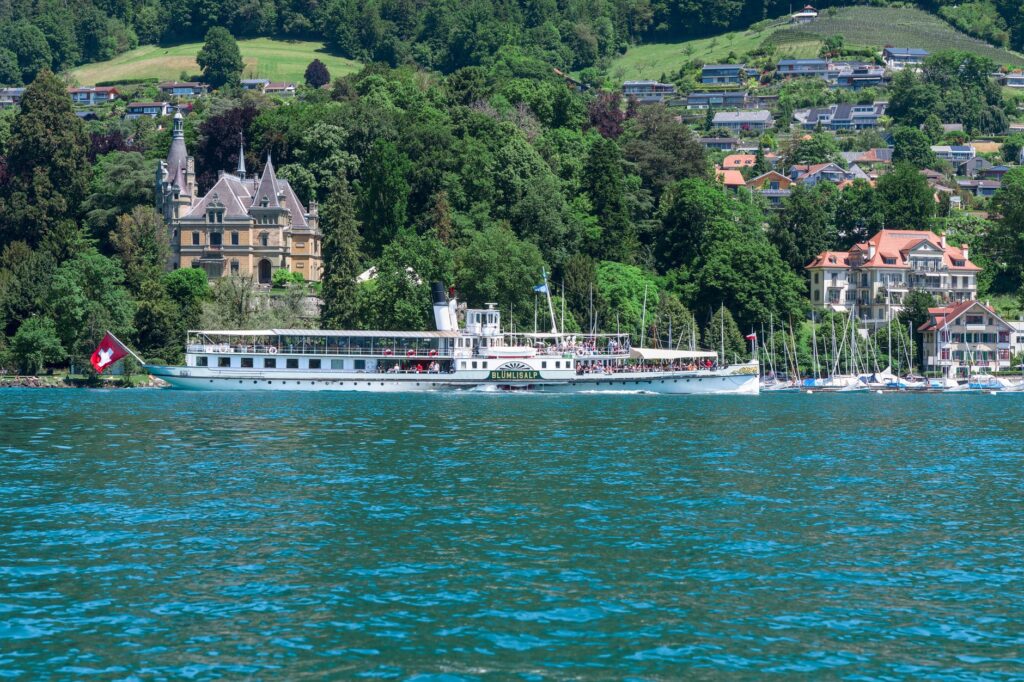
To comprehend the scale of this operational feat, one must descend into the mechanical entrails of these floating cathedrals. Unlike modern propeller propulsion, which concentrates force in a restricted area at the stern, paddle-wheel steamers—such as the Rhône, the Simplon, or the La Suisse—distribute energy along a central transverse axis that drives two enormous side wheels. Each oak paddle is submerged into the water with precise trigonometric calculation, designed to minimize turbulence and maximize thrust. This system, powered by multi-expansion steam engines and oscillating walking beams visible from the upper decks through glass bulkheads, allows vessels over seventy meters long to dock at narrow piers with astonishing maneuverability, defying crosscurrents and seasonal fluctuations in water levels.
The Floating Architecture of the Belle Époque and Century-Old Shipyards
The beating heart of this fleet is found not only on the routes connecting Lausanne to Evian-les-Bains or Montreux to Chillon Castle, but in the shipyards of Ouchy and the maintenance workshops of Saint-Gingolph. Here, artisanal tradition merges with precision naval engineering. While most European lake fleets were scrapped and replaced by standardized diesel vessels during the second half of the twentieth century, CGN undertook a pioneering global heritage restoration program. Local boat carpenters continue to hand-carve white oak paddle blades, selecting timber with the exact density required to withstand continuous friction against alpine water without splintering.
The decks of these vessels are a living testament to early twentieth-century industrial design. First-class dining salons preserve mahogany marquetry, bronze lamps with blown-glass shades, and panels etched with Art Nouveau floral motifs. Yet behind this aesthetic facade lies unyielding technical rigor. The original boilers, which once burned heavy coal, have been converted to low-sulfur diesel systems and automated burners to comply with the stringent environmental regulations of the Canton of Vaud, leaving the exterior aesthetics and the characteristic acoustic rhythm of the marching piston entirely intact.
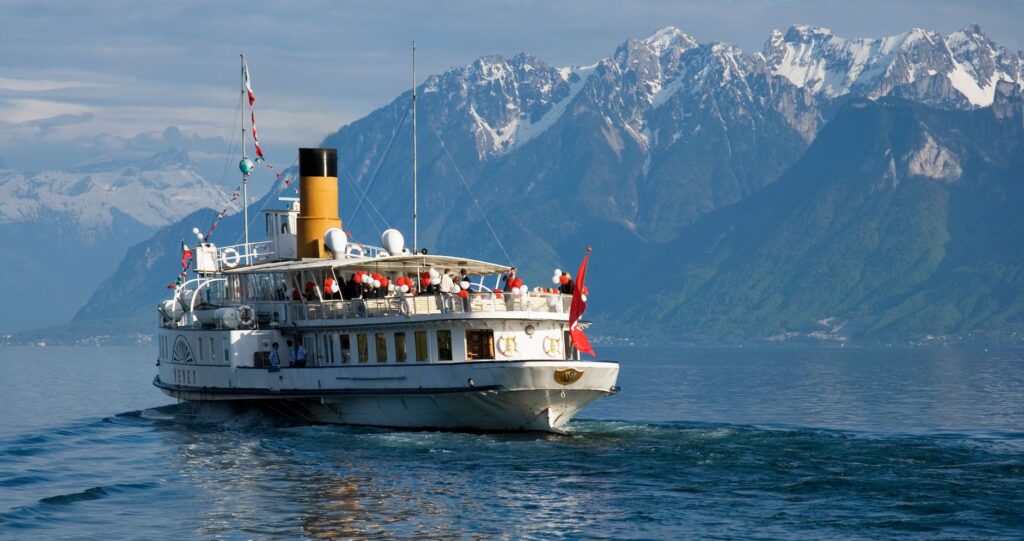
Steam power is not an industrial fossil on Lake Geneva; it is a high-precision technology whose unhurried pace reveals the true scale of the alpine landscape.
The synchronization of these colossi with the rest of Switzerland’s transport network borders on clockwork perfection. A traveler can step off a panoramic train operated by Swiss Federal Railways (SBB/CFF) at Vevey station, walk barely eighty meters along the quay, and board the steamship bound for Le Bouveret on a single integrated ticket. This seamless intermodality stems not from commercial improvisation, but from decades of joint planning among cantonal operators, port authorities, and lakeside municipalities that view the lake not as a natural barrier, but as an indispensable communication artery.
The Invisible Crew: Captains, Engineers, and the Liturgy of Docking
Governing a two-hundred-ton colossus with side paddle wheels demands absolute mastery of fluvial physics and a veteran expertise acquired only after years of navigation in the pilothouse. Lake Geneva captains must earn special licenses requiring exhaustive knowledge of local winds—the bise, the vent de sud, the morcles—and the rocky shallows defining the lacustrine basin. In the engine room, situated below the waterline, engineers operate in an environment where the radiant heat of the steam cylinders blends with the rhythmic, steady clank of polished steel connecting rods.
Unlike modern automated passenger vessels, where human intervention is reduced to supervising touchscreen monitors, steam navigation on Lake Geneva is a deeply collective and physical exercise. During docking maneuvers in complex harbors like Nyon or Yvoire, the captain communicates with the engine room via a mechanical engine order telegraph whose distinctive metallic chime sets the cadence of their joint effort. Deckhands toss hemp mooring lines with millimetric precision toward the quay bollards, securing the structure as passengers disembark across polished hardwood gangplanks.
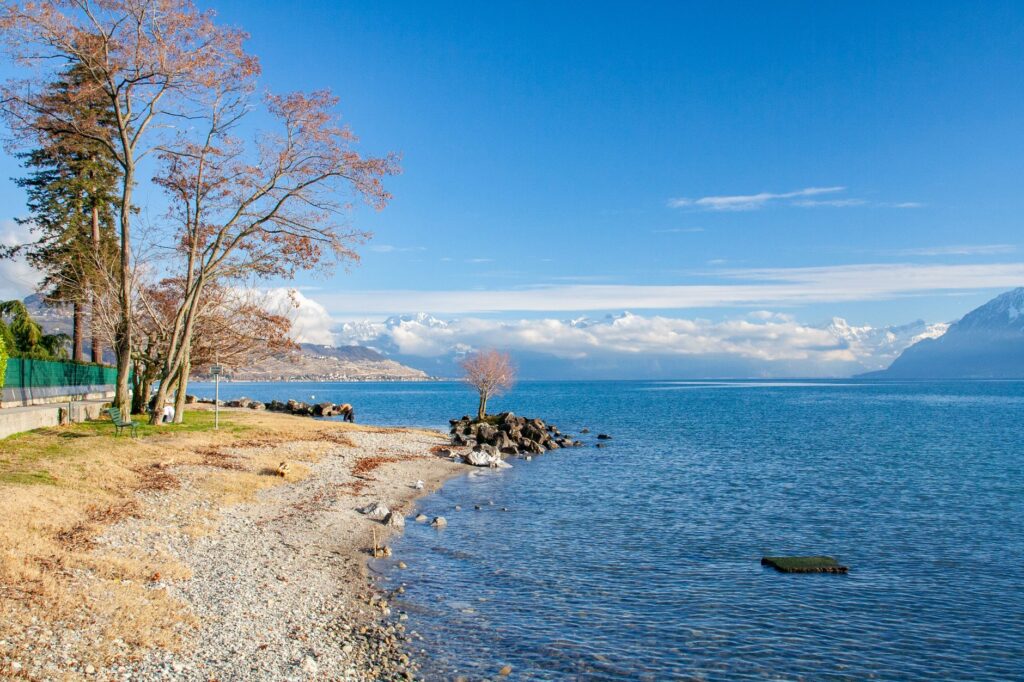
This steady flow of local commuters, students, cross-border workers, and international travelers imbues the crossings with an unshakeable social authenticity. This is not a disposable tourist cruise, but an essential public service that relieves traffic congestion on the lake’s ring roads and connects isolated alpine communities during winter months, when heavy snowfalls obstruct road access in certain corners of Haute-Savoie.
The Ecological Challenge and Energy Transition of a Century-Old Fleet
Sustaining a historic fleet in the twenty-first century presents a fascinating dilemma between heritage conservation and environmental sustainability. Far from turning a blind eye to carbon emissions, CGN, in collaboration with the Swiss Federal Office of Energy, has implemented an ambitious propulsion modernization plan. The historic steamers have undergone rigorous energy audits, successfully reducing fossil fuel consumption through thermodynamic optimization of their steam circuits and waste-heat recovery systems.
Similarly, the newer vessels in the fleet combine diesel-electric systems with solar panels integrated into the upper decks to power interior lighting and digital navigation systems. This methodical balance proves that heritage preservation is not at odds with technological innovation. Naval engineers work hand in hand with art historians to ensure that any structural modification respects the original canons mandated by Swiss heritage protection authorities.
Winter maintenance constitutes another critical phase of this transport ecosystem. Between the months of November and February, when passenger traffic slows, most steamers are hoisted onto floating dry docks or hydraulic platforms in the Lausanne shipyards. There, entire hulls are scraped, repainted with specialized anti-corrosion enamels, and subjected to ultrasonic testing to detect any fatigue in the original riveted steel dating from the Belle Époque.
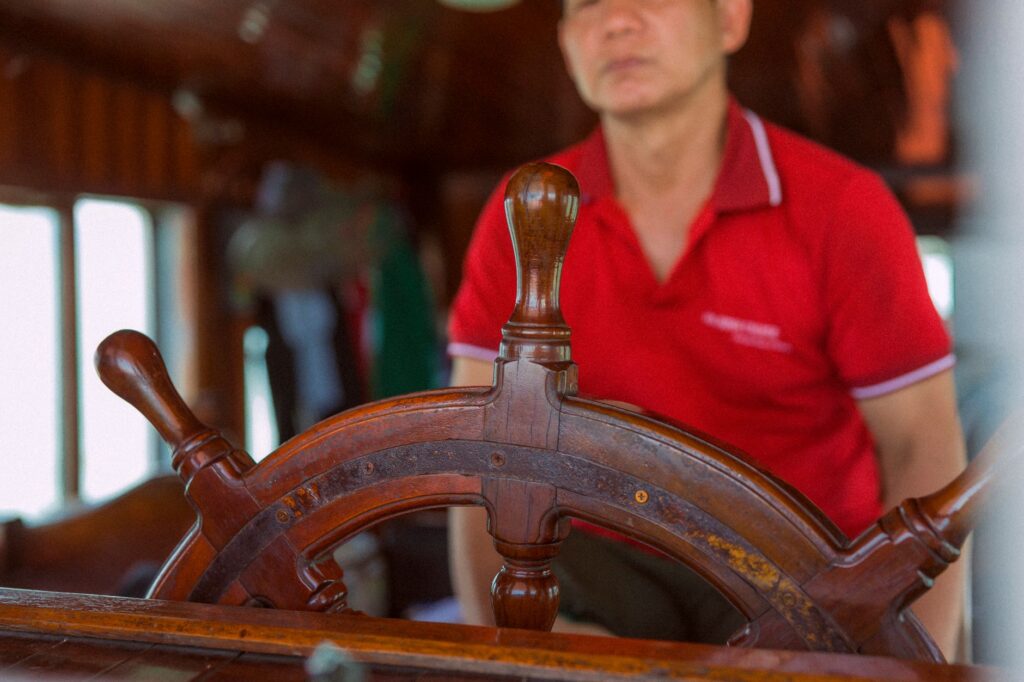
Keeping riveted steel and 1908 walking-beam engines alive requires a daily pact between workshop craftsmanship and demanding contemporary engineering.
The financing of these costly restorations comes from a mixed model combining federal and cantonal subsidies allocated for the upkeep of public-interest infrastructure, revenue from integrated national transport tickets, and support from philanthropic foundations dedicated to safeguarding alpine cultural heritage. Every franc invested in restoring a walking-beam shaft or rebuilding a teak salon is an explicit acknowledgement of the shared identity of populations inhabiting both shores of the lake.
The experience of traveling aboard these aquatic colossi transcends mere physical transit. In an era dominated by the urgency of low-cost flights and the sterile velocity of motorways, the Lake Geneva steamer invites passengers to recover a harmonious relationship with time and geographical surroundings. From the promenade deck, the silhouette of the Bernese Alps and the terraced vineyards of Lavaux—a UNESCO World Heritage site—unfold with solemn slowness, allowing travelers to assimilate the true human scale of the landscape.
Practical guide
How to get there: Lausanne and Geneva boast direct rail connections from major European transport hubs. From the central stations, urban trams and buses connect to the main piers in under fifteen minutes.
Route planning: The CGN network operates year-round, though frequencies and the presence of historic steamers increase significantly between May and September. It is advisable to consult the official timetable integrated into the Swiss Federal Railways (SBB/CFF) mobile application.
Fares and passes: The transport system is fully interoperable. The Swiss Travel Pass covers all regular CGN crossings at no additional cost, as do regional and cantonal general travel passes.
Accessibility: The main piers and most historic ships feature ramps adapted for passengers with reduced mobility, though it is recommended to verify the technical specifications of each secondary pier on the official website.

Onboard gastronomy: The steamers feature restaurants in their main salons serving local seasonal products, ranging from Lavaux AOC wines to artisanal regional cheeses.
Recommended season: Spring months (May and June) offer exceptional visibility of snow-capped peaks with lower passenger density, while autumn stands out for golden tones across the lake’s viaducts and hillsides.
Photography and environmental respect: Access to outdoor decks and glass-enclosed engine viewing areas is permitted. Passengers are kindly requested to maintain silence in quiet zones and avoid littering the protected waters of the lake.
The sun begins its slow descent behind the peaks of the Jura mountains, dyeing the calm waters of Lake Geneva a deep copper hue that seems to fuse the sky and liquid surface into a single continuous plane. On the aft deck of the Rhône steamer, the rhythmic, muffled echo of the steam piston continues to beat time with hypnotic regularity, untouched by the frenzy of contemporary life rushing along the northern shore’s motorways. A group of passengers watches silently as the silhouette of Chillon Castle softly dissolves into the twilight mist, while the captain expertly executes the final turn toward the Montreux pier. In that suspended moment, where nineteenth-century engineering proves its absolute functional validity, the journey ceases to be a mere transit between two geographical points and transforms into an intimate communion with the living memory of the alpine territory, reminding us that true progress often lies in knowing how to preserve the soul of what we build.