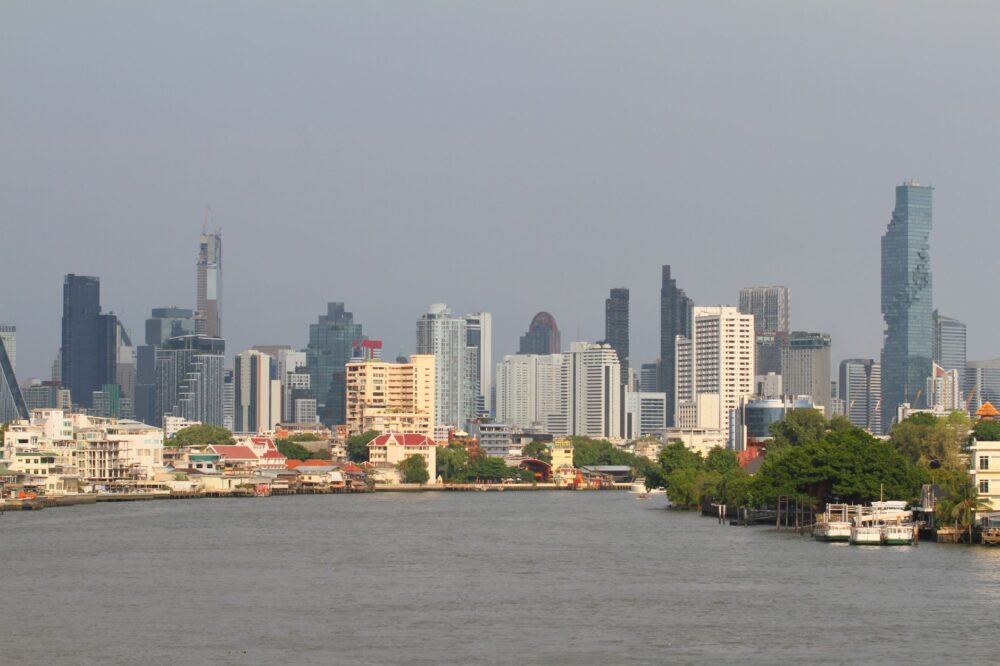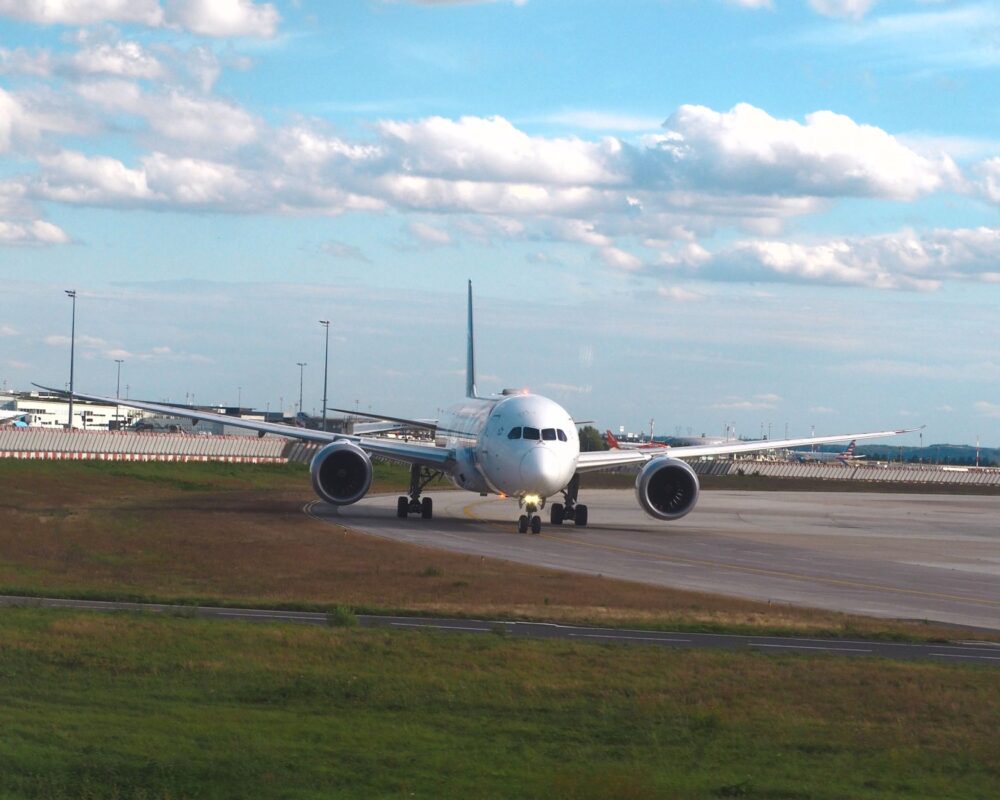

The recent crisis in Asian civil aviation, marked by more than three thousand delays and over a hundred aircraft grounded unexpectedly, has exposed the vulnerability of highly congested skies. When airlines collapse due to operational, meteorological, or hub-congestion reasons, the modern traveler faces an implacable reality: dependence on a single transport model leaves millions stranded in saturated terminals. In this scenario of aerial uncertainty, high-speed rail infrastructure and transcontinental train corridors are reclaiming a historic prominence that goes far beyond a simple emergency route.
Railway transport in Asia is not a recent phenomenon, but rather an ancient network transformed into a technological artery. Countries such as China, Japan, and South Korea have spent decades perfecting high-speed networks that connect metropolises in a matter of hours, eliminating the downtime associated with airport controls. However, the true revolution lies in the integration of international networks that allow passengers to cross borders without depending on geopolitical turbulence or technical issues that systematically affect commercial air traffic. The current crisis acts as a catalyst that accelerates the transition toward a multimodal model where the train ceases to be aviation’s younger sibling and becomes the backbone of sustainable mobility.
The fragility of the Asian sky versus rail resilience
The aviation system in Asia operates at the absolute limit of its technical capacity. Major hubs, from the bustling airports of Southeast Asia to the gigantic connecting terminals in the east of the continent, concentrate a volume of daily operations that leaves virtually no room for error. When an unforeseen factor alters the schedule, the domino effect spreads rapidly across the region, affecting thousands of passengers who find their plans falling apart in minutes. Recent data regarding massive cancellations and grounded aircraft reflect a systemic problem that air carriers have failed to resolve despite heavy technological investments.
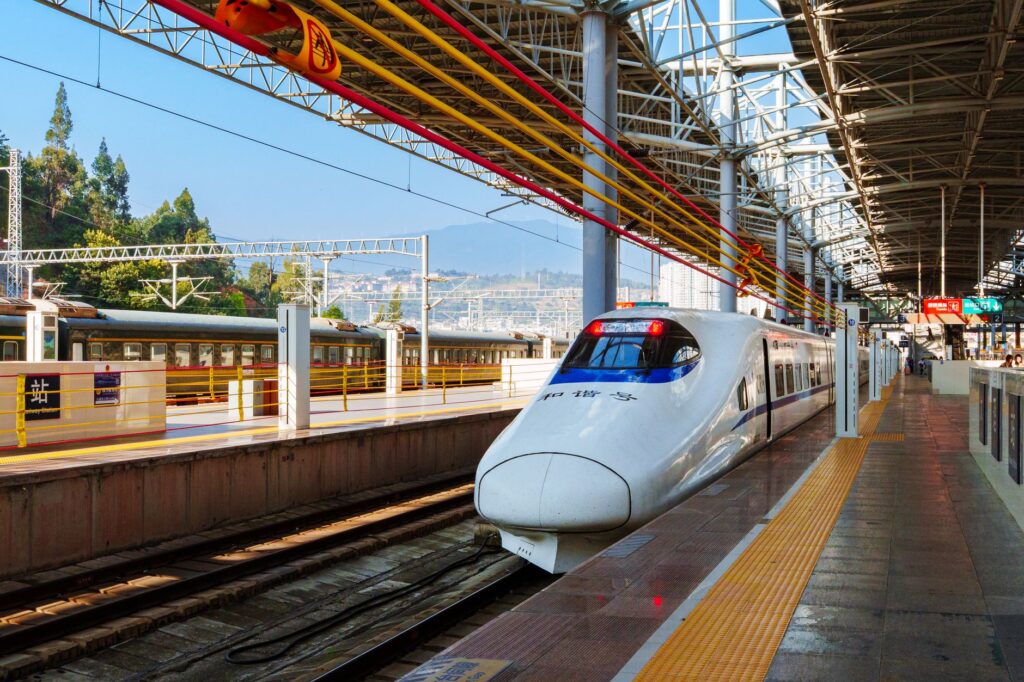
Facing this structural fragility, the train offers predictability rooted in the physics of the rails. Modern railway networks operate under advanced signaling systems that minimize weather risks and maintain punctuality even under adverse conditions that would completely paralyze activity on a landing strip. Furthermore, the passenger absorption capacity of high-speed trains allows for the transfer of massive volumes of travelers without overwhelming stations, distributing passenger flow steadily throughout the day.
Architecture and speed: the metamorphosis of terminal stations
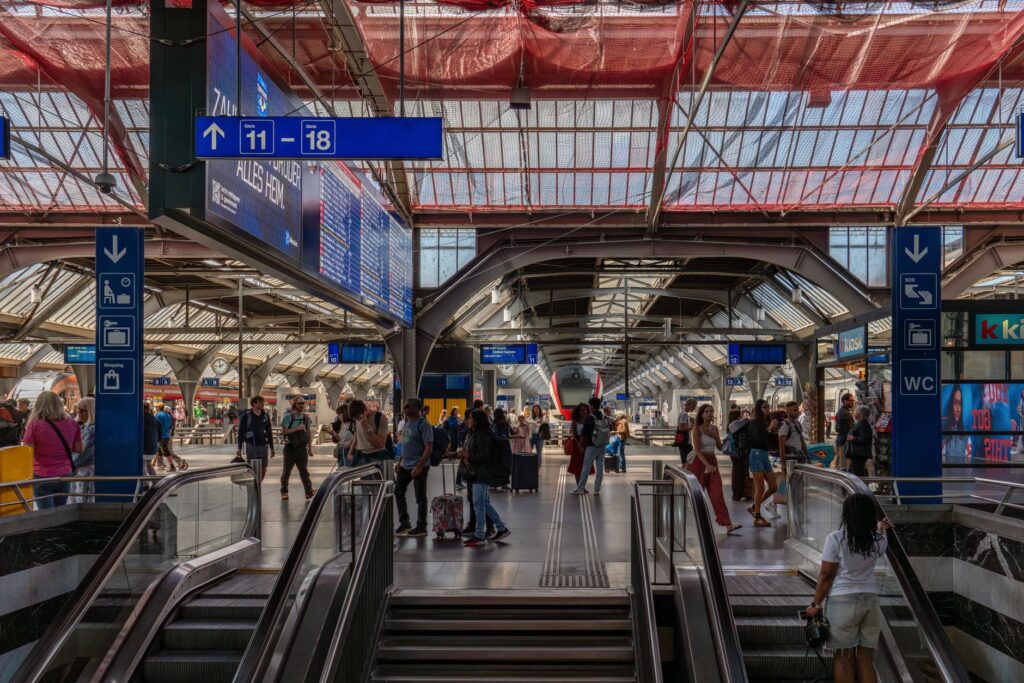
Contemporary railway stations in Asia have evolved from simple stops into monumental intermodal hubs equipped with cutting-edge technology. Designed by internationally acclaimed architectural firms, these terminals integrate commercial centers, cultural spaces, and direct connections to underground subway networks, optimizing the traveler’s experience from the moment they step inside. Unlike airports, usually located dozens of kilometers from urban centers, railway stations are situated in the heart of cities, drastically reducing travel times associated with peripheral commutes.
This urban integration radically transforms the geography of travel. A passenger departing from the financial center of a major Asian metropolis can board a train and arrive in the center of a neighboring nation without wasting hours on transfers to remote, peripheral airports. Railway architecture prioritizes flow, eliminating endless airport security checks and replacing them with agile access systems that respect the user’s time without neglecting international safety protocols.
The human factor and the onboard passenger experience
Traveling by train across Asia offers a human dimension that commercial aviation has progressively lost in its quest to maximize seat density per aircraft. Aboard continental expresses, the available space allows travelers to walk around, work comfortably, or socialize in dining cars, enjoying a constantly transforming landscape that acts as a direct window into the social and geographical reality of the territory being crossed.
The railway experience returns travel to its true condition, transforming displacement from a mere logistical chore into an enriching journey where time regains its human value.
Railway personnel play a fundamental role in this experience. Trained in attention to detail and en-route incident resolution, onboard teams ensure a level of comfort and assistance that sharply contrasts with the impersonality of low-cost airlines. Passengers are not treated as mere cargo units, but as travelers who deserve personalized attention throughout the journey, an aspect of critical importance when operational incidents occur within the network.
Engineering and geography: conquering mountain ranges and steppes
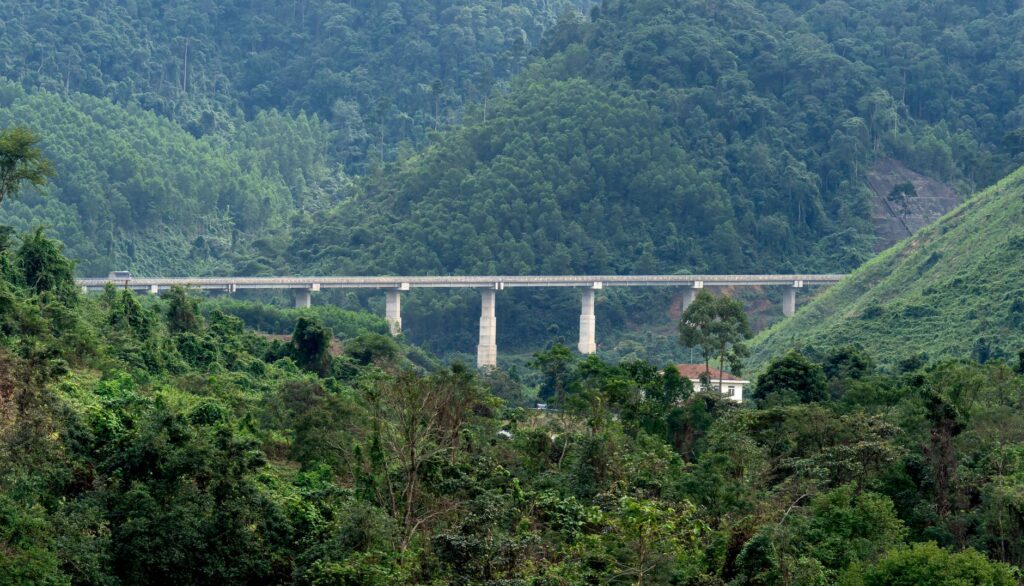
Overcoming Asia’s complex topography to lay thousands of kilometers of railway tracks has required titanic feats of civil engineering. From the construction of kilometer-long bridges soaring over impenetrable valleys to the excavation of massive mountain tunnels, railway engineers have redefined the limits of possibility. These infrastructures not only connect cities but integrate remote regions into the global economy, facilitating commercial and cultural exchange between populations that were previously isolated.
Magnetic levitation technology and high-speed trains capable of running at over three hundred kilometers per hour across permafrost terrains or high seismic zones demonstrate the sophistication achieved by the Asian railway industry. Every kilometer of track represents an investment in safety and durability, designed to withstand the relentless passage of time and the demands of continuous, heavy traffic.
Culture, commerce, and the modern silk road
The renaissance of trains in Asia transcends the strictly technical realm to become a geopolitical and cultural phenomenon of the highest order. New cross-border rail connections act as catalysts for regional trade, allowing goods and people to flow with an agility unknown since the era of ancient caravan routes. This constant flow fosters a deeper intercultural understanding between neighboring nations, strengthening diplomatic and economic ties that benefit millions of citizens.
Likewise, rail tourism is positioned as an ethical and sustainable alternative to the mass tourism driven by mass aviation. Travelers who choose the train typically possess a higher awareness of the environmental and cultural impact of their journeys, preferring longer stays and more respectful interactions with the local communities hosting stops along the route.
Practical guide
Planning a train journey across Asia in the face of an aviation contingency requires understanding the specificities of local rail networks and anticipating the high demand generated by these operational crises.
- Advance booking: Tickets for high-speed corridors usually go on sale weeks in advance. During airline collapses, availability sells out within hours.
- Documentation and visas: Unlike connecting flights, international rail journeys require strict compliance with the immigration requirements of each border country, which are often processed directly at stations or designated checkpoints.
- Luggage and restrictions: Trains generally allow greater flexibility regarding luggage volume compared to airlines, but passengers remain personally responsible for their belongings during boarding and transfers.
- Digital connectivity: Downloading official booking apps and offline translators is essential for managing tickets and communicating with staff at secondary stations.
The integration of local payment systems and real-time schedule verification through authorized platforms ensures a smooth and trouble-free transit along the chosen route.
The sustainable horizon of Asian mobility
As the Asian continent faces the structural challenges of the twenty-first century, the consolidation of the train as a primary mode of transportation represents a triumph of long-term planning over short-term urgency. The recent commercial aviation crisis has demonstrated that infrastructure redundancy is not a luxury, but a vital necessity to ensure the economic and social resilience of nations.
Investing in railways means committing to a future where speed is not at odds with sustainability, returning landscape and people to the prominence they deserve in every journey.
The conclusion of this transformation places us before a horizon where mobility is no longer measured solely in terms of speed, but valued according to its stability, safety, and respect for the environment. When contemporary travelers step off the train into the heart of an ancient metropolis after a silent and punctual journey, they understand that true progress does not consist in flying higher, but in knowing how to connect the earth with intelligence and humanity.
Source in EN: Nomad Lawyer (https://news.google.com/rss/articles/CBMi4gFBVV95cUxORFRqZ0g3ckZnQW5Qemxoa2dXX2tJRU42Qlhjdk9nQkVhNkt4STBLUUd0d3M1OFRnRmFScnIyaXFCa0p6RVRKdGZjX0lJNzhUSG9BdmRCWFJFeERYZTh1X0NFSXpOa3RjeTdmY3A4dlBqUXRoWDgzU3hDLThPNXBPTzhqLUxGR1hpS3oxdFRUQlVRSGZUdEFoT3p2MklXeU11NHJCMGxFcUVnWWxvUlZIbGdJbFduVkJaV205UFJRYW8xdThBQVJRbXpLenFxaGYtNHFoTTRMLTh3elhNdEJNcG9R?oc=5)