As the northern hemisphere retreats into heavy coats and seeks the warmth of crackling fires, Mauritius awakens in its full summer glory. Christmas here doesn’t smell of cold pine; instead, it carries the sweet, intoxicating scent of blooming Flamboyant trees, their fiery red blossoms signaling the start of the holidays. In this corner of the Indian Ocean, the celebration is a tapestry woven from diverse cultural threads—Hindu, Creole, Chinese, and European—converging at a table where spicy curries sit alongside roast turkey, and local rum toasts with French champagne. It is an invitation to rediscover the winter solstice through a radically different sensory lens, where luxury is found in the simplicity of a ripe mango and the sophistication of a gala dinner facing the coral reef.
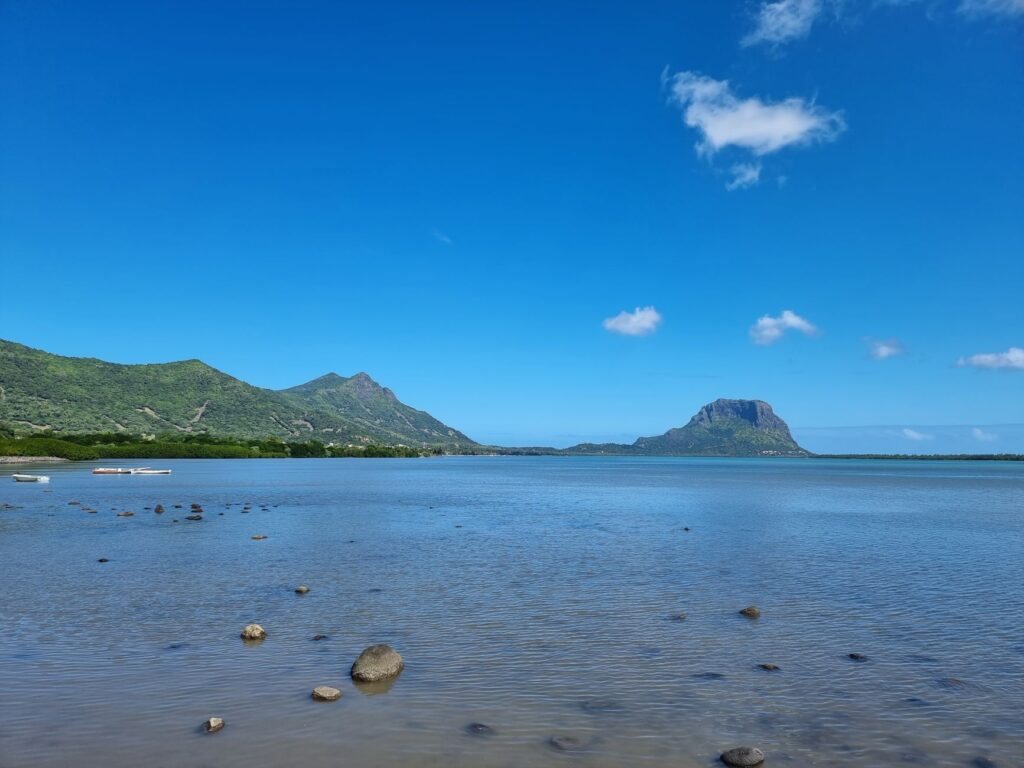
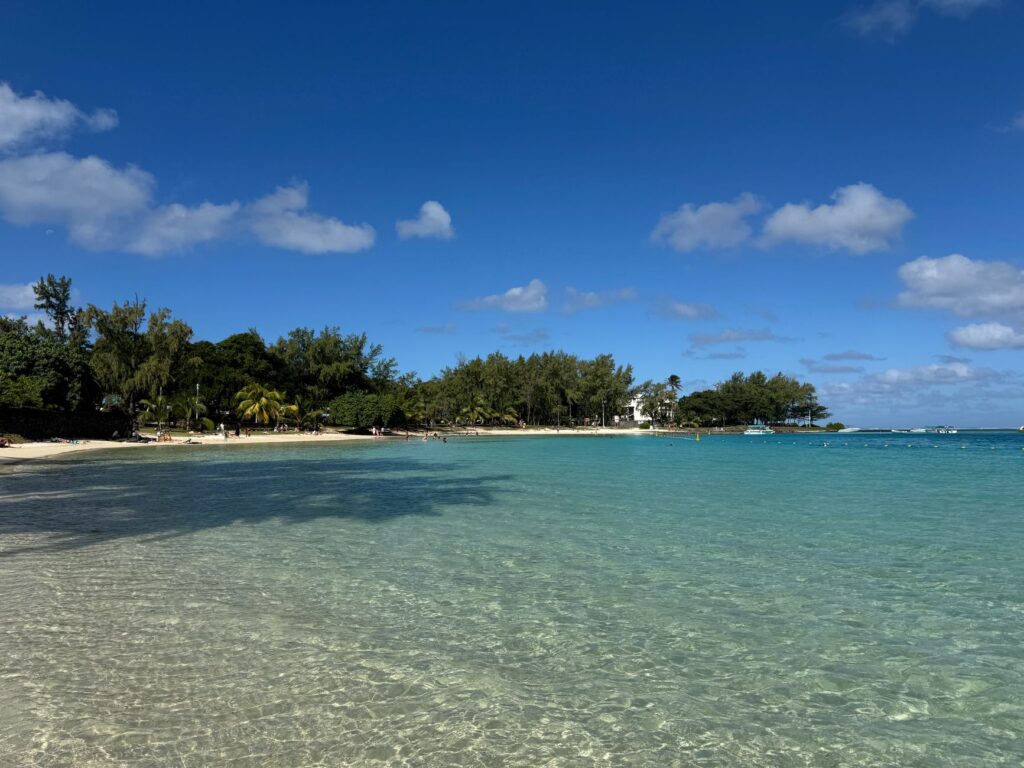
Traveling to Mauritius in December is to immerse oneself in a choreography of hospitality and gastronomy. While the white sands of Le Morne or Belle Mare fill with families hosting massive beach picnics, the markets of Port Louis buzz with frantic activity. Christmas on the island is, above all, a shared celebration; regardless of religious background, the spirit of generosity permeates every corner. For the traveler, this translates into a unique opportunity to experience one of the most authentic and vibrant fusion cuisines on the planet, at a time of year when every recipe is prepared with almost sacred care.
A Tropical Christmas: Where Cultures Converge
Mauritius is a country where coexistence isn’t just a slogan but a daily reality that reaches its zenith in December. Although the Christian population is significant, Christmas is celebrated by nearly all Mauritians as a festival of light and unity. Streets are adorned with colorful lights, but nature provides the primary decor: sugarcane fields are at their peak height, and fruit trees bow under the weight of summer harvests. This blend of influences is reflected in home decorations, where a traditional Christmas tree might be an imported fir or, more often, a tropical plant decorated with seashells and local flowers.
The atmosphere is one of infectious joy. Sega music, with its African rhythms and Creole lyrics, echoes across beaches and village squares. It is common to see groups of musicians improvising around a bonfire, the scent of woodsmoke mingling with the sea breeze. This soundtrack accompanies the preparations for Christmas Eve dinners, which are typically long-form events where conversation flows as freely as the food. Mauritian hospitality dictates that no one should spend these dates alone, and it is customary for visitors to be invited for a snack or a traditional sweet when passing a celebrating home.
«In Mauritius, Christmas is not just a date on the calendar; it is the moment the entire island breathes a single aroma of cinnamon, sea, and brotherhood.»
The Creole Banquet: Heart of the Celebration
Christmas Eve dinner in Mauritius is a display of national identity. Unlike European dinners, the menu here is a palette of colors and spices. The star dish is often the Rougaille, a spicy and aromatic tomato sauce based on ginger, garlic, and thyme, served with Creole sausages, salted fish, or even lobster for special occasions. This dish embodies the soul of the island: robust, warm, and deeply satisfying. It is invariably accompanied by long-grain basmati rice and achards—pickled vegetables with mustard and turmeric that provide a sour, crunchy contrast.
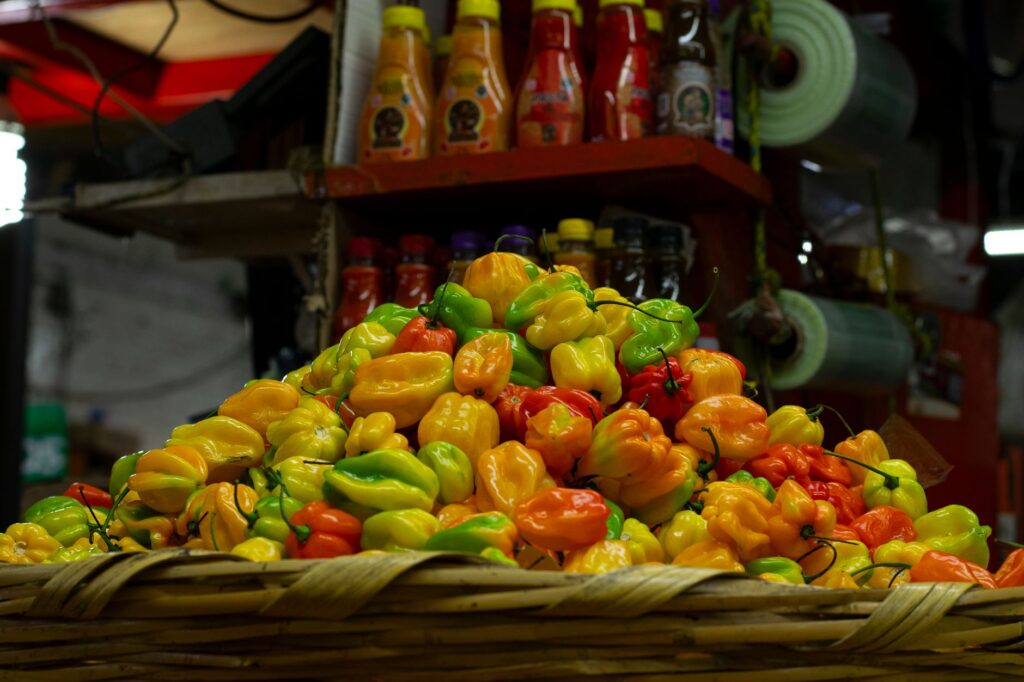
Another indispensable element is Vindaye, a preservation and cooking technique inherited from Indian influence, usually applied to fish or octopus. It is prepared with mustard seeds, saffron, garlic, and green chilies. It is a dish that challenges the palate and, interestingly, tastes better if prepared a day in advance, allowing the flavors to settle. For those preferring something milder, Mauritian Biryani (especially the style from the island’s Muslim community) offers a complexity of spices like cardamom and cloves, slow-cooked with lamb or chicken and potatoes, creating a fragrant mountain of rice that serves as the centerpiece of any festive table.
Summer Harvest: Lychees, Mangoes, and Red Flame Trees
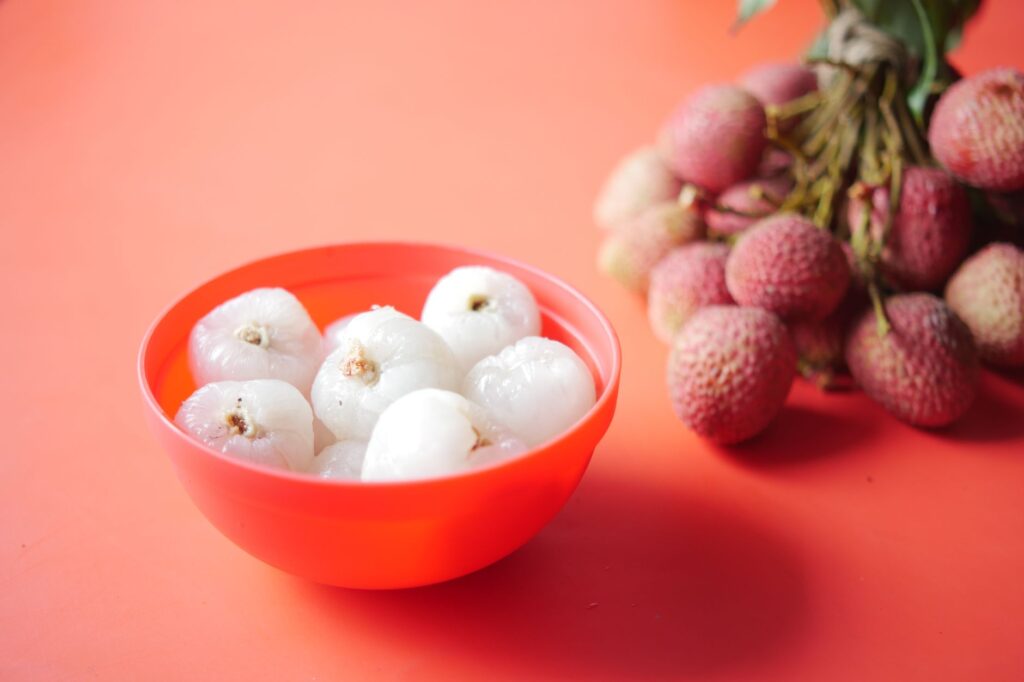
If there is one flavor that defines Christmas in Mauritius, it is the lychee. December is harvest month, and the island is dotted with makeshift roadside stalls selling clusters of this red, bumpy fruit. Its white, sweet pulp is the perfect refreshment for the summer heat. Families buy entire crates to share during gatherings, and children are often seen competing to see who can peel the fruit the fastest. Alongside lychees, mangoes in all their varieties—from the small, sweet ‘maison rouge’ to the large, fleshy ‘josé’—flood the markets with their tropical fragrance.
These fruits are not only eaten fresh but are an integral part of Christmas desserts. Lychee mousses, mango tarts, and artisanal sorbets offer a refreshing respite after spicy main courses. Mauritian confectionery also includes the Napolitaine, a sweet of French heritage consisting of two shortbread cookies joined by guava jam and covered in bright pink icing. While eaten year-round, at Christmas they are decorated with festive motifs and given as gifts in beautifully wrapped boxes, keeping alive the tradition of exchanging sweets among neighbors.
Port Louis: A Festive Gastronomic Pilgrimage
To understand the Mauritian Christmas, one must walk the streets of its capital, Port Louis. The Central Market is a hive of energy where spice aromas mix with the scent of sudden tropical rain. During this time, street food takes center stage. Vendors of Dholl Puri—thin yellow pea flatbreads filled with bean curry, tomato sauce, and chilies—see their queues grow longer. It is the favorite quick lunch for those doing last-minute holiday shopping.
One cannot miss the Samosas and Gâteaux Piments (chili cakes), small fried balls of split lentils with coriander and chili sold hot in paper bags. These bites are the essence of social life on the island; they are eaten standing up, sharing news and laughter. Around the market, fabric shops offer shimmering silks for New Year’s outfits, and toy stores overflow onto the sidewalks, creating a labyrinth of colors that captures the excitement of children in an atmosphere that is simultaneously chaotic and charming.
Toasts of the Indian Ocean: Rum and Exotic Wines
The Christmas toast in Mauritius has its own distinct character. While imported wine is present in luxury hotels, local production offers fascinating alternatives. Mauritius has developed a unique wine industry based not on grapes, but on lychees. Lychee wine, with its floral notes and balance of sweetness and acidity, has become the ideal companion for Creole cuisine. It is an elegant drink that captures the essence of the Mauritian summer in a bottle, surprising even the most experienced sommeliers.
Of course, rum is the undisputed king of celebrations. The island’s distilleries, such as Chamarel or Saint Aubin, produce high-quality agricultural rums. During the holidays, it is traditional to prepare Rhum Arrangé, where white rum is macerated for months with vanilla, cinnamon, citrus peels, and local fruits. Every family has its own secret recipe, proudly brought out after dinner to accompany coffee. It is a potent, aromatic liqueur that invites long post-dinner conversations, confidences, and the remembrance of loved ones.
«A sip of rum arranged with Bourbon vanilla is, in essence, drinking the history and the sun of Mauritius in a single gulp.»
New Year’s Eve: Fire on the Horizon
If Christmas is a more family-oriented holiday centered around the home, New Year’s Eve is a public explosion of joy. Tradition dictates that December 31st must be spent near the sea. Thousands of people head to public beaches with tents, barbecues, and sound systems. At midnight, the island’s sky lights up not only with the fireworks from grand hotels but with thousands of small flares and rockets launched from every garden and beach. It is a democratic spectacle that unites the entire island in a single roar of celebration.
On the first day of the year, the custom is to bathe in the sea to ‘cleanse’ the energies of the previous year and welcome the new one with freshness. Families prepare large pots of Briani on the beach, and the sound of the Ravanne (a traditional goat-skin drum) sets the rhythm for the first dance of the year. It is a celebration of life and survival, a moment of optimism where social barriers disappear under the January sun. For the visitor, participating in this beach celebration is the most authentic way to connect with the resilient and festive soul of the Mauritian people.
The Spice Route Legacy
The culinary richness of Mauritius cannot be understood without its history as a vital stop on the Spice Route. Vanilla, pepper, cinnamon, and cloves are not just ingredients in a jar; they are part of the landscape. In the Pamplemousses Botanical Garden or the southern plantations, one can see how these plants grow before they define the flavor of Christmas. Mauritian vanilla is particularly prized for its subtle, lingering aroma, serving as the secret ingredient in many festive desserts and teas.
During December, it is common to visit the tea plantations at Bois Chéri, where the highland mist offers a respite from the coastal heat. Black tea blended with vanilla is the national drink, served generously at Christmas, often accompanied by ginger biscuits. This connection to the land and local products gives Mauritian gastronomy its honesty. Here, the concept of ‘zero-kilometer’ is not a trend but the natural way of eating for an island that has learned to extract the best from its volcanic soil.
Grand Tables: Modern Mauritian Fine Dining
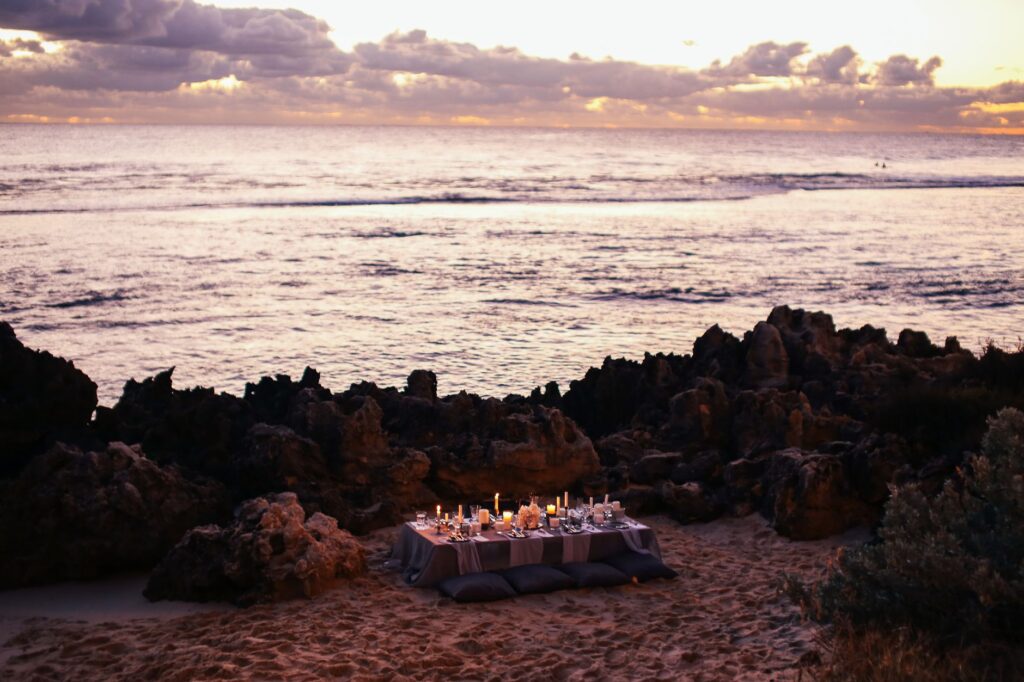
For those seeking a luxury experience, the island’s resorts offer gala dinners that are true gastronomic milestones. Internationally renowned chefs work alongside local talent to create menus that fuse French techniques with Mauritian ingredients. Imagine a bluefin tuna carpaccio with passion fruit vinaigrette, or a wagyu beef tenderloin with an island spice crust. These banquets are often held under the stars, with tables set on the sand and the sound of waves as background music.
These establishments place a special emphasis on local seafood. Rock lobster, giant prawns, and calamari are grilled with garlic butter and fresh herbs. It is a sophisticated cuisine that never loses sight of its roots, offering a refined interpretation of street flavors. New Year’s Eve at these hotels usually culminates in themed parties that last until dawn, combining the elegance of a tuxedo with the freedom of bare feet on fine sand.
Practical guide
If you are planning to spend the holidays in Mauritius, keep in mind that it is the peak high season. It is essential to book accommodation and flights at least six months in advance. The weather is hot and humid, with temperatures ranging between 25°C and 33°C, so light linen and cotton clothing are essential. Don’t forget high-SPF sunscreen and insect repellent, especially for outdoor evenings.
- Transport: Renting a car is the best option for exploring the island at your own pace, though driving is on the left (a British legacy). Taxis are plentiful, but agree on the price before getting in.
- Language: English is the official language, but French and Mauritian Creole are the most widely spoken. A few words in Creole like «Bonzour» (Good morning) or «Mersi» (Thank you) will open many doors.
- Currency: The Mauritian Rupee (MUR). Credit cards are accepted in most establishments, but it’s wise to carry cash for markets and street food stalls.
- Gastronomy: Don’t be afraid to try street food; it is generally safe and delicious. Look for the stalls with the most locals.
- Cultural Respect: When visiting temples or private homes, remember to remove your shoes. Modesty in dress is appreciated outside of beach areas.
Finally, let yourself be carried away by the island’s slow pace. Mauritius at Christmas is not a place for rushing. It is a destination for watching the sun drop behind a palm tree while holding a cool drink, for enjoying a conversation without checking the clock, and for understanding that the true celebration lies in diversity and the warmth of its people. At the end of your trip, what you will remember most won’t just be the blue of the water, but the sweet taste of a shared lychee and the smile of those who wished you a happy new year in a tongue that, though foreign, sounds like home.