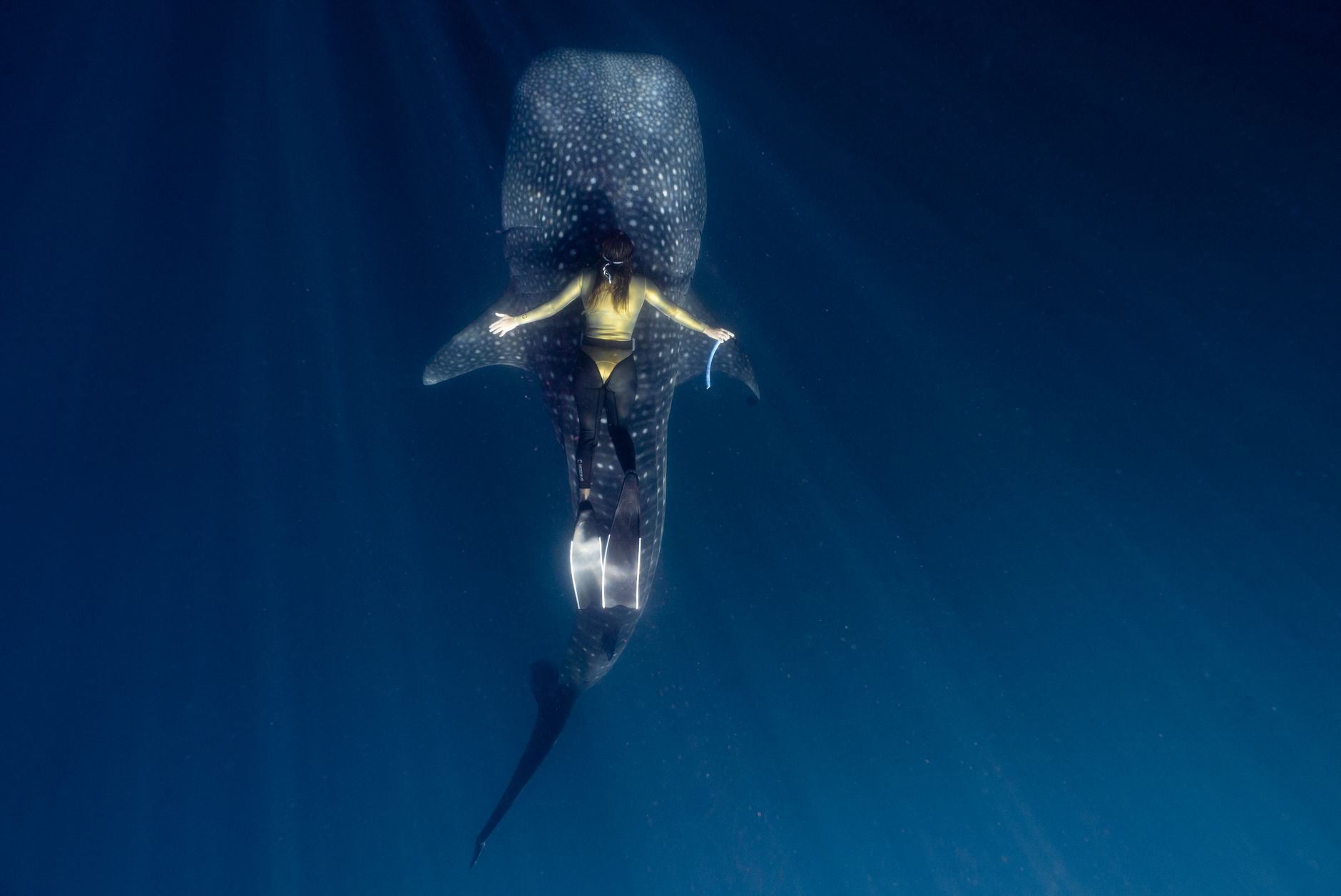

The deep waters of Cenderawasih Bay, located in the northeastern corner of Indonesia’s West Papua province, harbor one of the most unique oceanographic and biological phenomena on the planet. In this isolated corner of the archipelago, the Rhincodon typus, commonly known as the whale shark, has established a symbiotic and daily relationship with local fishermen on traditional wooden platforms known as bagans. This marine sanctuary stands out not only for the clarity of its coral bottoms and endemic biodiversity, but for offering a natural laboratory where large pelagic fauna converges with human subsistence dynamics in a fragile equilibrium.
Understanding the constant presence of these cartilaginous giants in Cenderawasih requires looking toward monsoon currents and the Gulf’s bathymetry. Unlike other regions of the world where whale sharks are merely seasonal migratory visitors, the protected waters of the national park act as a permanent feeding zone due to the concentration of small baitfish attracted by the lights of the bagans during the night. This millenary interaction has transformed the behavioral ecology of the species in the area, turning scientific observation and ecotourism into key vectors for its long-term protection.
The Oceanography of the Gulf and Seasonal Upwellings
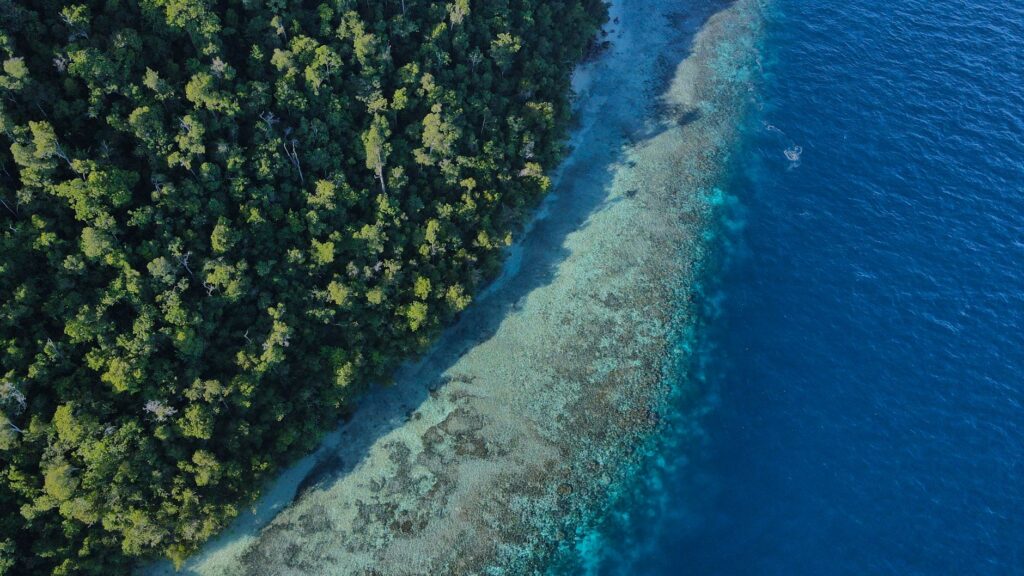
Cenderawasih Bay National Park spans over one and a half million hectares, combining fringing coral reefs, mangroves, and oceanic trenches exceeding one thousand meters in depth. The oceanic currents flowing from the western Pacific interact with the insular platform of New Guinea, generating nutrient upwellings that sustain an exceptionally rich trophic chain. This constant flow of cold, plankton-rich water is the invisible engine enabling the development of dense populations of small pelagic fish, the staple food of the whale shark.
Researchers from Indonesia’s Ministry of Environment and Forestry note that the bay’s thermal stability, with surface temperatures predictably fluctuating between 28 and 30 degrees Celsius, provides the ideal thermoregulatory habitat for these ectothermic animals. Furthermore, the historically low industrial pressure in this remote section of Papua has preserved the integrity of benthic habitats. Coral formations act as natural barriers dampening wave energy, creating calm zones where juvenile specimens, which dominate local sightings, can swim and feed without the physical exertion demanded by strong open-sea currents.
Feeding Behavior and Symbiosis with the Bagans
One of the most fascinating aspects documented by marine biologists in Cenderawasih is the whale shark’s feeding strategy associated with artisanal fishing structures. Bagans are floating platforms anchored several kilometers off the coast, equipped with lift nets and powerful lights turned on at nightfall to attract schools of anchovies and shrimp. Whale sharks have learned to associate nocturnal illumination and engine noise with an inexhaustible source of easy food, approaching the surface and vacuuming fish directly from the nets through their characteristic suction.
This artificial trophic dependence sparks important scientific debates regarding the natural behavior of the species. While some conservationists fear altering migratory routes might affect long-term genetic health, satellite telemetry data demonstrate that many individuals continue alternating these feeding visits with excursions into the open ocean. Local fishermen, meanwhile, consider the whale shark a symbol of good fortune and rarely interfere with its presence, establishing a peaceful coexistence rooted in cultural respect and ancestral Papuan tradition.
The coexistence between bagans fishermen and whale sharks in Cenderawasih proves that the most effective marine conservation is often born from local complicity rather than bureaucratic imposition.
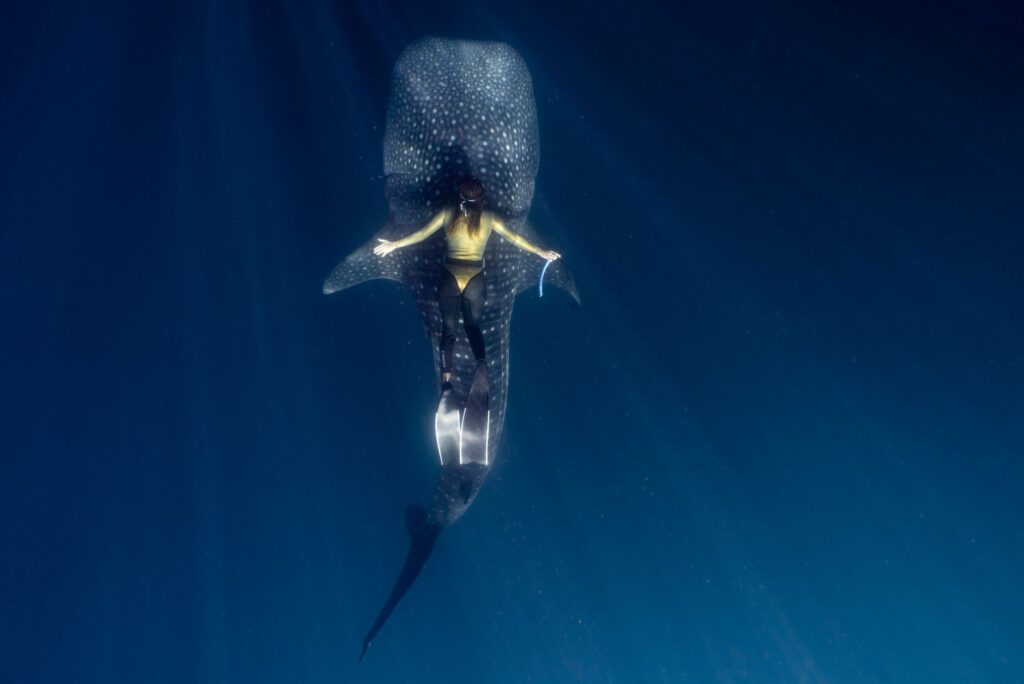
Morphological study of individuals frequenting the platforms has allowed cataloging unique skin spot patterns, equivalent to fingerprints, facilitating precise population censuses. These photographic records, managed in collaboration with international conservation organizations, reveal a high return rate of the same individuals year after year, confirming that Cenderawasih Bay functions as a critical growth and socialization area for young males before reaching sexual maturity and venturing into deep oceans.
Population Dynamics and Juvenile Demographics
The demographic profile of whale sharks in Cenderawasih Bay presents a notable anomaly compared to other global aggregations: the overwhelming majority of sighted individuals are young males, ranging between four and seven meters in length. Adult females and larger specimens rarely approach the shallow waters of the fishing platforms, suggesting spatial segregation based on sex and age that marine biologists are still striving to fully decipher.
This preference of juveniles for the protected waters of West Papua increases their vulnerability to local alterations, but also facilitates the implementation of scientific tagging and tracking programs. Mitochondrial DNA analyses extracted from small skin biopsies indicate that the Cenderawasih population maintains a healthy genetic diversity, connected via oceanic corridors with populations in the Banda Sea and the Coral Triangle. However, experts warn that any drastic shift in water temperature or industrial overfishing of small pelagics could collapse this delicate food web.
Ecotourism Pressure and Sighting Protocols
Over the past decade, the progressive opening of West Papua to nature tourism has transformed the bay into a pilgrimage destination for scuba divers and underwater photographers worldwide. This visitor influx, while generating vital economic revenue for coastal communities and reducing exclusive reliance on extractive fishing, carries significant risks if not managed with scientific rigor. Irresponsible interaction, such as excessive flash photography, physical contact with the animal’s skin, or obstructing its surface breathing routes, triggers acute stress levels in the sharks.
To mitigate these impacts, national park authorities, in collaboration with conservation NGOs, have implemented strict sighting rules. These regulations include prohibiting touching animals, maintaining a minimum distance of two meters from the body and four from the tail zone, and limiting the number of boats permitted simultaneously alongside each bagan. Compliance is monitored via joint patrols of park rangers and local community representatives, ensuring tourism functions as an active preservation tool rather than an environmental degradation factor.
Coral Restoration and Habitat Connectivity
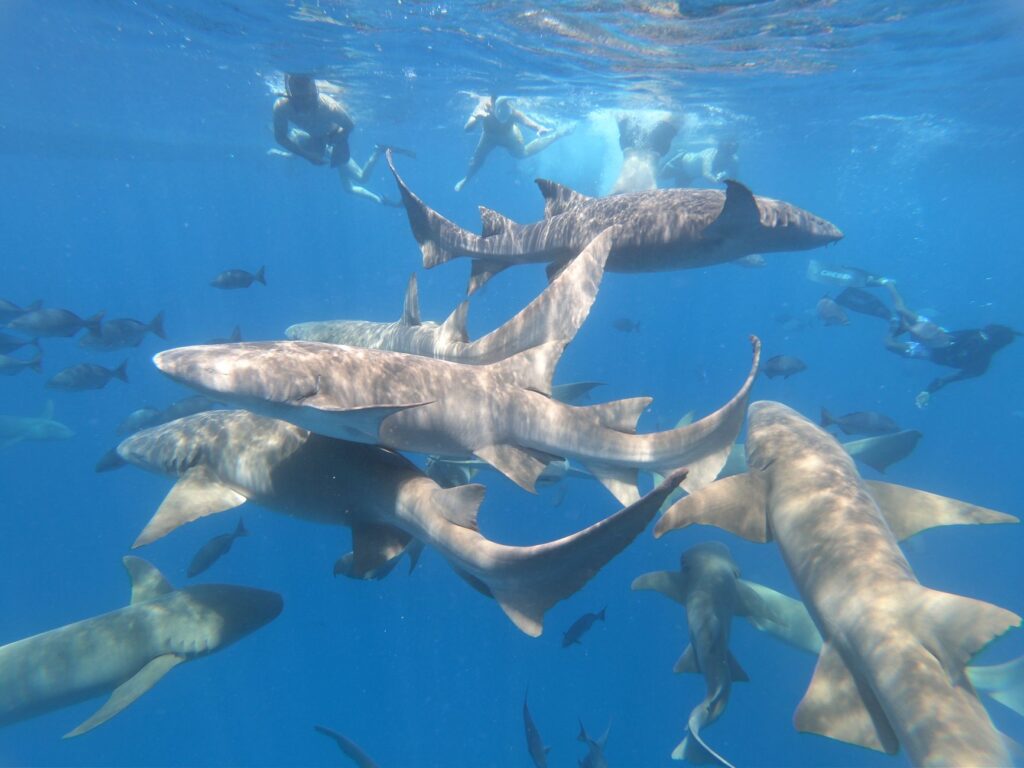
The health of the whale shark in Cenderawasih is inextricably linked to the health of its coral reefs. The bay’s peripheral reefs have suffered isolated coral bleaching episodes due to global thermal anomalies associated with El Niño, prompting local active restoration initiatives. Using underwater nurseries and mineral structures charged with low-intensity electric current, marine biologists and local volunteers replant heat-resistant coral fragments in the most degraded zones.
This connectivity between megafauna protection and benthic habitat restoration ensures the entire ecological chain maintains resilience against climate change. The preservation of coastal mangroves plays an equally critical role, acting as spawning and nursery zones for fish that will later serve as food in open waters. Thus, the Cenderawasih Bay ecosystem reveals itself as a complex mechanism where each physical and biological element fulfills an irreplaceable function in the global survival of the sanctuary.
The true measure of conservation in West Papua does not lie in the absence of human activity, but in the capacity to harmonize traditional subsistence with the scientific protection of marine treasures.
Educational programs directed at schools on Kwatisore and Rumberpon islands complement these technical actions, instilling in new generations the importance of safeguarding marine resources. The transmission of traditional ecological knowledge, combined with contemporary ocean science, consolidates a participatory management model serving as an international benchmark for conserving large marine vertebrates in Southeast Asia.

Practical guide
How to get there: Accessing Cenderawasih Bay requires flying from Jakarta or Bali to Manokwari or Nabire airports in West Papua, usually connecting through Makassar or Jayapura. From Nabire, speedboats are hired toward the bagans anchoring zones.
Best time to visit: Although whale sharks are present year-round due to continuous fishing activity, the months between May and October offer the most stable weather conditions and optimal underwater visibility.
Permits and fees: Obtaining entry permits for Cenderawasih Bay National Park (Kawasan Konservasi Perairan Daerah) is mandatory, along with paying the marine conservation fee destined for patrol maintenance and community support.
Accommodation: Land-based hotel options are limited in Nabire and Manokwari. The most immersive choice is booking liveaboard diving cruises based in Sorong or joining ecotourism stays managed by local communities on islands like Nabire.
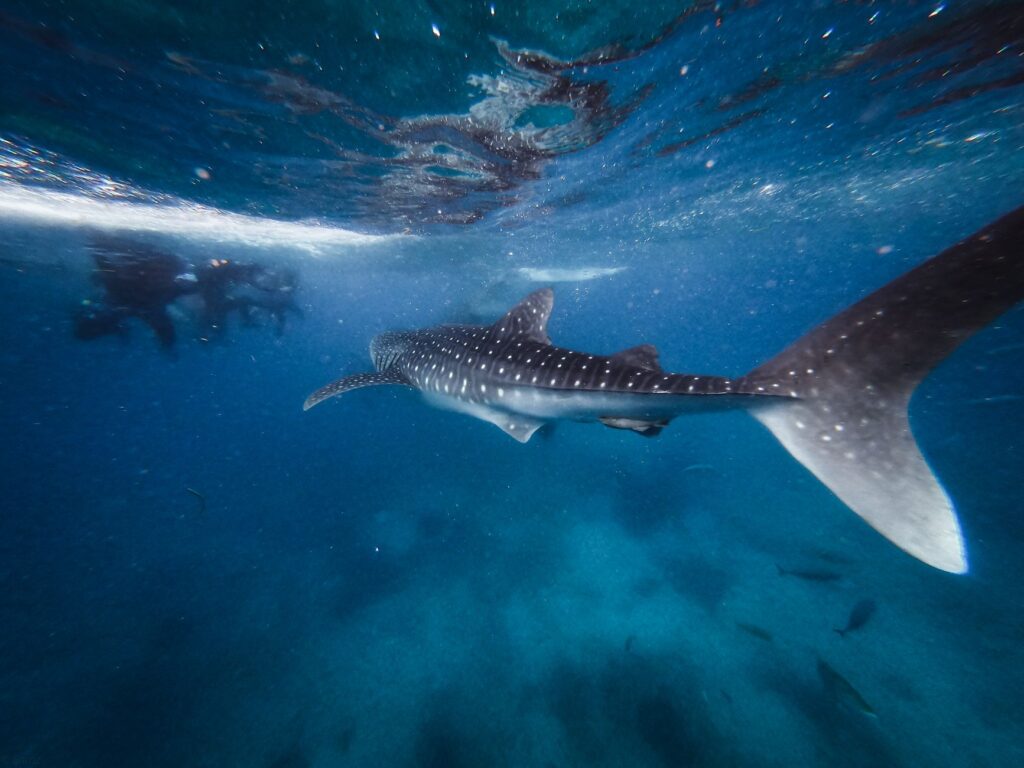
Recommended gear: Light wetsuit (3 mm), mask, snorkel, and fins. Flash photography must strictly follow park guidelines to avoid altering juvenile visual behavior.
Health and safety: Travel insurance covering emergency medical evacuation is essential, as medical infrastructure in the Papua region is extremely basic. Malaria prophylaxis is recommended per medical advice.
The tropical sun drops rapidly over the horizon of Cenderawasih Bay, dyeing the water a deep copper tone while bagans engines begin to roar softly in the distance. Beneath the surface, in the twilight illuminated by artificial light beams, the colossal, unhurried silhouette of a whale shark emerges from nowhere, gliding with undisturbed elegance among bubbles and fishermen’s nets. In that instant of absolute underwater silence, where ocean immensity intersects with the animal’s ancestral gaze, one realizes that the true wealth of this West Papua frontier lies not in the resources we extract, but in the shared fragility compelling us to protect it.