
The Liquid Artery of Central Europe
For millennia, the Rhine River has served as the backbone of the European continent, uniting alpine glaciers with the North Sea across more than twelve hundred kilometers of navigable waterway. Far from the purely idyllic postcard image often promoted in tourism brochures, the section known as the Romantic Rhine Gorge—designated a UNESCO World Heritage Site—operates today as one of the most complex and heavily trafficked logistics and passenger transport corridors in the world. Here, water is not merely a scenic backdrop, but a living highway where state-of-the-art river cruise ships, heavy-tonnage cargo barges, and local ferries coexist to maintain an uninterrupted social and economic fabric across both banks.
Understanding this fluvial corridor requires looking far beyond the mirror-like surface of the water. Navigation in the Middle Rhine is governed by the Central Commission for the Navigation of the Rhine (CCNR), the oldest active international body on the planet, established in the nineteenth century to guarantee commercial freedom and safety on its waters. In this narrow, winding stretch, where the rocky riverbed and unpredictable currents demand absolute respect, ship captains must master both traditional seamanship and the most advanced satellite positioning and river radar systems.
The precise synchronization between port infrastructure, containment dikes, and commercial traffic defines the true identity of this river valley. Every single lock and navigational marker along the banks of Rhineland-Palatinate reflects meticulous planning designed to prevent collisions and optimize the transit of millions of tons of goods and thousands of travelers each season.
Geography of a Gorge Sculpted in Slate
The fluvial canyon of the Middle Rhine between Mainz and Koblenz is the result of violent tectonic activity and millions of years of erosive water action cutting through the Rhenish Slate Mountains. The slopes, rising steeply hundreds of meters above the river level, are composed of dark slate strata that absorb solar radiation during the day and slowly release it at night, creating a unique microclimate highly favorable for heroic steep-slope viticulture.
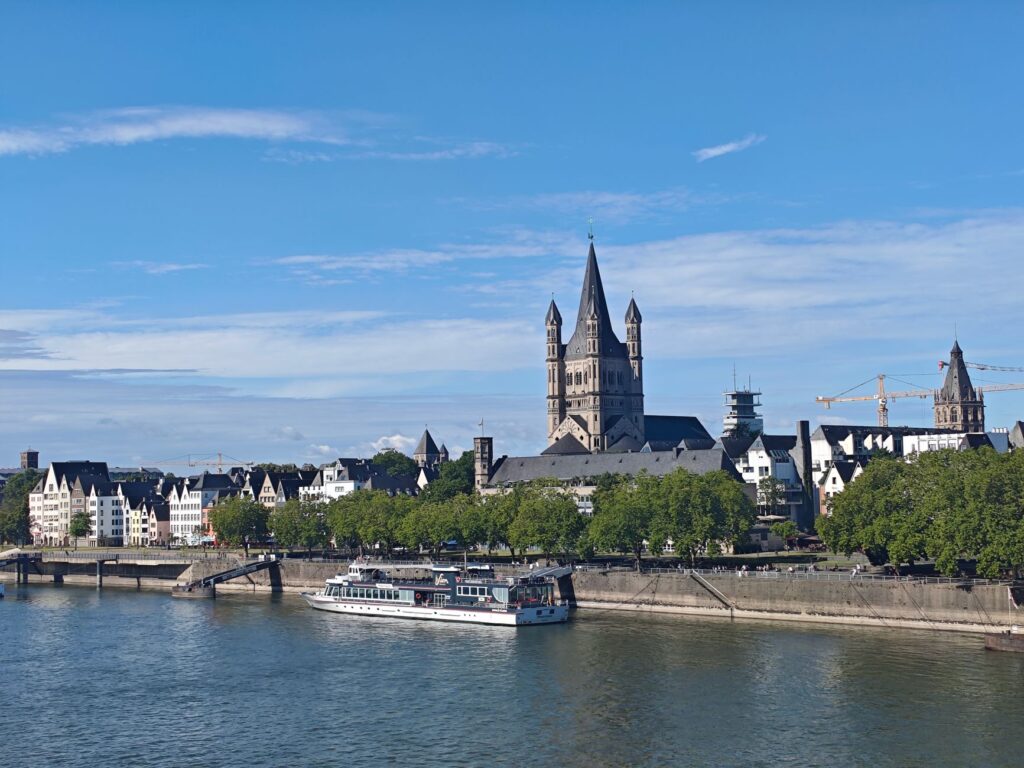
This vertical topography absolutely conditioned the historical development of land transport. For centuries, the banks of the Rhine were little more than bridle paths impassable during winter floods, making the river itself the sole fast and secure route for trading textiles, wine, and precious minerals. The arrival of the railway in the nineteenth century, with the construction of the left and right bank lines, pierced the cliffs through dozens of tunnels, redesigning the landscape with metal viaducts and ashlar stone stations that now form an inseparable part of the region’s technical heritage.
The visual contrast between natural volcanic stone and civil engineering interventions reveals humanity’s capacity to tame a hostile geographical environment without distorting its core essence. Today, high-speed trains and freight locomotives run parallel to the water’s course, creating a continuous symphony of iron and current that accompanies the traveler around every bend of the road.
The Architecture of Feudal Power and Custom Control
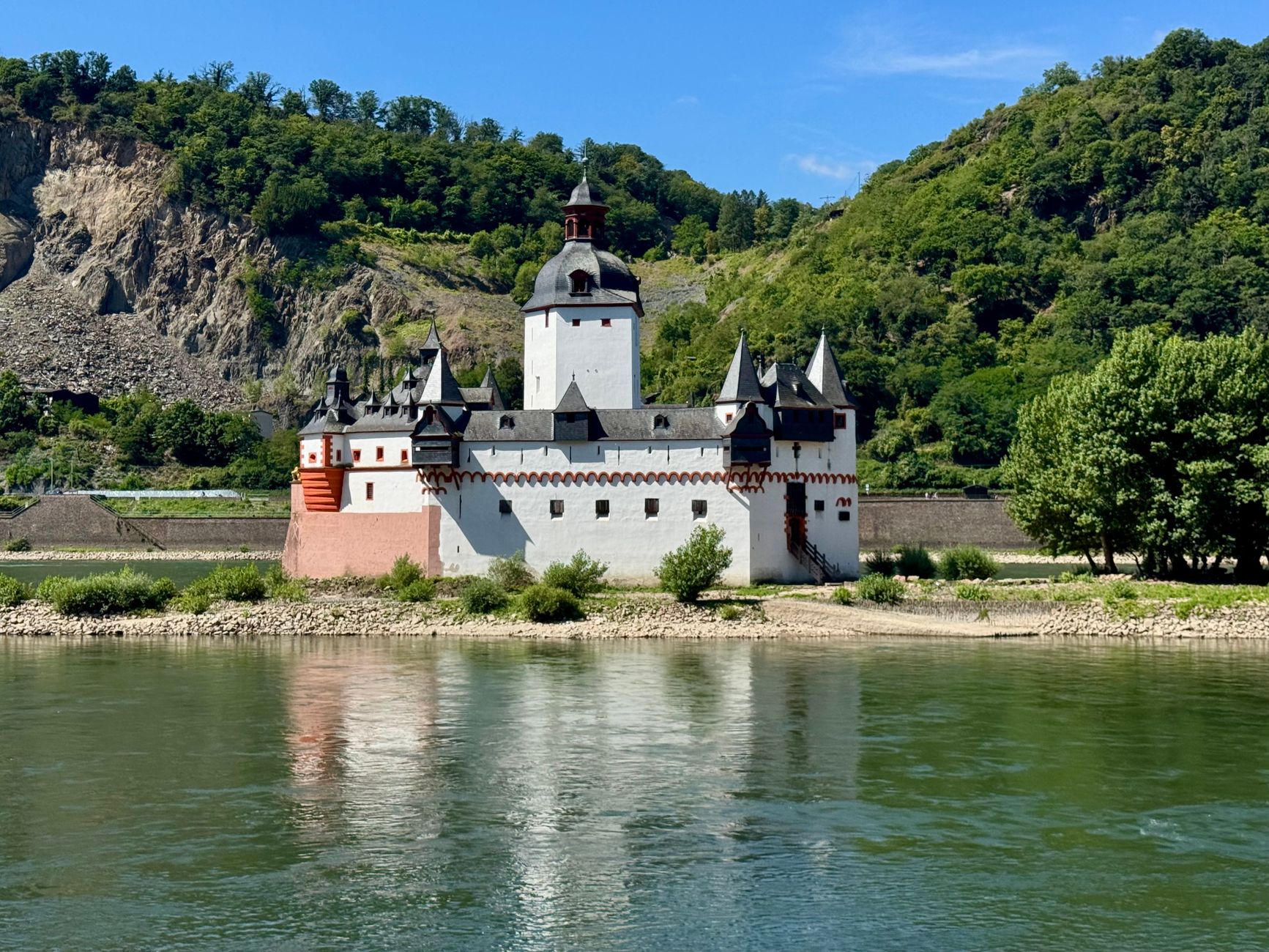
If the river constitutes the highway, the castles perched on rocky outspurs represent the control system that dominated medieval traffic. Unlike residential fortresses built in flat valleys, the defensive structures of the Rhine—such as Pfalzgrafenstein Castle, boldly positioned on a rock islet in the middle of the channel, or the imposing Katz Castle—were conceived as heavily armed customs posts designed to levy taxes on commercial vessels traveling up or down the current.
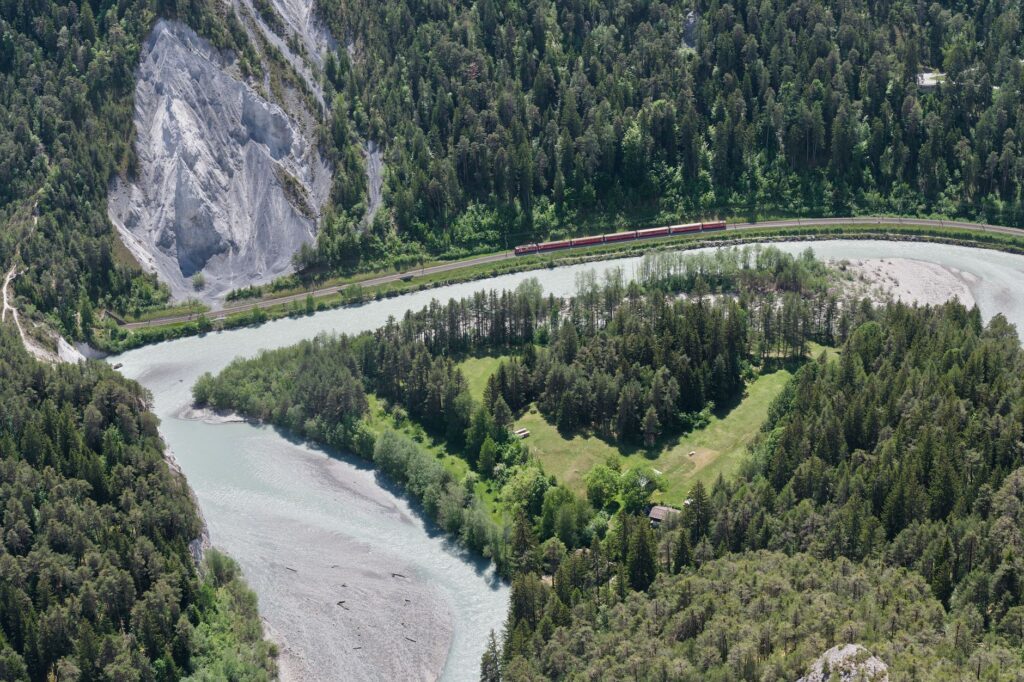
These sandstone and slate strongholds functioned not only as military bastions but also as nerve centers of a toll economy that enriched the Prince-Electors of the Holy Roman Empire. The military architecture of the area adapted with surgical precision to the scarcity of space on rocky summits, prioritizing cylindrical keeps capable of withstanding early artillery impacts and tiered curtain walls that followed the contour lines of the terrain.
The legacy of these medieval fortresses transcends the purely aesthetic; they are tangible proof of how the control of river transport dictated the political and economic hegemony of Central Europe. Today, many of these structures have been meticulously restored to house historical interpretation centers, high-end hotels, or youth hostels, allowing contemporary travelers to grasp the strategic magnitude of this corridor.
The Legend and Reality of the Lorelei Rock
No analysis of the Romantic Rhine would be complete without examining the myth of the Lorelei, the 132-meter-high slate cliff rising on the right bank near Sankt Goarshausen. While nineteenth-century romantic imagery popularized the ballad of the river nymph whose songs bewitched sailors and drove them against the reefs, the technical reality of the site is far more prosaic yet equally fascinating: a lethal combination of violent crosscurrents, a narrow riverbed, and hidden submerged rock banks.
Until the mine-clearing and dredging operations carried out in the late nineteenth and twentieth centuries, this stretch represented the most dangerous hazard on the entire river route between Basel and Rotterdam. Early boatmen and barge masters had to sound horns and bells to warn of their position amid the dense morning fog that frequently settles within the gorge.
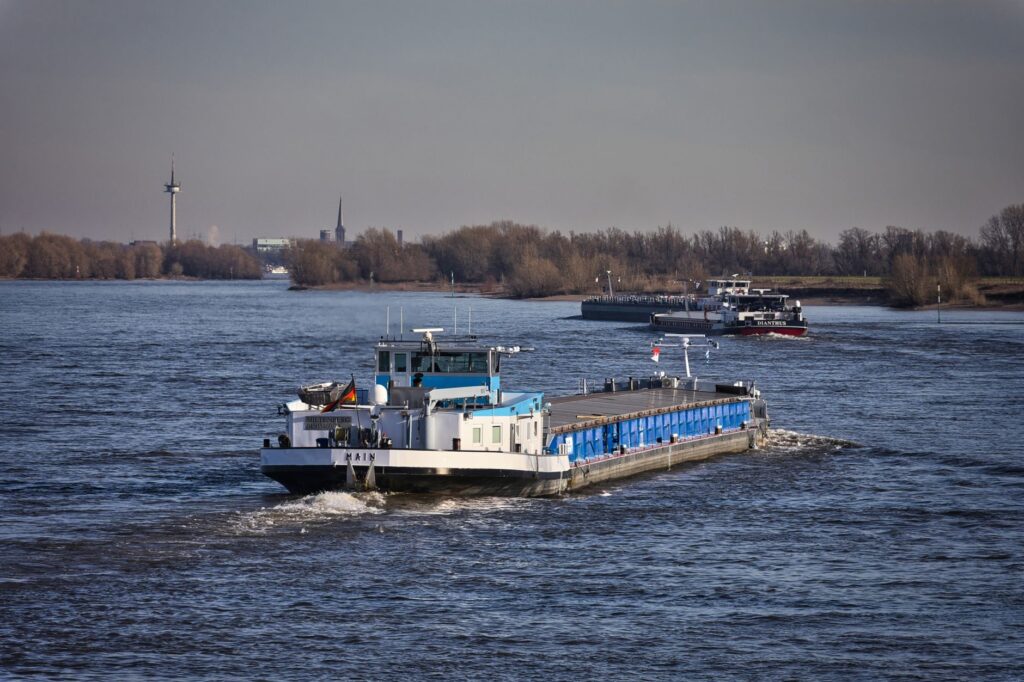
The navigational expertise required at the Lorelei bend has evolved from the collective physical effort of towing crews to the modern precision of short-range radar systems. Today, a modern signal station electronically manages vessel crossings in this sector of reduced visibility, guaranteeing safe passage without diminishing an ounce of its mythical and breathtaking natural beauty.
The Viticultural Pulse and Riverside Logistics
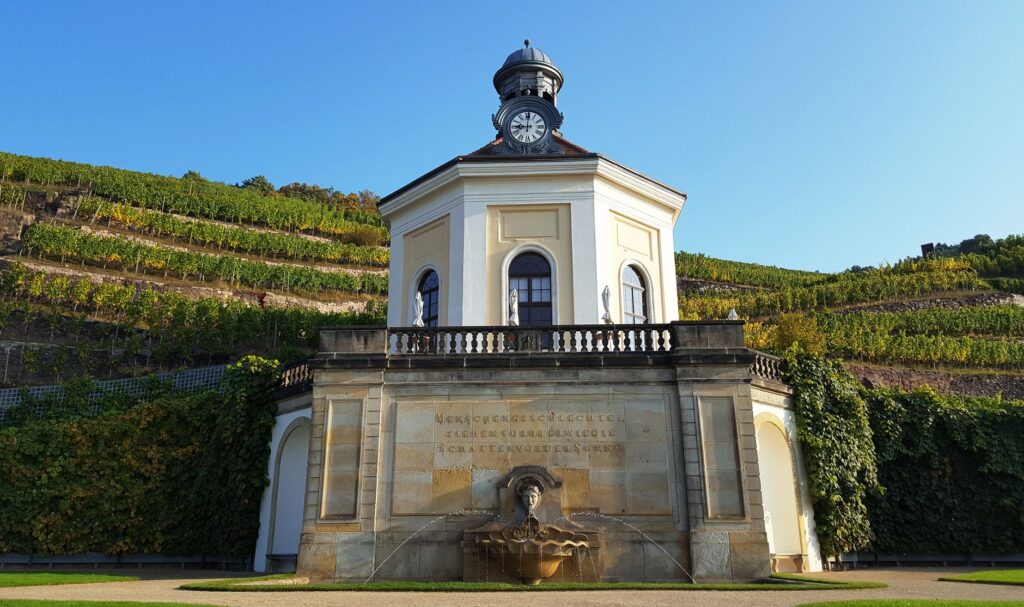
The steep slopes flanking the river do not merely support castles and railway tracks; they also sustain one of Europe’s most demanding winemaking traditions: the heroic cultivation of Riesling grapes. Due to the extreme inclination of the terrain, which in some places exceeds sixty degrees of slope, the use of heavy agricultural machinery is entirely unviable. All vineyard labor—from winter pruning to the manual October harvest—is carried out through human effort and the support of small rack-and-pinion monorails installed across the dry-stone terraces.
This agriculture of high topographical demand integrates seamlessly into regional transport logistics. Wines produced in these tiny, independent parcels rely on passenger boats and riverside roads as their primary distribution channels toward international markets, closing an economic circle where landscape, product, and mobility are inextricably linked.
The preservation of these slate terraces is not merely an aesthetic concern, but a natural civil engineering work that prevents massive slope erosion and regulates drainage toward the main channel. Visiting local wineries allows visitors to understand how generations of wine-growing families have adapted their production methods to twentieth-century logistical and climatic demands without sacrificing the authenticity of their ancestral practices.
The Contemporary River Cruising Experience
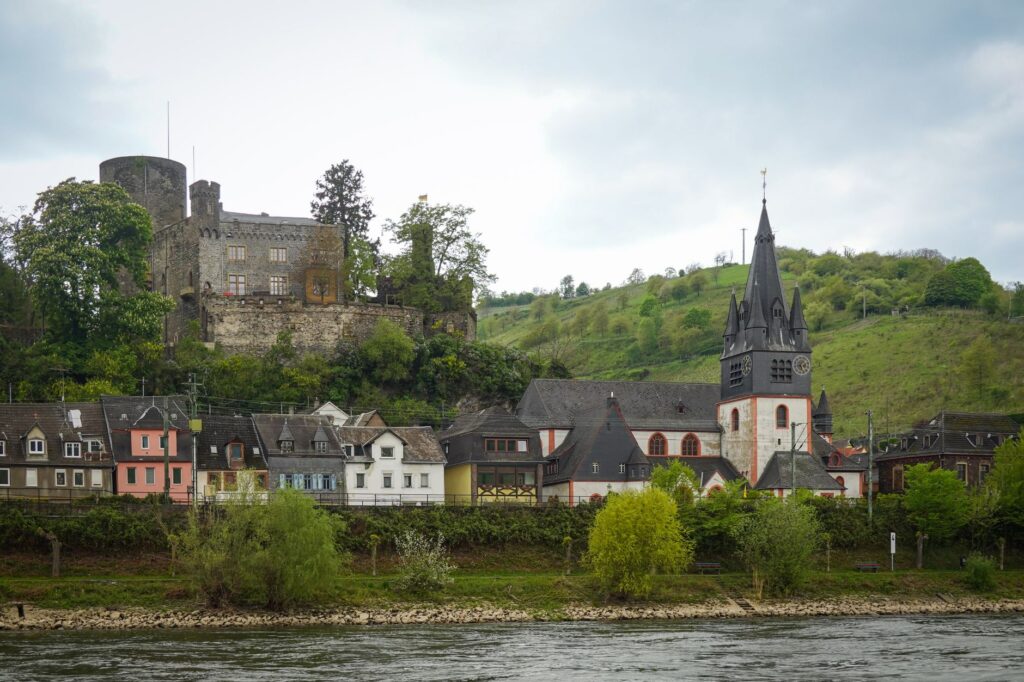
Traveling along the Rhine today offers a unique perspective on sustainable mobility and low-impact cultural tourism. Modern passenger vessels operating the route between Mainz and Cologne combine hybrid and low-emission diesel propulsion systems, complying with strict environmental regulations imposed by the European Union for inland waterways. These ships act as floating hotels that allow travelers to slow down the pace and contemplate the succession of industrial, natural, and heritage landscapes without the stress of driving.
Unlike mass tourism that saturates other European capitals, river cruising on the Rhine fosters a model of extended stays in small riverside towns such as Bacharach, Oberwesel, or Boppard. Passengers regularly disembark to explore timber-framed historic centers on foot, visit local artisan workshops, or connect with long-distance hiking trails like the RheinCaminweg.
The secret of this journey lies in its ability to offer a humanized travel pace, where transit and contemplation form a single, indivisible experience. The infrastructure of floating docks and accessible gangways further facilitates the inclusion of travelers of all ages, making the voyage an exemplary model of inclusive tourism.
Practical guide
Planning a rigorous journey through the Romantic Rhine corridor requires keeping several fundamental logistical aspects in mind to optimize travel times and ensure an enriching experience.
- Getting there: Frankfurt am Main International Airport (FRA) is the primary gateway, located just one hour away by regional train from Mainz, the southern starting point of the gorge.
- River transport: The KD (Köln-Düsseldorfer) shipping company operates regular passenger services between April and October. Purchasing day passes is recommended to hop on and off freely at different towns.
- Railway connectivity: Train lines operated by DB (Deutsche Bahn) run closely alongside both banks with high frequency, connecting all key towns every thirty minutes.
- Accommodation: Advance booking is advised in small historical hotels housed in traditional architectural buildings in Bacharach or St. Goar. Many offer bicycle parking facilities.
- Recommended season: The months of May to June and September to October offer the best weather conditions, lower tourist crowds, and the opportunity to witness the grape harvest or the Rhein in Flammen pyrotechnic illumination festivals.
- Documentation and rules: The official currency is the euro. Sturdy footwear is essential for mountain trail hikes, and strict adherence to environmental protection signs in vineyard zones is required.
The Eternal Reflection in Twilight Waters
When evening begins to fade over the valley and the last rays of sunlight strike obliquely against the slate walls of castles suspended over the abyss, the Rhine assumes a deep, metallic hue that seems to suspend the passage of time. At that precise moment, seated on the stern deck of a barge moving silently northward, one understands that the grandeur of this landscape resides not solely in its imposing monumental catalog, but in the perfect harmony achieved between relentless nature and humanity’s millennial tenacity.
The lights of riverside towns begin to flicker on one by one, casting long golden wakes across the dark water while the distant whistle of a night train echoes against the gorge walls. It is the steady heartbeat of a communication route that never sleeps, an invisible bridge between feudal past and Europe’s sustainable future that continues to captivate all who dare to contemplate it from its very current.
The true magic of the Rhine is not a romantic mirage, but the enduring testimony that rivers are the true architects of Western civilization. A destination that demands to be explored without haste, with all senses alert, to capture the essence of a territory where every river bend holds a lesson in history, engineering, and life.