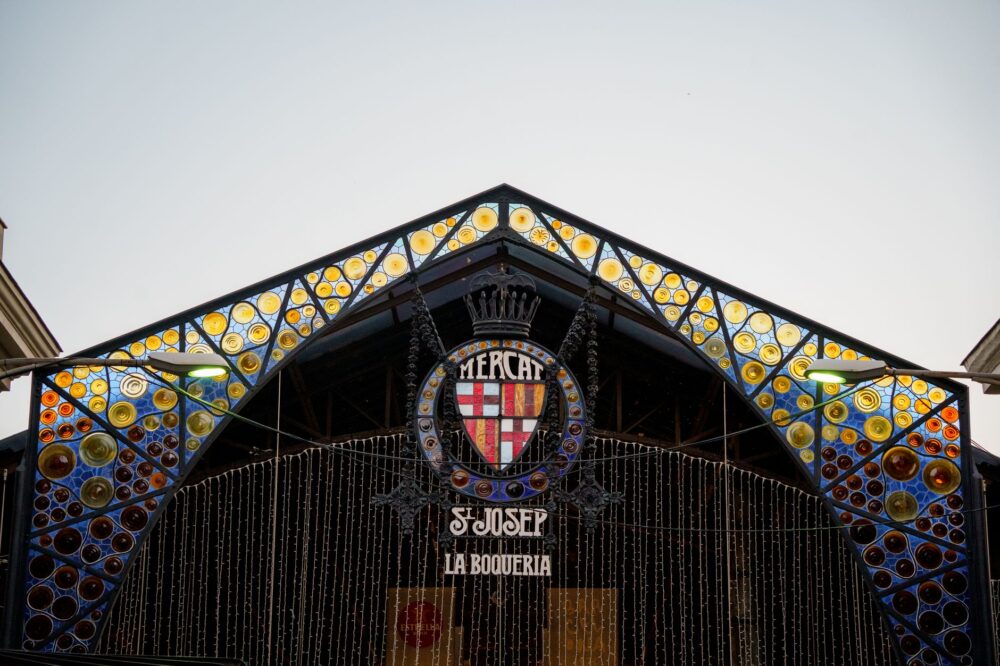
The dawn light over the Mediterranean Sea does more than merely illuminate the stone and iron facade of Alicante’s Central Market; it seems to gently draw back a curtain, revealing the most intimate larder of the Costa Blanca. At the city’s beating heart, this temple of provisions is not merely a commercial exchange point, but the faithful reflection of a culture where the sea and arid land have conversed for centuries. Stepping through its doors in the early morning hours means plunging into a liturgy of firm voices, steel knives sharpening against stone, and the unmistakable aroma of sea salt mingling with the sweetness of early figs.
This report investigates how territorial cuisine in Alicante resists the onslaught of tourist standardization through its food markets and the surrounding landscape of the Marina Alta. Geographically isolated by pre-coastal mountain ranges and historically oriented toward a sea of commerce and fishing, the villages of this region have forged an uncompromised culinary identity. How does ancestral gastronomy sustain itself when the natural environment transforms at breakneck speed, and what role do small local producers play in preserving this liquid and earthy memory?
The Halls of Flavor: Architecture of Iron and Living Stone
Inaugurated at the beginning of the twentieth century over the city’s former defensive bulwarks, the building of Alicante’s Central Market stands out for its functional layout and harmonious integration into the urban fabric. Beneath a diaphanous structure of cast iron, its halls shelter a perfectly ordered hierarchy of trades that has barely varied in its fundamentals. On the ground floor, dedicated to the fruits of the sea, local species such as the Denia red prawn or coastal shrimp shine with coral reflections over beds of crushed ice, displayed with the dignity of a pictorial work.

Veteran market vendors know the exact origin of each catch and recall the previous night’s tides with surgical precision. Fresh produce admits no unnecessary intermediaries in this link of the supply chain, where direct trade between fisherman and retailer guarantees a freshness difficult to replicate in large supermarkets. At the back of the main hall, the murmur gives way to the echo of secondary stalls, where cured fish displays roe, tuna mojama, and salted sardines—authentic vestiges of a time when preserving fish required ingenuity and maritime patience.
The Pulse of Marina Alta: Terraces, Cisterns, and Dry Farming
Leaving the urban bustle behind and heading into the province’s interior reveals a radically different landscape, dominated by terraced fields climbing the slopes of the Bernia mountain range and Montgó. Here, the land is stingy with rainfall, which forced ancient inhabitants to design a sophisticated network of cisterns, irrigation ditches, and dry-stone masonry walls to retain every drop of moisture. In these terraces grow the cherry trees, almond trees, and fig trees whose breva figs star in the region’s summer tables.
Dry-land agriculture in the Marina Alta does not seek industrial abundance, but rather the concentration of flavors. Alexandria Muscat grapes, cultivated on sea-facing terraces, ripen under an implacable sun before being transformed into sun-dried raisins or the area’s prized sweet wines. The harshness of the terrain forges a tenacious agricultural character, rejecting intensive farming and fiercely defending native varieties against the urban sprawl devouring the coastal strip.

The Liturgy of Rice: Geometry of Fire and Stock
To speak of Alicante without mentioning rice is to ignore the backbone of its culinary sociology. Unlike other latitudes where the grain acts merely as a support, in the Alicante regions rice is the result of a complex equation combining broth quality, vessel porosity, and the controlled intensity of sarment-wood fire. In traditional kitchens, the sofrito—the humble base of hanging tomatoes, garlic, and extra virgin olive oil—is slowly reduced until caramelized at the edges of the iron paella pan.
The use of rockfish broth or stocks made with scrap fish and mantis shrimp imparts a dense, deep body to the rice that impregnates every single grain. Improvisation has no place in this discipline; local master rice-cookers command the exact moment when the broth vanishes to yield to the ‘socarrat’, that coveted crispy, toasted layer synthesizing the quintessence of Mediterranean flavor. The direct-fire technique demands intuition and absolute respect for cooking times, turning a popular dish into an exercise in intuitive haute cuisine.
The Guardians of the Invisible Pantry
Behind every market stall and every recipe passed down from generation to generation lies a silent collective of artisans and foragers. They are the shepherds crafting raw goats’ milk cheese in interior valleys, the women manually cleaning and drying ñora peppers for seafood stews, and the boatmen respecting biological catch limits around Cape Nao. Without their daily labor, Alicante’s gastronomy would lose its real anchor and become a mere promotional gimmick devoid of substance.

These producers face formidable challenges: rural aging populations, a shortage of generational handover, and sanitary regulations often designed for large industries that penalize small-scale artisan operations. Despite everything, resistance organizes through direct sales channels and local zero-kilometer markets, where conscious consumers recognize the differential value of products with human and ecological traceability.
The cuisine of the Marina Alta and its capital is not a museum fossil, but an uninterrupted conversation between the fisherman defying the eastern gale and the farmer embracing the arid stone.
The Art of the Popular Brunch: More Than a Meal, a Social Pact
The Valencian and Alicante ‘esmorzaret’ deserves separate consideration within the region’s cultural anthropology. Far from being a simple morning snack, it constitutes a genuine ritual of socialization halting commercial activity between ten and eleven-thirty in the morning. At the bars of market taverns and traditional grocery stores, workers, office employees, and retirees share space around monumental sandwiches stuffed with blanquet, Easter sausage, leek omelet, or grilled squid.

This hearty morning meal is invariably accompanied by pickled olives, lupini beans, a earthenware porrón of local wine, and, as a finishing touch, a cremaet crafted from burnt rum, coffee beans, cinnamon, and lemon peel. The esmorzaret acts as an indisputable social equalizer, a democratic space where urban hierarchies dissolve beneath the aroma of freshly roasted coffee and bar camaraderie.
Practical guide
How to get there: Alicante boasts excellent railway connections via high-speed AVE trains from Madrid and commuter links with Valencia and Murcia. Alicante-Elche El Altet International Airport is located just 10 kilometers from the city center, with regular urban bus lines (Line C-6) connecting directly to the central market area in approximately twenty minutes.
When to go: The spring months (April to June) and early autumn (September and and October) offer optimal temperatures for touring both the urban market and the Marina Alta terraces, avoiding the heavy summer tourism while enjoying seasonal harvests.

Where to eat and shop: Alicante’s Central Market (Avenida Alfonso el Sabio) opens Monday through Saturday mornings; visiting the salted fish stalls and the ground-floor fish section is essential. For the esmorzaret, the surrounding market streets host century-old taverns like Bar Central or Mercado Bar. In the Marina Alta, towns like Dénia, Xàbia, and Teulada-Moraira offer restaurants rooted in unpretentious seaside recipes.
Route recommendations: Renting a vehicle is advised to travel along the N-332 highway and interior detours toward the Pop Valley, allowing travelers to discover historic cisterns, weekly local markets, and small producers of Muscat wine and extra virgin olive oil.
The Legacy of Scarcity and the Saline Horizon
As the afternoon begins to wane over the harbor basin and the last market stalls lower their metal shutters, Alicante recovers a slower, more reflective rhythm. The eastern wind stirs sailboat masts while the city breathes the persistent aroma of sea salt and wild fennel bordering orchard paths. There is no stridency in this sunset, but rather the silent realization that a land’s true wealth is measured by its capacity to endure through the flavors nourishing collective memory. At journey’s end, Alicante’s pantry reveals itself not as a resource warehouse, but as a living map where every bite tells the story of those who coaxed life from stone and sea.