The Azores archipelago, isolated in the heart of the North Atlantic, represents one of the last bastions where active geology and traditional architecture maintain a dialogue unaltered by time. Far from the congested routes of mass summer tourism, these nine volcanic islands emerge from the oceanic abyss as fortresses of black basalt, where human life has adapted millimetrically to the whims of wind, tide, and stone. Here, every sheltered harbor and every dry-stone wall tells a story of endurance and adaptation against an environment as beautiful as it is unforgiving.
Understanding the Azores requires immersing oneself in their insular condition, where inshore and deep-sea navigation has traditionally served as the sole umbilical cord to the outside world. The ocean currents brushing their coasts carry an exceptional marine biodiversity, turning the archipelago into a global sanctuary for cetaceans and a strategic outpost for scientific exploration. Through this report, we will examine how vernacular volcanic architecture and historical maritime routes shape the profound identity of a territory that constantly defies continental laws.

The Genesis of Fire and Water: The Living Geology of the Islands
The formation of the Azores stems from a complex system of tectonic fractures where the Eurasian, African, and North American plates converge. This geological hot spot endows the islands with an abrupt topography dominated by colossal craters, emerald lagoons, and calderas that store the millennial memory of the planet. Volcanic rock is not merely the physical substrate upon which life settles, but the construction material par excellence that defines the visual landscape of each island.
Unlike other island regions where timber abounds, the historical scarcity of large forests in the Azores forced settlers to erect their homes, churches, and retaining walls using exclusively black basalt. This exposed-stone architecture, paired with white lime highlighting openings and corners, creates an unmistakable chromatic contrast. Buildings cluster tightly against cliffs or take refuge in fajanas—those milk-like lava platforms spilled over the sea that today harbor the archipelago’s most fertile microclimates.
Basalt Architecture and the Geometry of Dry-Stone Walls
The agrarian landscape of islands like Pico or São Miguel is crisscrossed by thousands of kilometers of dry-stone walls, locally known as currais. These enclosures are not mere administrative boundaries; they act as authentic thermal shields and windbreaks designed to protect delicate crops, especially traditional vineyards. The mastery with which ancient stonemasons fitted each piece of basalt without using any mortar constitutes an ethnographic heritage of incalculable value.
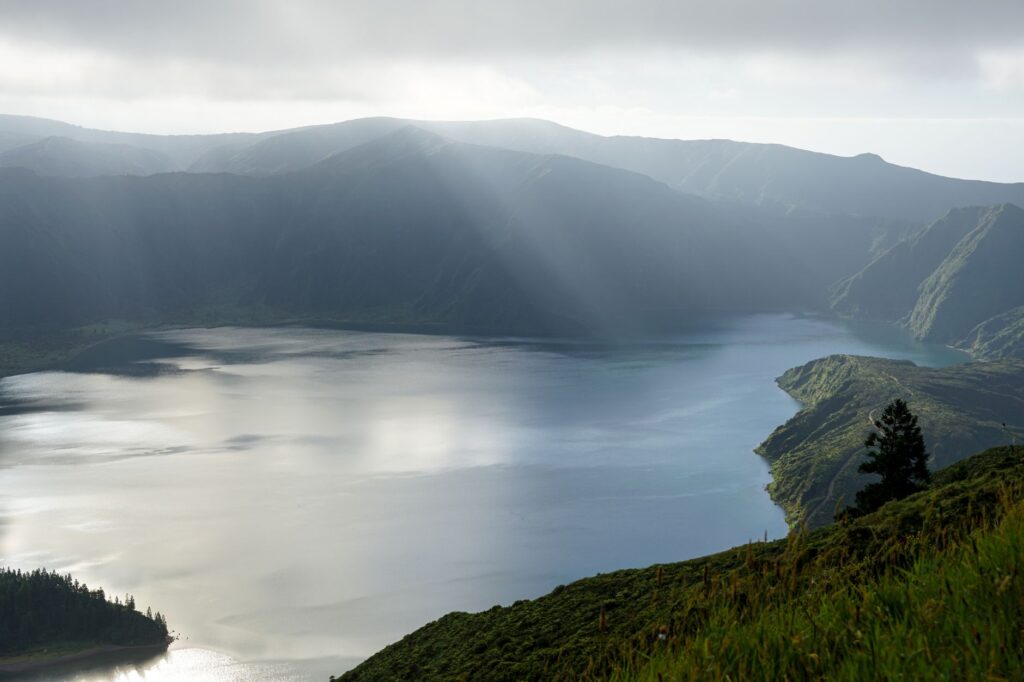
Within urban centers, civil architecture reflects a noble sobriety, conditioned by the need to withstand the onslaught of Atlantic storms. Manor houses and parish churches combine dark volcanic stone with lighter stonework elements, displaying an architectural restraint that shuns peninsular baroque excess. Each gabled roof and deep window recess reveals a constant pursuit of structural balance against perpetual humidity and dominant western winds.
Oceanic Navigation and Shelters in the Atlantic Abyss
For centuries, the isolation of the Azores made the sea its sole avenue of communication and sustenance. Harbors, carved out of the basaltic rock with pickaxes or protected by imposing natural breakwaters, represent milestones in historical civil engineering. From the sheltered roadsteads of Horta to the small jetties of São Jorge, port infrastructure has evolved from hosting whaling ships and transport schooners to modern research and ecotourism marinas.
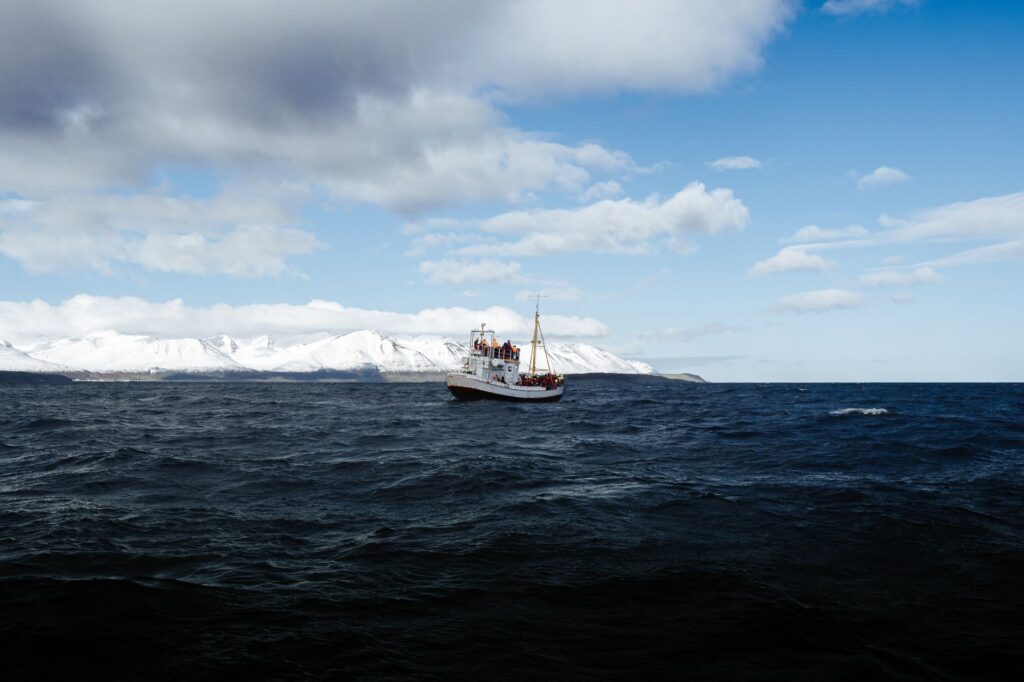
Navigation in these waters demands deep knowledge of local meteorology and tidal dynamics. Nutrient-rich Atlantic currents generate unpredictable swells that have tested the skill of generations of Azorean sailors. Today, maritime tradition is perpetuated through responsible cetacean observation and inter-island voyaging, allowing contemporary travelers to experience the exact sensation of oceanic vastness felt by the first Portuguese navigators in the 15th century.
Agrarian Pulse and the Biodiversity of Microclimates
The combination of latitude, mountainous relief, and the moderating influence of the ocean produces a surprising multiplicity of microclimates across the Azores. In a single day, travelers can transition from the subtropical coastal fringe—where pineapple and banana plantations thrive—to misty summits covered in peat bogs and endemic vegetation. This ecological diversity has shaped a unique subsistence agriculture based on the intelligent harnessing of ambient humidity and volcanic soil fertility.

Tea plantations on the island of São Miguel, unique in Europe, stand out by leveraging thermal mildness and constant rainfall to produce high-end infusions through traditional methods. Likewise, extensive livestock farming utilizes high-altitude pastures during summer months, configuring an intensely green rural grassland landscape that contrasts dramatically with the dark blue ocean and mineral black of the cliffs.
Thermal Sanctuaries and the Hidden Energy of the Subsoil
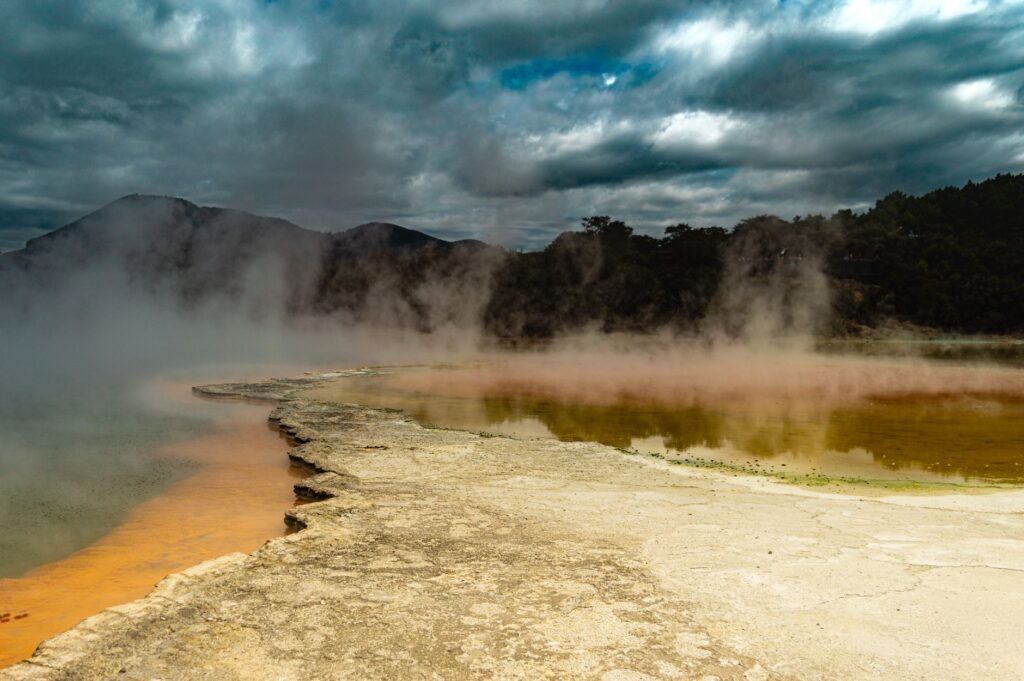
The constant presence of volcanic activity manifests peacefully and healingly through numerous thermal springs and fumaroles. In places like Furnas on São Miguel, mineral-medicinal water wells up at high temperatures, laden with minerals valued for centuries for their therapeutic properties. Historic bathhouses and natural pools carved into the rock offer spaces for introspection where water vapor and surrounding subtropical vegetation merge into a unique sensory experience.
This geothermal energy not only fuels wellness and hydrotherapy but also shapes local gastronomy. The region’s most emblematic dish, the cozido das Furnas, slow-cooks for hours buried in the volcanic soil, harnessing the natural heat from the earth’s core. It is a prime example of how insular communities have integrated extreme geological elements into daily life and culinary culture.
The Atlantic does not separate the islands; it unites them through an invisible code of tides, winds, and silence that only those who navigate with patience manage to decipher.
The future of the archipelago relies on a delicate balance between preserving its fragile ecosystem and intelligently managing tourism that seeks authenticity. Sustainable development policies implemented in recent years prioritize the protection of marine and terrestrial habitats, limiting mass tourism and championing scientific research as an economic engine. The Azores thus consolidate themselves as a model of ecological resilience where humans learn to coexist respectfully with the colossal power of a living planet.
Practical guide
- Getting there: The archipelago features regular air connections from Lisbon and Porto to the international airports of São Miguel (PDL) and Terceira (TER), alongside inter-island flights operated by SATA Air Açores.
- Local transport: To thoroughly explore each island, renting an all-terrain vehicle or compact car is the most efficient choice. Atlanticoline ferries operate seasonal routes between islands during summer months.
- Best time to visit: Between May and September, weather conditions are more stable, ideal for sailing and whale watching. Spring stands out for the massive blooming of hydrangeas.
- Recommended accommodation: Priority is given to restored rural tourism houses featuring exposed-stone architecture and small boutique hotels integrated into protected natural environments.
- Essential gastronomy: Taste the designated-origin São Jorge cheese, local seafood such as fresh limpets (lapa), and the traditional cozido das Furnas prepared with geothermal heat.
- Required equipment: Technical mountain footwear, high-quality waterproof jackets, and windbreakers are essential, as island weather can change radically within hours.
- Environmental respect: Altering dry-stone walls, collecting endemic plant species, or disturbing marine wildlife during whale-watching excursions is strictly prohibited.
At dusk, when the golden Atlantic light bathes the basalt cliffs of Fajã dos Cubres, the islands of fire reveal their true spiritual dimension. The steady murmur of waves against the volcanic breakwater and the dark profile of mountains silhouetted against the horizon sketch a landscape of magnetic and overwhelming beauty. In this Atlantic outpost, where the earth still breathes through subterranean heat and the sea sets the rhythm of each day, travelers find more than a destination: they discover the certainty of belonging to an ancient, wild, and deeply alive world.