
Origins of a Transformation in the High Alpine Mountains
At the heart of the Western Alps, the Gran Paradiso National Park is not merely a biodiversity sanctuary where ibex roam freely across rugged ridges; it is also an open-air laboratory where the future of rural mobility is being rethought. For decades, private motorized access to surrounding valleys—such as Valsavaranche and Cogne—placed unsustainable pressure on fragile subalpine ecosystems. The cumulative emissions from thousands of summer vehicles threatened to degrade air quality and erode the edges of historic pathways. Today, an ambitious transport transition strategy is redefining the territory, replacing internal combustion car traffic with an integrated network of electric shuttle buses, local hydroelectric-powered charging points, and dynamic access restrictions during peak tourism months.
This metamorphosis is not driven by administrative whim, but by an urgent necessity to adapt to retreating glaciers and altering hydrological regimes. Transport engineers and mayors of the municipalities integrated within the park have understood that regional connectivity must be subordinated to the ecological carrying capacity of the valleys. Implementing this new green mobility model requires constant dialogue among local farmers, mountain guides, and public administrators, proving that rugged terrain can be connected without sacrificing landscape integrity. The primary challenge lies in ensuring local residents maintain their daily fluidity while visitors experience a slower, more respectful, and quieter approach to the summits.
The Electric Backbone: Hydrogen Buses and Low-Emission Shuttles
The operational core of this sustainable transport network rests on a renewed fleet of low-emission vehicles specifically designed to navigate steep inclines and tight curves without compromising safety. Unlike traditional large tour buses that used to clog narrow access gorges in summer, new electric and fuel-cell minibuses operate on a regular cadence adapted to the real flows of hikers and mountaineers. These units are powered exclusively by small historical hydroelectric plants located at the valley floors, closing a zero-kilometer energy circle that minimizes electricity transmission losses.

The supporting infrastructure has been deployed with extreme care to prevent visual impact in protected environments. Rapid charging stations are located in peripheral parking lots situated outside the strict boundaries of the park, obliging visitors to leave private vehicles behind and continue their journey via public transport or assisted bicycles. This intermodality has reduced congestion in historic urban centers, such as Aymavilles and Rhônes-Alpes, where former parking spaces have been transformed into pedestrian zones and community gathering spots. Preliminary data from the park authority indicates a forty percent decrease in carbon dioxide emissions associated with summer tourism over the past three years, a verifiable milestone cementing the model as a European benchmark.
Bridle Paths and Active Mobility: Reclaiming Ancestral Footprints
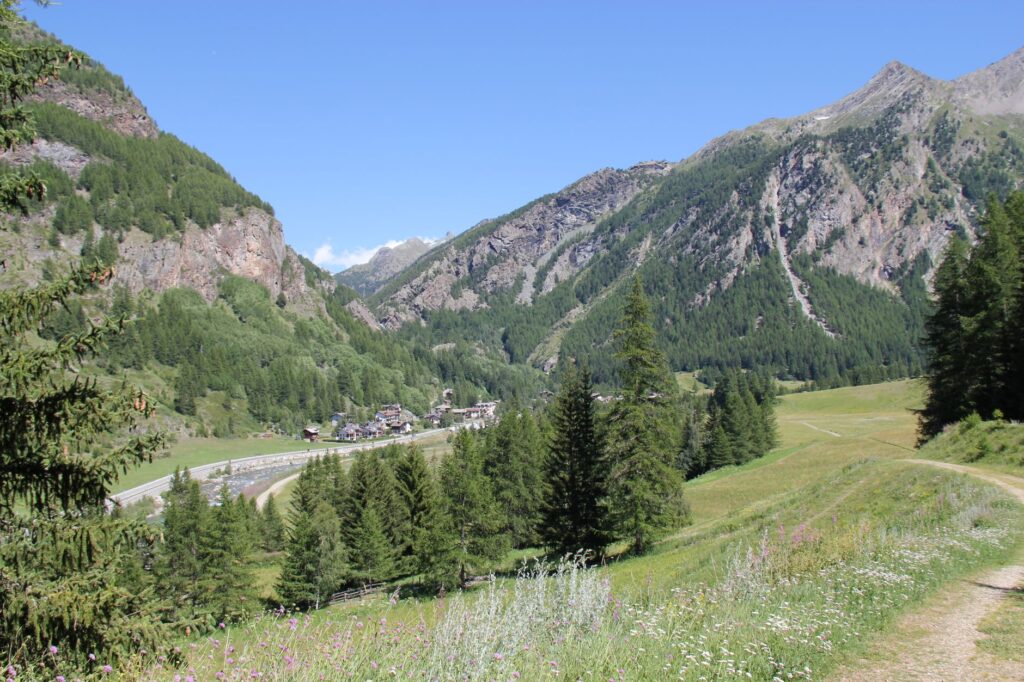
Alongside the electrification of road transport, the park has driven a massive restoration of ancient bridle paths and pastoral routes originally built during the nineteenth and twentieth centuries for royal hunting and silvopastoral exploitation. These trails are not mere recreational attractions, but backbone routes for non-motorized transport that allow hikers to travel between villages without stepping onto asphalted roads. Specialized landscape restoration brigades have employed traditional dry-stone techniques to consolidate slopes, prevent torrential runoff, and signpost critical intersections with biodegradable materials.
Integrating these paths with electric shuttle stops creates an active mobility system where travelers can cover short distances on foot or mountain bike before connecting with the next public transport link. The recovery of the footpath heritage demonstrates that progress in sustainable mobility does not always require building new infrastructure, but rather intelligently rehabilitating historical legacy. This approach also fosters a more balanced distribution of visitors, avoiding overcrowding in well-known enclaves and diverting flows toward secondary valleys that historically remained on the margins of tourism development.
«The true luxury in contemporary high mountains is not arriving faster in a private vehicle, but inhabiting the landscape with the smallest possible footprint and understanding the earth’s slow rhythm.» — Gran Paradiso National Park Sustainability Committee.
Socioeconomic Impact in Valley Communities
The transition toward a direct-emission-free transport model has radically transformed the local economy of small alpine enclaves. Traditional mechanical workshops and gas stations are gradually converting into maintenance centers for electric fleets and active mobility equipment rental points. Likewise, local producers of Fontina cheese and high-mountain honey benefit from a more orderly and cleaner distribution logistics network, utilizing smaller tourist shuttle buses to transport light goods between villages and high-altitude refuges, optimizing trips and reducing commercial transport costs.
This logistical reorganization has also positively impacted the retention of young talent in the region. Professions linked to environmental management, specialized guiding, and green infrastructure maintenance offer stable employment alternatives that curb the rural exodus characteristic of European mountain valleys. Resident associations actively participate in mobility committees, deciding bus line timetables and preferential fares for locals. The success of sustainable mobility in Gran Paradiso lies in the fact that the community is not a mere spectator of conservation policies, but their primary architect and direct beneficiary.
Technological Innovation and Challenges Amid Climate Crisis
Despite progress achieved in regional carbon footprint reduction, park managers face complex technical challenges directly derived from global warming. Slope instability due to permafrost thaw requires constant monitoring of transport routes and secondary access roads. Engineers have deployed seismic sensors and early warning systems on the most vulnerable slopes, connecting this real-time information with electric bus operations centers to automatically suspend or reroute paths in the event of any rockfall risk.
Likewise, fleet electrification faces rigorous performance testing during winter months when extreme temperatures reduce battery range. To mitigate this inconvenience, geothermal depots have been established to keep vehicles at optimal temperature overnight without drawing energy from the general grid. Scientific research and technological innovation applied to mountain transport demonstrate that ecological transition in extreme environments demands tailored solutions, discarding standardized formulas that fail the test of alpine reality.
The Role of Citizen Science in Managing Summer Traffic
One of the most innovative tools implemented in Gran Paradiso is the digital citizen science platform monitoring tourism pressure in real-time. Through a freely available mobile application, residents and visitors alike can report incidents related to trail congestion, improper parking use, or wildlife presence affected by noise, feeding a centralized database that manages electric shuttle frequencies dynamically. If a park sector records higher-than-recommended influx, the system automatically adjusts fares and bus frequencies to divert flow toward less congested areas.
This bidirectional flow of information fosters greater civic awareness among travelers, who cease to be passive landscape consumers and become active guardians of the territory. Data collected during summer seasons is analyzed by biologists and mobility experts from the University of Turin, allowing private traffic restriction policies to be refined year after year and public transport routes optimized. Technology in the service of conservation does not seek to monitor the citizen, but to harmonize their presence with the park’s non-negotiable ecological limits.
«Data shared by those walking our trails is the most reliable compass to govern the balance between public access and nature protection.» — Park Scientific Directorate.
Practical guide
How to get there: The main access to Gran Paradiso National Park valleys is via Turin or Aosta along the A5 motorway. To join the sustainable mobility model, visitors are advised to leave vehicles in designated peripheral parking lots in Villeneuve or Introd, where electric shuttles depart for Valsavaranche and Cogne.
When to travel: July and August concentrate the highest supply of integrated public transport and high-frequency shuttles. However, June and September offer a slower-paced experience, with lower visitor pressure and optimal conditions for active hiking.

Mobility rules: Private vehicle traffic is subject to dynamic restrictions in valley floors during peak daylight hours in high season. Using peripheral park-and-ride lots and shuttle buses to reach main trailheads is mandatory.
Accommodation and services: Hotels and mountain refuges prioritize energy efficiency and local product consumption. Booking in advance through the official park platform is recommended to secure spaces in refuges adhering to the green transport network.
The Recovered Silence on the Colossus’ Slopes
When evening falls in Gran Paradiso and the last electric buses complete their routes toward peripheral parking lots, a deep and ancient silence reclaims dominion over the valleys. Glacial ridges, mute witnesses to geological and climatic changes, tint with pink tones under the last rays of setting sun, while local fauna returns without fear to grasslands near restored paths. This return to quietude is not a geographical accident, but the deliberate result of rigorous and collective planning demonstrating the viability of a model where human beings travel through nature with absolute respect. Here, in the heights of northwestern Italy, sustainable mobility has ceased to be a statement of intent and become a daily reality, a renewed pact between community and mountain ensuring the pulse of the summits continues to resonate intact for generations to come.