Introduction to the Great Arc of Glaciers
High-altitude European mountains have historically stood as impassable barriers, territories where commerce and human transit depended entirely on seasonal passes and trade routes exposed to extreme weather conditions. However, at the dawn of the twentieth century, civil engineering successfully tamed the continent’s most inaccessible summits through a bold commitment to electric traction and topographic design. The Bernina Railway, integrated into the Rhaetian Railway network, represents one of the most extraordinary achievements of this transformation. Connecting the Swiss resort of St. Moritz with Italian Tirano across the eponymous mountain pass, this line demonstrates how transport infrastructure can vertebrate communities separated by thousands of vertical meters without breaking the fragile ecological balance of the alpine environment.
This report examines with documentary rigor the technical, historical, and logistical foundations that enable the operation of a high-mountain railway route three hundred and sixty-five days a year. Through a journey across cut-stone viaducts, helical loops, and tunnels carved into living rock, it analyzes how the convergence of Swiss innovation and cross-border cooperation shaped a connectivity model that is today a UNESCO World Heritage site. The journey is not merely a tourist attraction, but a vital transport artery sustaining the local economy, cultural exchange, and territorial cohesion between Romansh-speaking Switzerland and Italian Lombardy.
The Topographic Challenge: Extreme Gradients and the Triumph of Pure Adhesion
One of the most remarkable aspects of the Bernina Railway lies in its absolute rejection of rack-and-pinion systems, a ubiquitous technology on other high-altitude lines such as the Jungfrau or the Pilatus railways. Spanning a total length of just over sixty kilometers, the route ascends from 429 meters above sea level in Tirano to reach its peak at the Ospizio Bernina, situated at 2,253 meters of altitude, before descending toward the Engadin valley. To overcome this colossal elevation change without the aid of metal teeth on the track, engineers designed maximum gradients of seven percent, an extreme technical limit for the adhesion of steel wheels on rails under wet or snowy conditions.

The key to this performance lies in the pioneering use of high-tension single-phase alternating current and the design of powerful yet lightweight locomotives capable of distributing tractive effort uniformly along the entire train composition. The friction generated between wheel and rail is optimized through advanced regenerative braking systems and automatic sanders activated with millimeter precision on the steepest ramps. This technical deployment not only prevents excessive wear on the infrastructure but allows convoys to descend while feeding electrical energy back into the grid, an energy efficiency milestone that anticipated modern sustainability criteria over a century ago.
The Geometry of the Landscape: The Brusio Circular Viaduct and High-Altitude Loops
To fit the railway layout into such a vertical and rugged topography, constructors had to resort to bold geometric solutions that defied traditional laws of urban planning and civil engineering. The most celebrated example of this mastery is the Brusio helical viaduct, an exposed-stone structure describing a complete three-hundred-and-sixty-degree circle with a fifty-meter radius. This ingenious solution allows trains to gain or lose height progressively within an extremely restricted horizontal space, avoiding the need for kilometer-long tunnels or even steeper grades that would have overwhelmed tractive capacity.
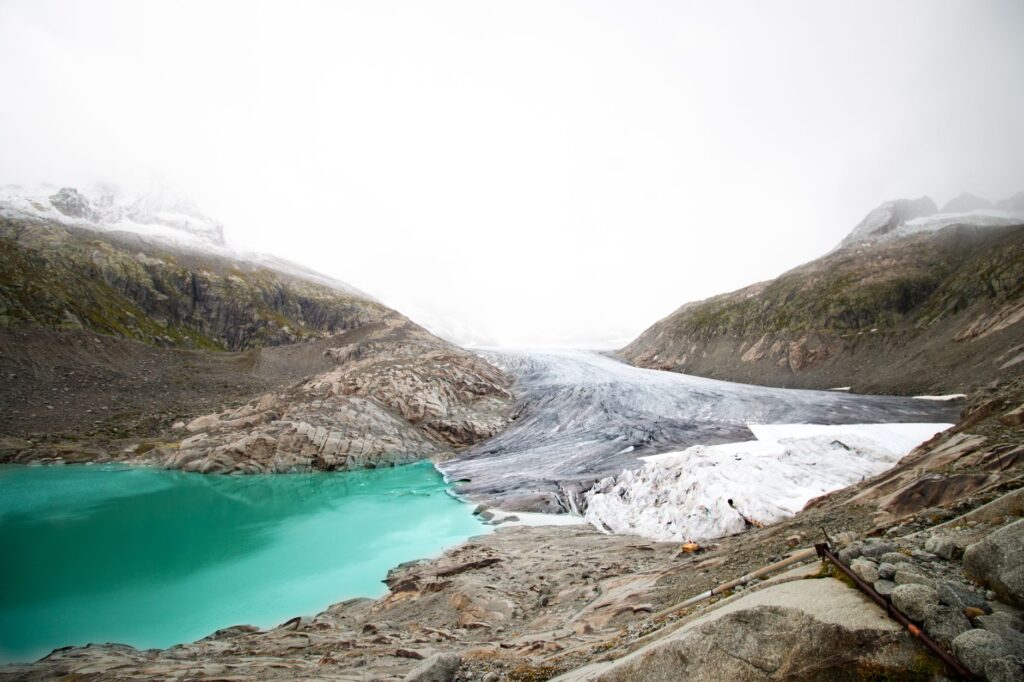
As the convoy leaves the wooded valleys and enters the upper alpine zone, the track adapts to contour lines through a rosary of avalanche galleries, masonry bridges, and cyclopean retaining walls. These structural works are far from purely utilitarian elements; they are integrated with absolute precision into the terrain’s profile, using stone quarried locally to blend seamlessly with the rocky cliffs. The visibility of these structures from the train window offers the traveler a masterclass in applied geography, where every meter of track responds to precise calculations of structural resistance and stability against landslides and winter snow avalanches.
The railway does not sever the mountain; it embraces it, following its contour lines with the precision of a topographic map translated into metal and stone.
Winter Logistics and Extreme High-Altitude Maintenance
Ensuring the operational continuity of the Bernina Railway at over two thousand meters of altitude during harsh alpine winters requires colossal logistical machinery and strict operational discipline. When severe blizzards bury switch points and snow depths exceed two meters along the Ospizio Bernina section, the company’s historic fleet of snow-clearing vehicles swings into action. Among them stand the imposing rotary snowplow units, some converted to modern electric traction, capable of ejecting dense blocks of snow tens of meters away from the track platform to prevent the formation of icy walls that would derail trains.
Maintenance operations are planned months in advance and executed during scheduled operational windows when commercial traffic decreases. Specialized crews daily inspect the integrity of catenary lines, signaling systems exposed to frost, and the stability of rocky slopes prone to freeze-thaw weathering. This invisible yet relentless logistics enables regional trains and the iconic Bernina Express to run with Swiss punctuality even under severe gales, establishing this high-altitude transalpine crossing as the highest year-round open railway in the European continent.

Railway Architecture and Heritage: Centennial Stations on the Border
The cultural impact of the Bernina Railway extends far beyond its function as a transport infrastructure; it has shaped a unique built landscape where station architecture reflects the transition between Swiss alpine culture and Italian Mediterranean tradition. Buildings in locations such as Poschiavo, Le Prese, or the Tirano terminal combine elements of alpine historicism with details characteristic of twentieth-century industrial architecture and modernism. Exposed stone facades, slate gable roofs, and characteristic freight warehouses with prominent overhanging eaves form an inventory of heritage meticulously preserved by cantonal and state authorities.
This architectural heritage fulfills a dual function today. On one hand, it keeps alive the memory of an era when the railway was the sole means capable of rescuing peripheral valleys from secular isolation; on the other, it acts as an engine for balanced economic development that rejects mass tourism in favor of prolonged stays. Former station master residences and maintenance workshops have frequently been rehabilitated as interpretation centers or regional information points, ensuring that the history of the line remains accessible to local inhabitants, engineers, and travelers interested in industrial heritage.
Sustainability and Energy Transition in the Heart of Graubünden
In the current context of climate emergency, the Bernina Railway stands out as a paradigmatic model of sustainable mobility respectful of the fragile ecosystems it traverses. All electrical energy used to propel convoys and power signaling systems across the Graubünden network is derived entirely from renewable sources, specifically alpine hydroelectric power plants located within the canton itself. This closed-circuit model, where meltwater flowing from the summits generates the electricity that moves trains across glaciers, represents a perfect symbiosis between industrial technology and mountain ecology.

Furthermore, infrastructure management prioritizes the protection of biodiversity within surrounding biosphere reserves, such as the protected area of Val di Campo. Track modernization works are executed under strict environmental restrictions to avoid disrupting native fauna reproductive cycles or altering high-altitude watercourses. Thanks to this active conservation policy, the line demonstrates that maintaining high-performance connectivity in mountainous territory is entirely feasible without sacrificing landscape integrity or compromising natural resources for future generations.
Practical guide
Planning a journey along the Bernina Railway requires understanding the operational characteristics of a line that combines regional commuter services and mandatory-reservation panoramic trains. The complete journey between St. Moritz and Tirano takes approximately two hours and ten minutes, offering a fascinating landscape transition from eternal glaciers down to the apple orchards of the Valtellina valley.
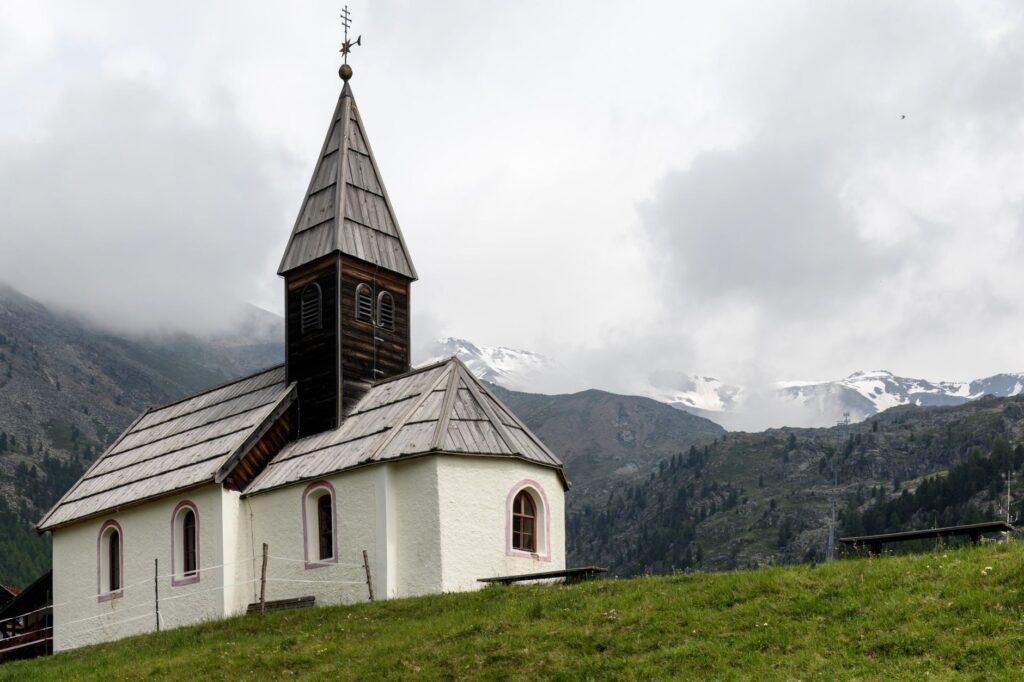
For travelers wishing to maximize the experience, purchasing a Graubünden network ticket with stopover flexibility is highly recommended, allowing passengers to disembark at intermediate stations such as Alp Grüm, Morteratsch, or Poschiavo to enjoy short hikes or visit local monuments. The famous Bernina Express features large panoramic windows but requires prior seat reservation and a surcharge over the base fare, whereas regional trains operate on the same timetable with privileged views and openable windows ideal for photography.
The best season to travel along the line depends on the traveler’s interests: the summer months between June and September offer full access to high-mountain hiking trails and thawed glacial lakes, while winter, from December to March, transforms the landscape into an immaculate white arctic stage where the contrast of the red train against snow offers one of the most iconic images of travel in Europe.
Visual Epilogue Between Eternal Snows and Valleys of Light
When the final evening sunray ignites the crests of Piz Palü and casts long shadows over the frozen tongue of the Morteratsch Glacier, the Bernina Railway continues its silent march through the alpine twilight. At that crepuscular moment, the line ceases to be a mere sum of kilometer coordinates and engineering structures to become a guiding thread of human memory, an enduring testimony that the drive to connect communities can harmonize with absolute respect for the unalterable majesty of the high mountains.