
The silent architecture sculpting the Balearic mountain range
In northern Mallorca, there exists a territory where vertical geography has been tamed millimeter by millimeter without the use of mortar or concrete. The Serra de Tramuntana is not merely a geographical accident of limestone summits and rugged gorges; it is, above all, a monumental architectural archive built upon patience, gravity, and dry stone. Over centuries, the inhabitants of these steep valleys transformed impossible slopes into fertile stepped terraces, locally known as marjades. This monumental work of vernacular engineering defines today’s insular landscape and poses a fundamental question regarding the relationship between humanity and the natural environment: how to turn an orographic trap into a sustainable refuge of biodiversity and culture?
International recognition arrived in 2018 when UNESCO inscribed the dry-stone construction technique on its Representative List of the Intangible Cultural Heritage of Humanity. Yet beyond institutional accolades, the true value of this legacy lies in its ongoing functional validity. Walking along the ancient bridle paths winding between terraces means entering a circulatory system where every stone fulfills a precise structural role. Master builders, known on the island as margers, continue to apply accumulated wisdom passed down through generations, empirical knowledge that defies erosion and regulates the water cycle in one of the driest regions of the western Mediterranean.
Anatomy of a terrace: applied physics in traditional masonry
To understand the complexity of a dry-stone wall, one must discard the notion that it represents a simple aesthetic stacking of rocks. Each marjada functions as a meticulously calculated retaining wall designed to hold back scarce arable soil and prevent the ravages of flash floods caused by seasonal storms. The construction process begins with selecting the foundation stone, the largest blocks wedged directly into virgin terrain to guarantee essential anchorage against the lateral pressure of damp earth.

Upon this natural footing, the faces are raised using fragments of diverse dimensions, fitted together dry through the physical intuition of the marger. The interior of the wall is not filled with earth, but with smaller stones known as relleno or brut, a permeable stratum whose primary function is to act as a draining filter. In this way, the structure does not fight against hydrostatic pressure; rather, it channels it in a controlled manner, preventing the wall from collapsing during heavy rainfall events. This constructive wisdom transforms each terrace into a living ecosystem where lichens, mosses, and microfauna thrive in the shadows of the cavities.
The art of the marger: intuitive geometry and manual craft
The trade of the marger is not learned in university classrooms, but on site, observing the deliberate gestures of the master builder and enduring the physical toll imposed by limestone. The contemporary artisan handles few tools: an iron mallet, a pair of metal pry bars, and above all, a trained eye capable of reading the veins and faces of each block. In a world dominated by industrial prefabrication and digital velocity, dry-stone work represents an unyielding material resistance.

Stone is never forced; it is listened to, its natural face is sought, and it is assigned the single exact spot where it will balance the entire assembly.
Restoration workshops promoted by the Consell de Mallorca and various local associations now strive to mentor a new generation of apprentices fearful of the craft’s extinction. Young architects, stonemasons, and conservationists attend training programs to learn the secrets of dry-stone laying, the construction of integrated staircases within the walls, and the raising of protective borders along paths. This generational handoff demonstrates that tradition is not a museum fossil, but a technical resource perfectly applicable to contemporary landscaping and environmental restoration challenges.
Water, terraces, and climate resilience in the Mediterranean
One of the greatest achievements of dry-stone architecture in the Serra de Tramuntana is its capacity to manage water resources. In a region where rainfall is scarce but torrential, the terraces act as gigantic sponges. Rainwater descending from the summits is systematically checked by successive steps, infiltrating gradually into subterranean aquifers rather than causing desertification and washing nutrients away into the sea.
Likewise, the network of irrigation channels, water mines, and cisterns associated with this agricultural system allows gravity-fed watering of traditional terrace gardens, where local varieties of vegetables and fruit trees have historically flourished. This ancient hydrological balance contrasts sharply with the unsustainable consumption models driven by mass tourism on the Mallorcan coast. While the coastal strip suffers chronic water stress, the interior valleys of the Tramuntana demonstrate that traditional infrastructure offers valuable lessons on climate adaptation and food sovereignty.
Bridle paths: the historic network connecting valleys and peaks
Before asphalt and automobiles traced modern highways, the Serra de Tramuntana was a living fabric of bridle paths, charcoal-burning routes, and herding tracks. These pathways, also delimited by dry-stone walls, connected small rural settlements, manor estates, and mountain shelters. Walking sections such as the Camí de des Correu between Esporles and Banyalbufar or the legendary Dry Stone Route (GR 221) today constitutes an archaeological journey afoot.
Conserving these pathways represents a constant challenge for public administrations and heritage managers. The agricultural abandonment of many lands during the second half of the twentieth century led to the neglect of numerous trails, overrun by vegetation and battered by landslides. However, the rise of respectful hiking and cultural ecotourism has driven specific recovery plans. Today, walking along these historical corridors allows visitors to understand the magnitude of human effort required to inhabit such a hostile yet deeply cherished territory.

Practical guide
How to get there: The usual starting point for exploring the Serra de Tramuntana is Palma de Mallorca. From Son Sant Joan Airport, the most efficient option to tour the valleys is renting a vehicle, which is essential for accessing small mountain villages such as Valldemossa, Deià, Sóller, or Escorca. Alternatively, the historic Sóller railway and its vintage tram offer an unforgettable heritage connection from central Palma.
When to go: Spring months (April to June) and autumn (September to November) offer ideal weather conditions for walking without the extreme heat of the summer months. Furthermore, these seasons coincide with the periods of highest agricultural activity on the terraces.
Visitor tips: Proper hiking footwear, layered clothing, and sufficient water are mandatory, as natural water sources on high routes can be irregular. Rural heritage must be strictly respected: climbing on dry-stone walls or removing their components is strictly prohibited, as any alteration can destabilize the structure. Respect private property and close livestock gates after passing through them.

The sanctuary of stone: silence, light, and eternity
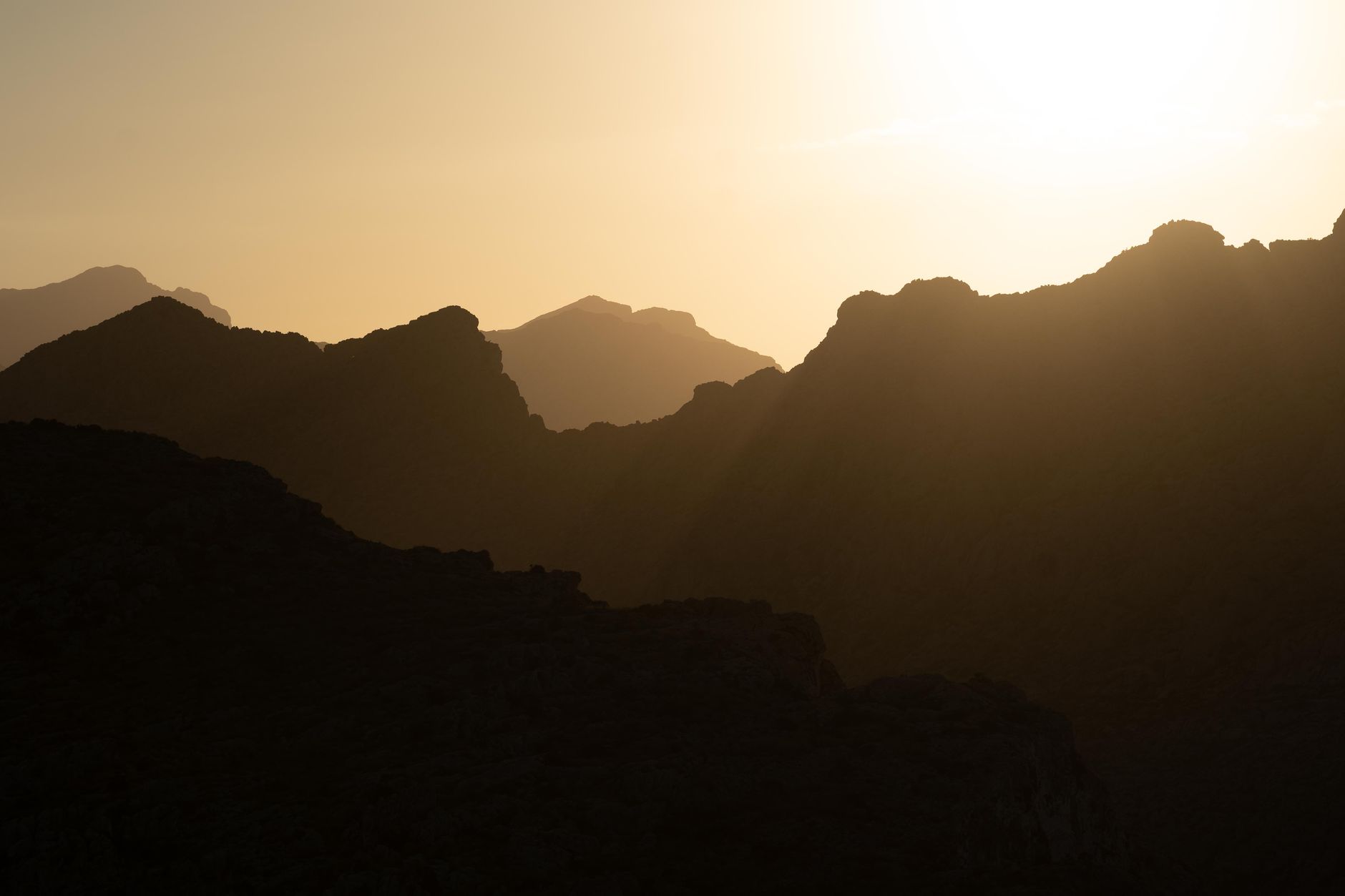
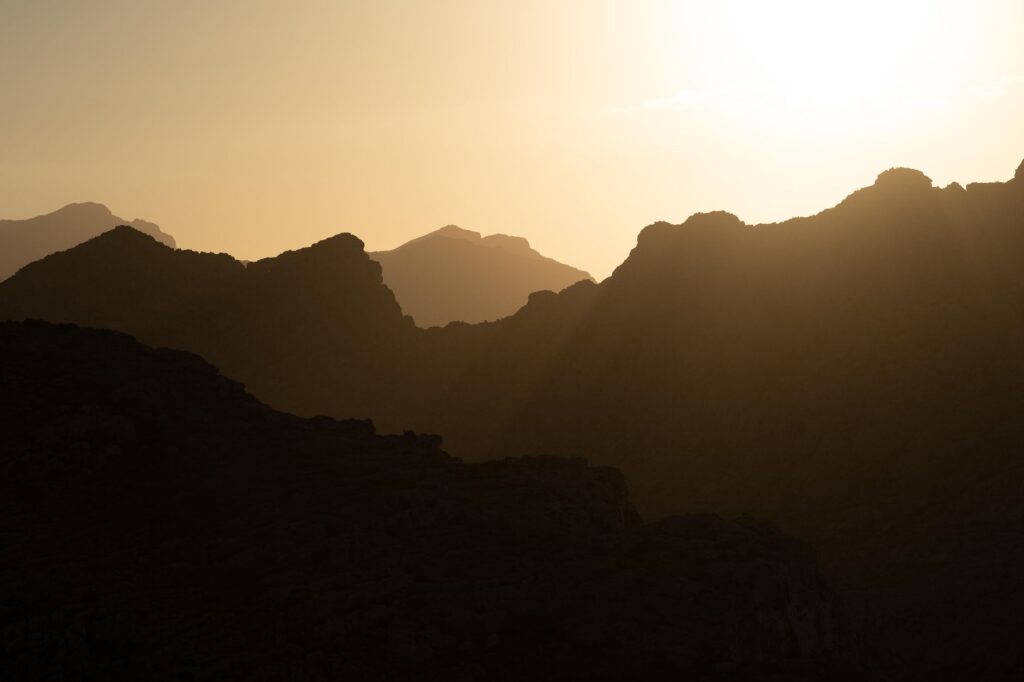
As the sun sets over the Mallorcan west and the Tramuntana cliffs turn a deep crimson, the limestone seems to recover the breath of the primordial fire that consolidated it millions of years ago. In that silent twilight, the terrace walls of the marjades become abstract sculptures dialoguing directly with the Mediterranean Sea. Here, time is not measured in digital seconds, but in the seasons passing over the branches of ancient olive trees and the unalterable solidity of a wall raised with no tools other than human hands and the law of gravity.
This landscape sculpted by the anonymous effort of generations is much more than a tourist attraction or a heritage landmark; it is a lesson in humility and permanence. In an era obsessed with the ephemeral and the virtual, dry masonry reminds us that truly essential works are those that sink deep roots into the earth, transforming the roughness of the world into a habitable, beautiful, and enduring place.