
The Geological Genesis of a White Wonder
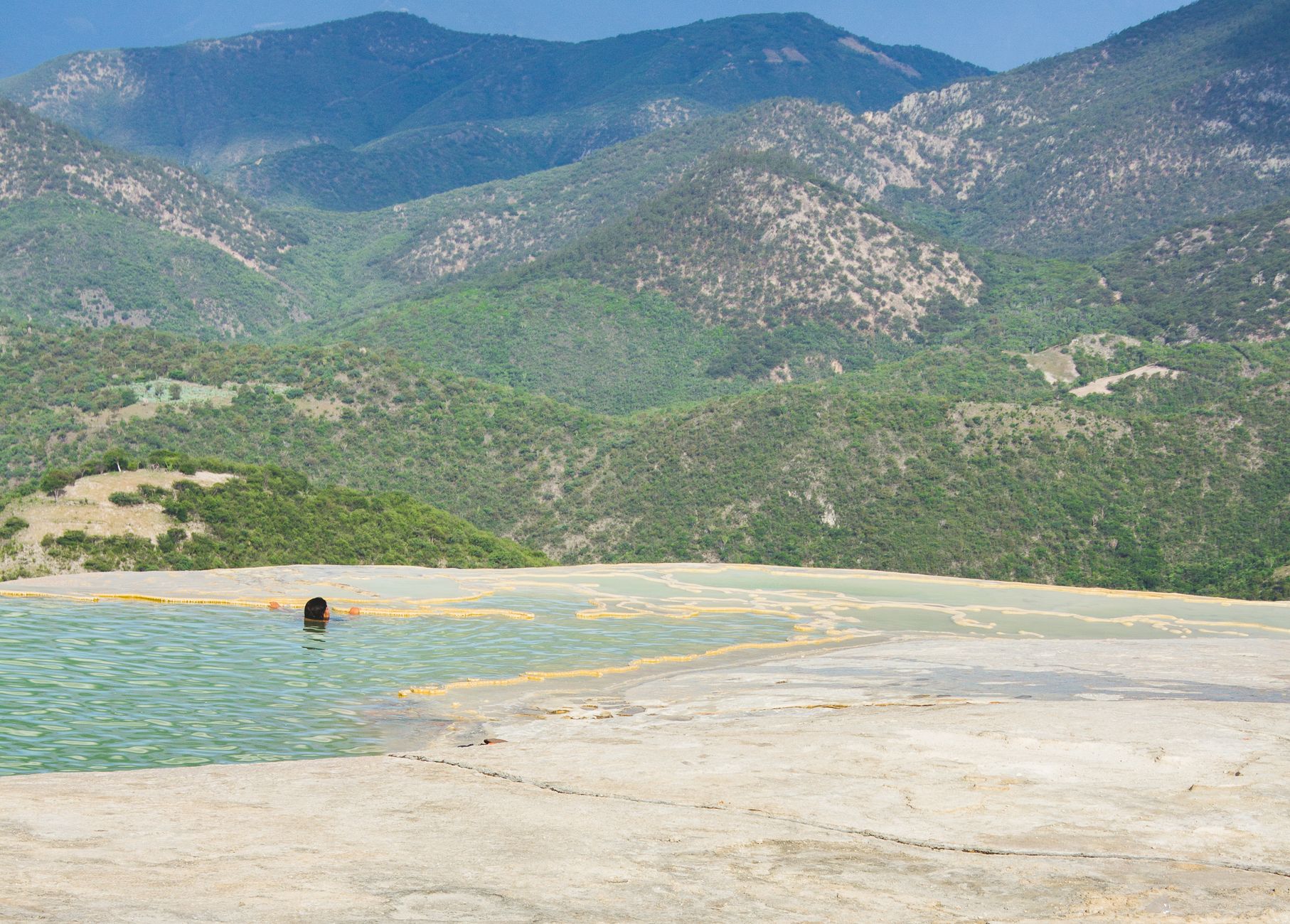
In the heart of the Anatolian plateau, water does not merely flow; it sculpts the landscape with millenarian patience. The thermal springs of Pamukkale, known since classical antiquity for their healing properties, represent one of the most fascinating hydrogeological phenomena on the planet. At constant temperatures hovering around thirty-six degrees Celsius, subterranean flows emerge laden with calcium bicarbonate—a mineral that, upon contact with the air and the release of carbon dioxide, slowly precipitates to form cascading pools of radiant white.
This natural architecture is far from static; it evolves imperceptibly beneath the Denizli sun. Each travertine terrace acts as a living dam that retains the crystal-clear water, creating an extraordinary chromatic contrast between the intense blue of the liquid and the snowy purity of the rock. Since the days of Hellenistic kingdoms, travelers have documented this phenomenon, seeking physical relief in its waters and a refuge for aesthetic contemplation. Far from being a mere visual attraction, the complex functions as an ecological self-regulation system where flow management is essential to preserve the whiteness of the carbonate against algae proliferation and anthropic erosion.
The Invisible Chemistry of Thermal Water
The secret of these pools lies in their complex chemical composition. Subterranean water, heated by deep tectonic faults, dissolves limestone as it courses through the bowels of Mount Kaldağ. Upon emerging to the surface, rapid evaporation triggers a flawless physicochemical reaction. This continuous sedimentation process has taken over two millennia to consolidate the impressive slopes that today dominate the plain of the Menderes River, turning geology into a geometric work of art.

Contemporary Management of the Water Resource
In recent decades, tourist pressure threatened the integrity of the travertines, forcing authorities to rethink access to the natural pools. Today, water circulation is channeled through an artificially controlled rotating system. This ensures that all terraces receive the necessary hydration to maintain their characteristic white color without suffering the wear and tear derived from massive visitor traffic, balancing heritage conservation with the traveler’s experience.
Hierapolis and the Symbiosis Between Health and Imperial Power
Just meters from the springs stand the ruins of ancient Hierapolis, founded in the second century BC by the Attalid kings of Pergamon. This enclave was conceived not merely as an administrative or military center, but as a large-scale health and wellness sanctuary. The Romans, acutely aware of the therapeutic virtues of the site, transformed the settlement into a premier spa city for the entire eastern Mediterranean, where the imperial elite flocked to undergo prolonged thermal cures.
The urban planning of Hierapolis reflects this healing vocation. The grand colonnaded avenues are oriented to directly connect public spaces with bath complexes and the necropolis, reminding citizens of the constant duality between earthly life and spiritual regeneration. The marble structures, now partially devoured by time, retain the traces of an urban design where hydraulic engineering constituted the core of daily life and aristocratic leisure.
The Theater as an Agora of Contemplation
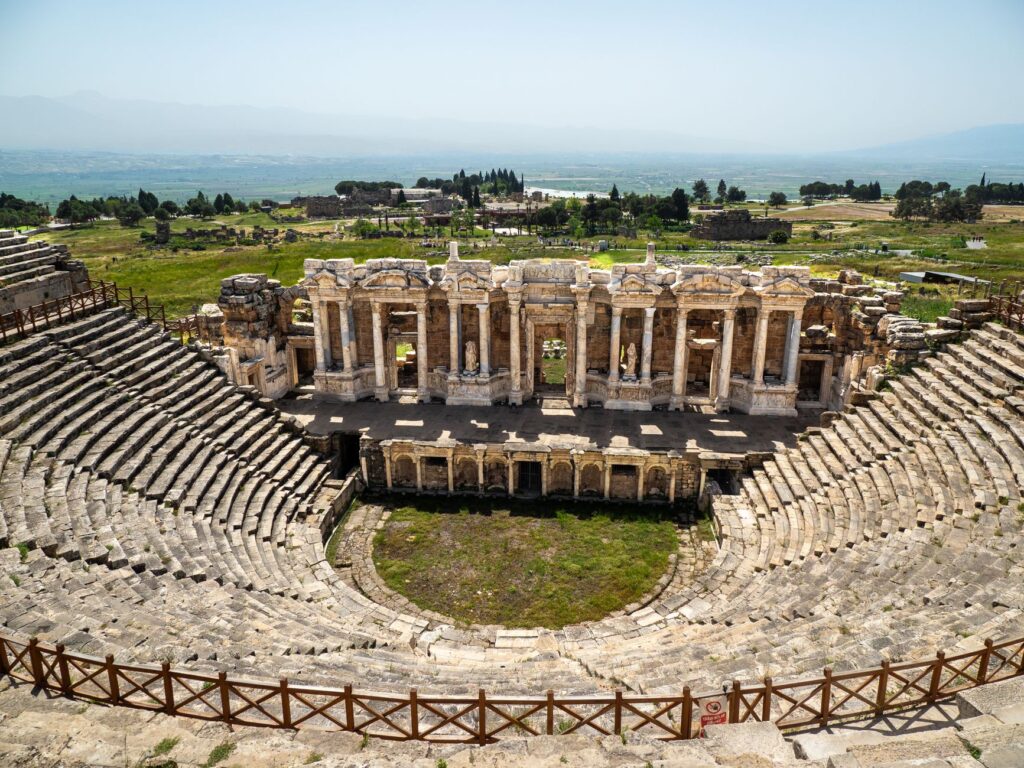
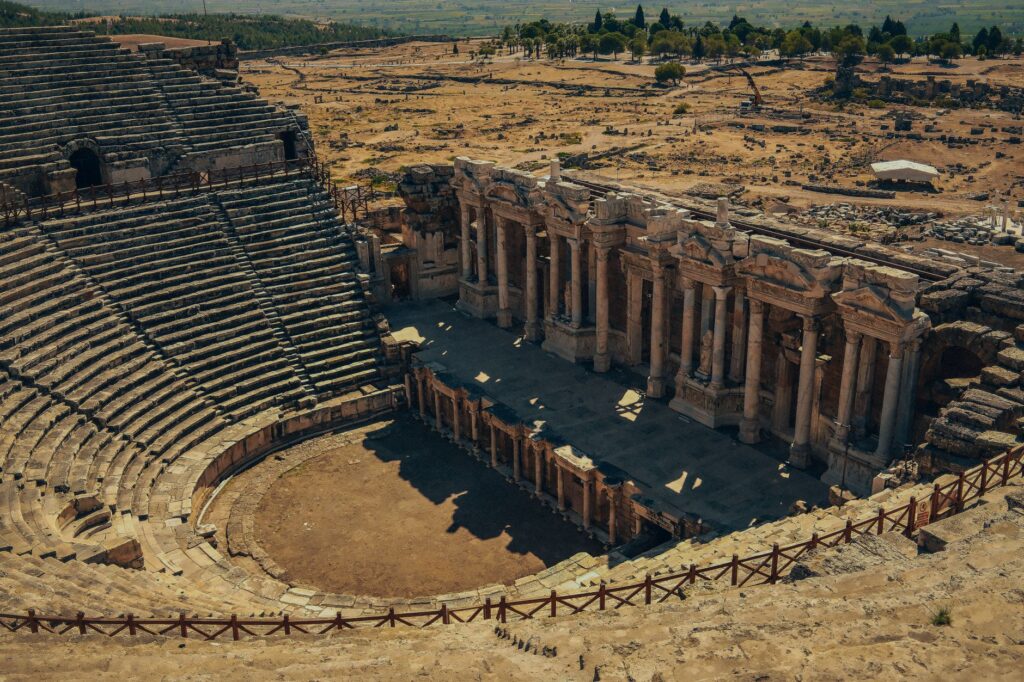
Excavated into the hillside crowning the archaeological site, the great Roman theater of Hierapolis offers a privileged perspective over the valley and the petrified cascades. This space not only hosted dramatic performances, but served as a meeting point where bathers and pilgrims exchanged impressions on the healing effects of the waters. The impeccable acoustics of the venue allowed the orchestra to resonate with crystal clarity, integrating the sound of the wind and the distant murmur of water into the staged experience.
The Monumental Necropolis and Eternal Rest
On the outskirts of the city stretches one of the largest and best-preserved necropolises of the ancient world. Featuring thousands of tombs spanning from the Hellenistic period to early Christianity, this monumental cemetery underscores the importance Hierapolis held as a final destination for those seeking healing in their final days. Local stone sarcophagi and funerary tumuli engage in a direct dialogue with the whiteness of the travertines, establishing a permanent visual connection between human mortality and geological permanence.
The Architecture of Water in Contemporary Hospitality
The influence of the historic springs has shaped contemporary hospitality in the Pamukkale region and its surroundings. Wellness-oriented accommodations no longer merely imitate the past, but integrate advanced geothermal technologies to offer hydrotherapy experiences that respect the natural cycle of water. These spaces combine local stone with minimalist designs, allowing guests to experience the benefits of mineral-medicinal water in an environment of absolute sensory isolation.
The architectural design of these sanctuaries prioritizes visual connection with the natural travertines. Large windows and infinity pools suspended over the Menderes valley blur the boundaries between interior and exterior, allowing the changing sunset light over the limestone rock to become part of the resting ritual. This landscape integration represents a sophisticated evolution of the classic spa concept, tailored to the demands of the modern traveler seeking authenticity and deep disconnection.

Geothermal Energy as a Driver of Efficiency
The modern wellness centers in the area harness the caloric energy of the springs not only to fill the pools, but to heat the facilities sustainably. Through subterranean heat exchangers, the carbon footprint of hotel complexes is drastically reduced, proving that health tourism can coexist in harmony with the fragile ecological environment of the region’s volcanic and sedimentary terrain.
Wellness Rituals Rooted in Anatolian Tradition
Far from the standardized treatments of urban spas, the wellness offerings in the valley rescue ancestral techniques based on the use of mineral-rich thermal muds and massages with indigenous essential oils. These rituals are designed to synchronize the heart rate with the water temperature, promoting deep neuromuscular relaxation that contrasts with the fast-paced nature of modern life.
The warm water gushing from the bowels of Anatolia is not merely a physical resource, but an invisible thread connecting the medicine of classical antiquity with contemporary longings for stillness and inner balance.
The Surrounding Ecosystem: Biodiversity and Dryland Agriculture
Beyond the white formations and archaeological ruins, the Menderes valley sustains a singular agrarian ecosystem adapted to summer aridity and the soil’s mineral richness. Surrounding fields alternate cotton crops with centuries-old olive groves and vineyards that leverage the nutrients provided by thermal runoff. This dryland agriculture, deeply rooted in local traditions, configures a rural landscape where time seems to pass at a different speed, far removed from the bustle of major tourist circuits.
The local fauna and flora have developed specific adaptations to survive in an environment with high mineral concentrations. In areas surrounding the springs, various migratory bird species find temporary refuge during their seasonal routes, attracted by constant humidity and the tranquility of protected wetlands. This delicate ecological balance is rigorously monitored by local biologists and conservationists to prevent human pressure from altering natural corridors.
The Culture of the Olive in Volcanic Soils
Olive trees growing on the hills near Pamukkale produce oil with very low acidity and unmistakable herbal nuances, thanks to the unique mineralization of the substrate. Local farmers maintain traditional harvesting techniques, avoiding aggressive mechanization to preserve the integrity of centennial roots. This product has become one of the gastronomic pillars of the region, integrating into a produce-driven cuisine that prioritizes proximity and seasonality.
The Hidden Trails of the Plateau
For those willing to walk beyond conventional circuits, the plateau offers hiking trails that wind past ancient Roman aqueducts and traditional irrigation channels. These paths reveal small villages where Turkish hospitality manifests in its purest form, offering travelers steaming black glass cups of tea and leisurely conversations about the valley’s millenarian history.
Practical guide
Planning a rigorous and respectful visit to the Pamukkale springs requires attention to a series of logistical guidelines essential to avoid overcrowding and minimize environmental impact on the fragile travertines.
- How to get there: The nearest airport is Denizli-Çardak, located about sixty kilometers from the archaeological site. From there, regular bus services and private taxis connect directly with the archaeological area in approximately one hour. It is also possible to arrive by train from Izmir or Selçuk via the regional railway line.
- Best time to visit: The spring months (April to June) and autumn (September to November) offer optimal temperatures for walking across the open-air terraces, avoiding the scorching heat and massive crowds of the European summer.
- Access rules for the travertines: For strict conservation reasons, footwear of any kind is prohibited on the carbonate pools. Visitors must remove their shoes before entering the wet zone to prevent abrasion and contamination of the limestone rock.
- Tickets and hours: The complex opens daily from 06:30 to 19:00 during the summer season, with slightly reduced hours in winter. Purchasing the combined ticket that includes access to Hierapolis and the local museum is strongly recommended.
- Recommended accommodation: Hotels located in the village of Pamukkale offer direct access to private thermal pools fed by the same aquifer, guaranteeing an intimate wellness experience away from daytime hustle.
- Local gastronomy: Do not miss trying the Denizli kebabı (Denizli kebab), slow-cooked in traditional wood-fired ovens, and artisan dairy products crafted on farms in the surrounding valleys.
The Eternal Pulse of Stone and Water
As evening falls, when the last rays of the sun reflect on the carbonate terraces and the silhouette of Hierapolis merges with the dark horizon of the plateau, Pamukkale reveals its most profound dimension. In that instant of transitional light, the daytime bustle dissipates, leaving only the rhythmic sound of water flowing over white stone—a constant reminder of nature’s unyielding force.
This corner of Anatolia transcends the category of a mere vacation destination to become a space for inner pause and reflection. The millenarian coexistence between classical architecture and thermal springs demonstrates that human wellbeing has always been tied to respect for the earth’s elemental cycles. For the contemporary traveler, delving into this petrified landscape is an exercise in reconnecting with the essential, a tangible reminder that travel’s true elegance lies in the capacity to listen to the silence of history.