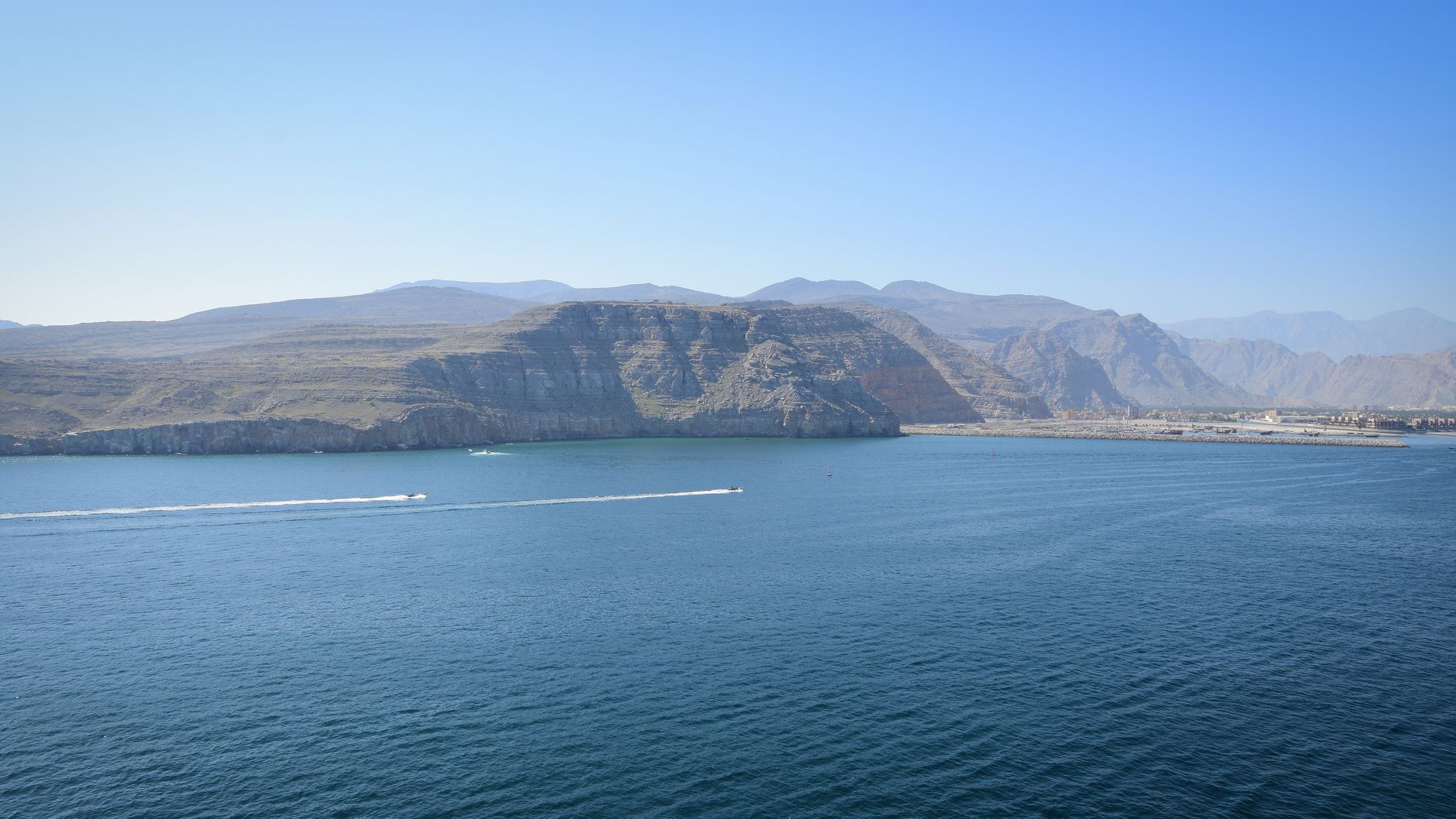

The Musandam Peninsula, separated from the main body of the Sultanate of Oman by a strip of Emirati territory, unfolds before the contemporary traveler as an imposing limestone fortress plunging abruptly into the emerald-blue waters of the Strait of Hormuz. This geographical feature, often described as the Norway of Arabia due to the dramatic presence of its khoras or fjords, has posed a major challenge to mobility and commercial exchange for centuries. Far from the hyper-connected highways of the Gulf capitals, the Musandami territory demands an understanding of a transport network where amphibious engineering and seafaring expertise continue to dictate the rules of daily travel.
Understanding the articulation of this remote territory involves delving into an intermodal ecosystem where land and sea establish a constant and often relentless dialogue. From fragile wooden boats powered by outboard motors to high-speed ferry fleets crossing the currents of the Persian Gulf, every journey in Musandam responds to an age-old logic of survival and geological adaptation. This report examines the arteries keeping alive the fishing communities of Khasab, the cliffside settlements of Kumzar, and the interior valleys where stone and sky seem to merge in absolute silence.
The Geography of Isolation: When Mountains Defy the Map
The territory of Musandam admits no superficial readings. Its mountain formations, sculpted by the slow thrust of tectonic plates, exceed two thousand meters of altitude above sea level in sharp ridges descending vertically toward the water. For centuries, this natural isolation turned coastal settlements into autonomous microcosms, communicated exclusively through maritime routes known as tidal highways. The opening of the first dirt tracks and, subsequently, asphalted layouts over high mountain passes marked a radical turning point, although the topography continues to impose severe restrictions on heavy road traffic.
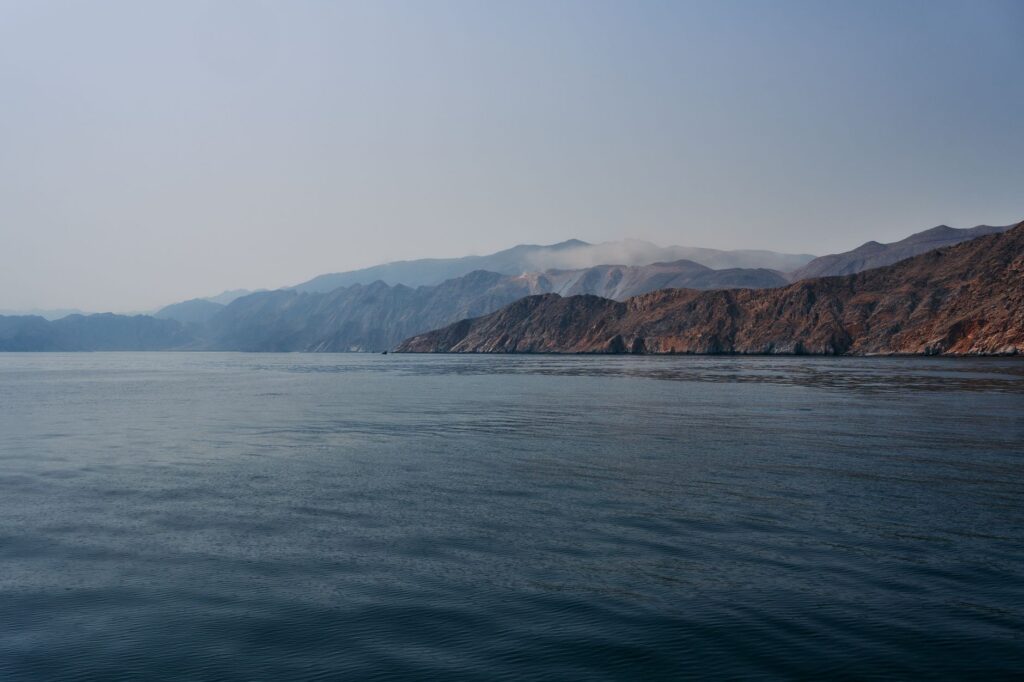
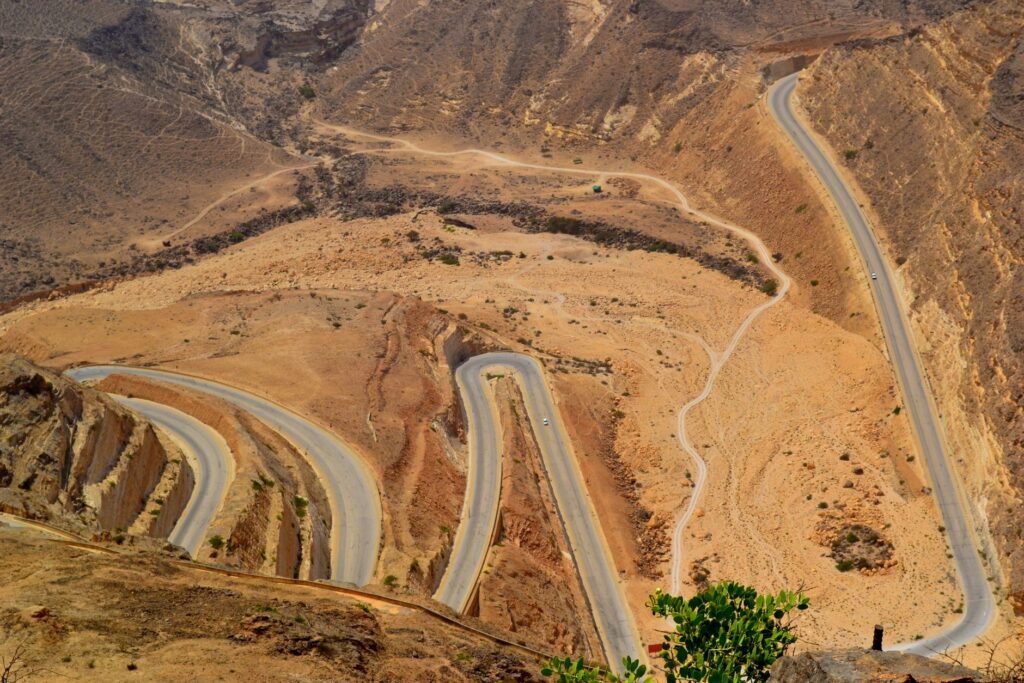
Local communities, belonging largely to tribes such as the Shihuh, have historically developed a dual vocation: deep-sea fishing and seasonal grazing on elevated plateaus. This vertical nomadism relied on bridle paths carved into living rock, today partially supplemented by mountain roads winding with dizzying gradients. For the traveler venturing into these landscapes, the transition between asphalt and gravel track is not merely a matter of comfort, but a direct immersion in a topography where every curve is an exercise in respect toward the hostility of the natural environment.
The Maritime Spine: Cabotage as an Insular Lifeline
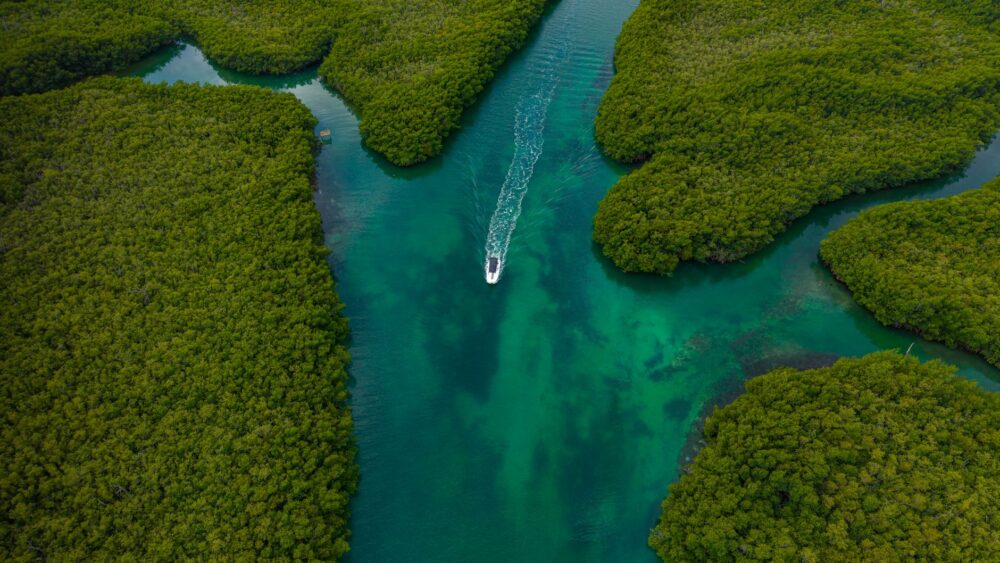
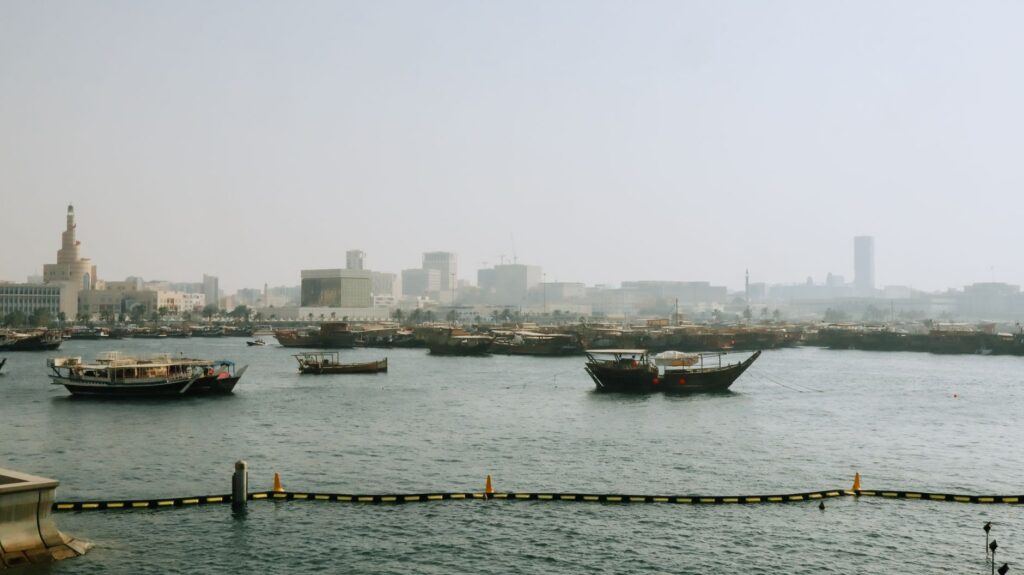
In the north of the peninsula, where roads terminate at the foot of impassable cliffs, the sea reclaims its starring role as the only viable communication route. The ports of Khasab and Dibba act as the logistical lungs of the region, managing the arrival of basic supplies, fuel, and passengers from both Muscat and neighboring emirates. Traditional vessels, locally known as dhows, have evolved from ancient trading sailing ships into sturdy cargo vessels equipped with modern technology, while retaining the master lines of Gulf naval architecture.
Cabotage transport in the fjords of Musandam is not exempt from meteorological complexities. Seasonal winds, locally known as the shamal, can drastically alter navigation conditions within hours, temporarily isolating remote villages like Lima or Kumzar. Port authorities and local skippers coordinate a network of advisories and alternative routes based on empirical knowledge of currents and coastal natural shelters, demonstrating that satellite technology must always be complemented by ancestral reading of the sea.
The sea in Musandam is not an obstacle to overcome, but rather the main street uniting what implacable rock insists on separating.
The Engineering of High Passes: Asphalt Over Abysses
Connecting the mountainous interior with the coastal strip has required some of the most daring civil engineering works in the Arabian Peninsula. The road ascending from Jebel Harim, the roof of the region, illustrates the magnitude of this construction effort. Engineers have had to trace gravity-defying routes, carving limestone rock to open corridors barely wide enough for two vehicles while protecting the roadway from rockfalls caused by sparse yet violent occasional storms.
This alpine road system fulfills a dual function: on one hand, it guarantees the mobility of emergency services and rural school provisioning; on the other, it opens the territory to rigorous, environmentally respectful adventure tourism. Unlike mass-marketed routes elsewhere, traversing these mountain passes requires four-wheel-drive vehicles, experienced drivers, and rigorous schedule planning, especially during summer months when extreme temperatures test both automotive mechanics and human endurance.
The Human Pulse of the Fjords: Communities Between Tides
To speak of transport in Musandam is ultimately to speak of people and their unbreakable bond with the land. In villages like Kumzar, situated at the northernmost tip of the strait, geographic isolation has allowed the preservation of a unique language —Kumzari, an Indo-European tongue wrapped in a sea of Semitic languages— and a lifestyle where the tide marks the rhythm of the school day, the arrival of mail, and the sale of fresh fish in local markets.
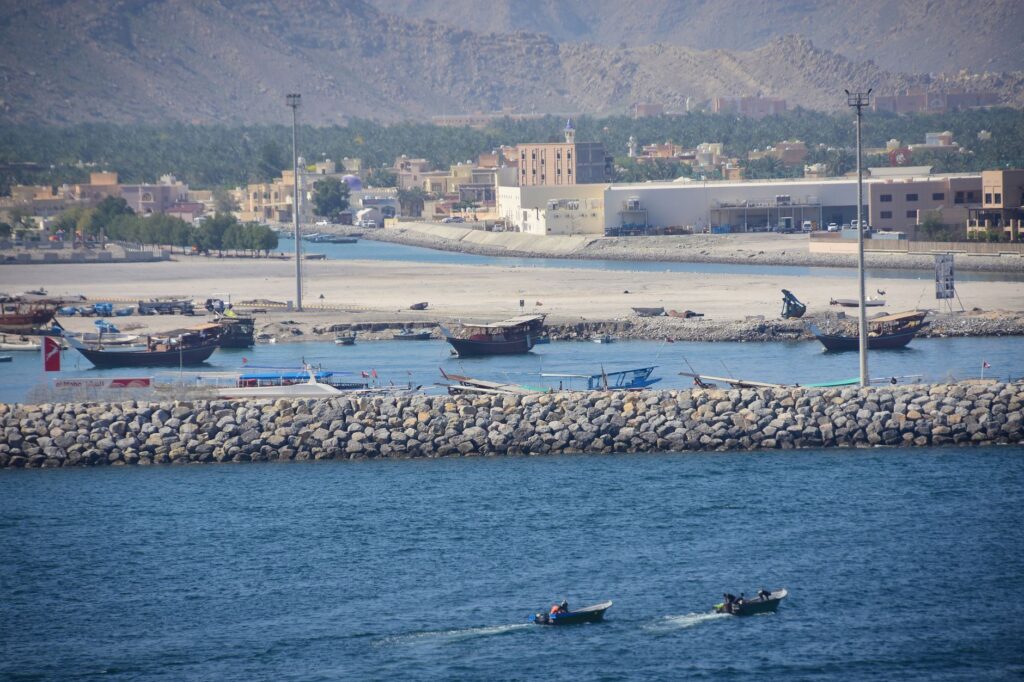
The interaction between permanent inhabitants and foreign visitors is governed by deeply rooted codes of hospitality. Local fishing cooperatives now manage a significant share of maritime excursions, allowing tourism to act as a complementary economic engine without disrupting the delicate social balance of these coastal communities. For the curious traveler, sharing a boat journey with local fishermen offers an unmatched perspective on the true human dimension of connectivity in the Gulf of Oman.
Future Challenges: Sustainability Versus Tourism Development
The gradual increase in international interest in Musandam’s pristine landscapes raises complex questions regarding the carrying capacity of its intermodal infrastructure. Balancing the opening of new tourist routes with the preservation of marine and terrestrial ecosystems is the primary challenge facing regional planners. Current initiatives prioritize improving energy efficiency in ferry fleets and enforcing aesthetic and environmental regulation for terrestrial access to sensitive valleys.
Likewise, integrating solar energy systems into border control posts and small port facilities reflects a commitment to transition toward more sustainable models. The ultimate objective is ensuring that the fragile connectivity structuring the peninsula does not become its own destruction sentence, but rather the vehicle through which the geological and cultural authenticity of this exceptional Middle Eastern corner is preserved.
Practical guide
How to get there: The primary access to the Musandam Peninsula is via Khasab Airport through domestic flights from Muscat operated by Oman Air, or by road crossing the border from the United Arab Emirates (Dubai or Ras al-Khaimah), requiring prior processing of corresponding visas.
Internal transport: Touring mountain roads requires renting a robust 4×4 vehicle. Journeys toward remote fjords must be arranged with authorized local operators at Khasab port using traditional skiffs or equipped dhows.
When to travel: Months between November and March offer the most favorable climatic conditions, featuring mild temperatures ideal for navigation and hiking. Summer periods should be avoided due to extreme heat.
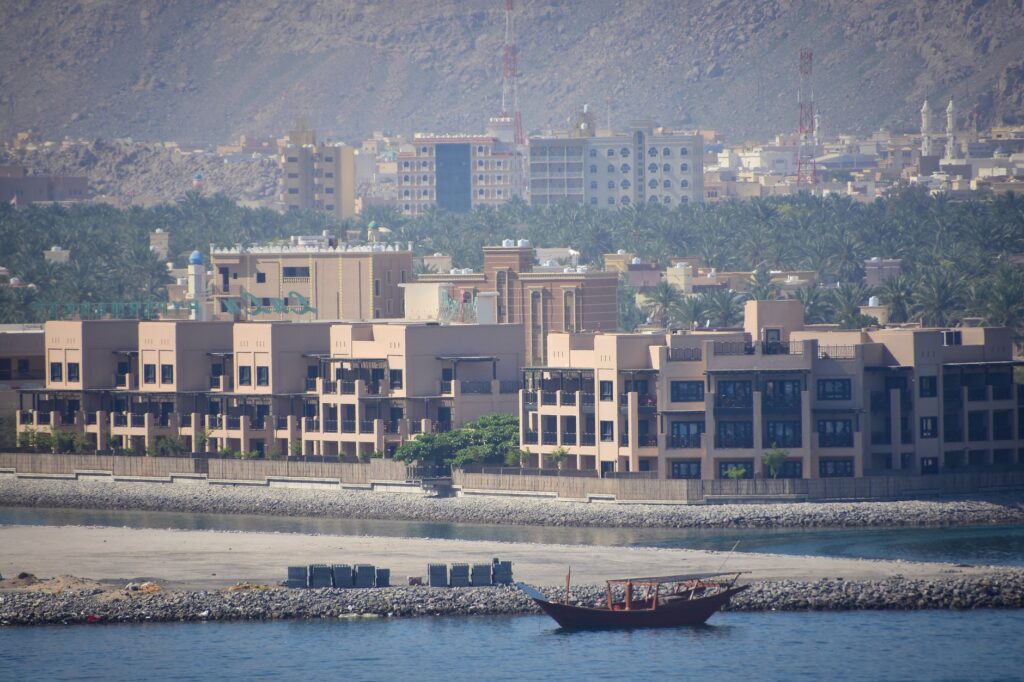
Accommodation and services: Hotel infrastructure is concentrated mainly in Khasab and Dibba, including international-class resorts and small family hotels. Interior villages lack commercial tourist services.
Traveling through Musandam demands renouncing haste and accepting that time in the fjords is dictated by wind and tides.
The final flash of light upon Musandam’s limestone cliffs reveals a palette of intense ochres and oranges contrasting with the absolute blackness of the sea at dusk. In that moment of geological silence, when boat engines fall silent at the fjord’s end and the echo of water striking rock recovers its ancestral prominence, the peninsula reveals its true essence. It is not simply a territory crossed by complex routes or a strategic node on the Gulf map, but a sanctuary where human perseverance has successfully woven, with threads of salt and rock, an unrepeatable way of life in rigorous harmony with Earth’s limits.