
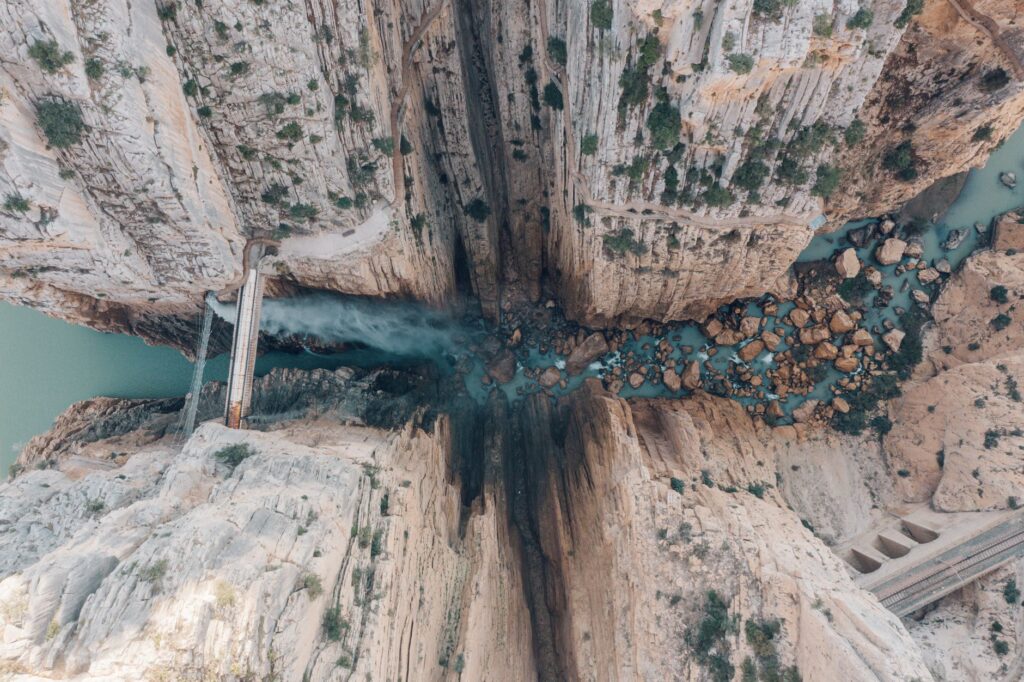
There are geographies that guard a fascinating contradiction within their very name. Just a few kilometers from the urban bustle and monumental history of Loja, in the province of Granada, lies a landscape whose toponomy evokes ancient terrors and volcanic depths. However, the so-called Hells of Loja are not a territory of sulfur and desolation, but rather one of the most lush, aquatic, and surprising natural enclaves in all of interior Andalusia. Here, the Genil River does not flow gently; instead, it forces its way with contained fury through a monumental gorge, sculpting the limestone and shaping a hidden Eden of thundering waterfalls, turquoise pools, and geological formations of incalculable value.
This report delves into the entrails of this geomorphological accident to understand how the millenary action of water has shaped not only the relief, but also the life, traditional economy, and collective imagination of the people who inhabit this corner of the Loja region. Through geological sources, local testimonies, and the attentive observation of the territory, we examine a landscape that demands to be explored with all five senses, respecting its fragile ecological balance and discovering a natural heritage that deserves a place among the great hidden wonders of southern Europe.
The Geography of Water: The Genil River’s Ancient Whim
To understand the Hells of Loja, one must look downward, toward the bed of a river that has acted as an unrelenting chisel for millennia. The Genil River, the main tributary of the Guadalquivir, encounters an orographic obstacle in this stretch that has forced its waters into a tight, steep gorge. Fluvial erosion, combined with the peculiar chemical composition of the soils, has given rise to an extraordinary geological phenomenon: the massive precipitation of calcium carbonate that creates travertine rock.
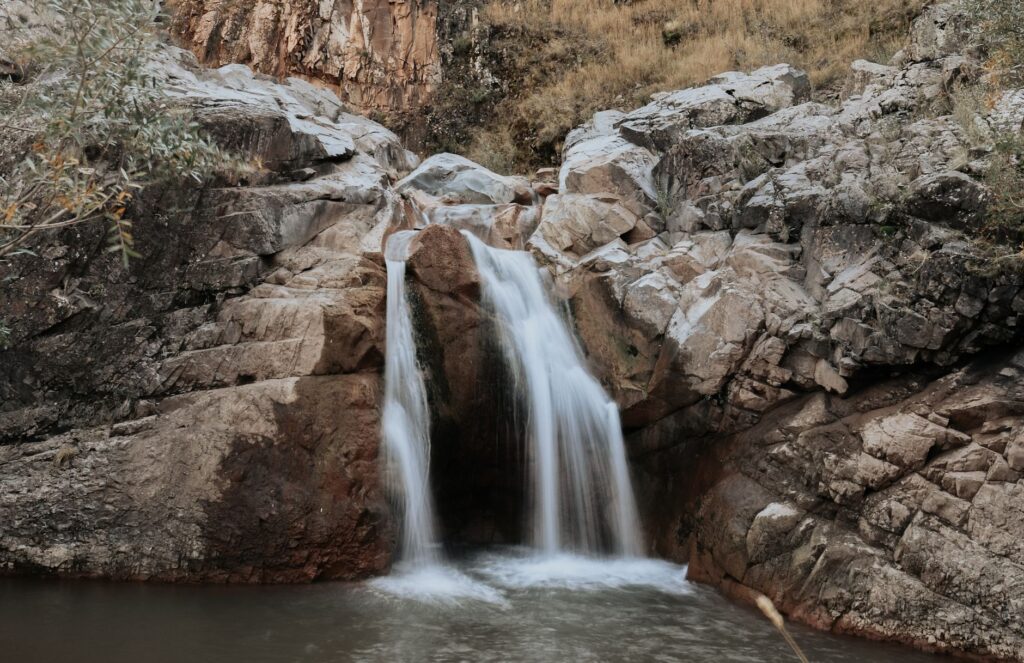
Travertines are porous, lightweight sedimentary rocks formed by the precipitation of mineral calcium from freshwater, especially in springs and rivers with a high limestone content. In the Hells of Loja, this process has created authentic natural sculptures. The water flows over stepped terraces, forming natural stone dams, whimsical small reservoirs, and curtains of calcareous tufa from which mosses and ferns hang as if frozen in time. Each flood of the river slightly remodels this dynamic relief, turning the canyon into an open book on the climatic and geological history of the Iberian Peninsula.
Water in Loja is not merely a vital resource; it is the silent architect that, drop by drop and century after century, has raised monuments of stone that are both ephemeral and eternal.
Geologists note that these types of formations are particularly sensitive to variations in flow and water temperature. The transparency of the pools, which acquire emerald and blue tones depending on the incidence of sunlight, contrasts with the brilliant white of the travertine walls. It is a landscape that changes radically depending on the season: lush and fresh in spring, when the snowmelt feeds the waterfalls with force; golden and melancholic in autumn, when the leaves of poplars and aspens cover the rocky bed like a fragile carpet.
The Human Footprint: Mills, Irrigation Canals, and Rural Memory
Far from being a pristine space untouched by human activity, the surroundings of the Hells of Loja have been an intensely inhabited and cultivated landscape for centuries. The abundance of water fostered the development of a rich hydraulic infrastructure inherited from the Andalusi era and perfected after the Christian conquest. Irrigation canals serpentining along the slopes of the valley lead the liquid element toward fertile orchards where vegetables, olive trees, and fruit trees have traditionally been cultivated.
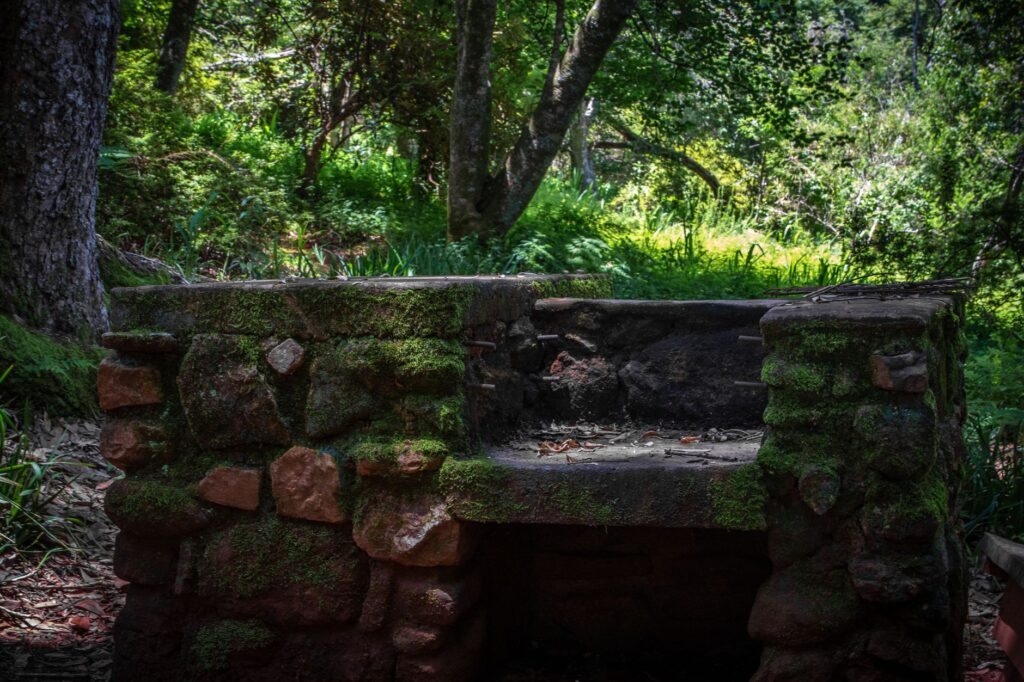
Along the course of the river, the remains of old flour mills recall a time when hydraulic force was the undisputed economic engine of the region. These masonry structures, today mostly integrated into the vegetal landscape or converted into evocative ruins, took advantage of the terrain’s unevenness to turn millstones that transformed the grain of the surrounding fields. The testimonies of Loja’s oldest residents evoke a time when the sound of the waterwheels blended with the constant murmur of the current.
The relationship between man and water in this territory also translated into a culture of extreme utilization. Every spring, every fountain, and every damp corner was named and endowed with a specific function, whether for watering livestock, washing wool, or irrigating small family gardens. This rural memory, transmitted from generation to generation, grants the canyon an anthropological dimension that goes far beyond its obvious aesthetic beauty.
The Biodiversity of the Gorge: Refuge for Riparian Flora and Fauna
The microclimate generated by the confinement of the Genil River and the constant humidity of the waterfalls have turned the Hells of Loja into a true sanctuary of biodiversity. While the surrounding mountains feature typical Mediterranean vegetation of holm oak groves and dry scrubland, the bottom of the canyon harbors a dense, well-preserved riparian forest.
White poplars, willows, ash trees, and elms form an arboreal canopy that filters sunlight and offers an indispensable refuge for numerous species of fauna. Among the branches, it is easy to spot the white-throated dipper, a small bird capable of diving in search of larvae and small crustaceans, or the elusive kingfisher, whose plumage flashes in bluish tones as it swiftly crosses the pools. Amphibians find the calm banks and small travertine ponds to be the ideal habitat for reproduction, notably featuring the common frog and the midwife toad.
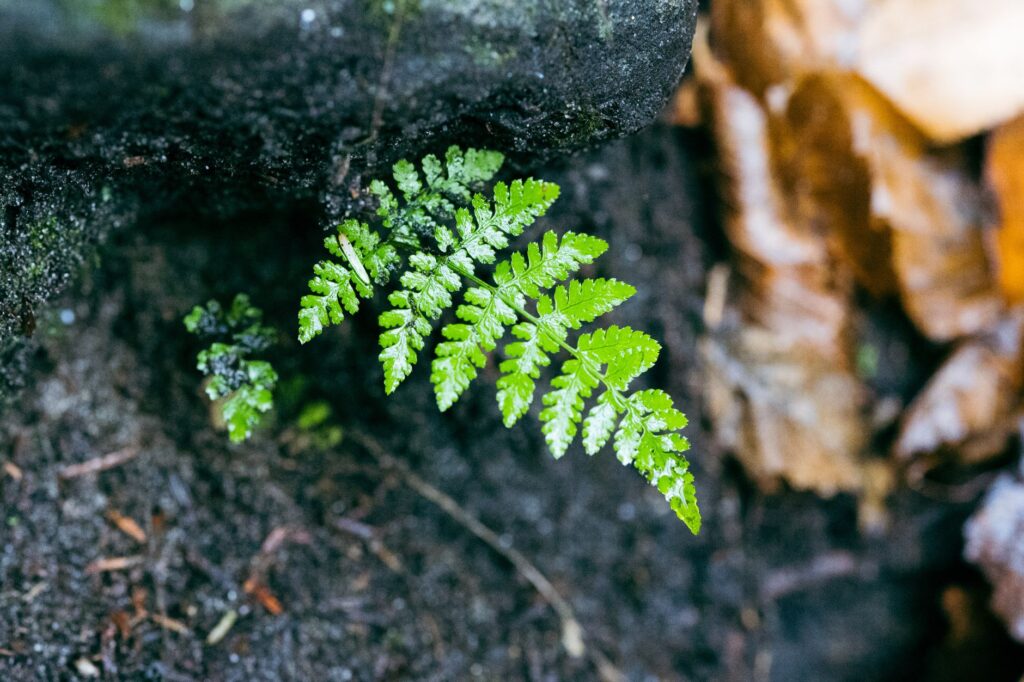
The rupicolous flora clinging to the vertical travertine walls is another of the place’s botanical treasures. Endemic species adapted to living in rocky fissures with high carbonate content carpet the stone with a palette of intense greens. This ecological balance, however, requires constant protection. Local authorities and conservation groups insist on the fragility of these riparian ecosystems, which are particularly vulnerable to uncontrolled mass tourism and the alteration of the river’s ecological flows.
The Art of Walking Slowly: Trails Among Waterfalls
Visiting the Hells of Loja is not an experience designed for haste. The trails running parallel to the water’s course invite visitors to adopt a leisurely, almost meditative pace. The path, which combines stretches of compacted earth with wooden walkways integrated into the environment, allows travelers to peer into the most spectacular points of the canyon without compromising safety or eroding the travertine formations.
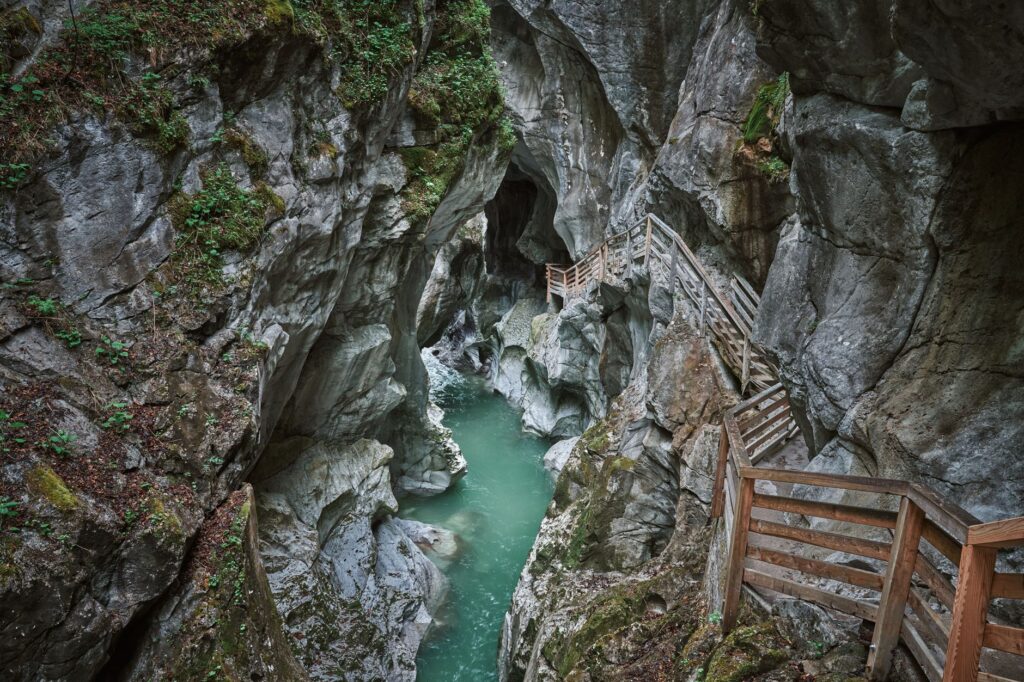
One of the greatest attractions of the route is the enveloping sound. The murmur of the water acquires different nuances as one advances: from the gentle splashing in shallow areas to the deafening roar of the main waterfalls, where the volume of water plunges violently into the pools. The sunbeams that manage to pierce the thick foliage of the gallery forest create plays of light and shadow on the stone, generating an almost cinematic atmosphere that has captivated photographers and naturalists alike.
Experts recommend visiting in the early morning, when the morning mist still rises over the river and silence is only broken by birdsong. It is in those moments of solitude that the landscape reveals its true essence, stripped of any commercial artifice. Walking these trails is also an exercise in reconnection with natural rhythms, a tangible reminder of the shaping force of nature in an era dominated by concrete and urban speed.
Hidden Heritage and Popular Legends of the Canyon
A landscape as singular and awe-inspiring as the Hells of Loja could not escape the rich folklore of the province of Granada. The place’s infernal toponomy has fueled popular imagination for centuries, giving rise to numerous legends about wandering souls, hidden treasures, and mythological beings supposedly dwelling in the deepest abysses of the river.
In the past, locals avoided approaching the gorge after sunset, convinced that the strange noises produced by the water striking the rock cavities were whispers from the afterlife. These oral narratives, though now reinterpreted as old wives’ tales, form an intangible part of Loja’s cultural heritage. They provide a layer of mystery that enriches the visit, turning a simple nature walk into a journey through the collective unconscious of a community that has lived alongside the indomitable force of the Genil for generations.
Legends are the poetic echo left by wild nature in the memory of peoples; in Loja, the river sculpted not only the stone, but also the soul of its inhabitants.
In addition to legends, the surroundings preserve archaeological vestiges from various eras. Small rock shelters used occasionally since prehistory have been documented, as well as remains of defensive infrastructure and medieval roads that evidence the strategic importance of this natural pass between the highlands of Granada and the Guadalquivir depression. The protection and enhancement of this historical and legendary heritage is the great pending challenge to consolidate sustainable cultural tourism in the area.
Practical guide
How to get there: The Hells of Loja are located near the municipality of Loja, in the province of Granada. The most convenient way to access them is via the A-92 highway, taking the indicated turns toward Loja. From the urban center, various local roads and rural paths lead to the starting points of the trails set up along the Genil River.
Best time to visit: Spring and autumn are the ideal seasons. In spring, the river’s flow is at its peak and the landscape displays its maximum green exuberance. In autumn, the ochre and golden colors of the gallery forest offer a unique visual spectacle. It is advisable to avoid the central summer months due to high temperatures in the area.
Recommendations and equipment: Hiking shoes with good non-slip soles are essential, as wet areas and travertine stones can be slippery. It is recommended to bring drinking water, sunscreen, and comfortable clothing. It is crucial to respect the rules of the natural space, avoid littering, stay on marked trails, and refrain from swimming in unauthorized areas to protect the fragile limestone formations.
Accommodation and gastronomy: Loja boasts an excellent range of rural houses and charming small hotels in its surroundings. Local gastronomy features traditional dishes such as river fish, regional breadcrumbs (migas), and pork products, always accompanied by the region’s excellent extra virgin olive oil.
The Eternal Beat of Stone and Water
At dusk, when sunlight acquires amber tones and projects horizontally across the travertine walls, the Hells of Loja reveal their most intimate and moving face. The roar of the water seems to soften, giving way to a tense calm that permeates the entire gorge. At that moment, sitting beside a pool of crystal-clear waters, one understands the true magnitude of this geological monument. It is not merely a postcard tourist attraction, but a living archive of the earth, an eloquent testimony to the infinite patience with which nature is capable of working wonders. The water continues its relentless course toward the sea, oblivious to the centuries and to men, leaving behind an Eden of stone that proudly defies its own name.
Source: Condé Nast Traveler Spain.