
The Iron Gates That Awaken the City
When the first rays of dawn brush the spires of the Basilica of Pilar, the silhouette of Zaragoza shivers under a blanket of mist that the Moncayo wind disperses with measured calm. At the heart of the Aragonese capital, the Central Market of Lanuza—a jewel of iron architecture inaugurated at the dawn of the twentieth century—begins to stretch. This is not a mere commercial routine, but an ancient liturgy deeply tied to the rhythm of the surrounding fields and the generous flow of the Ebro River. Delivery trucks unload crates housing the vegetal jewels of a land equally harsh and bountiful: pearl thistles, sweet onions from Fuentes, and above all, the undisputed queen of local orchards, borage, with its silvery, spiny stalks guarding the texture of pure water.
Crossing the threshold of this market, designated a National Historic Monument, is stepping into a sensory sanctuary where the scent of ripe fruit blends with the murmurs of stallholders who have spent decades dispensing local produce. Here, the act of purchasing acquires an almost sacramental dimension. Stalls follow one another with precise geometry, grouping the treasures of the earth according to origin and seasonality. In the central aisles, wholesalers and retailers exchange knowing greetings with a loyal clientele seeking the exact provenance of every item. There is no room for improvisation; every vegetable, every piece of meat, and every cheese responds to a strictly delimited geographical landscape that the people of Aragon defend with sober, unwavering pride.
The Pulse of Stone and Modernist Steel
Designed by architect Félix Navarro Pérez in 1903 and erected on the site of the old open-air market, the building marked an aesthetic and functional breakthrough. The structure combines a solid base of ashlar stone with a slender frame of forged iron and large glass windows that allow natural light to flood the stalls each morning. This layout not only optimized food hygiene and ventilation but turned the space into a vital meeting point for the bourgeoisie and working classes of the city. The metallic pilasters and basket-handle arches recall the grand railway stations of the European industrial era, endowing the market with an unusual monumentality for a food hall.
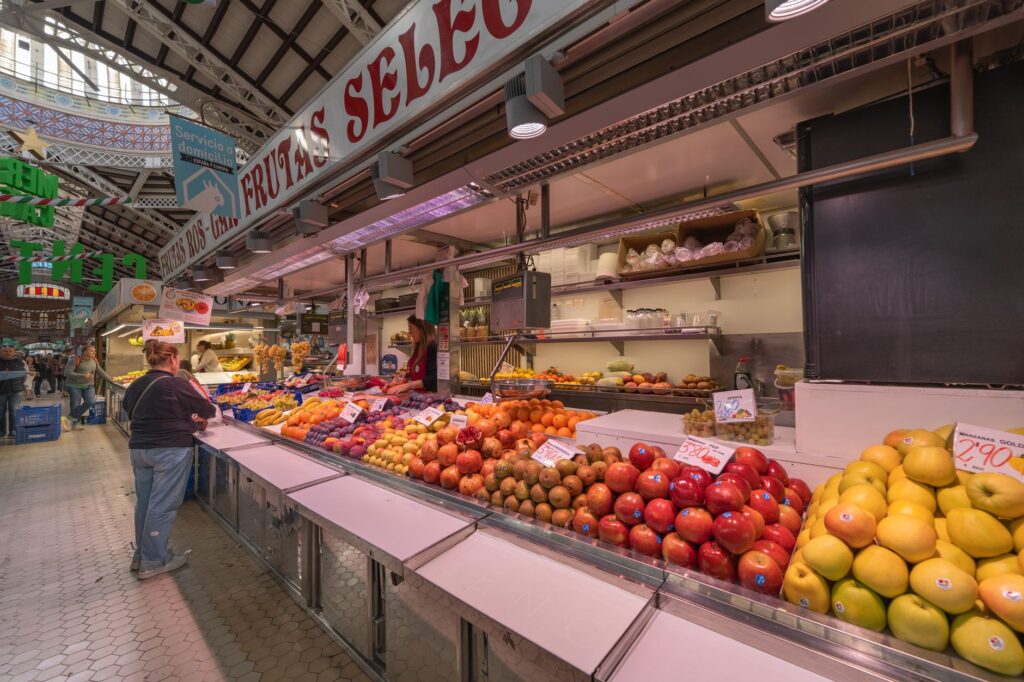
Yet the true soul of this iron colossus lies not in its architectural shell, but in the human community inhabiting it. Families of shopkeepers who have passed aprons from parents to children keep the traditional market counters alive. This is the case at poultry and game stalls, where partridges and quails from the Iberian mountain ranges can still be acquired, alongside poultry sellers carefully selecting farm-raised chickens fed on native grains. The conversation between vendor and buyer is an open manual of culinary ethnography: debates unfold over the exact cooking time of butter beans, the acidity of a pink tomato from Barbastro, or the suitability of an artisanal curd to conclude the midday meal.
The Fluvial Orchard: Between the Ebro and the Jalón
A few kilometers from the urban bustle, the Aragonese landscape unfolds into a network of fertile river valleys nourished by the Ebro, Jalón, and Gálvez rivers. It is in this territory that the vegetable larder filling Lanuza’s counters every morning is cultivated. Borage (*Borago officinalis*), traditionally regarded as a weed in other latitudes of Europe, has found here its perfect habitat and peerless gastronomic recognition. Its leaves are entirely discarded, utilizing exclusively the stems, cleaned with surgical precision to remove the outer fuzz. Cooked with potatoes and a generous drizzle of extra virgin olive oil from the Lower Aragon region, it becomes a dish of apparent simplicity yet subtle, comforting elegance.
Alongside borage reigns the thistle, especially the coveted red thistle of Aguarón, which requires a laborious process of earth-mounding and underground bleaching to prevent light from bittering its stalks. During the festive winter season, this vegetable stands as the undisputed monarch of Aragonese tables, usually accompanied by an almond sauce and small chunks of Teruel ham. The relationship between the riverside farmer and the urban cook rests on mutual trust that has resisted the push of large supermarket chains. The produce of Zaragoza’s orchards does not chase the aesthetic perfection of industrial greenhouses; it prioritizes flavor, tender texture, and the nutritional density forged by an extreme continental climate marked by freezing winters and scorching summers.
The Liturgy of Milk-Fed Lamb and Transhumance
If the orchard provides vegetal freshness, extensive livestock farming defines the deepest character of Aragonese cuisine. Ternasco de Aragón—milk-fed lamb from native breeds such as Churra Tensina, Rasa Aragonesa, or Roya Bilbilitana, under ninety days old and nourished exclusively on maternal milk and natural grains—holds Spain’s first specific Denomination of Origin for lamb meat. In the Central Market’s butcher shops, cuts are displayed with micrometric precision: ribs for the embers, shoulder for slow clay-pot roasting, and neck for traditional stews that enrich winter days.

This product embodies the legacy of millenary transhumance, when flocks traversed ancient drovers’ roads from the summer pastures of the Pyrenees to winter grazing lands in the Ebro Valley. The meat stands out for its pale pink hue, balanced fat infiltration, and a tenderness that melts on the palate. Market butchers insist that the secret to a good roast lamb lies in patience: a gentle oven, a base of thinly sliced baker’s potatoes absorbing the juices, and a final touch of garlic, parsley, and local white wine. It is a recipe admitting no artifice, conceived to exalt the purity of raw material inextricably linked to the land.
The market is not a mere showcase of goods, but the living archive where the memory of the landscape transforms into daily nourishment and cultural resistance.
The influence of livestock farming also extends to the universe of artisanal sausages and cheeses. In corners dedicated to traditional charcuterie, *chiretas*—a Pyrenean dish made of sheep’s intestine stuffed with rice, minced meat, ham, and spices—coexist with Graus sausages and goat cheese rounds from the Pre-Pyrenean valleys. Each of these products relates a tale of survival and holistic utilization, where nothing is wasted and every ingredient fulfills a precise function within the nutritional architecture of the dish.
Rye Breads and the Memory of Ovens
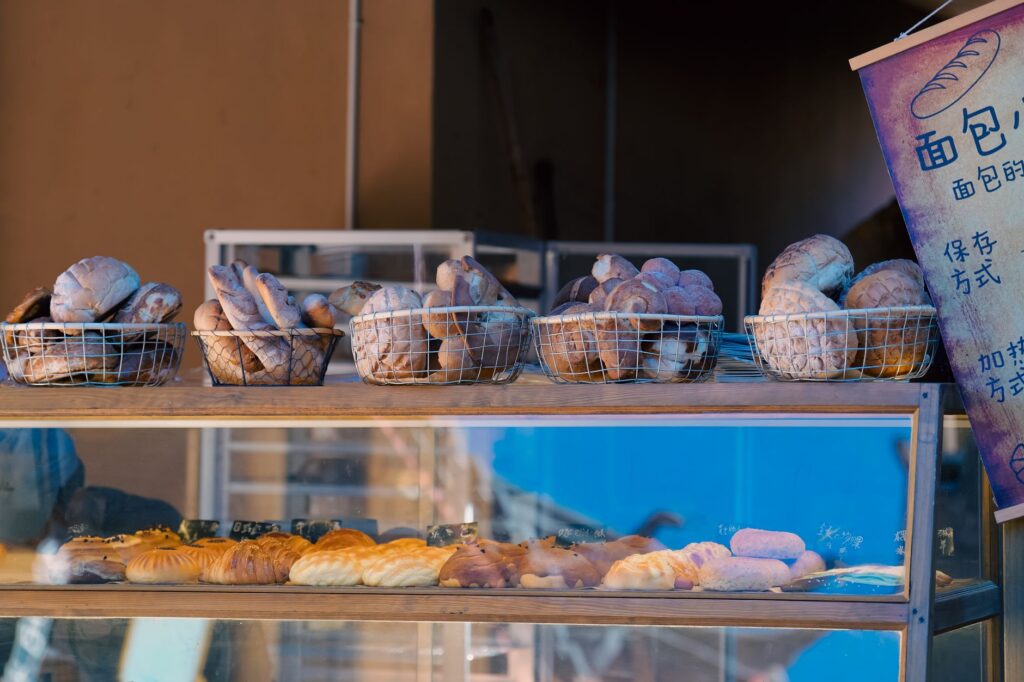
Cereal has historically been the economic and dietary muscle of Aragon. The fields of the middle Ebro valley and the provinces of Teruel and Huesca have nurtured native varieties of wheat and rye that are currently experiencing a profound revaluation thanks to artisanal bakers. In the market’s specialized stalls, one finds sourdough loaves with prolonged fermentations, crispy crusts, and honeycombed crumbs preserving the aroma of ancient grain. These breads do not merely accompany meals; they act as structural elements in garlic soups, shepherd’s crumbs, and oil-drizzled toasts.

Zaragoza’s baking culture keeps centennial establishments alive where flour is worked by hand, respecting the biological rhythms of yeast. The regional handkerchief bread (*pan de pañuelo*) is characterized by its flat shape and spongy crumb, ideal for soaking up the dense sauces of game stews or river fish dishes. This symbiosis between cereals grown in arid drylands and the mastery of the artisanal baker completes the circle of a gastronomy rooted in the earth, shunning industrial shortcuts and claiming slowness as an unnegotiable contemporary luxury.
The Wines of Somontano and Moncayo
No journey through Zaragoza’s larder would be complete without considering the wines nurturing its tables. Although the wineries of Somontano, Cariñena, and Campo de Borja occupy distinct viticultural zones, the Central Market acts as a natural convergence point to taste the community’s oenological diversity. Native varieties like Garnacha, finding its global zenith on the stony slopes of Moncayo, offer wines of immense personality, marked by notes of ripe red fruit, spices, and balanced acidity that cuts through the richness of traditional stews.
Specialized wine vendors act as true trench sommeliers, recommending references from small producers crafting wines through minimal intervention. Respect for terroir, the recovery of old vines, and vinification in native oak barrels or traditional concrete vats are highly prized. A well-aged Somontano wine or a centennial-vine Garnacha does not merely accompany the meal; it elevates the main course, creating a synergy where food and liquid fuse into a single sensory experience defining the Aragonese character.

Practical guide
How to get there: Zaragoza Central Market is located in the central Plaza de Lanuza, a short walk from Calle Alfonso I and the Basilica of Pilar. It is accessible on foot from any point in the historic quarter and connected via the urban tram network.
Visiting hours: The venue opens Monday through Saturday mornings, typically from 8:00 AM to 2:00 PM, extending hours on Fridays until 8:00 PM. Visiting early is recommended to witness the bustling loading and unloading.
Essential products: Fresh borage, red thistle, Denomination-certified Ternasco de Aragón lamb, sweet Fuentes onion, Teruel ham, and sourdough breads made from native wheats.
Recommended accommodation: The historic quarter and El Tubo district house boutique hotels integrated into restored Renaissance palaces, alongside properties with historic charm.
Surrounding gastronomy: Beyond purchasing fresh produce, market stalls and their immediate surroundings feature tasting bars preparing tapas crafted from the Aragonese pantry.
The Eternal Pulse of a Square That Feeds Memory
At dusk, when the Central Market’s iron gates descend with a metallic echo that silences the day’s clamor, the surrounding streets recover a measured calm. Restaurants and taverns of the historic quarter pick up the baton from the shopkeepers, transforming the morning’s purchases into banquets where tradition renews itself each night. Zaragoza thus proves that its gastronomy is not a museum piece destined for passive contemplation, but a living, muscular, vibrant organism beating to the rhythm of its orchards and rivers.
Eating in Zaragoza is an act of reconciliation with time and earth, a reminder that life’s finest flavors are born from patient effort and respect for the seasons.
In every plate of borage, in every cut of roasted lamb, and in every crumb of artisanal bread persists the memory of generations who managed to extract abundance from a demanding nature. The traveler who crosses this threshold and pauses to listen to Lanuza’s heartbeat understands that a destination’s true wealth is measured not in carved stone monuments, but in the daily authenticity of its markets and the inexhaustible generosity of its shared tables.