Silence and Rhythm in the City of Grey Stone
In the heart of Edinburgh, where North Sea mist embraces the volcanic stone of the Old Town, time seems measured by the unhurried pace of a bone folder gliding over cotton fiber. While the world accelerates its transition toward glowing screens and ephemeral cloud archives, the artistic bookbinding workshops of the Scottish capital defend a trench of material resistance. Here, the book is not a mere reading support, but a living organism endowed with a skeleton, skin, and memory.
The tradition of bookbinding in Scotland runs deep, tied both to medieval monastic fervor and the subsequent splendor of the Scottish Enlightenment, when Edinburgh emerged as a European publishing beacon. Today, this heritage survives not as a museum piece, but as a vibrant ecosystem where a new generation of artisans engages in dialogue with contemporary design, paper architecture, and preventive conservation.
The Invisible Anatomy of the Volume
Understanding conservation binding requires descending to the microscopic level of its structural components. In Alistair MacLeod’s workshop, located in a cobbled alley near Cowgate, the air smells of starch paste, vegetable-tanned leather, and beeswax. MacLeod, with over three decades in the trade, holds in his hands a notebook hand-sewn over natural hemp cords. Every stitch responds to a millimetric logic designed to ensure the spine breathes and the book block opens with absolute naturalness.
The process begins long before the first needle is applied. The choice of paper—frequently acquired from artisanal mills using cotton and linen rags—determines the flexibility of the whole. Fan sewing or sewing over raised bands is not merely an aesthetic resource, but the dynamic axis supporting the mechanical tensions of continuous use. Without a rigorous internal structure, even the most luxurious binding collapses under its own weight over the decades.
The Alchemy of Leather and Blind Tooling
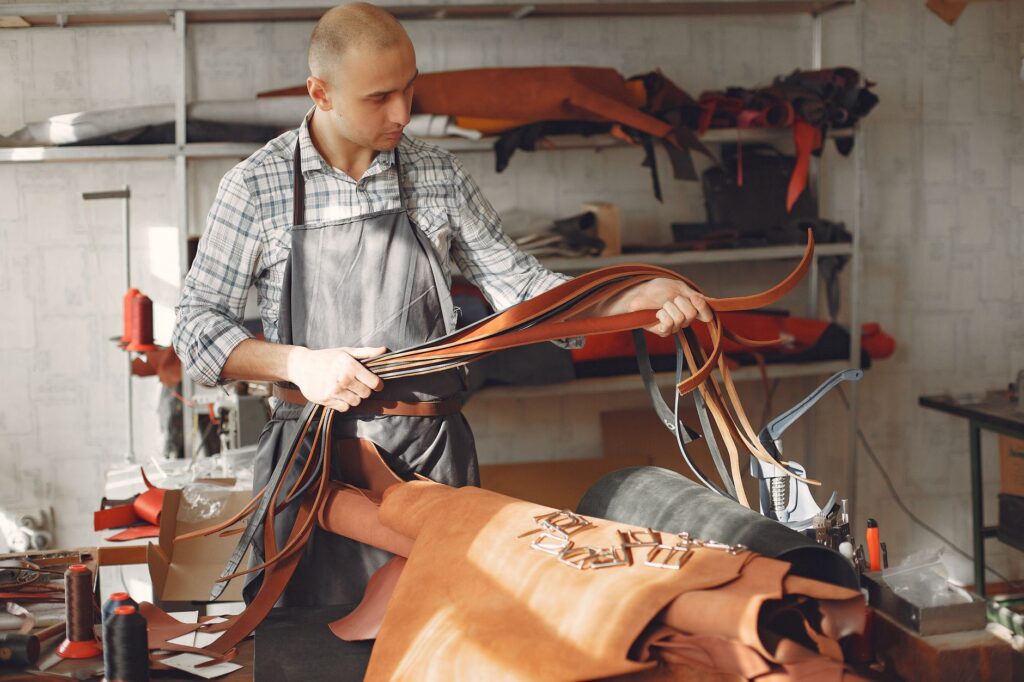
One of the most delicate moments in the workshop is the paring of the leather. Whether Moroccan goat, waxed calf, or skived calfskin, the artisan must pare the edges with a skiving knife until achieving a uniform thinness of fractions of a millimeter. This allows the corners and joints—the grooves where the cover fits—to close with pinpoint precision, avoiding clumsy folds that ruin the visual harmony of the volume.
Heat and pressure are subsequently applied through blind tooling or stamping with hand-engraved metal plates. In this territory, the temperature of the blocking press must be calculated with empirical exactness: excess burns the leather fiber; a defect leaves a fuzzy imprint. Geometric motifs inspired by the Gothic architecture of St. Giles’ Cathedral or the wild flora of the Highlands coexist with minimalist lines characteristic of current British and Scandinavian design.
The hand-bound book is the only technology that, as it ages, acquires dignity and beauty instead of obsolescence. Every scratch on the leather tells the story of who read it.
Centuries-Old Tools and Contemporary Technology
Far from opposing modernity, Edinburgh’s current workshops integrate traditional tools with technical advances in neutral pH preservation and reversible adhesives. Nineteenth-century cast-iron presses, with their large flywheels and deep-thread spindles, coexist in perfect harmony with precision microscopes for repairing endpapers and performing enzymatic cleaning of acid-damaged manuscripts.

This symbiosis attracts bibliophiles, European museums, and independent poetry publishers seeking limited editions. The contemporary bookbinder is no longer just a technician who sews signatures, but an aesthetic consultant capable of translating the conceptual content of a text into an unrepeatable tactile and visual experience.
The Role of Paper: The Archaeology of Cellulose
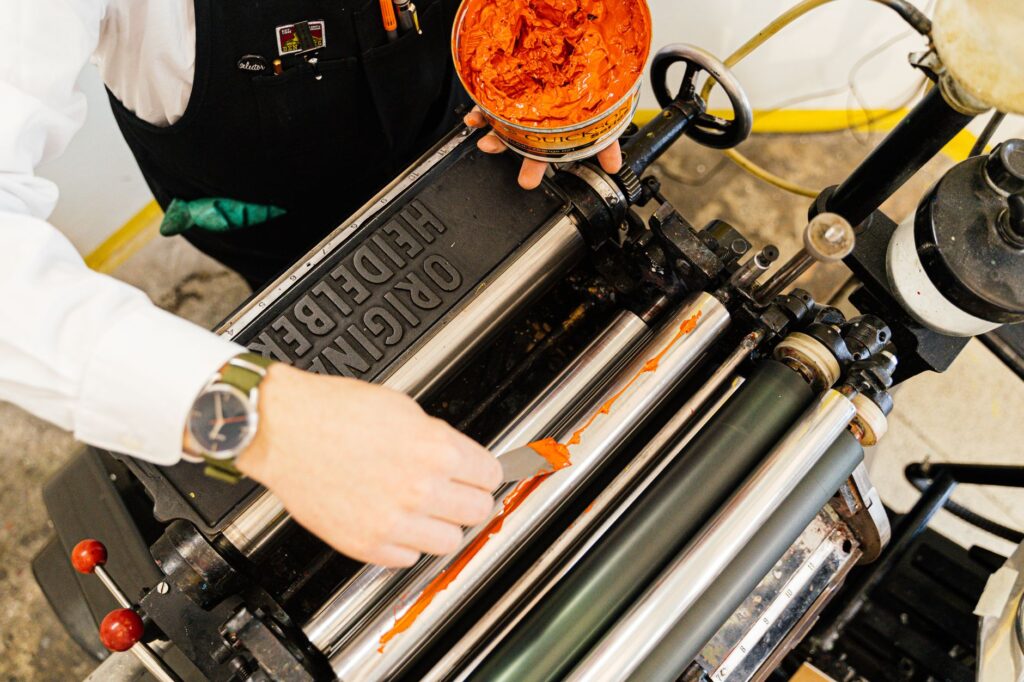
No exceptional binding can rest on a mediocre support. In New Town studios, artisans collaborate closely with letterpress printers using Heidelberg presses and lead movable type. The choice of weight, fiber grain direction, and internal sizing determine how the sheet will react to Scotland’s ambient humidity.
Headband treatment—the small textile braid crowning the top and bottom of the spine—constitutes the silent signature of the binder. Sewn thread by thread directly onto the spine with natural silk, these pieces fulfill a structural reinforcement function while providing a subtle chromatic note that contrasts with the sobriety of the exterior leather.
Sustainability and Circular Economy in the Workshop
In an era marked by mass production and planned obsolescence, the artisan workshop embodies a radical model of sustainability. Leftover leather scraps are repurposed for bookmarks and small pocket bindings; paper offcuts are recycled to create new handmade sheets using vat techniques; and petroleum-derived synthetic glues have been replaced by entirely biodegradable animal and plant-based adhesives.
This ecological commitment does not respond to a marketing strategy, but to an ethics inherited from the guild. A well-made book is designed to last centuries, requiring minimal maintenance interventions. Durability thus becomes the most forceful ecological argument against ephemeral consumption.
Restoring an old book is not returning it to an impossible original state, but allowing it to continue its journey into the future with structural dignity.
Generational Renewal and Trade Schools
The future of this millenary art in Edinburgh seemed threatened at the end of the last century, but it is experiencing an unexpected spring today thanks to the interest of young creators from graphic arts and fine arts. Institutions like the *Edinburgh College of Art* and independent studios offer specialized training courses where employment placement rates in conservation studios exceed eighty percent.

Learning the trade requires monastic patience. At least five years of daily practice are required to master exact thread tension, the handling of thickness calipers, and the uniform application of gold leaf. Current apprentices understand that the value of their work lies precisely in what machines cannot replicate: tactile intuition and human error corrected with mastery.
Practical guide
Planning a route through Edinburgh’s bookbinding and publishing design workshops requires attention to schedules and respect for silent workspaces. Unlike commercial shops, many studios operate by appointment only or open their doors exclusively during specific cultural events such as the *Edinburgh Festival Fringe* or open studio weekends.
How to get there: Edinburgh Airport (EDI) connects with major European hubs via scheduled flights. The tram and the Airlink 100 bus service connect the terminal to the center in less than thirty minutes. To explore the historic center, walking is the only viable option due to the narrowness of the medieval closes.
When to visit: The spring months (May to June) and early autumn (September) offer mild temperatures ideal for walking, as well as fewer tourist crowds compared to August.
Recommended workshop route: Start the tour in the *Grassmarket* area, ascend via *Victoria Street*—famous for its independent bookstores—and descend toward the alleys of *Cowgate*, where the city’s most unique paper restoration and artistic binding studios are concentrated.
Etiquette tips: When visiting a functioning workshop, always ask permission before photographing delicate tools or materials. Many masters work with highly valuable historical manuscripts guarded under strict security and confidentiality rules.
The Final Heartbeat Among Open Pages
When dusk falls over Edinburgh and gas lamps illuminate the granite facades, the windows of the workshops continue to cast a warm, amber light. Inside, on a solid oak table illuminated by overhead lamps, a newly bound volume rests beneath a wooden press. The leather still retains the residual heat from the last pass of the iron and the paper exhudes the clean aroma of hemp and wax. In that silent object, constructed with extreme patience and absolute respect for the material, lies the most evident proof that material culture is not a vestige of the past, but the very pulse of our shared humanity.