
Introduction to Anatolia’s Maritime and Mountain Frontier
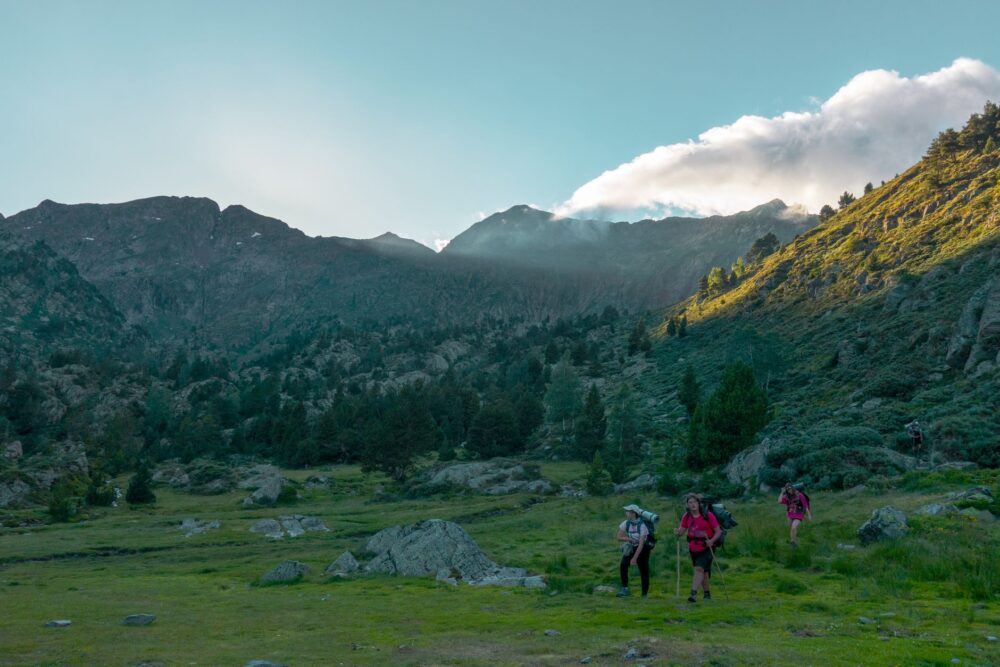
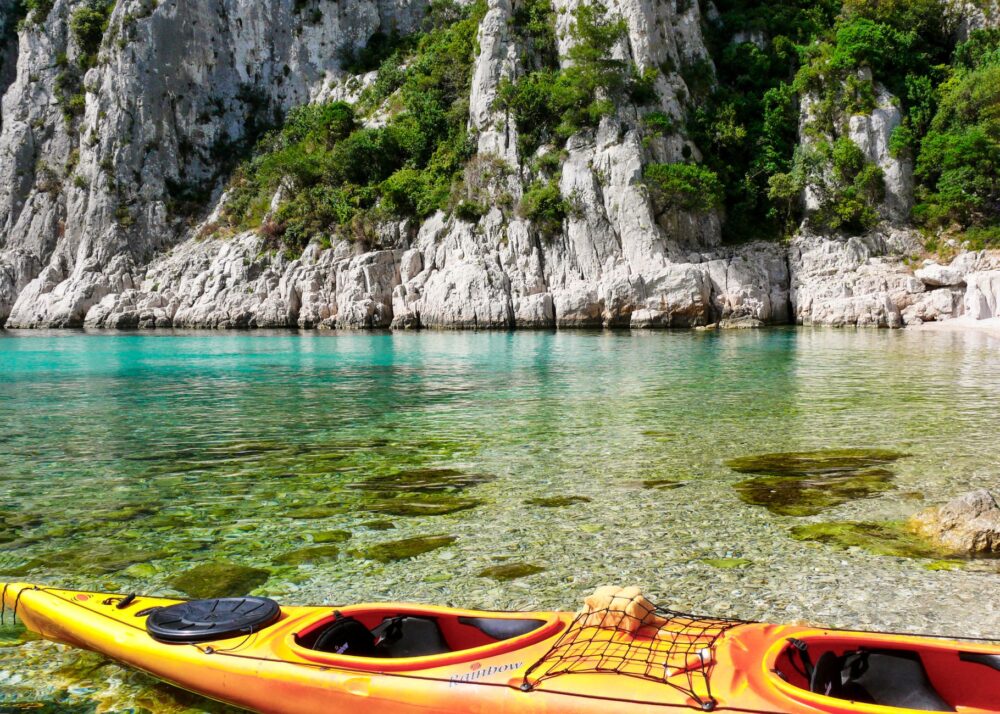
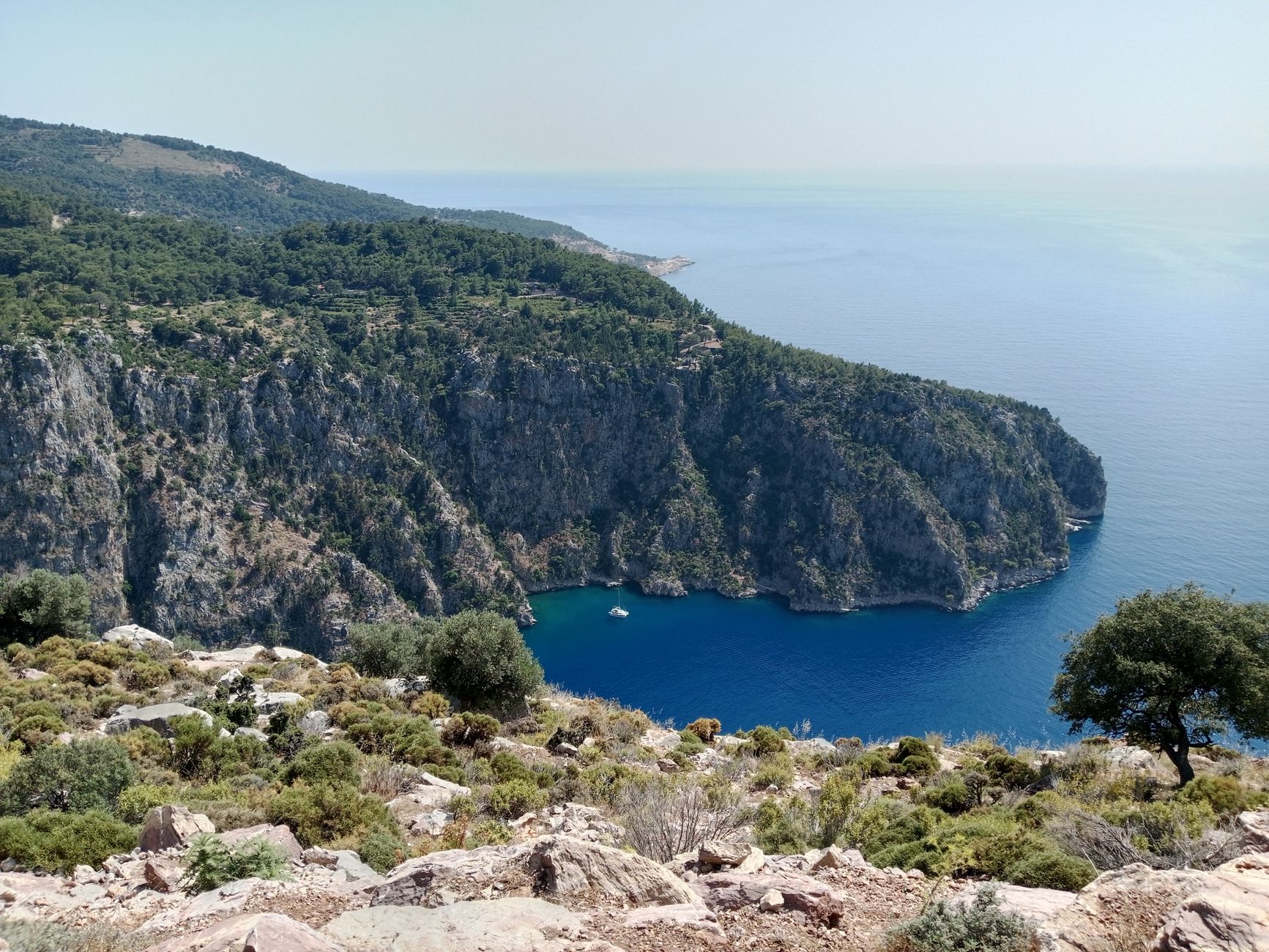
Southern Turkey’s Mediterranean coastline, where turquoise waters carve dramatic coves against the steep limestone ridges of the Taurus Mountains, harbors one of the most captivating long-distance footpaths in Eurasia. The historic footpath known internationally as the Lycian Way winds for over five hundred kilometers between Fethiye and Antalya, tracing the remnants of an ancient civilization that mastered maritime trade, seafaring, and the intricate art of carving rock-cut tombs directly into sheer cliff faces. Unlike conventional alpine traverses, this expedition pairs the rugged demands of Mediterranean mountain walking with constant exposure to coastal elements, where sea winds, seasonal scarcity of natural water sources, and complex karstic terrain require rigorous physical and logistical preparation from every trekker.
The purpose of this report is to break down with technical rigor the critical factors required for a successful autonomous or semi-autonomous traverse along this historic corridor. From map reading and interpreting the markers of the Grande Randonnée standard to managing cumulative elevation gains beneath the relentless Anatolian sun, we will examine the terrain step by step. This journey is not merely about walking from one waypoint to the next, but about understanding the delicate balance between preserving scattered archaeological ruins hidden among laurel thickets and maintaining the technical self-sufficiency demanded by an environment where local communities, though hospitable, operate on traditional rural rhythms with limited support infrastructure for foreign mountaineers.
Route Planning and Seasonal Timing
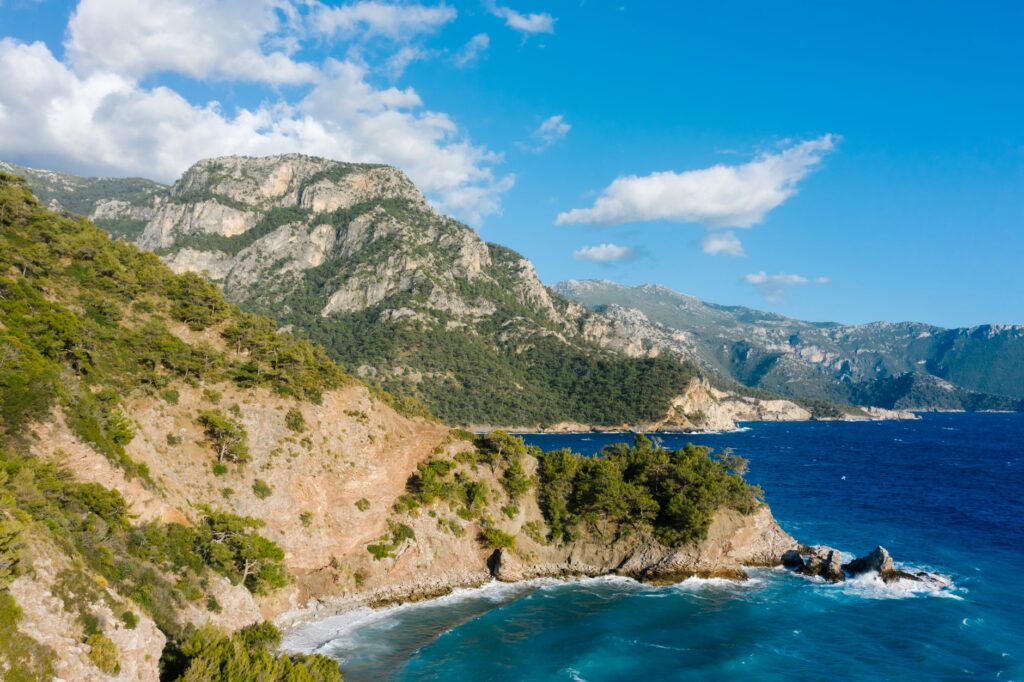
Determining the right time window to set out from Fethiye or Cape Gelidonya is the primary operational decision that will dictate the success of the expedition. Turkey’s Mediterranean region experiences intense summer heat, frequently exceeding forty degrees Celsius at sea level, turning daytime marching into an exhausting endeavor fraught with high risks of heat exhaustion. Consequently, the optimal weather windows are concentrated in the spring months—from March to May—and the autumn months—from September to November. During these periods, the climate provides vital thermal relief, though spring brings blooming vegetation and more active water sources, whereas autumn boasts stable atmospheric conditions and ideal sea temperatures for physical recovery at the end of each stage.
Choosing the direction of travel also sparks ongoing debate among seasoned backpackers. Traditionally, most guidebooks suggest starting in Fethiye and heading eastward toward Antalya. This orientation offers distinct advantages, such as receiving the morning sun primarily at your back during early stages and a gradual increase in the technical difficulty of the steeper mountain sections found in the second half of the itinerary, including the foothills of the imposing Tahtalı Dağı, which rises over two thousand three hundred meters above sea level. Conversely, starting from the east allows experienced trekkers to bypass the busiest segments early on and finish the trek facing the secluded cliffs of the Gulf of Fethiye.

Karstic Geology and Technical Terrain Management
The geological substrate underlying the trail is dominated by karstic limestone formations featuring sharp lapiaz, sinkholes, and a complete absence of surface streams across many high plateaus. This geological reality dictates that trekking boots must feature high-friction rubber compound outsoles and rigid ankle support capable of preventing sprains across extensive stretches of loose stone and weathered limestone. The terrain shows no mercy to fatigue; a single misstep on goat tracks can result in debilitating injuries miles away from the nearest paved road.
Beyond footwear, pack weight management becomes an unyielding mathematical discipline. When confronting sections where the distance between reliable springs can exceed fifteen or twenty kilometers, the volume of daily carried water can easily reach four to five liters per person, adding substantial mass to base equipment. Telescopic trekking poles with tungsten tips are indispensable tools, both for absorbing impact during dizzying descents toward the coves of Kabak or Ölüdeniz and for maintaining stability while traversing exposed ridges whipped by strong winds descending from the Taurus peaks.
Archaeological Heritage and the Legacy of the Lycian League
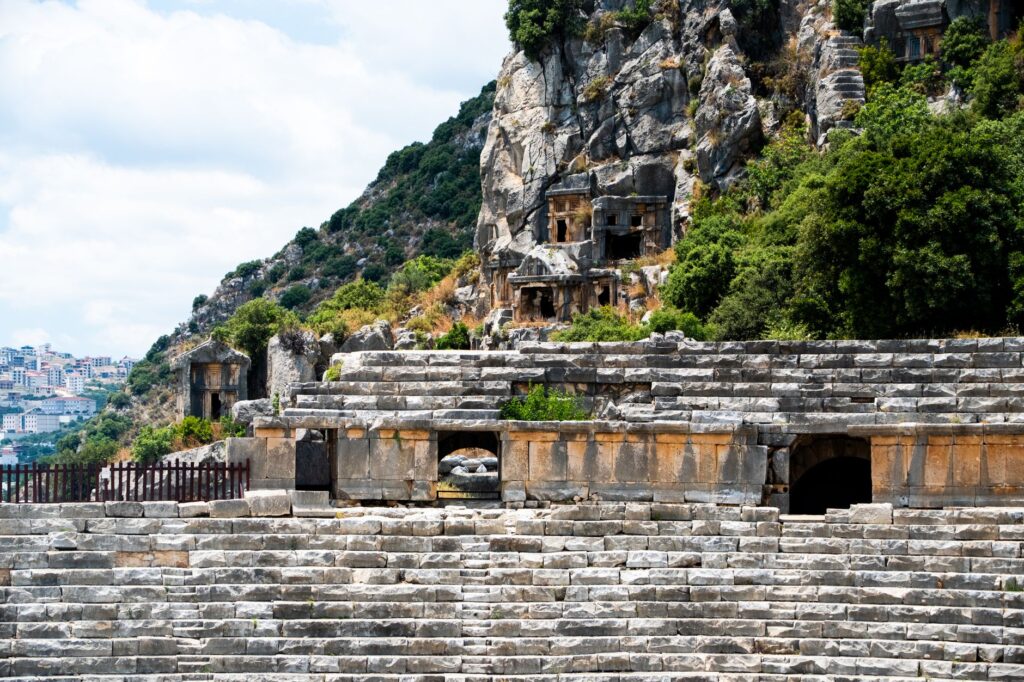
Walking through this corridor is not only a test of physical endurance, but a direct immersion into one of classical antiquity’s most unique geopolitical entities. The Lycian League, viewed by historians as one of history’s earliest federations with democratic principles, left a monumental footprint that today intersects every footstep. The rock-cut necropolises of Tlos, the free-standing sarcophagi emerging among olive groves in Xanthos, and the remarkably preserved Roman theaters in Myra or Patara are not confined behind museum glass, but integrated directly into the rugged landscape, accessible to any traveler who crosses a dry-stone wall.
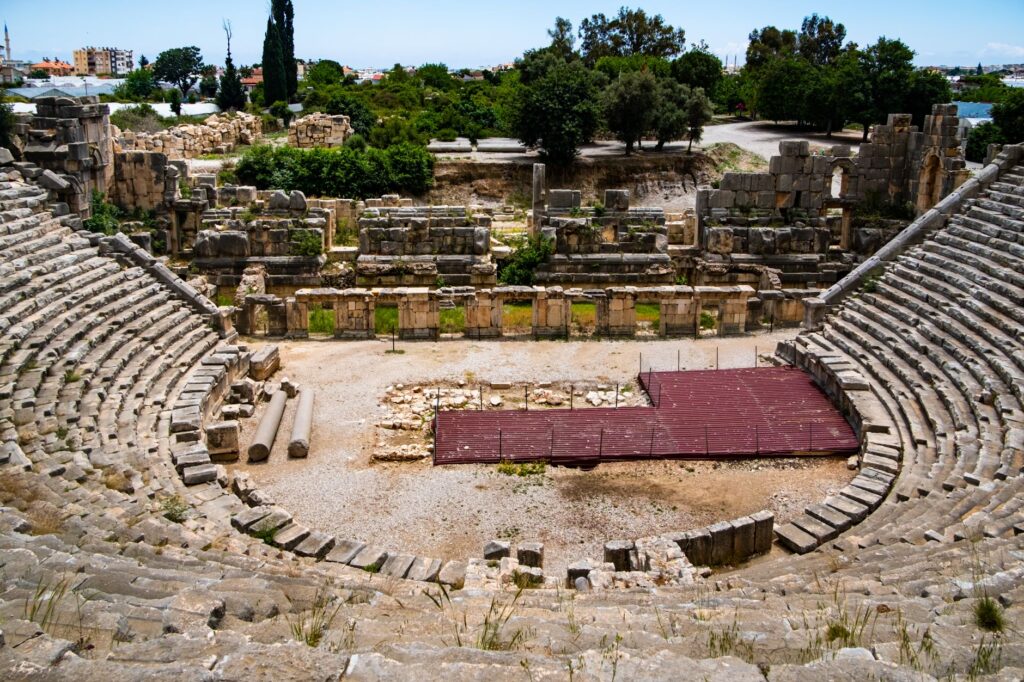
This direct coexistence with millennial ruins demands a strict code of respect from visitors. Climbing on historical ashlar masonry, moving scattered ceramic fragments from the ground, or disturbing architectural remains half-buried by undergrowth is strictly prohibited. Turkish authorities, in collaboration with local communities, have intensified trail marking with red and white paint blazes—the European long-distance standard—to divert foot traffic away from fragile structures, ensuring that expeditioners do not accelerate the erosion of a heritage that has withstood millennia of weather yet remains vulnerable to unchecked mass tourism.
Provisioning, Village Logistics, and Rural Accommodation
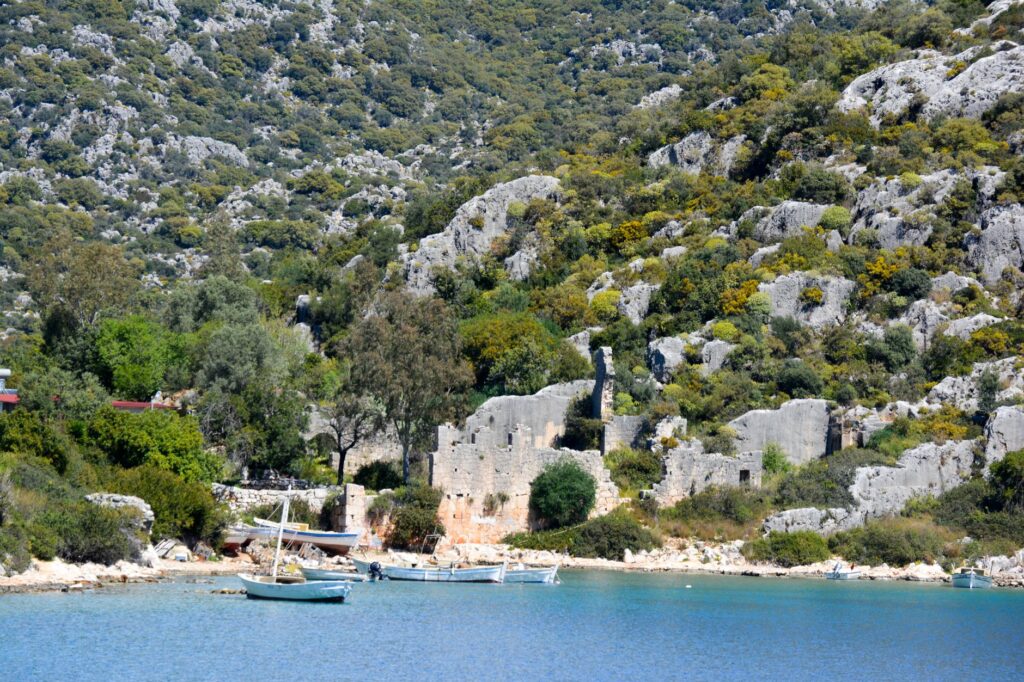
One of the most notable logistical highlights of the traverse is its capacity to combine wilderness self-sufficiency with the opportunity to stay in small farming and fishing villages that have adapted to the influx of hikers without losing their Mediterranean identity. Settlements like Üçağız, built atop the sunken ruins of ancient Kekova, or the mountain shelters of Geyikbayırı, offer everything from simple family-run guesthouses operated by locals to designated free-camping areas with basic sanitation and traditional food services.
Local gastronomy plays a central role in replenishing a trekker’s energy reserves. Dishes based on fresh vegetables grown in local terraces, artisanal goat cheese, family-produced extra virgin olive oil, and freshly baked flatbread form the dietary foundation found in small rural grocery stores. Nevertheless, carrying vacuum-packed emergency rations and water purification systems—whether chlorine dioxide tablets or hollow-fiber membrane filters—is mandatory, as traditional wells and rural mosque spouts, while generally clean, can present seasonal bacteriological variations that advise against direct consumption without prior treatment.
Practical guide
- Recommended best season: March to May in spring and September to November in autumn, avoiding extreme summer heat.
- Estimated full duration: Between 25 and 30 days for the 500+ kilometers, though numerous segmented 3-to-7-day sections exist.
- Essential technical gear: Mid-cut boots with high-traction outsoles, trekking poles, water purification system, and updated offline GPS cartography.
- Water logistics: Plan bivouacs and stages budgeting a minimum daily consumption of 4 liters per person due to scarce springs on limestone ridges.
- Camping regulations: Permitted with restrictions in non-protected areas; open campfires are strictly banned in forest zones during high summer fire seasons.
- Connectivity and rescue: Intermittent mobile coverage in coastal valleys and zero signal in deep gorges; satellite emergency device recommended.
The Silence of the Ridges and Trekker Introspection
The marine horizon that opens up after every steep descent is not merely a visual spectacle, but the intangible reward for the continuous effort of aligning each footstep with the ancient heartbeat of an indomitable land.
When the sun begins to dip over the waters of the Kekova gulf and the shadows of Calabrian pines stretch across stone paths, the true dimension of the traverse reveals its full depth. Far from the bustle of mass tourism beach resorts, hikers who complete these stages experience a unique form of communion with the landscape. Each day successfully concluded on a small seaside terrace, sharing a steaming glass of Turkish tea with locals beneath a starlit sky, melts away accumulated leg fatigue and transforms physical travel into an enduring exercise in introspection and respect for Anatolia’s wild nature.