
The Ephemeral Transformation of the Financial District
The announcement of traffic diversions and transit advisories in Lagos is merely the superficial symptom of an urban mutation of unusual proportions. Victoria Island’s financial district, usually dominated by the relentless flow of corporate commuters and the concrete of banking towers, is preparing to host the inaugural edition of its official carnival. This event emerges not as a mere festive parade, but as a radical exercise in tactical urbanism that temporarily reconfigures the public space of one of the densest and most dynamic metropolises on the African continent.
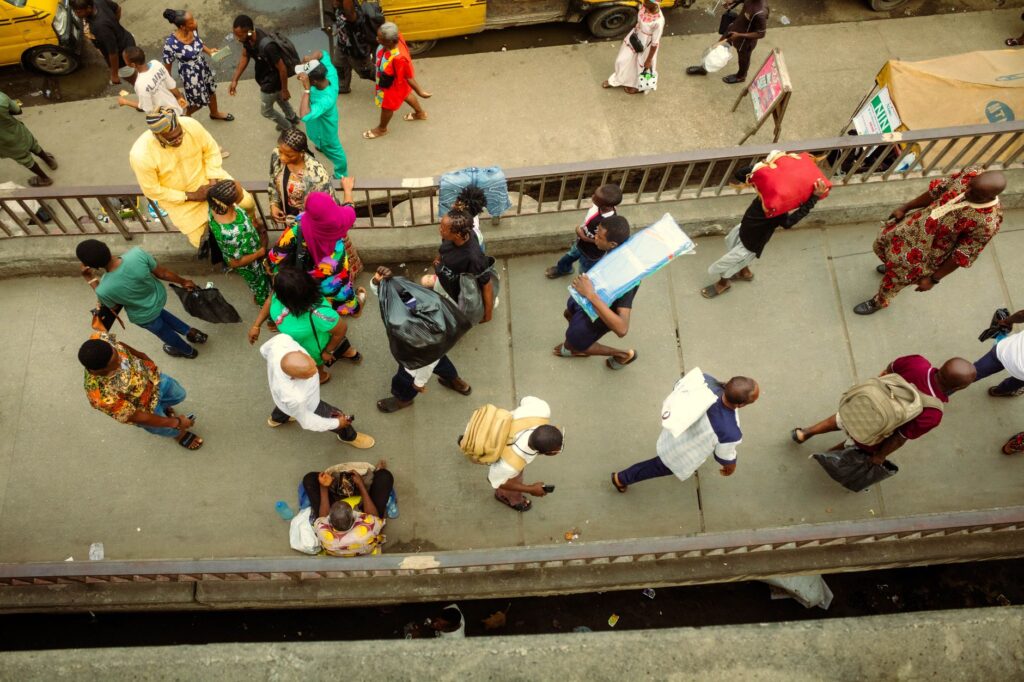
For days, road infrastructure undergoes a choreography of planned closures and openings orchestrated by local authorities and cultural organizers. The objective transcends mere mobility: it seeks to return the asphalt to the pedestrian, demonstrating that arteries designed exclusively for private vehicles can transform into corridors of collective expression. The design of this intervention redefines human scale within a vertical and overwhelming environment.
The arrival of this cultural milestone raises a fundamental question about contemporary urbanism in Global South megacities: how can ephemeral design heal spatial fractures inherited from accelerated growth? Lagos answers this through massive, festive occupation, where every temporary barricade and signposted detour acts as the stitches of a new social fabric uniting historically segregated neighborhoods.
Architecture, Mobility, and the Logistics Challenge of the Atlantic
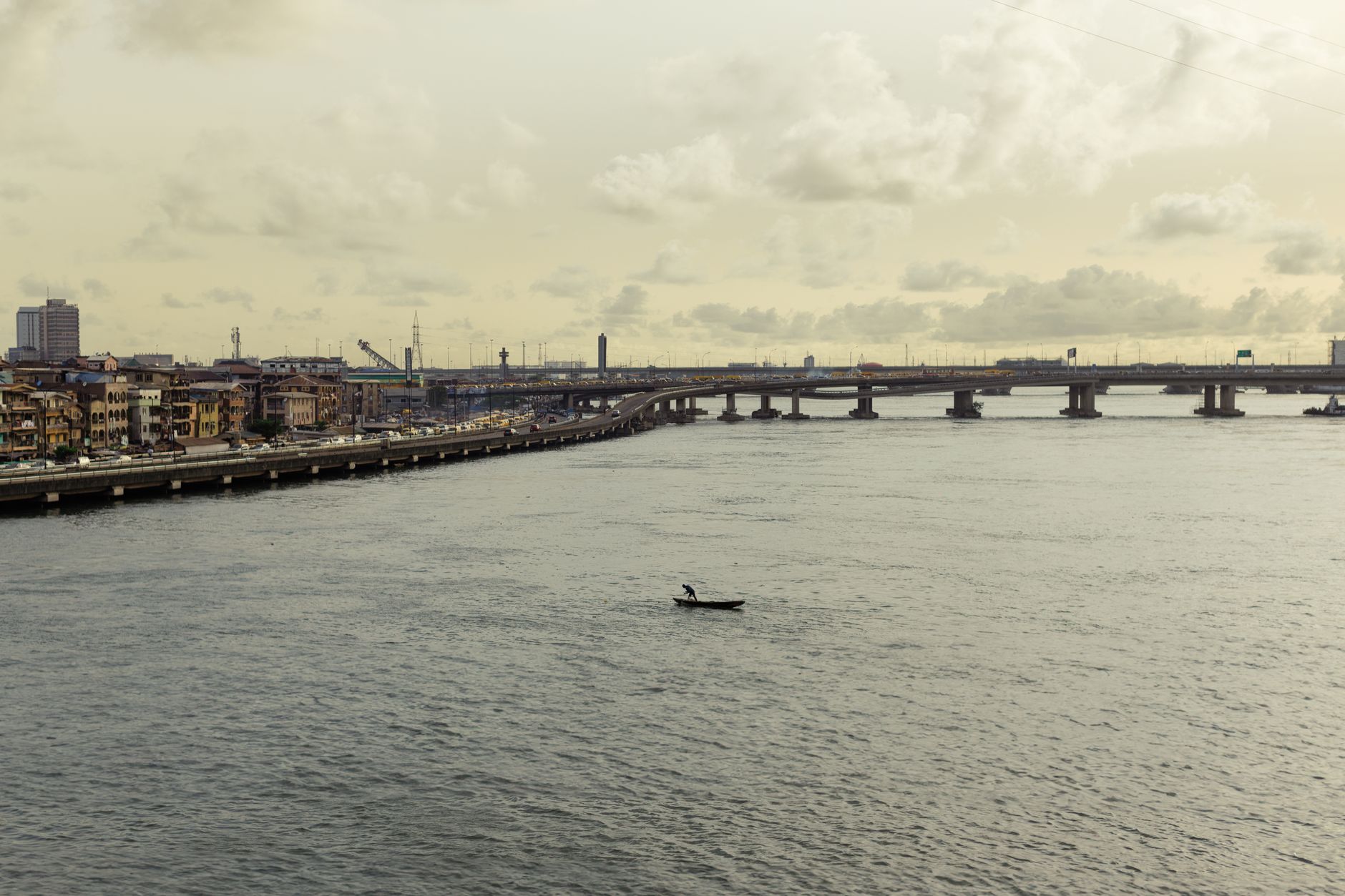
The carnival route winds through the sharpest architectural contrasts in Nigeria. On one side, glass and steel skyscrapers housing multinational headquarters; on the other, the canals and the constant Atlantic breeze washing over Bar Beach. This backdrop turns the logistics of the event into a work of civil engineering and artistic design in equal measure. Evacuation routes and temporary detours have been crafted through advanced digital simulations to mitigate the island’s habitual vehicular gridlock.

Urban mobility thus becomes a performance of pinpoint precision, where traffic police and civil volunteers guide thousands of citizens through a labyrinth of fences and pedestrian walkways. Temporary architectural intervention includes the installation of floating stages, modular grandstands, and luminous portals that converse with the monumental scale of surrounding buildings.
The asphalt of Victoria Island ceases to be a sterile transit channel, becoming instead the canvas where ephemeral architecture and Lagos’s collective memory converge.
Local urban design studios have collaborated closely with artistic directors to ensure temporary structures do not obstruct essential drainage systems, which are particularly vulnerable during high tides. This meticulous attention to underlying infrastructure demonstrates a maturity in mass event planning rarely documented in international chronicles of the region.
Visual Identity and Costume Design: Nigerian Avant-Garde
Far from folkloric stereotypes that often reduce African festivities to a static amalgamation of traditions, the Victoria Island Carnival positions itself as a global runway for contemporary aesthetic vanguard. Fashion designers, visual artists, and digital creators from Lagos have reinterpreted traditional Yoruba and other Nigerian ethnic iconographies through recycled materials, smart textiles, and impossible volumetric structures.
Each troupe operates as a moving design studio. Costumes are not mere adornments, but sculptural armors defying gravity while playing with tropical light. The use of ocean-recovered plastics, 3D printing, and reinterpreted ancestral fabrics like aso oke demonstrates conceptual sophistication that directly engages with the world’s major fashion capitals.
This creative explosion is supported by local art academies and independent collectives viewing the carnival as a platform for aesthetic emancipation. The event’s visual curation rejects complacent exoticism to embrace an uncomplex modernity, where digital technology and ancestral craftsmanship coexist in perfect harmony.
The Soundtrack of a Global Metropolis
No analysis of Lagos’s cultural design would be complete without examining its sonic dimension. The carnival’s acoustic landscape is dominated by mutations of afrobeat, avant-garde electronics, and contemporary fusions emanating from underground studios in Surulere and Lekki. Stages distributed along the route are not mere concert platforms, but acoustic installations designed to contain sound pressure without saturating the adjacent urban space.
Local sound engineers have implemented directional audio systems so music accompanies the flow of walkers without interfering with neighboring residential and corporate buildings. This technical rigor reflects the professionalization of Nigeria’s music industry, a sector currently leading global charts and finding its spatial apex in this festival.

Music acts as the invisible binder synchronizing the footsteps of thousands of attendees, transforming the vehicular detour into a perfectly rhythmic human tide. Traditional percussions blend with modular synthesizers, creating an atmosphere encapsulating the urgency and joy of living in Nigeria’s economic heart.
Creative Economy and Sustainable Cultural Tourism
The impact of the carnival transcends the purely aesthetic and playful, inserting itself into the core of Nigeria’s orange economy. Preliminary reports from urban development agencies indicate that the influx of domestic and international visitors exponentially boosts hotel occupancy, auteur gastronomy, and retail commerce across the entire Victoria Island and neighboring Ikoyi axis.
Unlike major ephemeral events leaving unsustainable ecological footprints, this organizing committee has implemented strict guidelines for waste management and circular economy. Materials used in constructing floats and signage are certified for subsequent recycling or reuse in community urban art projects across the mainland neighborhoods.
The true success of such interventions is measured not only by attendee numbers, but by the capacity to leave permanent social and ecological infrastructure after the lights go out.
Additionally, public workshops held in the weeks leading up to the event have trained youth in technical trades related to event production, scenic carpentry, and logistics management, generating an employability legacy lasting long beyond the days of celebration.

Logistical Challenges and Security in the Financial Heart
Organizing an event of this magnitude in a sensitive district like Victoria Island is not without operational friction. Authorities’ advisories regarding traffic diversions and parking restrictions have forced citizens and corporations to rethink weekly routines. Institutional communication has been pivotal in preventing gridlock, utilizing real-time mobile navigation apps and informational boards distributed at the island’s main entry points.
Security protocols combine specialized police presence with civil mediation and first-aid teams, prioritizing a preventive, proximity-based approach over coercion. This methodology responds to citizen demands for a safer, more inclusive public space where authority collaborates closely with community leaders.
The challenge lies in consolidating this model for future editions, turning temporary traffic disruption into an institutionalized annual date residents await with civic pride rather than logistical resignation.

Practical guide
- Getting there: Victoria Island is accessible from the mainland via the Eko, Carter, and Third Mainland bridges. During event days, using river public transport or alternative routes marked by Lagos traffic authorities (LASTMA) is strongly advised.
- Accommodation: The area features a wide array of high-end hotels and design boutiques located mainly around Eko Atlantic and the Akin Adesola Street axis. Booking months in advance is recommended due to high tourism demand generated by the festival.
- Urban mobility: Vehicle restrictions are strict within the carnival perimeter. Walking within the designated zone or using authorized ride-sharing services operating outside road closure rings is highly recommended.
- Recommended gastronomy: The district hosts a vibrant culinary scene combining international haute cuisine with contemporary reinventions of traditional Nigerian dishes like jollof rice and local soups at benchmark spots such as KOI Lagos or Nok by Alára.
- Security and recommendations: Keep belongings secure in crowds, follow assistance staff directions, and respect pedestrian detour signage to ensure a smooth, safe experience.
Atlantic Epilogue: The Beat Redefining the Future
When the last echo of drums dissipates over the lagoon waters and diversion fences are removed to restore normalcy to Victoria Island’s asphalt, Lagos will not be quite the same. The city will have proven capable of suspending its own mercantile vertigo to embrace a collective pause—a parenthesis of color and design subverting urban space hierarchy.
At this intersection between ocean and skyscrapers, the carnival has not only fulfilled its promise of cultural spectacle, but has charted a roadmap for the future of African metropolises. It teaches us that true modernity lies not in imitating foreign models, but in the bold capacity to resignify one’s own territory, turning chaos into choreography and asphalt into community.
Source: THISDAYLIVE (https://news.google.com/rss/articles/CBMi0wFBVV95cUxQaDJBSEIzN0hiQ0NUbVVfRk5jMVpDWFhWNHBGemQ1RHNuam9SNXJQSDg1dWpLMlVMQUZQMGdWQlplVEd5RzN4UmdxS0J5U0RVMWZsRVUzS3JwTmRfaTc2c2RQci1iLXdSU3ZDc1M5d3Fib2VVLVFvWkFadVNvZWcwYmswLUJIZzkzcmtTM2U3MjJyMmtYclBSUElyblMyQW56RWNVVF9sbVJGQkRlRUg2bng1eExWUzduX0FPY0g5d3d3NTY4cFJSNjkzdllaLTBWV0VN?oc=5)