
Laos does not shout. Unlike its neighbors, bustling and transformed by mass tourism and accelerated industrialization, this corner of Southeast Asia seems to move at a different, almost analog cadence. Here, time is measured by the monsoon cycle, the leisurely rhythm of barges on the Mekong River, and the respectful silence that precedes dawn, when monks walk barefoot through the streets to receive offerings of rice.
Traveling from north to south through Laos is an immersion into a landscape where nature and Buddhist spirituality coexist without friction. From the mist-shrouded karst peaks of Luang Prabang to the fluvial labyrinth of Si Phan Don, known as the 4,000 islands, this feature explores the essential milestones of a nation that has preserved its identity against global turmoil.
Luang Prabang: Elegance Suspended at the Confluence of Two Rivers
Luang Prabang, the former capital of the Lane Xang kingdom, occupies a forested peninsula embraced by the brown waters of the Mekong and the clearer stream of the Nam Khan River. Declared a UNESCO World Heritage site, this city is a living museum of French colonial architecture and Buddhist temples with tiered roofs. Walking through its streets at dusk is an exercise in listening to the murmur of prayers and the creak of aged wooden shutters.
The spiritual heart of the city beats within the Xieng Thong Temple, built in 1560. Its low-slung roofs that almost graze the ground and glass mosaics depicting the life of Buddha are a masterclass in Laotian art. In front of its facade, travelers learn to slow their pace, observe the interplay of light on gilded stucco, and understand that art here does not strive for imposing monumentality, but rather for harmony with its surroundings.
The Tak Bat Ritual and the Morning Pulse
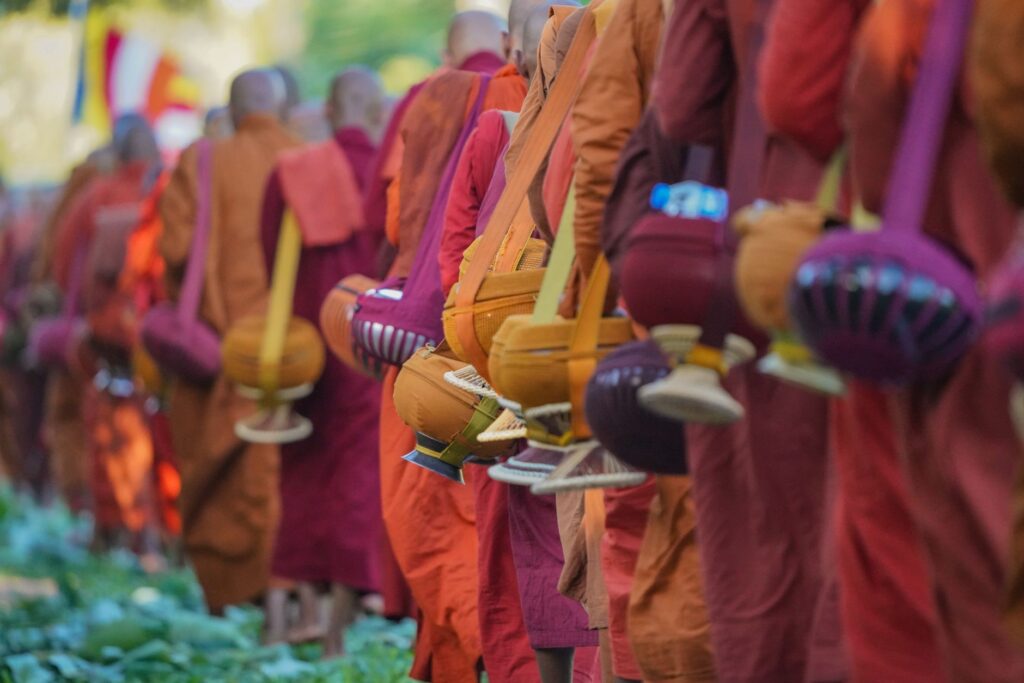
Before the sun breaks over Mount Phousi, the streets of Luang Prabang transform into the stage for an ancient ceremony: the Tak Bat. Silent rows of novices and monks in saffron robes walk barefoot while locals, kneeling on woven mats, place small portions of sticky rice into their alms bowls.

This act is not a tourist attraction, but a cornerstone of religious and community life. Local authorities and guides insist on maintaining a respectful distance, avoiding intrusive flashes, and observing in complete silence. It is the first reminder that in Laos the traveler is, above all, a guest in a deeply rooted culture.
Vang Vieng: From Backpacker Excess to Karst Adventure
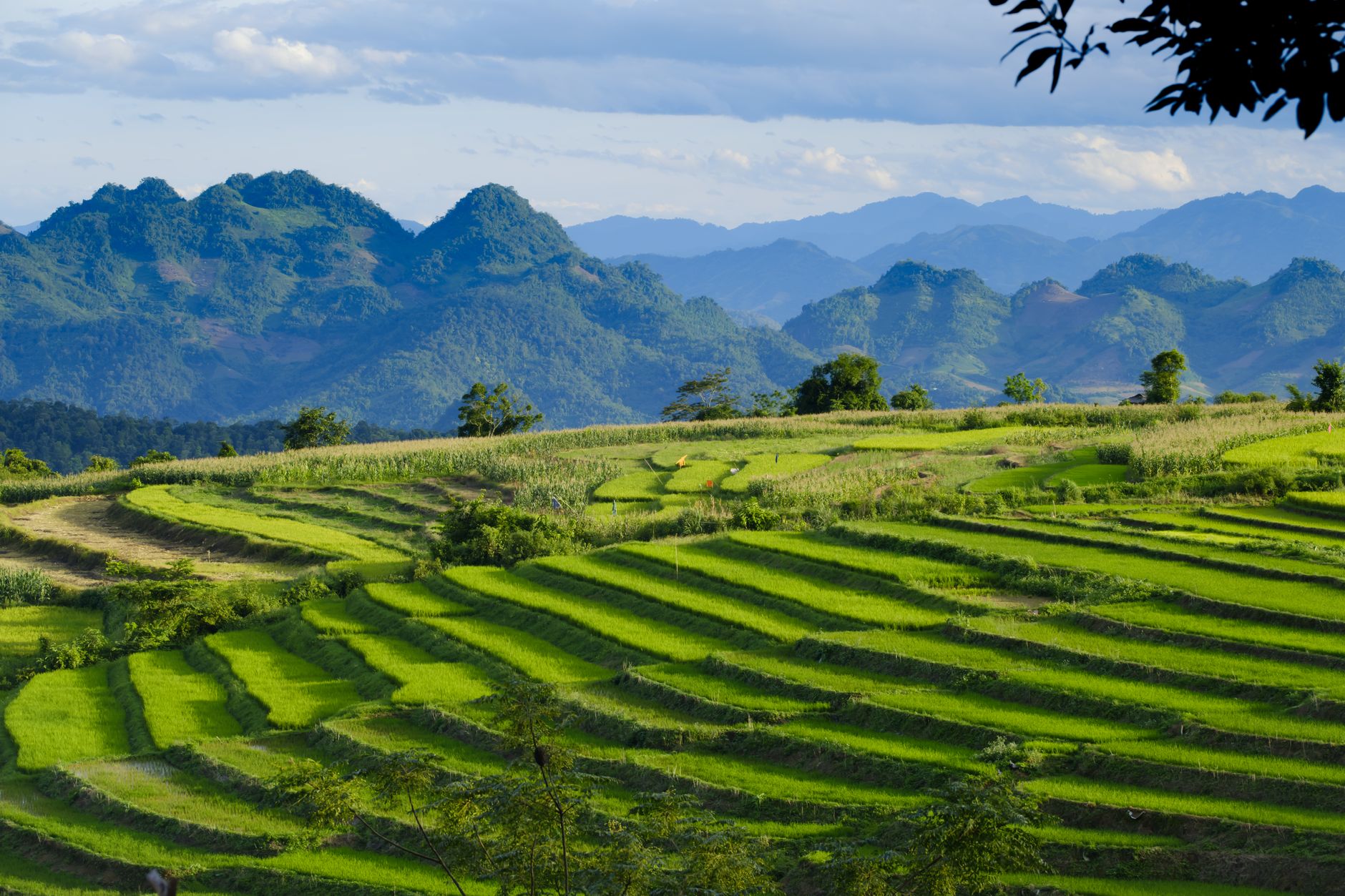
For years, Vang Vieng carried a turbulent reputation associated with river-party tourism and open bars along the Nam Song River. However, the Laotian government initiated a radical shift to clean up its image and protect its fragile natural environment. Today, this valley surrounded by towering limestone karst formations has established itself as a sanctuary for ecotourism and active travel.
The vertical rock faces rising above rice paddies attract rock climbers from around the globe. At their base, a network of subterranean caves, such as Tham Chang, invites exploration of hidden rivers and stalactite formations illuminated by beams of natural light filtering through mountain crevices.
The Recovered Serenity of the Nam Song River
Paddling down the Nam Song River in a traditional wooden boat or canoe at sunset reveals Vang Vieng’s transformation. The commotion has been replaced by the sound of oars cutting through water and the silhouette of farmers tending to riverside vegetable plots.

The karst landscape of Vang Vieng dazzles not only for its verticality, but for the territory’s capacity to heal and reconnect with its rural vocation.
Sunsets here dye the peaks an intense mauve, reflecting off the turquoise pools bubbling at the foot of the cliffs. It is the ideal place to rent a bicycle and get lost on dirt paths connecting villages where children wave with shy, genuine smiles.
Vientián: The Discreet Capital in the Shadow of the Great River
Unlike other Southeast Asian capitals saturated with skyscrapers and chaotic traffic, Vientián presents itself as a gentle city with a human scale and a provincial rhythm. Situated on the banks of the Mekong, directly facing Thailand, the Laotian capital combines tree-lined boulevards with historic monuments that recount the turbulence of its past.
The quintessential national symbol is the Pha That Luang, a 45-meter-high golden stupa whose base is surrounded by thirty defensive terraces. Its brilliance under the tropical sun symbolizes the union between Buddhism and the sovereignty of the Laotian state. Nearby stands the Patuxai, a triumphal arch inspired by the Parisian monument but reinterpreted with local mythological motifs such as the kinnara —half-bird, half-human beings—.
The Secrets of the Buddha Park
About twenty-five kilometers downstream from the capital lies Xieng Khuan, better known as the Buddha Park. Created in 1958 by a monk and sculptor who combined elements of Buddhism and Hinduism, this space houses over two hundred concrete statues hidden among vegetation.
The centerpiece is a giant reclining Buddha figure forty meters in length. Wandering the paths of this surreal garden offers insight into the region’s religious syncretism, where Vedic deities coexist with the precepts of the middle way without apparent contradiction.
The Highlands and Ethnic Diversity
Beyond the cities and main valleys, the mountainous terrain of northern and central Laos harbors one of the richest ethnic diversities on the continent. The Hmong, Khmu, Akha, and Yao groups inhabit remote villages often accessible only via dirt tracks or hours of river navigation.
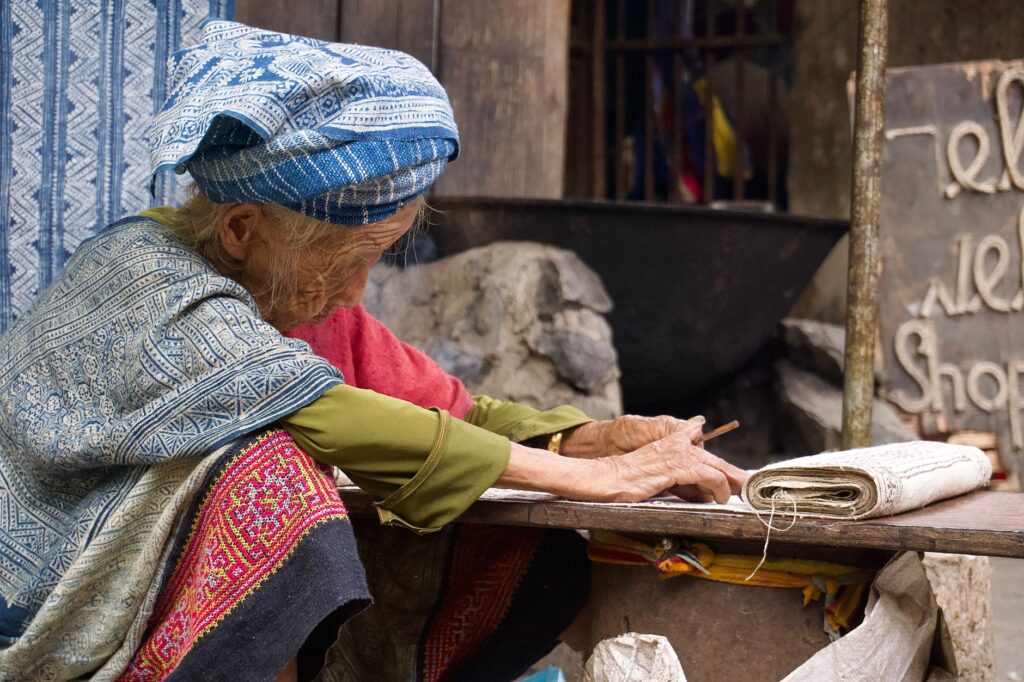
Each of these communities preserves distinct textile traditions, languages, and belief systems. Local markets, such as the one in Muang Ngoi or weekly fairs in the highlands, are bursts of color where women wear traditional attire hand-embroidered with silver coins and intricate beadwork.
Community Tourism as a Tool for Preservation
In recent years, various sustainable tourism initiatives have allowed rural communities to manage their own trekking routes and traditional guesthouses. These experiences ensure that economic benefits flow directly to local families.
Sharing a dinner of wild herb soup, sticky rice, and river fish in a wooden house elevated on stilts offers an honest perspective on daily life in the mountains, far from conventional circuits.
The Deep South: Bolaven Waterfalls and the Secret of Its Coffee
The descent toward southern Laos leads to the Bolaven Plateau, a volcanic highland with extraordinarily fertile soil where temperatures drop pleasantly compared to the lowlands. This region is famous for its stunning waterfalls, such as Tad Fane and Tad Yuang, where water plunges over one hundred meters into gorges covered in virgin jungle.

Yet Bolaven is also the country’s coffee engine. The Arabica and Robusta seeds introduced during French colonization find an ideal habitat here. Visiting a small family plantation reveals the artisanal harvesting process and offers a chance to taste high-altitude coffee with very distinct earthy and fruity notes.
The Constant Murmur of Water
The plateau’s hydraulic force feeds numerous tributaries flowing into the Mekong. In this territory, the relationship with water is vital: local residents utilize the streams for traditional fishing and irrigation of small vegetable plots.
The Bolaven Plateau exudes the aroma of Southeast Asia’s finest coffee within an environment where waterfalls carve out an emerald-green landscape.
The crisp mountain air and the ubiquitous sound of falling water make this stop a haven of peace before tackling the final leg of the journey toward the Cambodian border.
Si Phan Don: The 4,000 Islands and the End of the Great River
The concluding point of this river and overland journey is located at the southernmost tip of Laos, in the fluvial archipelago of Si Phan Don. Here, the Mekong River widens disproportionately during the rainy season, reaching up to fourteen kilometers across and fragmenting into thousands of islands, islets, and channels.
On islands like Don Det and Don Khon, the pace of life reaches extraordinary levels of tranquility. Transportation is by bicycle or on foot, crossing colonial iron bridges that retain disused railway tracks. Hammocks strung on the porches of wooden houses are the epicenter of daily activity.
The Khone Phapheng Waterfalls and the Last Dolphins
In this border frontier lie the Khone Phapheng waterfalls, considered the most voluminous waterfall in Southeast Asia. Their deafening roar contrasts with the placidity of the rest of the archipelago and marks the geographic end of the Mekong’s navigability from China.
Downstream from the waterfalls, in deep river pools shared with Cambodia, a tiny and endangered population of freshwater Irrawaddy dolphins survives. Their sighting, conditioned on absolute respect for conservation rules, symbolizes the fragility of a unique river ecosystem struggling to survive hydroelectric dam projects.
Practical guide
- How to get there: The most common entry point is Luang Prabang International Airport or the capital, Vientián, with connecting flights from Bangkok, Hanoi, or Kuala Lumpur. Overland border crossings also exist from Thailand, Vietnam, and Cambodia.
- Visas and documentation: Most travelers can obtain a tourist visa (Visa on Arrival) at major airports and land border crossings by presenting a passport valid for at least six months, a recent photograph, and the corresponding fee in US dollars.
- Best time to visit: From November to February, the weather is dry and temperatures are milder, especially in the north and mountainous areas. Between March and May, heat intensifies markedly, while the rainy season extends from June to October.
- Internal transport: Travel combines local buses, shared minivans for mountain routes, and river barges. For long journeys between north and south, domestic flights save hours of road travel.
- Currency and payments: The official currency is the Lao kip. It is advisable to carry US dollars or euros in good cash condition to exchange upon arrival, as credit card use is limited to hotels and large restaurants in major cities.
- Health and precautions: It is advisable to have medical travel insurance that includes repatriation. Consultation with an international vaccination center regarding recommended prophylaxis is encouraged, along with exercising caution regarding bottled water consumption.
At the end of the journey, Laos leaves a subtle yet indelible mark. It does not manifest in massive crowds or flashy postcards, but in the memory of a silent dawn over the river, the scent of freshly cut rice, and the conviction that places still exist in the world where hurry is not mandatory. The country that listens to rice grow teaches, with its proverbial modesty, that the most authentic luxury consists of reclaiming time and attention for what is essential.
Source in EN: El Viajero in EL PAÍS (https://elpais.com/elviajero/viajes-paco-nadal/2026-09-16/imprescindibles-de-laos-el-pais-que-escucha-crecer-arroz.html)