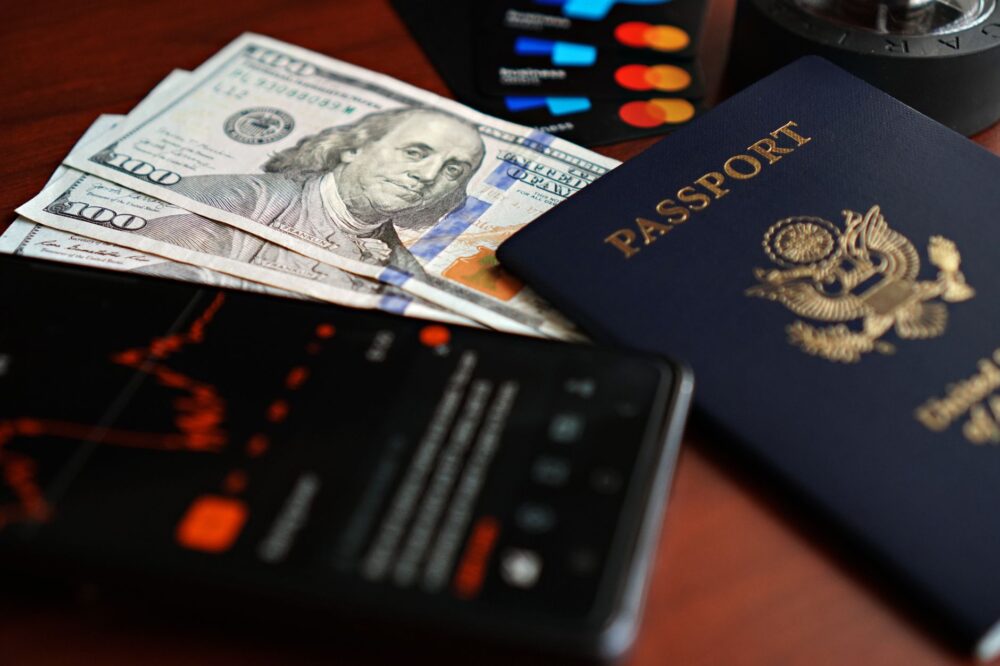
The contemporary traveler who navigates global airports with the precision of a watchmaker rarely finances their journeys through simple cash transactions. Behind every business-class seat and every minimalist boutique hotel reservation operates a sophisticated ecosystem of financial arbitrage. The rewards from cards such as the one analyzed by Nomadic Matt in his review of the Capital One Venture Business are not mere commercial perks, but accounting instruments designed to capture the residual value of operational business expenses. In a world where global connectivity has become the primary fixed cost for any independent professional or small business owner, understanding the architecture of points has become just as crucial as mastering the logistics of visas or flight connections.
This report examines the intersection between the financial management of sole proprietorships and the optimization of international travel. Through a critical lens based on Nomadic Matt’s data, we will break down how everyday spending on telecommunications, software, advertising, and ground transportation can be strategically channeled to subsidize complex itineraries—transforming operational and tax obligations into passports toward distant horizons without compromising business liquidity.
The Invisible Economy of the Modern Corporate Traveler
For decades, the business travel sector was dominated by large corporations capable of negotiating preferential rates directly with airlines and hotel chains. However, the proliferation of remote work and the creator economy has decentralized this reality. Today, millions of professionals travel autonomously, entirely shouldering the costs of their international mobility. For this segment, every dollar invested in business operations must yield a dual dividend: boosting productivity and funding subsistence in transit.
Credit cards designed for the business segment respond to this structural need by offering flat or bonus accumulation rates for every monetary unit spent. Unlike personal cards, which typically limit rewards to specific categories like dining or groceries, corporate tools recognize that the spending of a modern business is diverse and fragmented. This ranges from cloud servers and international shipping to software subscriptions.

The fundamental principle of miles arbitrage lies in separating operational cash flow from the real cost of travel. When a professional uses their corporate card to pay quarterly taxes, digital marketing campaigns, or inventory, they accumulate a capital of points that is subsequently decoupled from the seasonal fluctuation of airfares. While the commercial aviation market drives up ticket prices during peak seasons, the accumulated point balance acts as a stable financial shock absorber.
Accumulation Architecture: Flat Rates Versus Segmented Categories
One of the most recurring debates in the frequent flyer community is the dilemma between cards offering high multipliers in specific categories and those guaranteeing an unlimited flat rate per transaction. According to Nomadic Matt’s review of the Venture Business card, the primary appeal lies in the simplicity of a flat accumulation structure. This modality eliminates the mental fatigue associated with remembering which card to use for each type of purchase.
For a business constantly on the move, predictability is a valuable asset. When transaction volume ranges from European train tickets to software licenses acquired in Asia, calculating points via complex formulas is inefficient. A consistent return rate ensures that every cent invested in the company’s operations contributes directly and transparently to the travel fund.
Travel rewards are not passive income, but the strategic reimbursement of the inevitable costs of operating in a globalized market.
Furthermore, business-focused cards typically offer credit limits considerably higher than those of personal lines. This allows businesses to absorb seasonal spending spikes—such as the advance purchase of tickets for international conferences or the hiring of external services—without saturating the cardholder’s borrowing capacity, thereby maintaining optimal credit health both personally and commercially.

The Transfer Factor: Unlocking the Real Value of Miles
Accumulating points is merely the first phase of the equation; true value materializes at the moment of redemption. Modern loyalty programs have evolved from product catalogs and direct cash-back systems toward transfer partnerships with partner airlines and global airline alliances (such as Star Alliance, Oneworld, or SkyTeam).
The ability to transfer points accumulated on a business card to frequent flyer programs opens the door to optimizing long-distance routes. A timely transferred point can turn into a business-class ticket whose market value in cash would triple the original investment made on the card. This asymmetry is the financial engine that allows experienced travelers to explore the world while maintaining tight budgets.
However, this process demands analytical discipline. Unilateral transfers without confirmed award seat availability can result in capital locked up in programs with constant devaluation policies. The corporate traveler must operate as an asset manager, monitoring airline award charts and anticipating booking windows months in advance.
Financial Sustainability and Risk Control on the Road
The intensive use of corporate credit tools entails fiscal and risk management responsibilities that should not be underestimated. Mixing personal finances with business expenses is the most common mistake among novice entrepreneurs. Cards dedicated exclusively to commercial activity not only facilitate accounting and tax deductions, but also protect personal assets against operational unforeseen events.

Likewise, it is essential to evaluate the fee structure associated with these tools. Foreign transaction fees, annual maintenance charges, and interest rates on deferred payments can rapidly erode the value of accumulated miles. The golden rule of travel arbitrage is relentless: no reward justifies paying interest on revolving balances. The net benefit materializes only when the total card balance is paid off religiously every month.
The Invisible Logistics Behind Tax Optimization
Managing travel expenses from the perspective of a small business requires understanding how local tax authorities interpret professional travel. In most jurisdictions, the costs of transportation, lodging, and subsistence abroad are deductible as long as their direct link to the generation of business income is reliably demonstrated.
The use of corporate cards simplifies this process by generating consolidated statements automatically categorized by cloud accounting software. This traceability not only saves hours of administrative reconciliation at the end of the fiscal year, but also provides robust documentary backing in the event of potential audits. Operational efficiency, therefore, is not limited to savings on plane tickets, but encompasses the reduction of indirect administrative costs.
Beyond the Loyalty Program: Coverages and Transit Protections
The value of a business-oriented credit card extends far beyond point accumulation. Integrated insurance policies—including coverage for flight delays, lost luggage, rental car damage, and emergency medical assistance abroad—represent substantial savings on independent insurance premiums.

For a professional crossing borders multiple times a year, the likelihood of logistical incidents is high. Having institutional backing that covers unforeseen expenses resulting from airport strikes, weather cancellations, or loss of technological equipment provides an essential layer of security to maintain operational business continuity without economic shocks.
Practical guide
- Fixed expense audit: Identify and centralize all recurring business payments—such as servers, digital marketing, and software—onto a single card geared toward miles accumulation.
- Strict accounting separation: Never use the business card for strictly personal expenses, thereby ensuring fiscal transparency and the legal deduction of operating costs.
- Airline alliance monitoring: Study the airlines partnered with transferable points before accumulating large balances, ensuring that routes operate toward your regular destinations.
- Mandatory monthly settlement: Pay the entire balance before the due date to avoid interest charges that completely negate the value of the rewards earned.
- En-route insurance optimization: Review the luggage protection and travel assistance coverages included with the card before purchasing additional international insurance policies.

The Horizon of the Conscious Traveler: Connection and Purpose
At the end of each journey, when the glare of airport displays gives way to the silence of an unfamiliar room, the true measure of travel is not gauged by accumulated miles or optimized bank statements. Financial engineering and points arbitrage are mere mechanical instruments, invisible scaffolding supporting the architecture of our mobility. The ultimate purpose of these tools is to free the individual’s attention, allowing them to inhabit the world with greater presence and receptivity. When the financial cost of travel ceases to be a suffocating burden, the traveler regains their capacity for wonder, transforming the cold efficiency of the corporate route into a deep human experience, where each destination becomes a legitimate opportunity to learn, connect, and understand the complex texture of our planet.
Source in EN: Nomadic Matt’s Travel Site