
The persistence of touch in the era of synthetic board
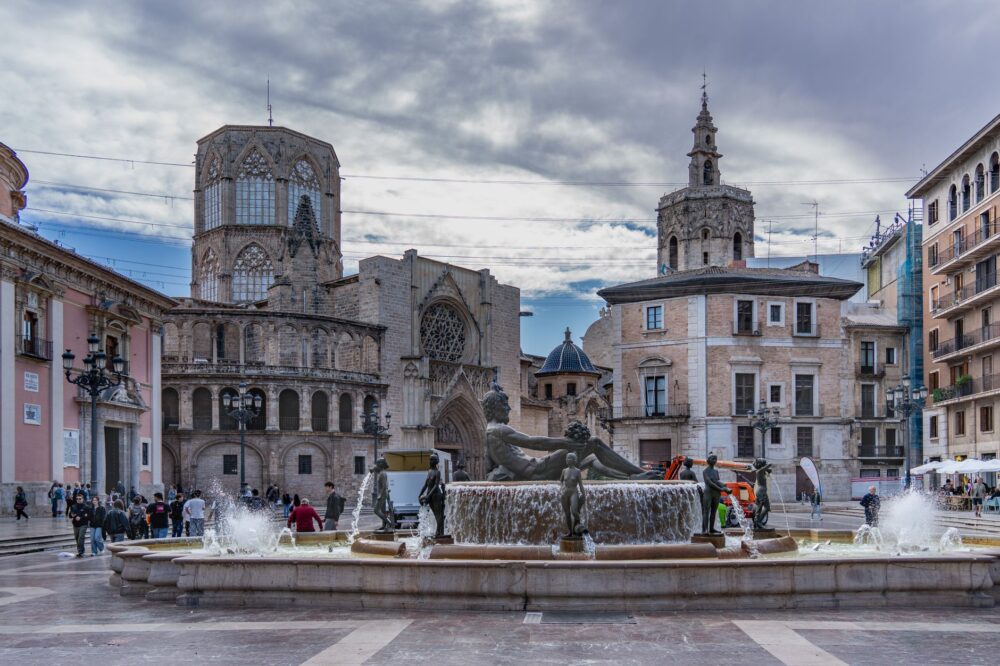
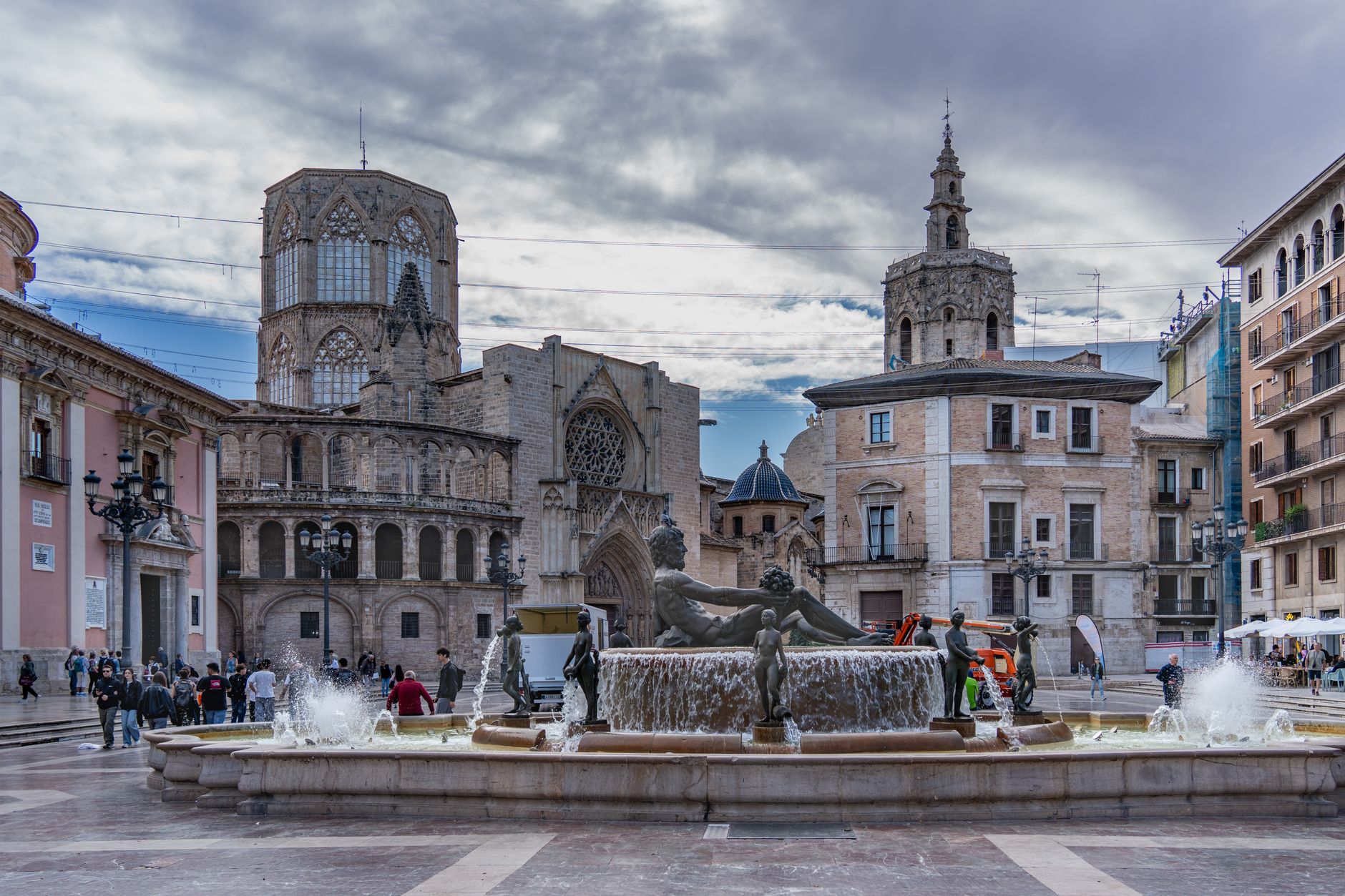
In an era dominated by mass prefabrication and high-density particle board, the historic quarters of Valencia preserve small pockets where time seems to flow at a different pace. This is neither nostalgic resistance nor aesthetic caprice, but the survival of a millenary trade that understands wood not as a flat resource, but as a living organism endowed with memory, tension, and character. The traditional workshops in the Velluters neighborhood and the converted warehouses of the Poblats Marítims are today the epicenter of a silent debate on the value of durability against programmed obsolescence.
High-end cabinetry in the capital of the Turia has found a new avenue for survival by hybridizing the tradition of classical Valencian furniture—marked by Mudejar influence and Levantine sobriety—with the demands of contemporary international design. Master cabinetmakers with grey hair work side by side with young architects to rescue pieces where the structure responds to the physics of the material rather than closed catalogs. True contemporary luxury no longer resides in the artificial shine of polyester, but in the honesty of a dovetail joint executed by hand, capable of expanding and contracting with seasonal humidity without losing an iota of its structural soundness.
Spanish walnut: anatomy of a noble and elusive resource
The undisputed protagonist of this school is *Juglans regia*, commonly known as Spanish or European walnut. Unlike American walnut, which is more homogeneous and darker, the native peninsular specimen features a capricious grain, knots marked by the water stress of Mediterranean drylands, and a chromatic palette oscillating between deep toast and copper reflections. Selecting a suitable board requires years of experience: the artisan must strike the wood with their knuckles, listen to its resonance, calculate the direction of the fibers, and intuit how the piece will age after three decades of exposure to sunlight.
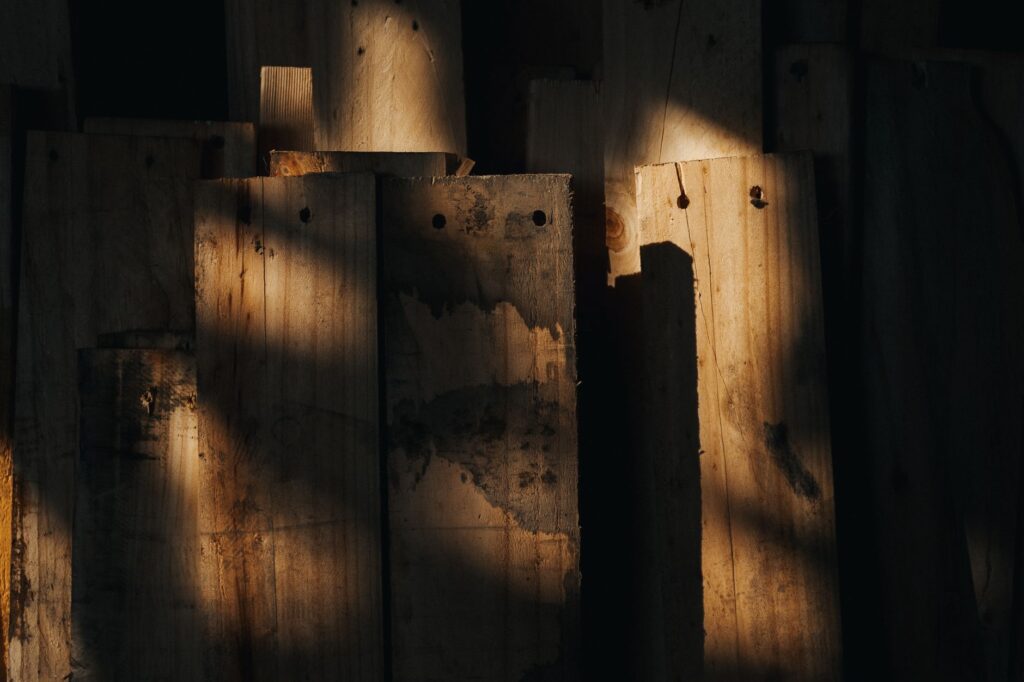
The drying process is a ritual of patience that can last for years. In the interior courtyards of Valencian workshops, the woods rest in the shade, protected from western winds, slowly losing their natural moisture until reaching optimal equilibrium. Hurry is the mortal enemy of noble woodworking; a poorly cured board will inevitably warp with the first abrupt temperature change, ruining months of meticulous work. For this reason, workshops reject accelerated industrial kilns driven by artificial heat, preferring the slowness of natural cycles that guarantee the stability of the raw material.
From trunk to table: geometry and cutting at the workbench
Once the wood is stabilized, the cutting phase begins. This is where the artisan’s skill separates radically from automated computer-numerical-control routing. Using hand saws and perfectly sharpened chisels, the creator traces the master lines on the piece that will make the most of the heartwood’s irregularities. Each grain is studied so that it acts as a symmetrical mirror when working with book-matched veneering techniques, creating geometric compositions reminiscent of organic mandalas.
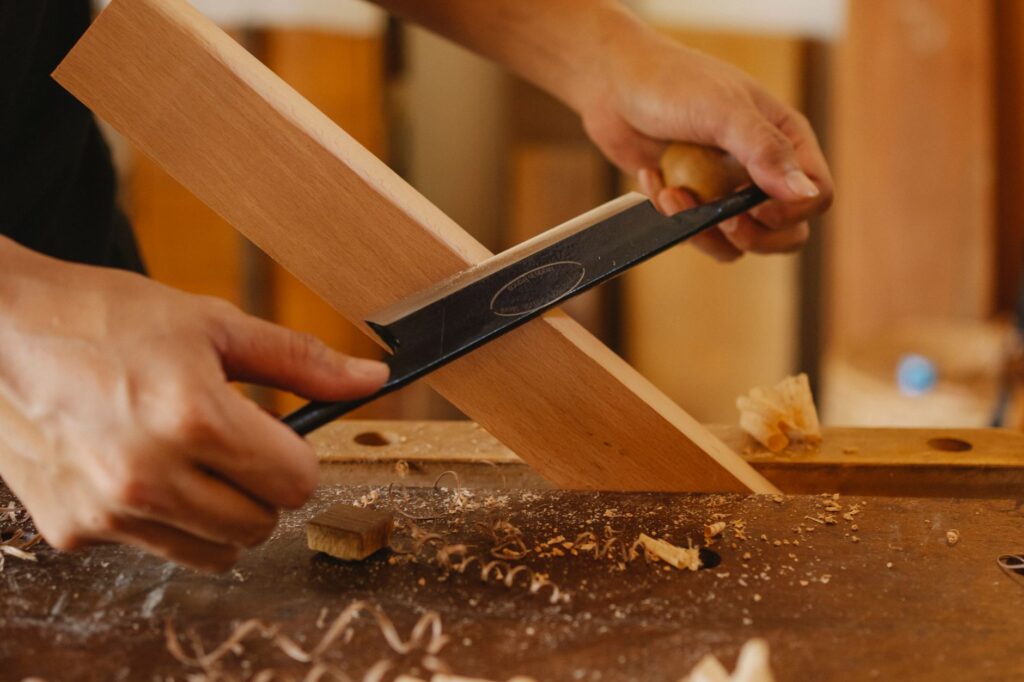
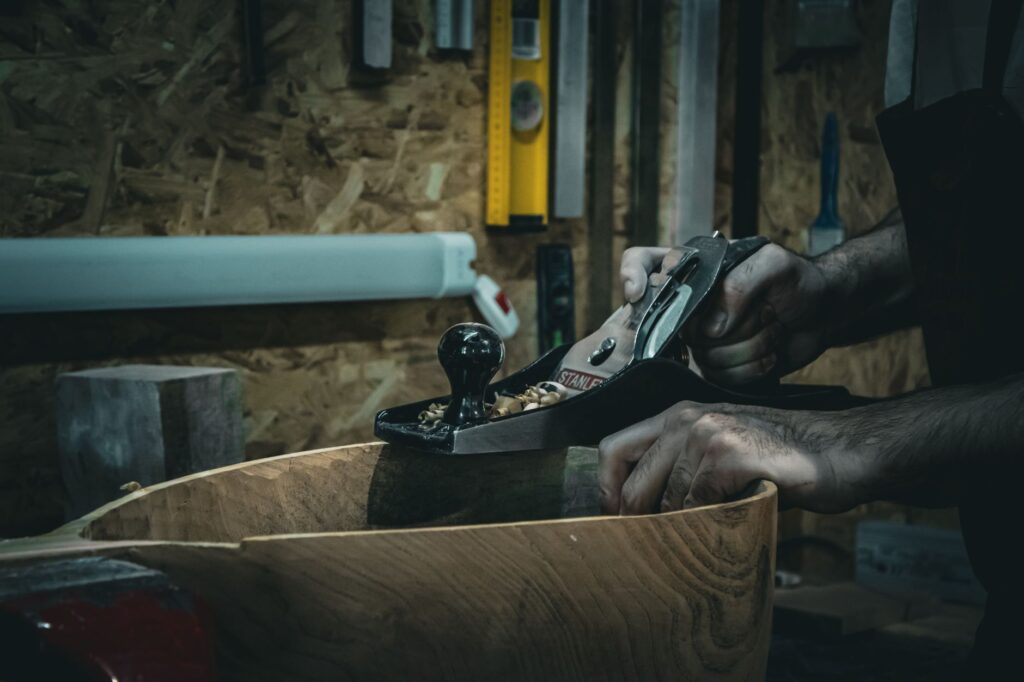
The workbench, usually made of solid beech and worn by the use of previous generations, is the altar where this transformation is officiated. Planing, rabbeting, and micrometric fitting operations take place upon its surface. Hand tools—joiner’s planes, fine-toothed rasps, and brass marking gauges—function as an extension of the artisan’s nervous system. A millimeter of error in assembling a corner condemns the entire piece to instability, forcing the cabinetmaker to restart the process from scratch if the joint does not seal with the precision of a clockwork mechanism.

The craft of cabinetmaking is not about mastering wood, but learning to negotiate with its internal tensions until the furniture becomes a second skin of the space it inhabits.
Invisible joinery: the engineering of wood without hardware
One of the greatest attractions of Valencian heritage woodwork is its absolute disdain for superfluous metallic fasteners. Dovetails, mortise and tenon joints, and false housing reinforcements allow pieces to breathe and support themselves through pure geometry and mechanical friction. This invisible architecture requires exact mathematical calculation, anticipating the thermal expansion of wood across the four seasons of the year.
To join the pieces, masters reject petroleum-derived synthetic adhesives and recover animal-based glues, especially hot hide or bone glue. This traditional adhesive offers a fundamental advantage for posterity: it is completely reversible. If a leg suffers damage a century from now, applying controlled water vapor is enough to dissolve the bond without tearing the fibers of the surrounding wood, allowing a clean restoration respectful of the original.
Hand finishing: shellac, French polish, and the touch of history
Surface treatment is the moment of truth, the instant when wood reveals its full chromatic and tactile potential. In Valencian workshops, the technique of shellac polishing applied with a French polishing pad remains alive, an artisanal procedure requiring dozens of ultra-thin layers spread in circular, rhythmic movements. The resin, diluted in pure alcohol, penetrates the open pores of the walnut, sealing them from moisture while allowing the material to maintain a warm, matte touch, radically removed from the plastic shine of polyurethane varnishes.
This process can take weeks, as each coat must dry completely and be gently buffed with micronized pumice stone before applying the next. The result is a surface that inevitably invites a caress, a horizontal or vertical plane that diffuses light softly and acquires a beautiful golden patina over time, improving aesthetically with use rather than degrading.
The transmission of knowledge: new apprentices of the 21st century
Facing the real risk of extinction for manual trades, Valencia is currently experiencing a hopeful phenomenon: the arrival of young graduates in fine arts, industrial design, and architecture who decide to trade computer screens for the scent of sawdust. Art schools and local workshops have articulated mentorship programs where old masters transfer their technical secrets to a hyper-connected generation that values materiality and real sustainability.
This symbiosis is generating a highly dynamic emerging market. Clients from all over Europe commission unique pieces that dialogue with contemporary art, seeking refuge against the culture of the ephemeral. Valencian workshops thus demonstrate that tradition is not a fossil to be displayed in a showcase, but an engine of economic and cultural innovation capable of competing in the most demanding global markets thanks to the excellence of execution.
Practical guide
How to get there: Valencia has Manises Airport (VLC), connected to major European hubs. For internal travel and access to historic neighborhoods like Velluters and peripheral artisan workshops, the metro network and urban buses (EMT) offer excellent coverage, though the best way to tour the workshops is on foot or by bicycle.
When to visit: The spring months (April to June) and autumn (September to November) offer ideal weather conditions for visiting workshops without the extreme temperatures of the Mediterranean summer, while also guaranteeing stable ambient humidity for wood conservation.
Workshop route: Although many studios are located in private warehouses with restricted access for production reasons, local cultural associations periodically organize open house days. It is advisable to contact in advance through the Official College of Interior Designers of the Valencian Community (CDICV) to coordinate guided visits to selected artistic woodwork studios.
Recommended accommodation: To maintain the cultural coherence of the trip, staying in boutique hotels located in rehabilitated buildings within the historic center is recommended, where contemporary interior design respects the original structural elements of noble wood and traditional load-bearing walls.
Gastronomy and shopping: Beyond the timber heritage, the city offers a rich gastronomic culture based on local produce from the orchard and sea. If looking to acquire small-format pieces—such as marquetry boxes or turned walnut kitchenware—it is best to visit artisan markets authorized by the Generalitat Valenciana to avoid industrial counterfeits.
The last workbench: where memory becomes furniture
As evening falls, when the Mediterranean sun filters horizontally through the barred windows of the workshop, the walnut dust suspended in the air resembles an ephemeral constellation. In that laborious silence, the master cabinetmaker runs his fingertips over the freshly waxed surface of a chest of drawers destined to endure for generations. There are no screens or algorithms in this space; only the accumulated intuition of centuries and absolute respect for a material that will outlive us all.
Valencian cabinetry reminds us that true modernity does not consist in discarding the past, but in endowing it with a new function for the challenges of the present. Each piece emerging from these workbenches is a love letter to slowness, a physical manifesto against the dictatorship of the perishable, and a constant reminder that human hands remain the most sophisticated instrument to shape our most enduring dreams.