
Introduction to the Glacier Colossus
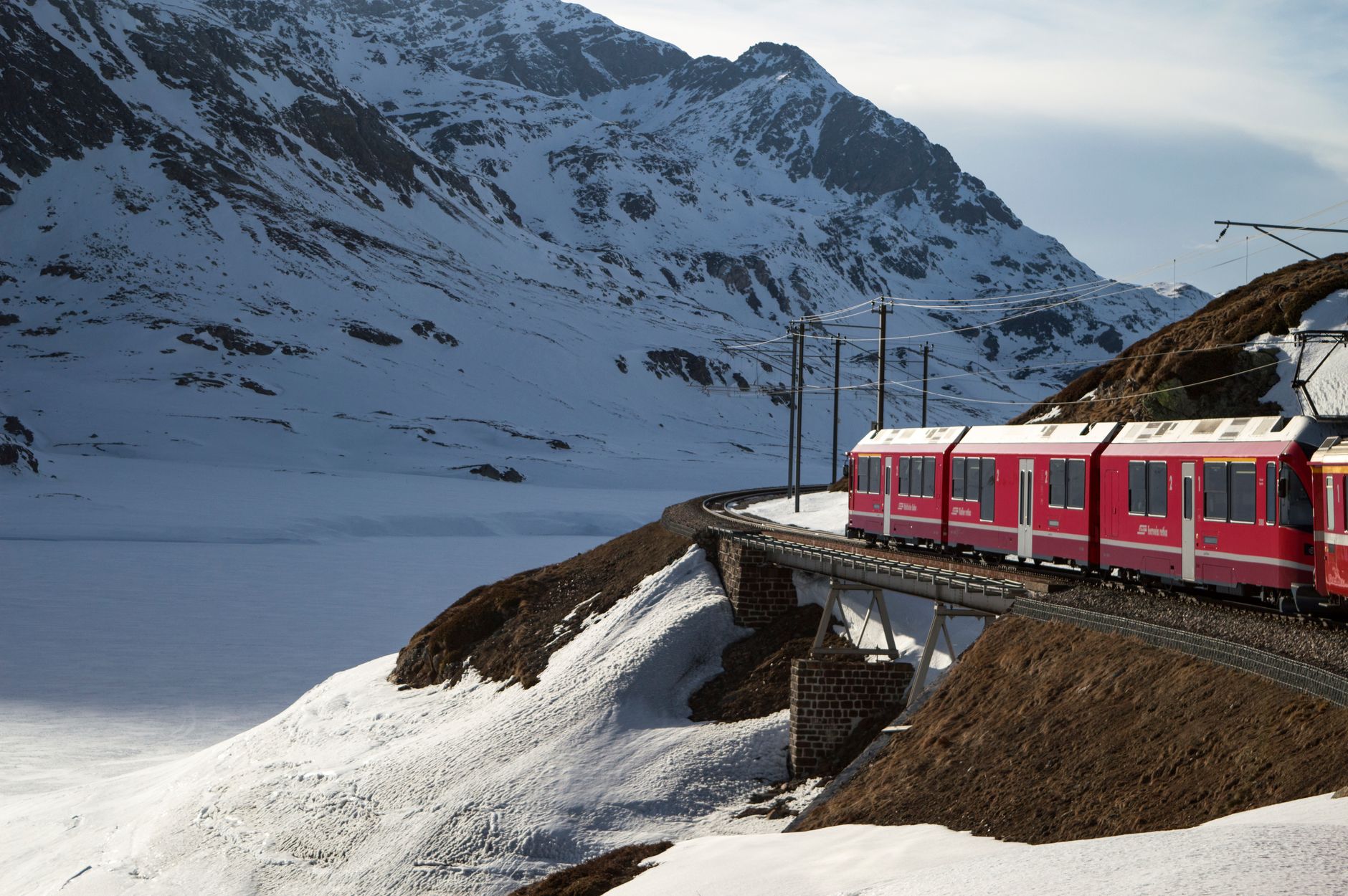
In the heart of the European Alps, where jagged stone defies the sky and ancient glaciers guard deep valleys, stands one of the masterpieces of global civil and railway engineering: the Bernina line. An integral part of the Rhaetian Railway (Rhätische Bahn) network, this high-mountain corridor is not merely a mode of transport, but a topographical marvel connecting Chur in Switzerland with the Italian town of Tirano. Along its route, the train climbs to the Bernina Pass summit at an elevation of 2,253 meters above sea level, making it the highest open-air transalpine railway crossing on the continent.
The uniqueness of this journey lies in its ability to overcome extreme gradients without the aid of rack-and-pinion systems, relying exclusively on the natural adhesion of its steel wheels upon metric-gauge rails. This technical feat, conceived in the late 19th century and consolidated in the early 20th century, radically transformed connectivity between northern and southern Europe. Today, this UNESCO World Heritage route continues to operate as a vital nexus that defies the harshest winter weather conditions thanks to cutting-edge logistics and meticulous maintenance.
Historical Origins and the Vision of Pioneers
The genesis of the Bernina Railway responded to an imperative economic and geopolitical necessity in Belle Époque Switzerland. By the late 1890s, the valleys of Graubünden suffered severe isolation during the long winter months. While high-mountain road passes were buried under meters of snow, commerce and tourism languished. Local visionaries and Swiss engineers, led by figures like Willem Jan Holsboer, understood that the only viable solution was to lay a railway track capable of penetrating the alpine massif permanently.
Construction officially began in 1906, a titanic undertaking that mobilized thousands of workers, mostly Italian immigrants laboring under extreme conditions. Using rudimentary tools, dynamite, and astonishing topographical precision for the era, construction crews carved tunnels through living rock, erected stone viaducts without mortar, and designed extremely tight curve radii to match the abrupt slopes of the terrain. In July 1910, the complete line was inaugurated, definitively uniting the Germanic culture of Graubünden with the Mediterranean heritage of the Italian Valtelina.
The Art of Adhesion: Rackless Engineering
The greatest technical challenge faced by engineers was the terrain’s steep gradient. Between the station of Poschiavo and the Bernina Pass, the track must overcome a rise of over 1,800 meters within just a few dozen kilometers, translating to maximum gradients of 7%. To put this in perspective, most conventional adhesion trains suffer drastic limitations when slopes exceed 3% or 4%.
The answer to this challenge was not to add a third notched bar between the rails, but to design powerful electric locomotives equipped with advanced direct-current motors capable of distributing traction evenly across all axles. Additionally, car weights were optimized and pioneering regenerative braking systems were introduced. This technology allowed trains during the descent toward the valley to feed energy back into the overhead catenary grid, an ahead-of-its-time milestone in sustainability that remains a benchmark in railway energy efficiency today.
Monumental Architecture: Viaducts and Helical Loops
Throughout its sixty-plus kilometers of route, the Bernina Express alignment serves as an open-air museum of civil architecture. Among its most celebrated elements is the famous Brusio helical viaduct. To prevent the gradient from exceeding safe limits on a particularly steep hillside, engineers designed a complete 360-degree circular loop—a viaduct built as a helical ramp that allows the train to gain height over itself, describing an elegant curve that drastically reduces the track’s inclination angle.
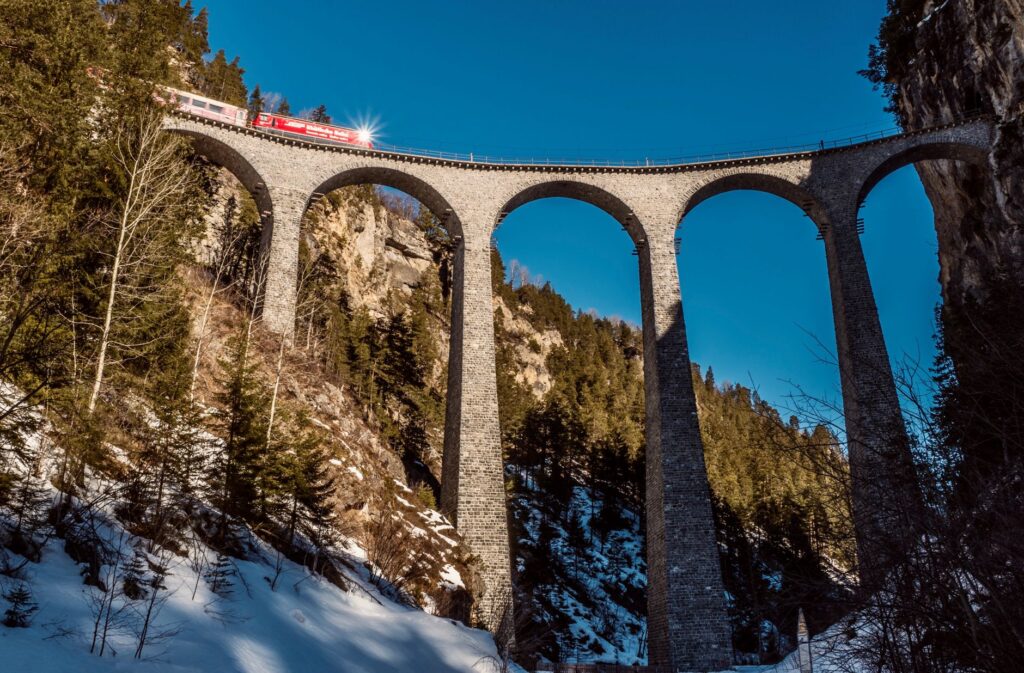
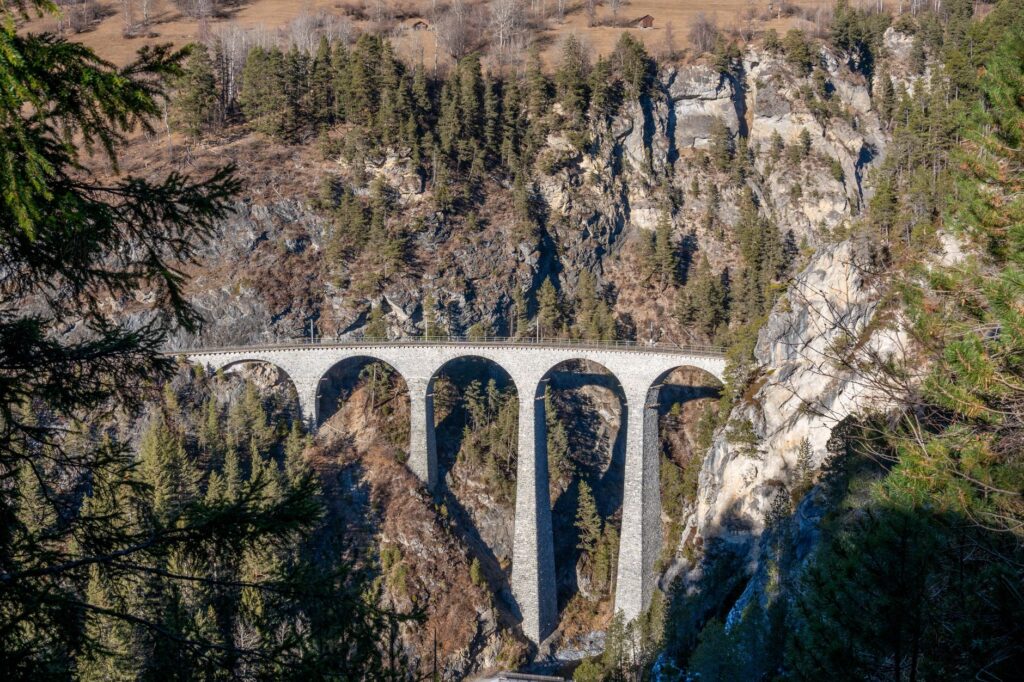
Another undisputed milestone is the Landwasser Viaduct, located along the connecting Albula section, whose dark limestone structure with five slender arches plunges directly into the mouth of a tunnel excavated in the vertical cliff face. These structures stand out not only for functional efficacy, but for flawless landscape integration. Built from local materials, they withstand the onslaught of avalanches and freeze-thaw cycles, proving that durability and aesthetics can converge in perfect harmony.

Winter Logistics and Extreme High-Mountain Maintenance
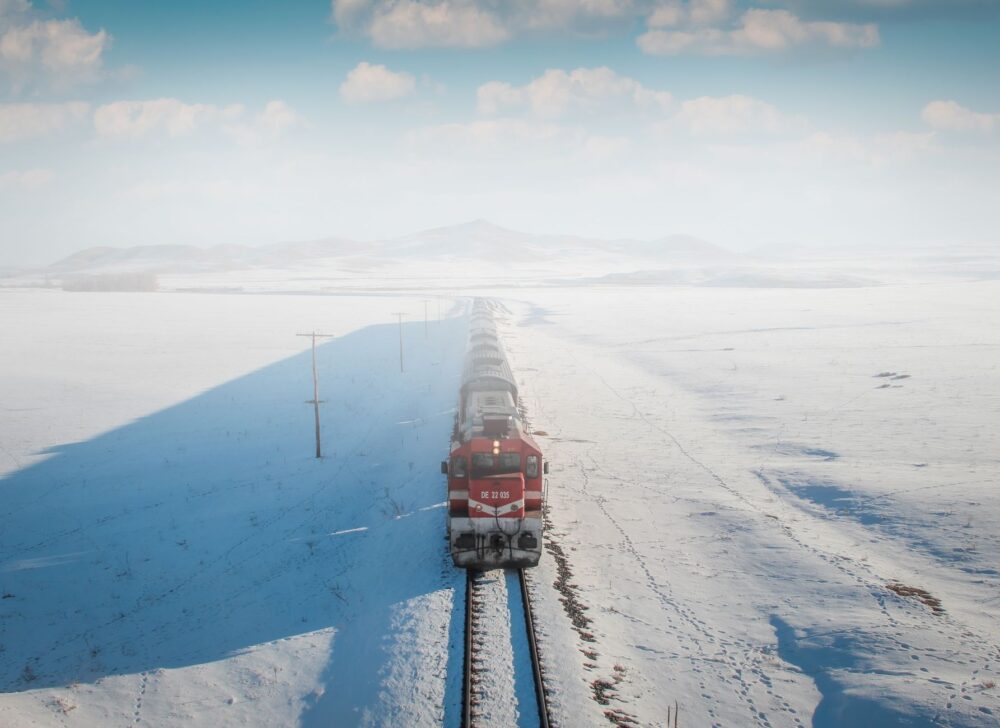
Keeping a railway line operational at over two thousand meters of altitude during harsh alpine winters demands a colossal logistical infrastructure. Snowfalls at the Bernina Pass can accumulate multiple meters within hours, accompanied by gale-force winds that form impenetrable drifts. To combat this phenomenon, the company maintains a specialized fleet of powerful snowplow locomotives, some historical yet continuously modernized, and others of high-tonnage diesel propulsion.
blockquote>The battle against winter on the Bernina is won not through brute force, but via pinpoint precision in weather forecasting and the constant rotation of technical teams at the route’s most vulnerable points.
Beyond snow removal, track maintenance crews conduct daily inspections to detect surface permafrost shifts and verify the stability of tunnels and slopes. During the nights, when passenger traffic ceases, special service trains transport repair materials and technical personnel to the most remote stretches, ensuring that at dawn the international corridor operates with the Swiss punctuality that defines the network.
The Onboard Experience: From Glacier to Palm Tree
Traveling aboard the Bernina Express is an incomparable sensory experience that transports passengers through radical geographical contrasts in the span of just four hours. Modern panoramic carriages, equipped with large curved windows extending up to the ceiling, offer 360-degree visibility over changing landscapes. From their seats, travelers witness a fascinating ecological metamorphosis.
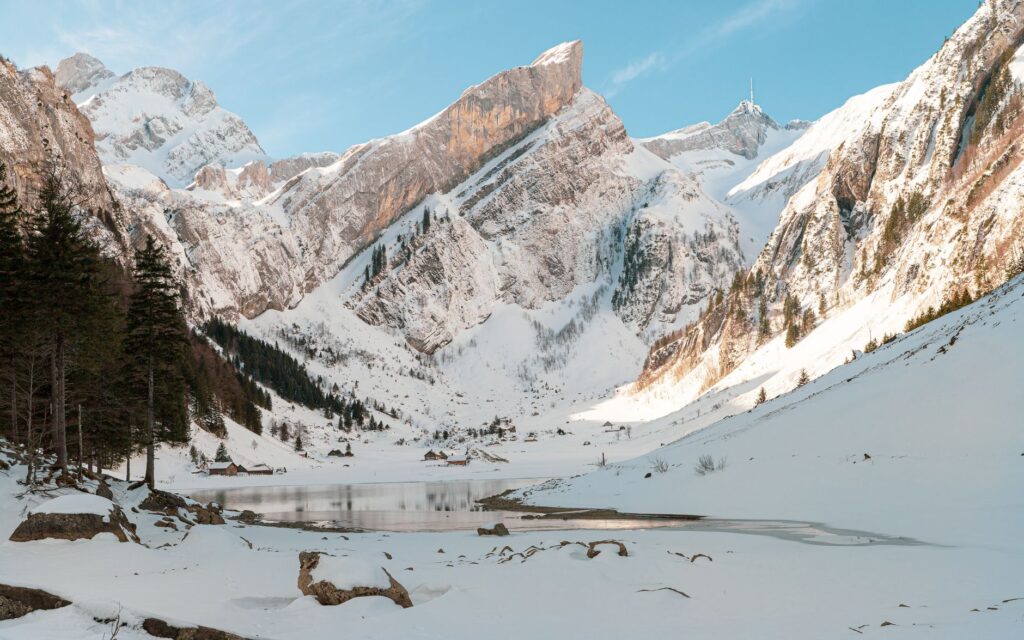
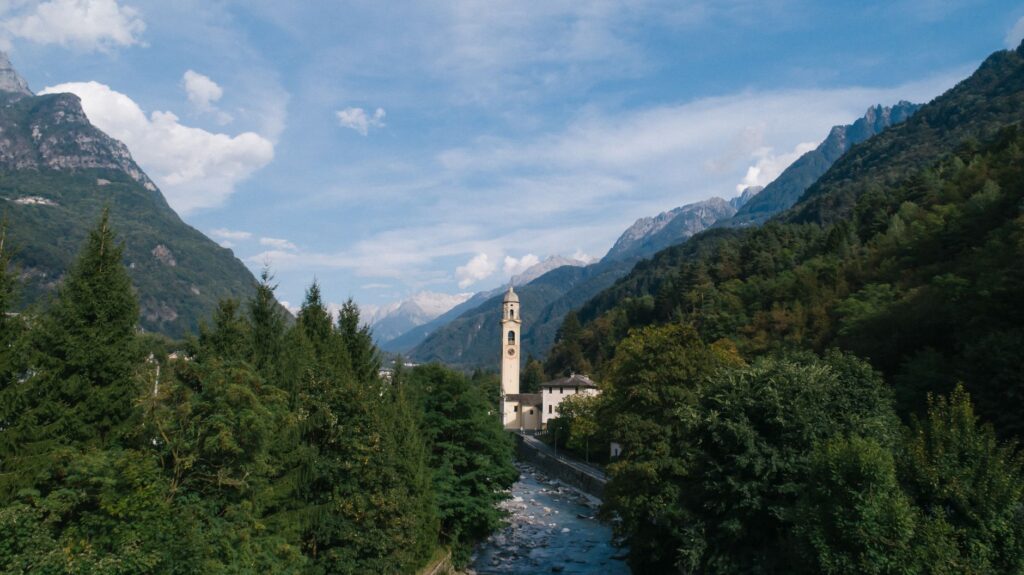
The journey begins among conifer forests and the imposing bulk of the Morteratsch Glacier, whose bluish ice tongues seem close enough to touch. As the train clears the maximum elevation at Ospizio Bernina, the environment turns alpine and lunar, dominated by glacial lakes frozen for much of the year such as Lago Bianco. Afterward, the track descends gently toward the Poschiavo valley, where the architecture shifts toward a more Italian style with cobbled squares and Romanesque bell towers, ultimately culminating in Tirano, surrounded by vineyards and palm trees under a Mediterranean sky.
Practical guide
Planning a journey aboard the Bernina Express requires understanding key operational details to ensure an optimal experience free of logistical hitches.
- Main Route: The full route operates between Chur, St. Moritz (Switzerland), and Tirano (Italy), covering approximately 61 kilometers in the purely alpine section of the Bernina.
- Seat Reservation: While regional trains run along the same tracks and offer greater flexibility, the official Bernina Express requires mandatory advance seat reservation, especially during the peak summer and winter seasons.
- Connectivity and Transfers: The line is fully integrated into the Swiss public transport system. Connections can easily be made from Zurich via Zurich-Chur or Landquart with perfectly synchronized minute-to-minute timing.
- Luggage and Accessibility: Panoramic cars are adapted for passengers with reduced mobility and feature specific hand luggage areas, though traveling with moderate-sized suitcases is recommended due to interior space configuration.
- Weather and Seasonality: Each season offers a radically different profile: winter months guarantee immaculate white landscapes, while spring and autumn allow travelers to observe the chromatic transition of forests and melting alpine torrents.
Emotional Epilogue Beneath the Sunset Light
When the final rays of sunlight wane over the Bernina massif, casting an intense copper hue known as alpine glow over the snow-covered peaks, the train winds silently along the valley slopes. In that moment of stillness, the roar of electric motors merges with the distant murmur of mountain streams. Passengers, captivated by the monumental beauty of the landscape, maintain a respectful silence before the grand windows. This monumental work represents not merely the conquest of the summit by human ingenuity, but a constant reminder that the true elegance of travel lies in absolute respect for nature’s silent grandeur.