
Silence and golden stone among discreet canals
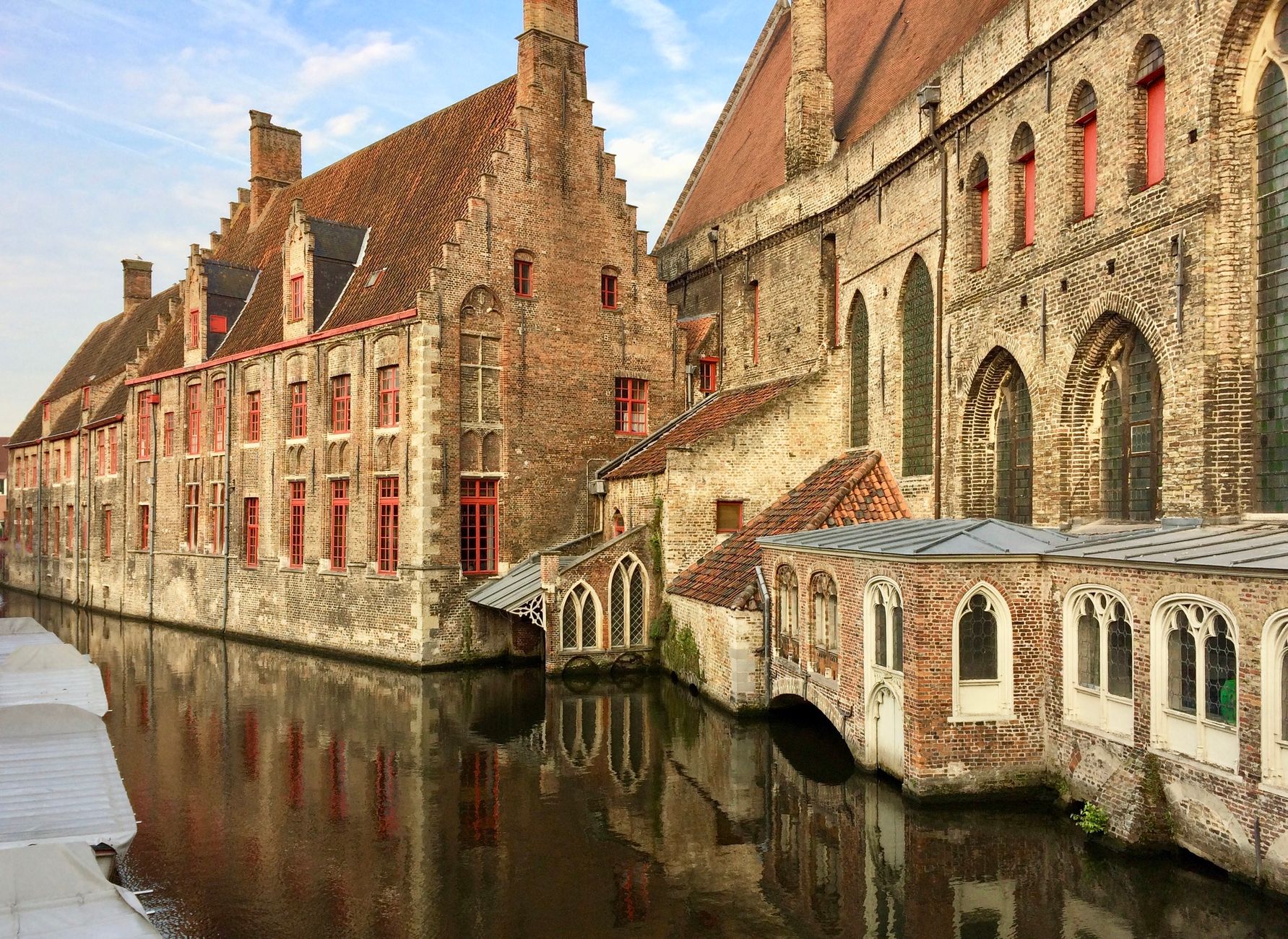
For centuries, tourist itineraries across northern Europe have traced an almost invariable route between the canals of Bruges, the university stronghold of Leuven, and the guild monumentalism of Ghent. Within that map of big names, Mechelen has historically remained in the background—a closely guarded secret that experienced travelers discover almost by chance. Strategically located in the heart of Flanders, halfway between Antwerp and Brussels, this human-scale city does not compete with the crowds of its more famous neighbors; instead, it offers a leisurely experience where the weight of history is felt in the texture of its bricks and the calm of its squares.
Mechelen’s uniqueness does not stem from a single dazzling attraction, but from the density of its architectural heritage and the vitality of a community that has reinvented itself without losing its medieval identity. Walking through its streets is a journey into an urban grid mapped out along the Dijle River, whose waters reflect centuries of political disputes, ecclesiastical power, and commercial prosperity. Far from being an open-air museum, Mechelen beats with the everyday pulse of its markets, local cafes, and artisan workshops, making it an essential destination for those seeking to understand the true Flemish essence beyond mass-marketed circuits.
The heart of the main square: the Grote Markt as a civic agora
The natural starting point for any tour is the Grote Markt, the main square that has functioned as the city’s nerve center since the Middle Ages. Expansive, luminous, and surrounded by historic buildings featuring Flanders’ characteristic stepped gables, this square encapsulates Mechelen’s civic memory. Here converge the commercial currents that once brought prosperity to the local bourgeoisie, a past reflected in the sumptuous guild mansions lining the perimeter. At the center, the statue of Margaret of Austria presides over the space, recalling the fundamental role played by this influential regent of the Netherlands in the 16th century, when Mechelen became the political and judicial capital of the Habsburg domains.

The Grote Markt is not merely a monumental relic; it is the living room of the people of Mechelen, where history intersects with daily life in the cafes and local markets.
Unlike other European squares transformed exclusively into tourist stages, the Grote Markt retains an authentic atmosphere. On weekends, the traditional market fills the pavement with stalls offering local produce, flowers, and antiques, perpetuating a secular tradition. The surrounding cafes provide the perfect setting to observe the coming and going of citizens, while the imposing silhouette of the cathedral dominates the visual horizon, reminding visitors that civil and religious power historically walked hand in hand in this strategic enclave.
St. Rumbold’s Cathedral and the verticality of the carillon
Dominating Mechelen’s urban skyline stands the imposing St. Rumbold’s Cathedral (Sint-Romboutskathedraal), a church whose construction began in the 13th century and whose unfinished tower is one of Belgium’s most recognizable architectural landmarks. With an initial planned height intended to surpass any other in the region, the tower stopped at 97 meters due to a lack of funds, but its presence remains an imposing mass of stone and spiritual authority. Inside, the visitor encounters a vast Gothic space housing masterpieces of Flemish art, notably a monumental canvas by Anthony van Dyck depicting the crucifixion, bathed in light filtered through large historical stained-glass windows.
However, the true sonic soul of the cathedral lies in its famous carillon, an instrument of 49 bells that has made Mechelen the world capital of this musical discipline. The Jef Denyn Royal Carillon School, founded in the city, attracts students from all over the globe to learn the art of performing melodies from the heights. Listening to the weekly concerts that resonate throughout the city is a unique sensory experience, where heavy medieval architecture seems to come alive and float to the rhythm of metallic notes descending over the roofs of the old town.
The legacy of Margaret of Austria and the Palace of the Netherlands
To understand Mechelen’s golden age, a visit to the Palace of Margaret of Austria, located on Keizerstraat, is essential. This building, considered the first Renaissance palace in the Low Countries, was the residence of Charles V’s aunt and one of the most brilliant courts in Europe during the early Renaissance. Within these walls, the future emperor was educated, and geopolitical decisions of continental scope were made. Today, the complex houses the courts of justice, but its interior courtyards and gardens retain the sober elegance of an era when the city was the administrative epicenter of the Habsburg empire.

Nearby is the Palace of Busleyden, a jewel of civil Gothic architecture commissioned by Hieronymus van Busleyden, a patron and humanist friend of figures such as Erasmus of Rotterdam and Thomas More. Following careful restoration, the palace now houses the city’s municipal museum, an avant-garde exhibition space that narrates Mechelen’s history through collections of manuscripts, sculptures, and everyday objects. This dialogue between the historical continent and contemporary museology allows visitors to delve into the humanist thought that flourished in Flanders during the 16th century.
River walks and the green heritage of the Dijlepad
Water is the element that structures Mechelen’s urban geography, and one of the most rewarding ways to discover the city is by exploring its waterways. The Dijlepad is a floating wooden boardwalk built over the Dijle River that allows pedestrians to walk literally at water level, skirting old walls, backyard patios, and commercial docks that might otherwise go unnoticed. This pedestrian path offers an intimate and slowed-down perspective, connecting the old town with newly regenerated urban areas where contemporary architecture engages in respectful dialogue with pre-existing heritage.
- Floating pathway: The Dijlepad allows walking over the river to discover rear facades inaccessible from main streets.
- Historic bridges: Structures like the Vismarktbrücke connect former fishing neighborhoods with today’s lively nightlife.
- Green spaces: Urban parks along the canals offer ideal resting spots for spring and summer months.
This aquatic route also leads to the Vismarkt (former fish market), a rectangular square by the river that has transformed into one of the city’s most lively meeting points. Surrounded by historic buildings converted into restaurants and breweries, this corner encapsulates Mechelen’s ability to integrate its guild past into modern leisure dynamics, offering travelers an ideal stop to taste local gastronomy by the water.
The Great Béguinage: a haven of peace and spirituality
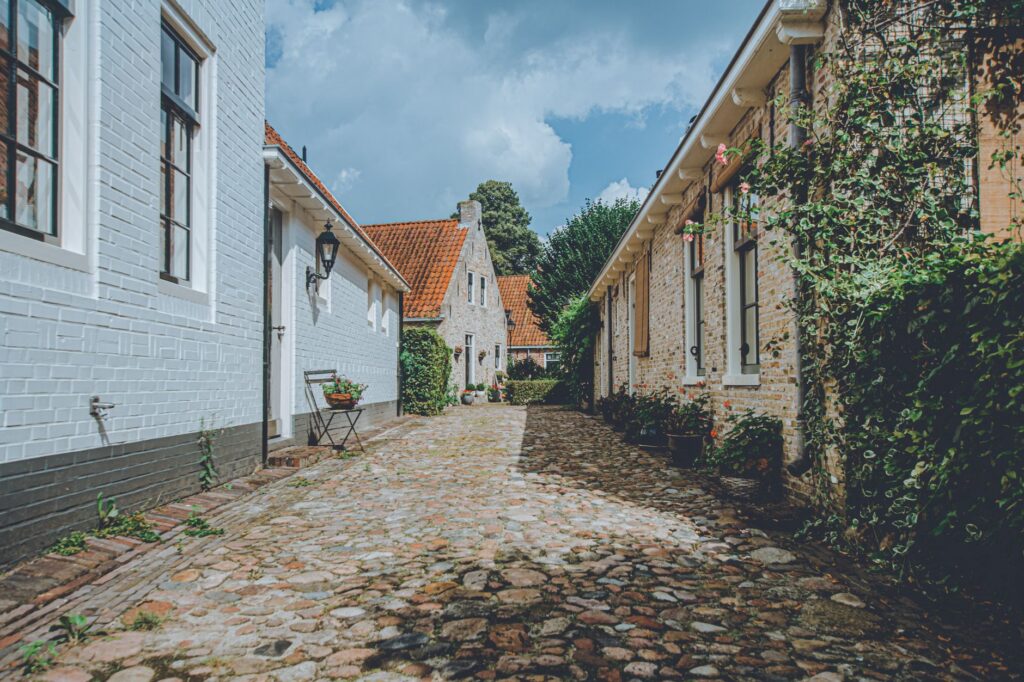
Declared a UNESCO World Heritage site, Mechelen’s Groot Begijnhof (Great Béguinage) is one of the city’s most poignant architectural ensembles. Béguinages were communities of pious women who lived independently, without taking strict monastic vows, dedicating themselves to manual labor, prayer, and caring for the sick. Unlike other walled béguinages closed to the outside, Mechelen’s integrates organically into the urban fabric through a network of cobblestone streets, cul-de-sacs, and historic white-façade houses that exude serene elegance.
Walking through this neighborhood is immersing oneself in an inhabited silence where time seems to pass at a different pace. The facades are flanked by small front gardens and commemorative plaques recalling the lives of those pioneering women in female autonomy. Today, the houses remain inhabited by private residents who jealously care for the common heritage, keeping alive a spirit of community and respect that contrasts pleasantly with the bustle of the commercial arteries in the center.
Beer, tradition, and the brewing pride of Het Anker
Flanders cannot be understood without its brewing culture, and Mechelen occupies a prominent place in this tradition thanks to the emblematic Het Anker brewery, active since the 15th century and historically linked to the Great Béguinage. Its facilities produce the famous Gouden Carolus, a high-alcohol abbey beer that has won multiple international awards. Visiting the brewery offers insight into the artisanal fermentation and maturation process, as well as an understanding of the deep connection between beer production and ancient religious orders that found in this beverage a safe source of hydration and caloric sustenance during the Middle Ages.
The brewing experience extends throughout the city, where traditional bars and contemporary taverns offer menus featuring dozens of local references. Mechelen’s beer masters recommend pairing each variety with regional products, such as cheeses made in nearby monasteries or slow-cooked beef stewed with dark beer. This commitment to culinary quality and authenticity reinforces the character of a city that cherishes its traditions without falling into complacency.
Practical guide
How to get there: Mechelen boasts excellent rail connectivity. It is just a 20-minute train ride from both Brussels and Antwerp, and about 45 minutes from Ghent, making it a perfect day trip or an ideal base for exploring Flanders without renting a car.
When to go: Spring (April to June) and autumn (September to October) offer pleasant temperatures and fewer crowds. Summer months host various outdoor festivals, including carillon concerts.
Where to stay: The historic center concentrates boutique hotels located in restored buildings, such as former convents and guild mansions, combining contemporary design with respect for architectural heritage.

Recommended gastronomy: In addition to Het Anker beer, trying local artisanal chocolates and traditional Flemish brasserie dishes around the Vismarkt and Grote Markt is a must.
Emotional epilogue facing the bell tower
As evening falls and the last rays of sun gild the cathedral’s sandstone, Mechelen reveals its most intimate face. Day-tripping tourists have departed, and the streets recover the calm pulse of locals strolling along the canals. Sitting on a bench in the Grote Markt while St. Rumbold’s bells chime a distant melody is the perfect summary of a journey that defies tourist conventions. Mechelen does not need to shout to be noticed; its discreet beauty, dense history, and unpretentious hospitality engrave themselves in memory with the force of great discoveries—those best enjoyed knowing one is off the beaten path.
Source: La Vanguardia