
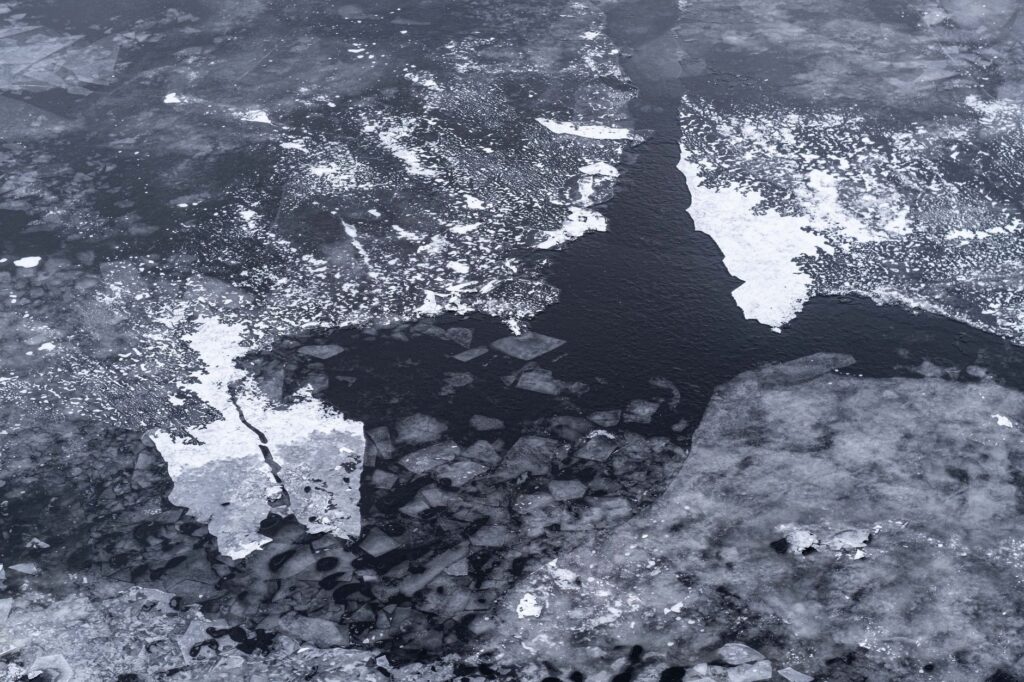
The Weddell Sea, wedged between Coats Land and the Antarctic Peninsula, represents one of the most unforgiving and fascinating geographies in the global ocean. Far from being a static frozen wasteland, this vast southern gulf acts as the primary engine of planetary thermohaline circulation, the colossal system of oceanic conveyor belts that oxygenates the Earth’s depths. Navigating its confines requires understanding that water here is not merely a liquid medium, but a complex physical architecture in constant metamorphosis, shaped by hurricane-force katabatic winds and a sea-ice cover that defies the limits of biological survival.
Historically named by British explorer James Weddell in 1823, this sea has captivated and intimidated generations of navigators. The chronicles of Sir Ernest Shackleton’s tragic yet heroic expedition aboard the Endurance illustrate the absolute tyranny of seasonal pack ice, a dynamic labyrinth of floating ice plates capable of crushing any wooden hull. Today, marine science has replaced romantic wonder with precision oceanographic instrumentation, revealing that beneath the dark, freezing surface lies an ecosystem of extraordinary complexity and resilience, crucial for regulating the climate of the entire Southern Hemisphere.
Glacial Genesis and the Physical Architecture of Pack Ice
The formation of the Weddell Sea is inextricably linked to the tectonic drift of southern continents and the consolidation of the Antarctic Circumpolar Current. As the white continent became thermally isolated millions of years ago, a unique system of easterly winds began to dominate the region, driving sea ice in a closed cyclonic gyre that concentrates massive masses of multi-year ice. This process is not a mere surface phenomenon; the interaction between the freezing air of the Antarctic plateau and the sea surface generates massive volumes of dense ice that, upon freezing, expel brine toward the ocean floor.
This Weddell Sea Deep Water, extremely cold and dense, sinks with unusual force and begins a slow northward journey that permeates the basins of the Atlantic, Indian, and Pacific oceans. Without this hydrological engine, oxygen renewal in the deep ocean depths would collapse. The pack ice acts, therefore, as the planet’s respiratory skin, a floating shield that reflects solar radiation during the austral summer and thermally insulates the ocean during winter, dictating the thermodynamic rhythms of the entire biosphere.

The Water Column: Pelagic Productivity and the Phytoplankton Paradox
Despite the apparent hostility of its surface, the water column of the Weddell Sea experiences biological explosions of colossal magnitude during the austral summer. When sunlight penetrates the cracks of fragmented ice, Antarctic phytoplankton—dominated by thriving diatom communities—blooms with an intensity that dyes surface waters green-gold hues. This massive primary production sustains one of the most specialized and short food chains on the planet, where the intermediate link is Antarctic krill.
Krill (Euphausia superba) is not merely a keystone species, but the cornerstone upon which all regional megafauna rests. Blue whales, fin whales, Weddell seals, crabeater seals, and millions of seabirds depend on the biomass of this small crustacean. The survival of these species is synchronized with the extension and retreat of sea ice; any alteration in the pack-ice cycle immediately destabilizes food availability, triggering ripple effects of scarcity that affect top predators in the trophic web.
Extreme Adaptations in the Benthos: Life Below Zero
Beneath the continental shelf and in the dark abyssal depths, the fauna of the Weddell Sea has developed admirable physiological adaptations to withstand temperatures that hover permanently near the freezing point. Notothenioid fish, popularly known as icefish, lack hemoglobin and red blood cells, reducing blood viscosity and allowing them to swim in waters laden with ice crystals. Instead, they synthesize specialized antifreeze proteins that prevent cellular nucleation, a unique evolutionary marvel.
The seafloor, or benthos, harbors dense sessile communities that defy the lack of light. Giant siliceous sponges with complex architectural forms, sea lilies, and bryozoans carpet submarine platforms, forming cold-water reefs that serve as nurseries for numerous endemic species. Unlike tropical reefs, these Antarctic ecosystems grow at an extremely leisurely pace, making them uniquely vulnerable to any direct physical disturbance, such as deep-sea trawling or abrupt changes in bottom-current temperature.
Top Predators: Sentinels of the Southern Ecosystem
At the apex of the Weddell Sea’s ecological pyramid reign the leopard seal (Hydrurga leptonyx) and the imposing killer whale (Orcinus orca). The leopard seal is a solitary and versatile predator, equipped with specialized filtering teeth for capturing krill, but also endowed with the ferocity necessary to hunt penguins and seal pups at the edges of floating ice. Its ecological role is crucial for maintaining the health and genetic vigor of lower prey populations.
Meanwhile, killer whale ecotypes patrolling the Weddell Sea exhibit highly sophisticated cooperative hunting strategies, such as wave-washing, a technique where several individuals swim synchronously to create a wave that intentionally washes seals off ice floes into open water. These culturally transmitted behaviors between generations demonstrate a degree of cognitive sophistication that places these cetaceans as true ecological engineers of the polar marine environment.
The Impact of Climate Change on Regional Stability
For decades, the Weddell Sea was considered a relatively isolated climate refuge against rapid alterations suffered by the western Antarctic Peninsula. However, recent oceanographic measurements indicate that deep waters are warming perceptibly and that the maximum extent of winter sea ice has shown alarming historical lows and fluctuations. The loss of pack ice not only reduces available habitat for krill but weakens the dense-water formation engine that feeds global oceans.

This thermodynamic imbalance threatens to alter oceanic currents on a planetary scale, with unpredictable consequences for global meteorology and sea-level rise. The international scientific community insists that the health of the Weddell Sea is a direct indicator of global climate stability, recalling that processes occurring in this remote corner of the planet resonate in the ecological and economic systems of all five continents.
Conservation and Geopolitics in the Southern Ocean
Protecting the waters of the Weddell Sea has been one of the most complex objectives of contemporary environmental diplomacy. Through the Commission for the Conservation of Antarctic Marine Living Resources (CCAMLR), proposals have repeatedly been made to create continental-scale marine protected areas to shield krill fishing grounds and cetacean migration routes from commercial fishing pressure.
However, managing these waters faces geopolitical tensions stemming from overlapping territorial claims and the economic interests of industrial fishing fleets operating in the Southern Ocean. Keeping the Weddell Sea as a sanctuary free of intensive exploitation requires not only binding international agreements but a constant scientific monitoring effort to ensure that conservation regulations are met under the planet’s harshest climatic conditions.

The fragility of the Weddell Sea teaches us that no corner of the Earth is remote enough to escape the consequences of human activity in the Anthropocene.
The future of this frozen sea depends on humanity’s capacity to transition from extractive exploitation to management based on the preservation of systemic equilibria. The decisions adopted in international offices over the coming years will determine whether Weddell waters remain the pure heartbeat of the deep ocean or succumb to global climatic degradation.
Practical guide
Exploring or documenting the Weddell Sea is an undertaking reserved for specialized scientific expeditions, ice-strengthened polar vessels, and authorized expedition cruises operating strictly under the regulations of the Antarctic Treaty and IAATO.
Access and logistics: The vast majority of tourist and scientific expeditions depart from the port of Ushuaia in Argentina, crossing the legendary Drake Passage or heading directly into the Weddell Sea through the Antarctic Peninsula if ice conditions permit.
Best time to visit: The operational window extends exclusively during the austral summer, from November through March. November offers the most pristine landscapes of intact ice, while January and February maximize whale-watching opportunities and penguin chick sightings.

Regulatory requirements: All visitors must comply with biosecurity protocols to prevent the introduction of invasive species, including strict disinfection of footwear and outdoor gear prior to each landing.
Physical preparation and gear: High-end technical polar clothing, waterproof thermal layers, and excellent resistance to seasickness are required due to the proverbial roughness of the Southern Ocean during crossings.
The journey to these extreme latitudes transforms the human perception of nature, revealing the silent immensity of a world where ice and ocean dictate ancient laws that humanity is only beginning to understand and respect.