
The Liquid Artery of Eastern Europe
The Lower Danube is not merely a natural geographical border between Romania and Bulgaria; it constitutes a colossal logistical artery through which history, international commerce, and the daily lives of communities that have spent centuries adapting to the whims of an unpredictable current flow. Throughout the six hundred shared kilometers between both countries, from the Iron Gates gorge to the labyrinth of delta canals, the river operates as a complex circulatory system where heavy cargo barges, local ferries, and small artisanal fishing boats converge.
Understanding the connectivity of this region requires abandoning a strictly terrestrial perspective to immerse oneself in the logic of an international river corridor. Here, national highways and railway tracks often run parallel to the dikes, serving as secondary logistical support against the great water highway represented by the Danube. Every port, from the industrial docks of Giurgiu to the fishing basins of Silistra, functions as a neuralgic node where the transit of agricultural goods, minerals, and fuels from the heart of Europe destined for the Black Sea is negotiated on a daily basis.
The economic dependence of these riverside enclaves on the river’s flow has molded a unique infrastructure of dikes, breakwaters, and diversion channels. State investments and European community funds have attempted to modernize this network in recent decades, although the daily reality of many riverside villages remains marked by slow bureaucratic customs procedures and the technical obsolescence of some docks built during the second half of the twentieth century.
The Titanic Engineering of the Iron Gates
At the western end of this border section, the landscape changes radically. The Danube narrows, boxed in between the Southern Carpathians and the Serbian Balkans in a gorge historically known as the Iron Gates. Before the construction of the binational hydroelectric complex in the 1970s, this stretch was a ship graveyard due to furious rapids, submerged reefs, and violent whirlpools that made upstream navigation nearly impossible.
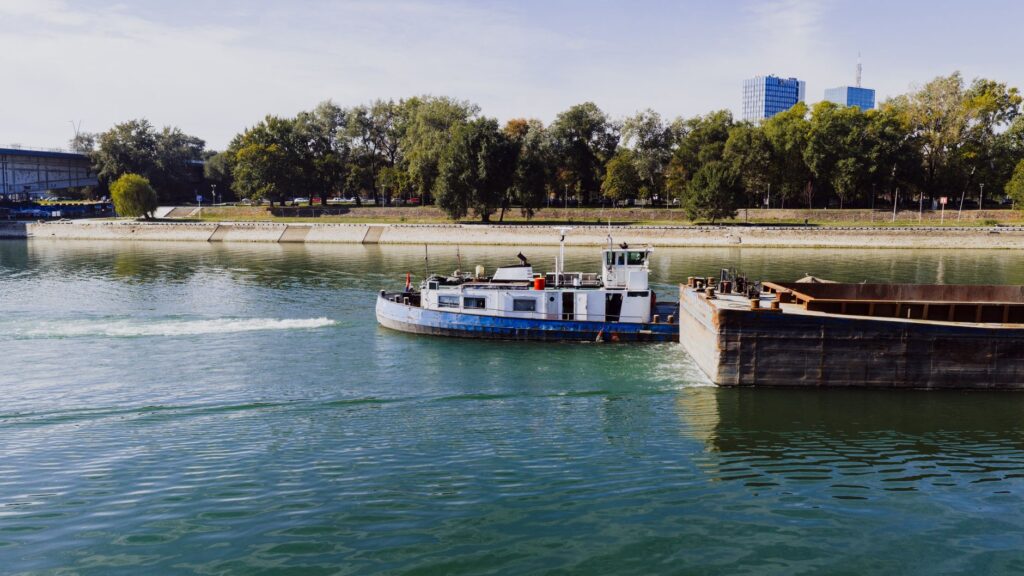
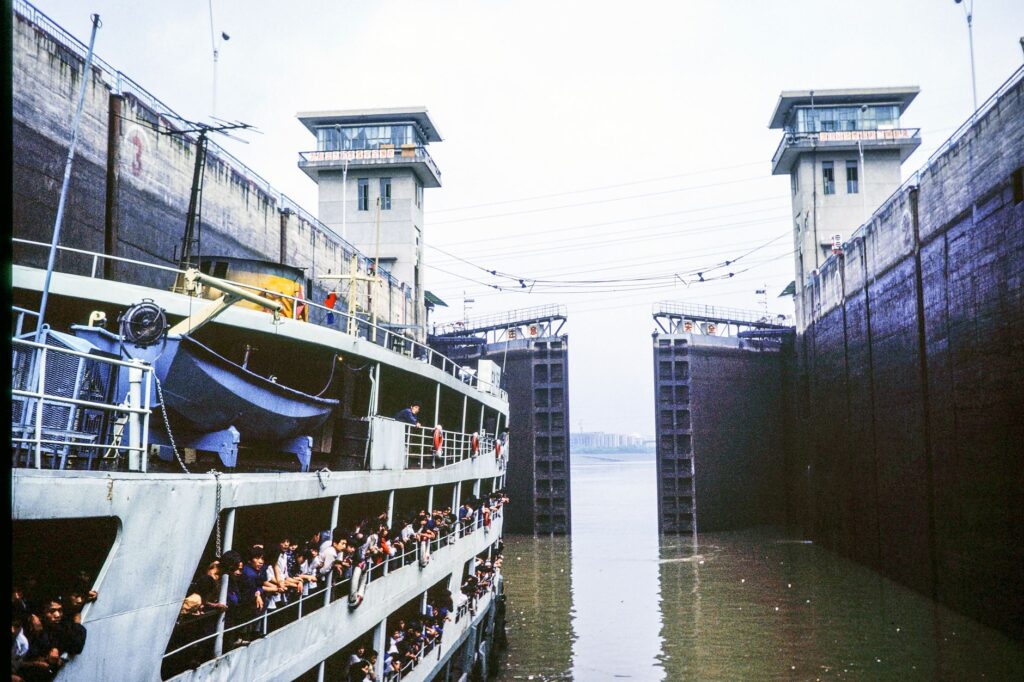
The Iron Gates I and II complex completely transformed the hydrology and connectivity of the region. The gigantic dams raised the water level dozens of meters, burying ancient villages and the legendary Sip gorge, but enabled the construction of monumental locks capable of lifting or lowering heavy-tonnage barges in a matter of minutes. These locks operate twenty-four hours a day, coordinated by Romanian and Serbian operators who manage international commercial traffic with millimeter precision.
For the traveler driving along the road winding through the Romanian bank, the sight of the locks in operation impresses with its industrial scale. Massive steel gates slowly open to let river convoys pushed by high-powered tugboats pass by, while sailors wait moored to concrete bollards. This lock system is not merely a Cold War engineering masterpiece; it is the indispensable bottleneck that sustains river navigation between the Rhine and the Black Sea via the Rhine-Main-Danube canal.
The Bridges of Discord and European Integration
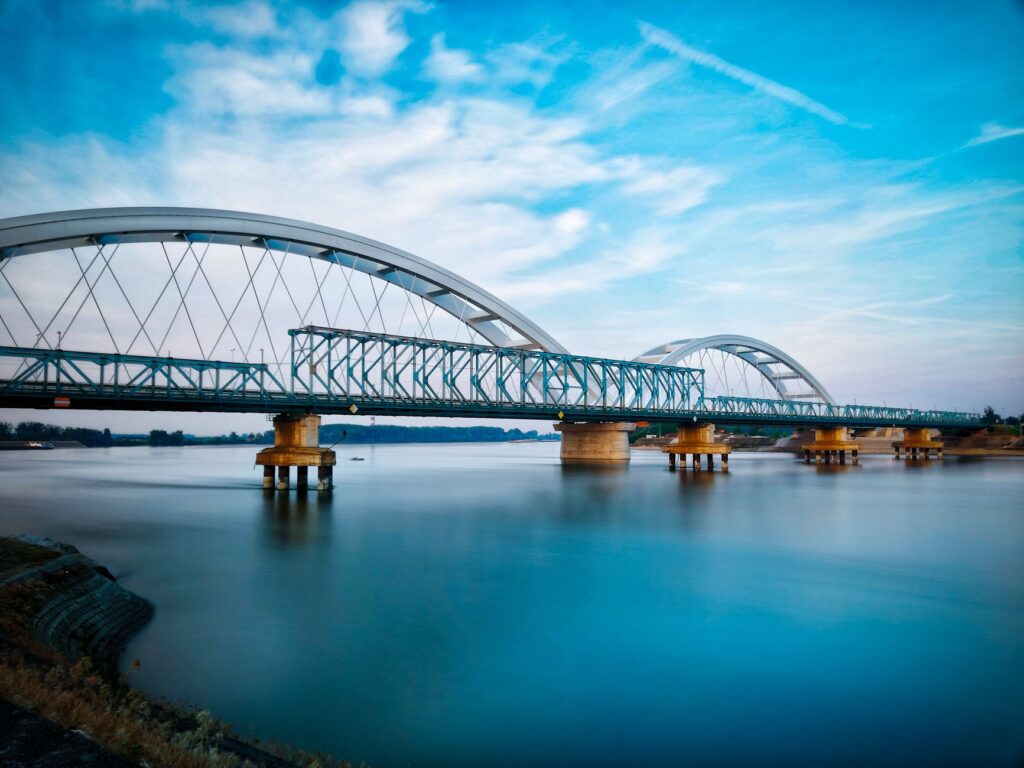
For decades, crossing the Lower Danube between Romania and Bulgaria was an odyssey limited to a handful of slow and unreliable ferries. The lack of fixed land crossings over hundreds of kilometers strangled cross-border trade and isolated entire regions. This situation began to change drastically with the inauguration of the Friendship Bridge between Giurgiu and Ruse in 1954, and more recently with the opening of the New Europe Bridge between Calafat and Vidin in 2013.
The construction of the New Europe Bridge marked an absolute turning point for road freight transport in southeastern Europe. Before its opening, trucks had to wait entire days to cross by ferry, enduring long bureaucratic controls and frequent interruptions caused by winter floods or summer fogs. Today, this combined highway and railway structure connects the European transport corridor linking the center of the continent with Greece and Turkey, stimulating the local economy of two traditionally depressed cities.
However, integration remains incomplete. Despite modern bridges, freight transport associations recurrently denounce that border controls within the European Union unnecessarily slow down commercial traffic. Waiting times at tollbooths and customs booths reflect persistent geopolitical and administrative tensions between two states that, although sharing a common market, maintain significant operational barriers in their shared land infrastructure.
Life on the Banks: Barges and Local Ferries
While large commercial convoys swiftly cross the main channel powered by diesel engines of thousands of horsepower, the daily life of riverside communities is sustained by a capillary system of local ferries. These shallower-draft vessels daily connect small agricultural villages located just a few kilometers apart in a straight line but separated by a vast expanse of muddy water and treacherous currents.
In towns like Turnu Măgurele or Oltenița, the ferry is not a tourist attraction, but an essential public service. Farmers, students, and cross-border workers depend on these boats to reach their jobs on the other side of the river. Boarding operations are carried out with a mixture of ancestral patience and daily urgency; tractors loaded with sacks of grain share space with cyclists and local passengers who use the crossing to exchange news about the weather and market prices.
Navigation conditions for these ferries are increasingly challenging. Climate change has drastically altered the hydrological regime of the Danube, causing extreme summer droughts that reduce the available draft in secondary branches. In recent summers, several ferry services had to be temporarily suspended due to the accumulation of sandbars, forcing local inhabitants to make land detours of over one hundred kilometers to reach points that used to be ten minutes away.

Multimodal Transport in Dry Ports and the Railway Network
The connectivity of the Lower Danube is not reduced to water and roads; it also rests on a centennial railway network that in many sections suffers the ravages of chronic disinvestment. The railway lines connecting Danubian ports with national capitals and interior industrial centers were designed in the late nineteenth and early twentieth centuries, responding to imperial geopolitical logics that are obsolete today.
To revitalize the region’s economy, Romania and Bulgaria have promoted development projects for dry ports and multimodal logistics platforms in strategic enclaves like Galați and Constanța. These facilities allow containers to be transferred directly from river barges to cargo trains or heavy-duty trucks, optimizing transit times and reducing the carbon footprint of freight transport in the east-west corridor.
Nevertheless, the modernization of railway lines proceeds at an extremely slow pace. Freight trains frequently run at reduced speeds due to poor infrastructure conditions and a lack of electrification in numerous secondary branches. Local engineers operate locomotives inherited from the Soviet era that require constant mechanical repairs, evidencing the technological gap separating these peripheral regions from the modern railway corridors of Western Europe.
The river understands neither bilateral treaties nor administrative borders; its current erodes the foundations of bureaucracy while demanding constant cooperation between neighbors who learned to share the water before the laws.
Environmental Challenges and Permanent Dredging
Keeping the Lower Danube navigable for heavy-tonnage barges requires a titanic effort of continuous dredging that profoundly alters river ecosystems. Shipping authorities of both countries operate fleets of mechanical and suction dredges that extract tons of accumulated sediments from the riverbeds to ensure a minimum safety draft during low-water months.
This constant intervention generates a delicate ecological dilemma. On one hand, dredging is indispensable to sustain commercial activity and prevent shipping accidents in the narrowest passages; on the other hand, it destroys natural habitats of migratory fish species and alters the morphology of the banks, eroding protected wetlands that act as natural water filters. Local fishermen watch with concern how river engineering works modify the currents where they traditionally caught sturgeons and carp.
Furthermore, industrial pollution accumulated over decades in the upper and middle course of the river slowly flows down toward the delta, forcing municipal treatment plants located on the Bulgarian and Romanian banks to redouble their purification efforts. River connectivity, therefore, is not merely a matter of boats and locks, but also of environmental health and long-term sustainability for millions of people directly dependent on the waters of the Danube.
Practical guide
How to get there: The main access to the Lower Danube is through the international airports of Bucharest (OTP) in Romania or Sofia (SOF) in Bulgaria, both connected to major European capitals. From either city, the best option to explore the region is renting a vehicle, as public rail transport between riverside towns is limited and infrequent.

When to travel: The ideal months to tour the Lower Danube are spring (from May to June) and early autumn (from September to October), when temperatures are moderate and the rainfall regime allows you to enjoy river landscapes without the extreme heat waves of summer.
Documents and customs: Although both Romania and Bulgaria are members of the European Union, border controls at land and river crossings continue to operate due to partial integration into the Schengen area. It is essential to always carry a valid passport or identity document, as well as vehicle technical documentation if crossing the border by car or ferry.
Accommodation and services: International hotel infrastructure is concentrated in major cities like Ruse, Giurgiu, or Brăila. In smaller towns and fishing villages, rural guesthouses run by local families predominate, ideal for experiencing river gastronomy and riverside culture first-hand.
The Final Echo of Border Waters
At dusk, when the last rays of sun set the grayish waters of the Danube ablaze and commercial barges turn off their navigation lights to anchor near small wooden docks, the river recovers a millenary calm that defies human hustle. In that suspended instant, the gigantic locks pause their industrial roar and the current flows silently, carrying the sediments that have been sculpting this continent since the dawn of time. The communities inhabiting these banks continue to observe the water with the same mixture of respect and resignation as their ancestors, knowing that their destiny, their commerce, and their identity are inextricably tied to the whims of a current that never stops, connecting worlds separated by an abyss of water and stone.