
The Light of Alboran and the Architecture of the Pantry
At the southeastern tip of the Iberian Peninsula, where the desert meets the deep waters of the Alboran Sea, the city of Almería preserves a sanctuary of aromas, voices, and textures that defies the logic of arid lands. The Central Food Market, a late-19th-century cathedral of iron and masonry, is not merely a commercial venue; it constitutes the anthropological heartbeat of a community that has turned scarcity into ingenuity and aridity into an orchard of wonders. Crossing its doors at dawn is to step into a realm where time is measured by the arrival of fishing boats from the capital and Roquetas, and by the patient harvesting of vegetables grown under an unforgiving sun.
The building’s sober, functional structure reflects the character of a merchant bourgeoisie that championed modernization without sacrificing its seafaring roots. Beneath its grand metallic framework, the stalls are arranged as a living map of Almería’s microclimates. Here, water is a scarce and precious commodity—a guiding thread that dictates the salinity of sea produce and the sugar concentration in land fruits. This report documents the daily liturgy of a market that resists globalized uniformity, revealing the culinary secrets of a frontier cuisine where blue fish and halophytic plants converse with the spices brought by centuries of Mediterranean trade.
The Fish Market and the Alboran Sea: Biodiversity in Salt
The market’s initial pulse is felt at the fishmonger stalls, where the influence of the Alboran Sea manifests in species adapted to complex underwater currents and rocky seabeds. Unlike the broader continental shelves of northern Spain, Almeria’s fishing grounds offer a unique faunal richness due to the mingling of Atlantic and Mediterranean waters. Fishmongers, heirs to generations of sailors, skillfully display red prawns from Garrucha—renowned for their intense iodine flavor and coral brilliance—alongside rockfish, hake, and octopuses whose tentacles have battered the volcanic reefs of Cabo de Gata.

Conversing with market veterans reveals the fragility of a marine ecosystem subjected to artisanal fishing pressure and rising water temperatures. Fish is not merely sold; it is explained, dated, and recommended according to the day’s prevailing wind. When a western wind blows, deep-water species seek refuge; when the eastern wind dominates, the coast teems with pelagic life. This direct dependence on natural elements grants each specimen an unmistakable freshness, consolidating Almería’s fish market as one of the most honest gastronomic bastions of the southern coastline.
Greenhouse Horticulture and the Miracle of Fossil Water
Just a few meters from the fish stalls, fruit and vegetable stands burst into a chromatic palette that defies the aridity of the surrounding landscape. Almería is globally renowned for its plastic-covered greenhouse belt in the plains of Dalías and Níjar, but the central market maintains a special bond with small-scale traditional agriculture from farmhouses and inland river valleys, such as the lower course of the Andarax. Rough-skinned, green-cored Raf tomatoes, Almagro-style eggplants, goat-horn peppers, and skin-melon varieties comprise a pantry where water scarcity has forced the development of ancestral precision agriculture.
The arid earth is not an obstacle to flavor, but its most rigorous filter; every drop of fossil water concentrated in these fruits stands as a testimony to agricultural resilience.
Local growers explain that the secret behind these vegetables lies in the salinity of the irrigation water and extreme solar radiation—factors that multiply the concentration of organic acids and natural sugars. At the market, purchasing a tomato is not a routine act, but an exercise in tasting where customers demand the crisp texture and precise balance between sweetness and acidity that only limestone soil and a semi-arid climate can guarantee.
The Secrets of Brine and Coastal Air-Drying
Food preservation has historically been a matter of survival in a province where summer temperatures easily exceed forty degrees Celsius. In the market’s interior aisles, salt-cured and pickled stalls display a culinary heritage originating with the Phoenicians and Romans. Salted fish roe—from meager, tuna, or seabass—pressed mojamas cured in extra-virgin olive oil, and olives seasoned with fennel, thyme, and orange peel form part of a deep pantry that has barely changed over centuries.
The salting process requires empirical knowledge of curing times and ambient humidity. Master artisans supplying the market select fish caught at optimal body fat levels, submerge them in pure sea salt from the Cabo de Gata salt flats, and leave them to dry beneath the dry northern wind. This method concentrates amino acids and transforms the fish into a rich, deeply saline bite that acts as a bridge between the open sea and the domestic pantry of Almería households.
Country Bread and Desert Flours
No journey through the Almería market is complete without stopping at the bakery counters, where grain culture is expressed through unique preparations adapted to nomadism and prolonged agricultural labor. The flagship product is pan de cañada—a dense-crumb, crispy-crust loaf enriched with extra-virgin olive oil, often topped with dried peppers, salted sardines, or bacon bits, locally known as gurullos or hornazo depending on the festive calendar.
Local bakers work with moderate-strength flours and slow fermentations that allow the bread to endure for days without losing its organoleptic qualities. This rustic bread is not a mere accompaniment; it serves as the physical foundation upon which seafood stews and fried fish platters are built. Its crumb nobly absorbs the broths of squid rice dishes and garlic-almond sauces, closing the circle of a gastronomy where resourceful thrift and caloric density were indispensable for past generations of laborers and fishermen.

Spices, Herbs, and the Moorish Heritage
The air in Almería’s market is infused with balsamic and earthy notes that betray the deep Andalusi influence in local cooking. Stalls selling spices and wild herbs offer bundles of savory thyme, savory winter herbs, rosemary, and oregano foraged from the limestone slopes of the Sierra de Filabres and the Alpujarra. These aromatic plants not only season stews but historically formed part of traditional pharmacopeia to aid the digestion of fibrous meats and fatty fish.
Likewise, the use of cumin, sweet and hot paprika, and saffron threads reflects historical trade routes connecting the port of Almería with North Africa and the Middle East. Vendors prepare custom spice blends for fish broths and gachas de guijas—a winter endurance dish made from grass-pea flour that encapsulates the memory of lean years. Spices in Almería never mask the product; they underscore it, enhancing its mineral profile and undeniable geographical origin.
Practical guide
How to get there: Almería’s Central Market is located in the heart of the historic center at Plaza Cetina s/n. It is easily accessible on foot from any point in the old town. The intermodal train and bus station is a ten-minute walk away.

Opening hours: Monday through Saturday, mornings from 08:00 to 15:00. Fish and seafood stalls typically offer their freshest catch between 08:30 and 12:00.
Essential products: Ask for Garrucha red prawns, traditionally grown Raf tomatoes, almadraba tuna mojama, and artisanal pan de cañada.
Market etiquette: Respectful photography of stalls and produce is permitted, though it is always advisable to request prior permission from vendors during peak morning hours.
Recommended accommodation: Opting for small boutique hotels in the restored historic center, such as Aire Hotel & Baón, allows travelers to appreciate the bourgeois architecture from the market’s founding era.
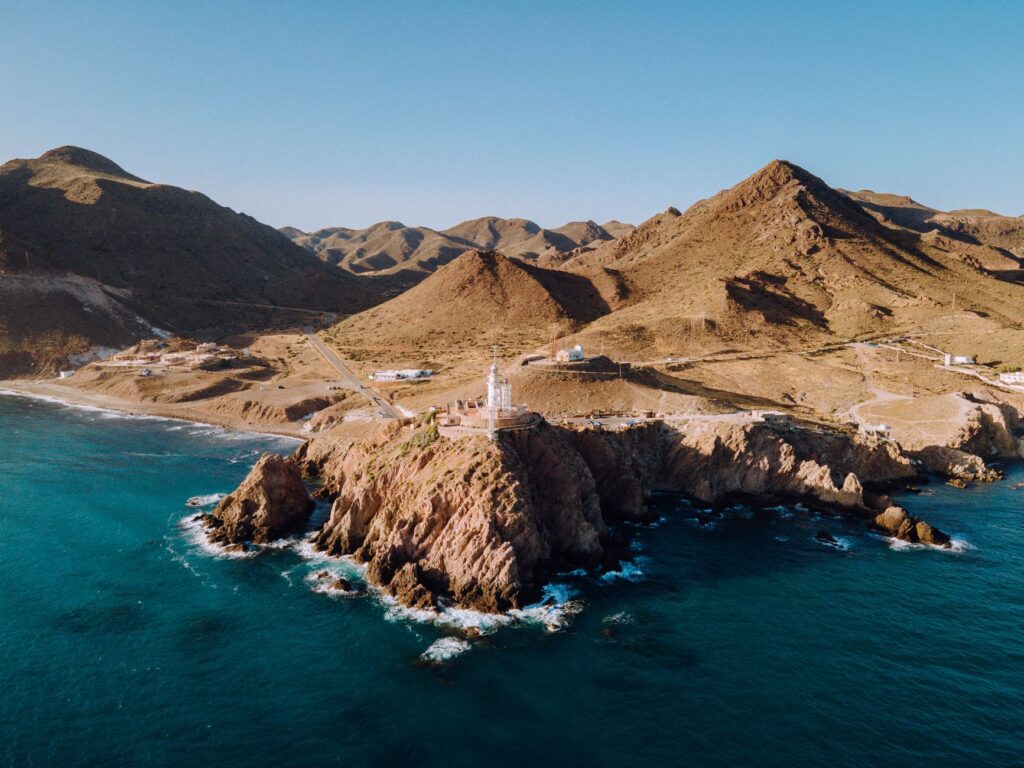
Complementary excursions: Combine the market visit with a trip toward the salt flats and lighthouse of Cabo de Gata to understand the geographic origin of the salt and seafood consumed in the capital.
The Memory of Sunset on the Bay
When the metal shutters of the Central Market begin to roll down and the bustle of bargaining yields to the silence of clean halls, the city of Almería casts a golden, oblique light over nineteenth-century buildings and the Alcazaba crowning the hilltop. This is the moment when fishermen mend their nets in Almería’s port and the last inshore boats return with the receding tide. In the taverns surrounding the market, regular patrons savor a final glass of beer accompanied by a tapa of freshly fried fish in clean oil, remembering that the true wealth of this land lies not in artificial abundance, but in the human capacity to extract beauty and sustenance from living rock, relentless sun, and the saline generosity of the Alboran Sea.