
The Lithic Genesis of a Cantabrian Stronghold
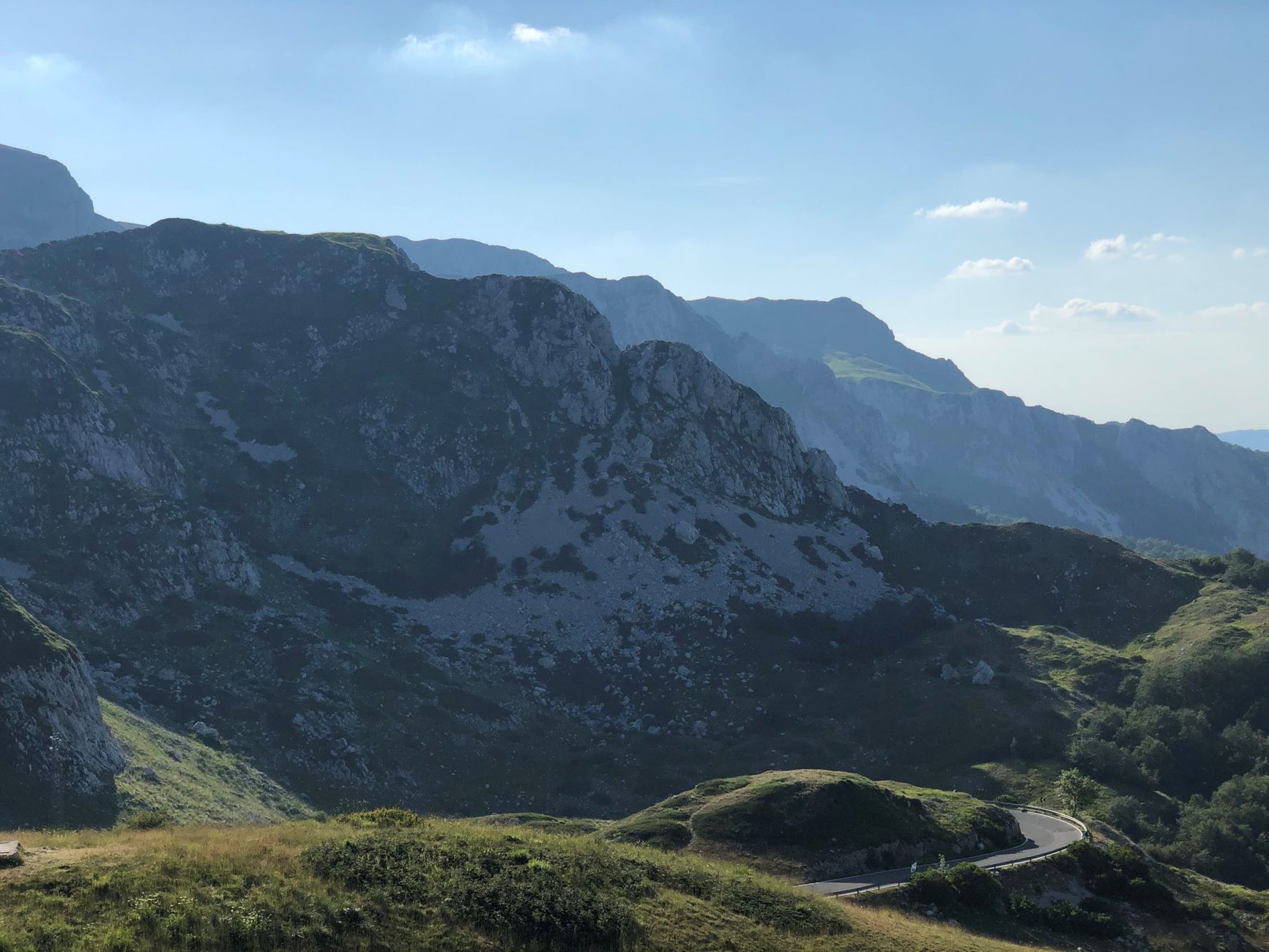
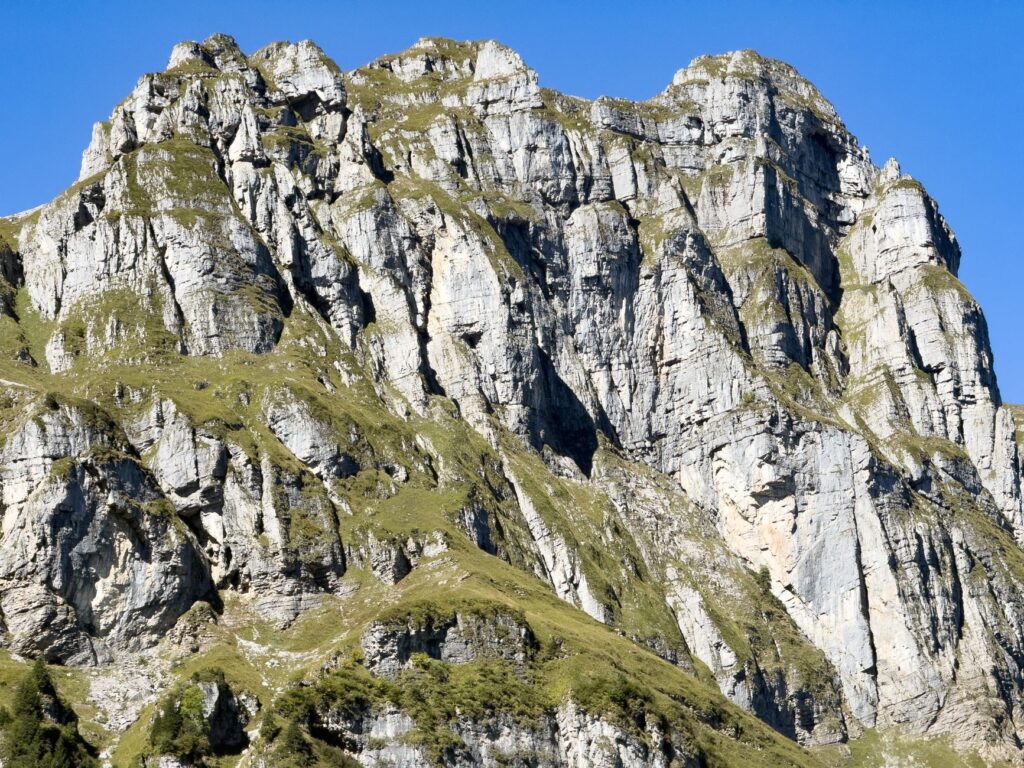
The Picos de Europa massif is not merely a geographical feature; it is a lithographic archive recording millions of years of tectonic and sedimentary history. Located just a few kilometers from the Cantabrian Sea coast, these three great ranges—Cornión, Urrieles, and Ándara—represent a formidable mass of Carboniferous limestones emerged from the ocean floor following colossal continental collisions. Alpine compression forces elevated these blocks to altitudes exceeding two thousand six hundred meters, sculpting a landscape where water, through relentless karst processes, has perforated the subsurface into a labyrinth of potholes, subterranean galleries, and vertical precipices that defy conventional erosion logic.
This architecture of white and grey stone, further modeled by the retreat of Quaternary glaciers, defines a territory of extreme contrasts. Here, the vertical distance between karst river valleys and sharp summits generates a climatic and ecological compression unique to the Iberian Peninsula. The limestone rock acts as a geological sponge: the surface lacks visible permanent streams, as precipitation immediately filters down into deep aquifers that feed monumental springs in the lower gorges, such as the course of the Sella or Cares rivers.
Alpine Climatology and the Siege of the Atlantic Fog
The geographic position of the Picos de Europa, nestled in northern Spain and very close to the Bay of Biscay, determines a climatic regime deeply influenced by the flow of humid air masses originating from the Atlantic Ocean. Upon colliding against this impassable stony barrier, clouds condense abruptly, discharging copious precipitation in the form of summer rain and heavy winter snowfalls. This phenomenon, known locally as the cloud wall, generates high-mountain microclimates characterized by intense ambient humidity and severe thermal oscillations.

Persistent cloud cover, which often shrouds the jous—closed karst depressions—in a mantle of dense fog, directly conditions the survival of flora and fauna. Dominant northwest winds lash the limestone ridges with fury, preventing the establishment of large tree formations at higher elevations and giving way to highly specialized alpine grasslands. This rigorous climatology demands remarkable physiological adaptability from the species inhabiting the massif, subjected to prolonged winters where snow accumulation exceeds several meters in shaded areas.
Rupicolous Botany and Resistance on Vertical Cliffs
Far from being a sterile wasteland, the limestone rock harbors a fascinating botanical community adapted to soil scarcity and thermal severity. The cracks and fissures of vertical walls are the exclusive home of endemic species that have evolved in isolation, protected from the competition of more vigorous plants. Among them stands out Saxifraga preslana and various caespitose grasses that deploy root systems capable of fracturing rock in search of residual moisture accumulated in the massif’s interior.
On moderately sloped hillsides and the bottoms of the jous, subalpine meadows replace bare rock during the summer months. These natural grasslands sustain a rich floristic diversity where alpine gentians, bellflowers, and valerians coexist. Tree vegetation, meanwhile, takes refuge in sheltered valleys and lower gorges, dominated by centuries-old beech forests and mixed woodlands of sessile oak and ash, which act as vital ecological corridors for the national park’s forest fauna.

Fauna Adapted to the Void: From the Chamois to the Bearded Vulture
The fauna of the Picos de Europa is living testimony to resilience in high-mountain habitats. The undisputed icon of these crags is the Cantabrian chamois (Rupicapra pyrenaica parva), an endemic subspecies perfectly adapted to climbing inaccessible precipices thanks to hooves equipped with non-slip pads. Its demographics, closely monitored by protected area managers, reflect excellent population health after overcoming historical threats of poaching and habitat fragmentation.
The park’s skies are dominated by large raptors such as the golden eagle, the griffon vulture, and the coveted bearded vulture, whose recent reintroduction into the Cantabrian range represents a crucial milestone for European necrophagous avifauna conservation. In the dense forest groves of the peripheral valleys, the Cantabrian brown bear finds a territory for transit and occasional feeding, evidencing ecological connectivity between this limestone massif and the great forest patches of the eastern Cantabrian Range.
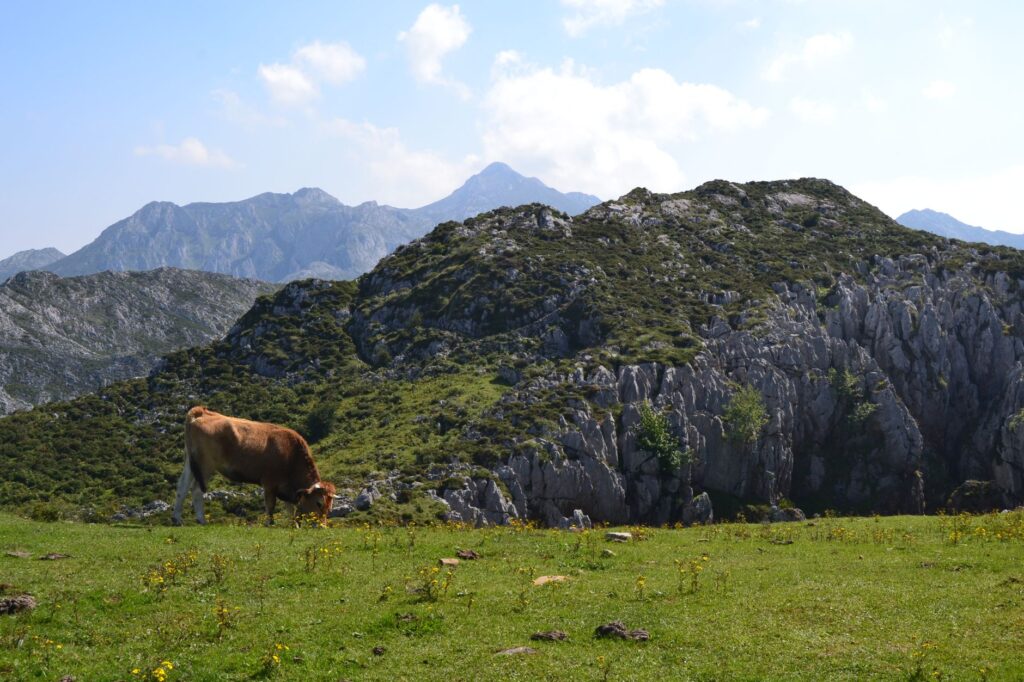
Traditional pastoralism remains the primary historical engine shaping the open alpine landscapes through sustainable grazing practices.
Pastoral Anthropology: High-Mountain Cheese and the Herder Myth
Human presence in the Picos de Europa is not extraneous to the ecosystem, but rather the result of centuries of cultural and pastoral coevolution. Since ancient times, local shepherds have practiced seasonal transhumance, moving cattle, sheep, and goat herds from the valleys to high-altitude pastures—the majadas—during the warmer months. This millenary activity has shaped the current landscape, keeping alpine grasslands open and preventing the massive colonization of scrubland.
From this pastoral tradition emerges one of Europe’s most prized gastronomic and ethnographic jewels: the artisanal production of Cabrales cheese and the three-milk cheeses of the Áliva and Valdeón mountain passes. Aged in natural caves excavated directly into the limestone rock, where constant humidity and the spontaneous proliferation of Penicillium fungi act upon the curd, these products encapsulate the territory’s microbiological and cultural essence.
The Intrusion of Modern Mountaineering and High-Altitude Refuges
The scientific and sporting exploration of the Picos de Europa began in the late 19th century, driven by pioneering figures such as Pedro Pidal, Marquis of Villaviciosa, and German geologist Gustav Schulze. Their ascents to the most emblematic summits, especially the conquest of the mythical Picu Urriellu—also known as Naranjo de Bulnes—in 1904, marked the birth of modern mountaineering in Spain and transformed the cultural perception of these mountains, previously considered a terrifying, barren, and infertile obstacle.
The construction of a strategically located network of mountain refuges, such as Urriellu, Collado Jermoso, and Cabrones, democratized access to summits and facilitated continuous scientific research under adverse weather conditions. These enclaves are not mere leisure support infrastructures, but essential scientific platforms for monitoring alpine climate change and providing rescue operations in extreme vertical terrain.
Conservation Challenges Amid Tourism Pressure and Climate Change
Today, the Picos de Europa National Park—Spain’s second oldest protected natural area—faces unprecedented ecological challenges. The massive influx of summer visitors to key focal points like the Lakes of Covadonga and the Cares Gorge exerts unsustainable pressure on local infrastructures and alters wildlife behavior. Automobile congestion and overcrowding on main trails demand rigorous visitor management and a decisive push toward sustainable mobility based on regulated public transport.
Simultaneously, climate change is drastically altering the massif’s thermal and snow regimes. The sharp reduction in days with continuous snow cover and rising average summer temperatures threaten to desiccate fragile alpine grasslands and displace the most vulnerable plant and animal species to higher elevations. Citizen science and institutional ecological monitoring programs are the most effective tools to anticipate an irreversible decline of this European natural heritage.
Practical guide
How to get there: The main access to the Picos de Europa is by road via the A-8 highway to Unquera or Llanes on the northern slope, or via the N-621 road from León toward Potes on the southern slope. The closest international airports are Asturias (OVI) and Santander (SDR), both located approximately an hour and a half’s drive from the park’s primary gateways.

Best time to visit: The months from June to September offer the most stable weather conditions for hiking and mountaineering, though steep drops and sudden fog require constant caution. Spring months (May and June) allow visitors to observe maximum botanical explosion, while autumn (October and November) grants unmatched chromatic displays in valley beech forests.
Conservation regulations: Camping outside designated areas, lighting fires, dumping waste, or altering protected vegetation and wildlife is strictly prohibited. Drone usage requires express authorization from the national park administration to prevent the disturbance of rupicolous birds of prey during their nesting and breeding periods.
The Last Refuge of Stone and Wind
Contemplating sunset over the limestone ridges of the Picos de Europa from an elevated jou is an experience that transcends mere nature tourism; it is an exercise in humility before the planet’s geological scale. As the sun dyes vertical cliffs in shades of ochre and crimson, the wind blows fiercely across the high plateaus, reminding us that these landscapes belong to an indomitable wild lineage. Protecting this limestone stronghold is not only preserving an alpine biodiversity sanctuary, but safeguarding the lithic testimony of a terrestrial history that continues to write itself drop by drop, century after century, in the heart of northern Spain.