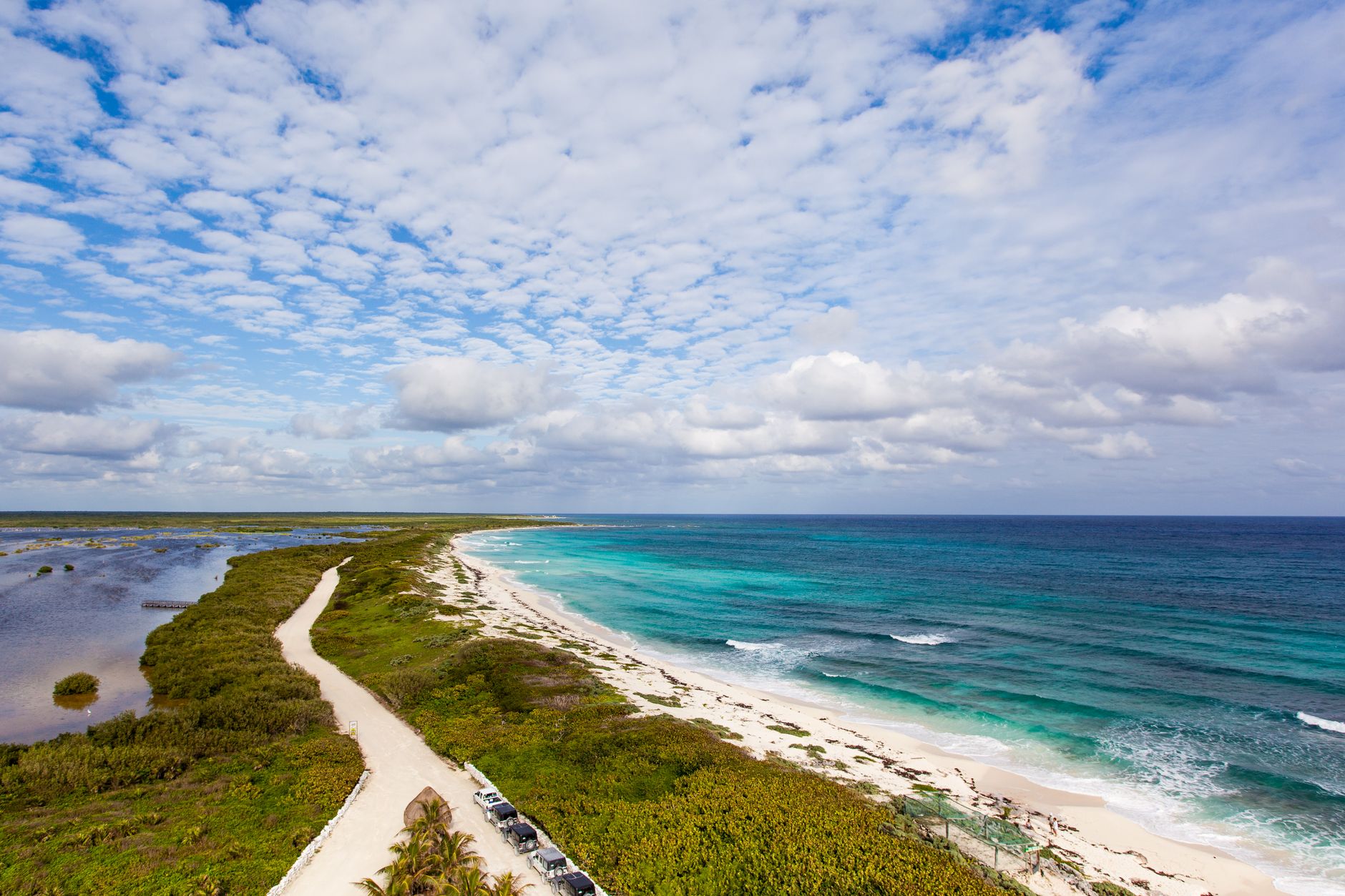

At the southern tip of the island of Cozumel, where paved roads give way to white gravel and the ceaseless murmur of waves, lies Punta Sur. This protected territory is not merely a geographic point on maps of the Mexican Caribbean; it is a complex ecosystem of wetlands, coastal dunes, coral reefs, and Mayan vestiges that resists the onslaught of mass tourism. Unlike the urbanized beaches of the north, here nature imposes its own rhythms, dictated by easterly winds and tides that nourish red, white, and black mangroves.
Approaching a visit to this reserve requires understanding its biological fragility and historical importance. Far from being a tropical amusement park, Punta Sur operates as an open-air laboratory where marine conservation and anthropogeographic research coexist daily. Analyzing its costs, schedules, access routes, and codes of conduct is not just a matter of traveler logistics, but an essential exercise in responsible tourism to preserve one of the most pristine landscapes in the Yucatán Peninsula.
Geography and Biodiversity of the Insular Frontier
The topography of Punta Sur is a dynamic mosaic shaped by marine erosion and fluvial sedimentation. The heart of the park is dominated by the Colombia Lagoon, a deep brackish water body that acts as the region’s ecological womb. In this mirror of water, separated from the open sea by dense mangrove barriers, stable populations of river crocodiles and an immense variety of waterbirds live, from egrets to majestic frigatebirds that take advantage of local thermal currents.

The plant environment is strictly adapted to salinity and karstic soils. The coastal dunes host a low, thorny vegetation known as tasistal, capable of withstanding extreme solar radiation and hurricane-force winds. This ancient ecological balance depends directly on restricting invasive human activities, allowing endemic species of iguanas and smaller mammals to move freely along marked trails without constant habitat alteration.
Pre-Hispanic Legacy: El Caracol and Commercial Routes
Human presence in Punta Sur is not recent. During the Postclassic period, the ancient Mayans established an astronomical observation center and commercial control post known as El Caracol at this strategic site. This small architectural structure, named after the peculiar sound the wind makes passing through its upper openings, served as a kind of lighthouse and meteorological station for canoes navigating between the eastern coast of Yucatán and Central America.
Archaeological research in the area indicates that El Caracol was part of an interconnected network of coastal settlements dedicated to the worship of Ixchel, the Mayan goddess of the moon, fertility, and water. Visiting these ruins reveals the nautical mastery of a civilization that understood the sea not as a barrier, but as the main commercial highway of the Mesoamerican world. Respect for the centenarian stones is mandatory, as the saline humidity of the Caribbean accelerates any structural wear process.

The Celerain Lighthouse and Cozumel’s Nautical Memory
Rising imposingly over the flat landscape of the southern island, the Punta Sur lighthouse, also called Celerain Lighthouse, marks the visual and functional landmark of the reserve. Built at the beginning of the 20th century to guide international navigation through the dangerous Yucatán Channel, this metallic tower not only serves maritime signaling functions, but also houses a navigation museum at its base documenting shipwrecks, galleon routes, and the history of the island’s early modern settlers.
Climbing the lighthouse stairs offers an unparalleled visual reward: a 360-degree panorama merging the turquoise blue of the reef, the emerald green of the jungle, and the ochre of the wetlands. Reserve conservation staff explain in detail to visitors how the modernization of GPS satellite systems has transformed the lighthouse keeper’s trade, turning these structures into custodians of collective memory and key points for hurricane meteorological monitoring in the Mexican Caribbean.
Coral Reefs and the Colombia Reef
Beneath the marine surface, off the coast of Punta Sur, lies one of the best-preserved underwater treasures of the Cozumel Reefs National Park. The Colombia Reef, world-famous for its vertical coral formations and imposing walls dropping over thirty meters deep, attracts certified divers from around the globe. Here, the moderate current nourishes overwhelming marine biodiversity including hawksbill turtles, eagle rays, and schools of parrotfish that fulfill a vital function in white sand production.
Use policies in this zone are extremely strict. The use of traditional sunscreens is prohibited, even those labeled as biodegradable if they contain certain chemical compounds that harm soft coral.
- Mandatory use of certified life vests in designated snorkeling areas.
- Absolute prohibition against touching, standing on, or extracting fragments of live or fossil coral.
- Strict minimum safety distances when sighting marine mammals or sea turtles.
- Strict limits on the daily carrying capacity of authorized watercraft.

The Colombia Lagoon and Mangrove Photographic Safaris
The interior lagoon system is accessible via suspended wooden walkways and observation platforms designed to minimize impact on the fragile muddy soil. Boat tours of the Colombia Lagoon, operated by certified local guides, represent one of the most educational experiences in the reserve. During these journeys, visitors can closely observe the intricate root system of the red mangrove, whose aerial roots filter salinity and protect the coastline against storm erosion.
Bird watching is another core activity in this sector. Amateur ornithologists and scientists arrive at dawn to record the behavior of migratory species using Cozumel’s wetlands as resting areas during seasonal routes. The stillness of dawn over stagnant water contrasts vividly with the energy of the open sea, offering a dual perspective of insular geography that few travelers take the time to discover and properly value.
Beach Infrastructure and Relaxation at El Mirador
After exploring ecological trails and archaeological zones, Punta Sur’s coastline offers resting areas where the full force of the Caribbean is unleashed. Sectors like El Mirador feature rock formations sculpted by waves, where water crashes violently, creating natural geysers and crystal-clear tide pools. Although swimming in these open zones is not always safe due to intense wave action and rip currents, contemplating the seascape from rustic hammocks and palapas is deeply restorative.

The park’s infrastructure has been designed under strict sustainability criteria. Restrooms operate with ecological water treatment systems, electricity is partially supplied by solar panels, and the few food-service points prioritize local consumption and single-use plastic reduction. This operational coherence proves that quality tourism services can be offered without sacrificing the environmental integrity of the protected territory that sustains them.
Practical guide
Planning a successful visit to Punta Sur requires meticulous attention to operational details, as the remote location of the park limits last-minute improvisations.
How to Get There and Transportation
The reserve is located about 27 kilometers south of San Miguel de Cozumel. The most efficient way to arrive is by renting a vehicle, a scooter, or booking a guided tour with included transportation from downtown. There is no regular public transportation service reaching the park entrance, meaning traditional taxis charge high fixed rates due to distance and unpaved road conditions.

Hours and Admission Fees
The park opens Monday through Saturday continuously, usually from 9:00 AM to 4:00 PM, remaining closed on Sundays or subject to severe weather restrictions. General admission ranges between 20 and 25 US dollars per person, covering access to the lighthouse museum, archaeological zones, and lagoon trails. Young children under a certain height usually enter free, and discounts apply for accredited local residents.
Essential Traveler Recommendations
- Wear closed, comfortable footwear for walking on unpaved dirt and limestone trails.
- Pack insect repellent and exclusively mineral, organic sunscreen.
- Carry sufficient drinking water in reusable canteens to avoid purchasing plastics.
- Strictly respect closing times to avoid getting stranded on isolated park routes.
Final Reflection on Conserving Paradise
Visiting Punta Sur transcends mere vacation leisure; it constitutes a conscious act of communion with one of the last truly wild strongholds of the insular Mexican Caribbean. At a time when mass tourism threatens to homogenize the planet’s most beautiful coastal destinations, this Cozumelean sanctuary proves that environmental preservation and responsible enjoyment are not mutually exclusive concepts, but two sides of the same coin.
When the sun begins to descend over the Colombia Lagoon, dyeing the sky in amber and violet tones, the traveler understands the urgency of protecting these fragile balances. The future of Punta Sur depends not solely on government regulations or park ranger surveillance, but on the sensitivity with which each traveler walks its trails, absorbing its silence and committing to leave no footprints other than those strictly necessary in the memory of wind and tide.
Source in EN: https://news.google.com/rss/articles/CBMiggFBVV95cUxNbEN0a0dtZmtGaVNybjdiTk1SS0JOY29fYURDUEZFbE1JaFNKU01NVy1fVlhFLW1QeDRKOHJ0VC1IbEZRUFF3SHg2emthVGw1MXpmQ19rdElYN0ZDR2VMMWkyMk95RFZJeTFPYmRBZ0t4dHFNbkhfLUxURVA5YnNKcjJR?oc=5