Origins of Decarbonization at the Atlantic Edge
The Reykjanes Peninsula, situated at the southwestern tip of Iceland, represents much more than the international gateway for the majority of travelers landing at Keflavík Airport. This territory of recent lavas, smoking fissures, and geothermal fields has historically functioned as a rapid transit zone—a lunar landscape that visitors hurried through in combustion vehicles toward the capital or the famous Blue Lagoon. However, in recent years, a radical shift in territorial planning has begun transforming Reykjanes into an advanced model of sustainable mobility. Local authorities, in collaboration with energy cooperatives and community-based tour operators, have redesigned the transport system to decouple mass tourism from fossil fuel dependence, establishing an integrated network where the earth’s own energy powers everyday travel.
This process is not a matter of green marketing, but an imperative of geological and climate survival. The peninsula experiences intense seismic and volcanic activity that has forced a rethinking of transport infrastructure resilience. By decentralizing mobility and progressively phasing out heavy-duty diesel buses, Reykjanes proves that a transition is possible toward a model where transport infrastructure respects the fragility of volcanic soil. The key to this transformation lies in the direct utilization of industrial byproducts from local geothermal power plants, which now not only supply electricity to homes but directly power the charging stations of a high-efficiency public transit fleet.
The Invisible Infrastructure of Steam and Electricity
The technical heart of this mobility revolution lies near the Svartsengi power plant. Here, superheated water extracted from the depths of the earth’s crust drives turbines and, once its industrial cycle is complete, surplus thermal energy is channeled into urban distribution networks and transport infrastructure. Local engineers have developed a pioneering kinetic and thermal energy storage system that charges electric bus fleets in a matter of minutes, taking advantage of the stability of the geothermal grid against seasonal weather fluctuations that affect solar or wind power in subarctic latitudes.

The true innovation in Reykjanes does not lie in imported high technology, but in the capacity to close the loop between the energy emanating from the subsurface and the mobility traversing the surface.
This energy integration translates into a drastic reduction in carbon dioxide emissions along routes connecting Grindavík, Sandgerði, Garður, and Keflavík. Public transit vehicles have been retrofitted with reinforced chassis to withstand the unique terrain conditions of volcanic soils and interior heating systems powered directly by waste heat, eliminating the auxiliary electrical consumption that traditionally drained battery ranges in cold climates. For travelers, this means a quiet and efficient transit experience, where the roar of combustion engines has been replaced by the soft hum of electric inverters and the distant whistle of the wind over moss-covered lava fields.
Volcanic Hiking Networks and Soft Mobility
Beyond wheeled public transport, the decarbonization strategy places strong emphasis on soft mobility, integrating hiking and all-terrain cycling as essential components of regional connectivity. The creation of the trans-peninsular Reykjanes trail has restored ancient fishermen’s paths and wagon tracks dating back to the island’s earliest human settlements. These trails, meticulously routed to prevent erosion of delicate lava moss mats, connect major geological sites without the need for invasive asphalt paving.
Local communities manage rental points for electric mountain bikes equipped with low-pressure tires, designed specifically to roll over compacted ash and volcanic gravel tracks. These stations operate via autonomous solar and wind microgrids, offering visitors a real alternative to explore the Fagradalsfjall craters or the sea cliffs of Reykjanestá without leaving a carbon footprint. The integration of these routes with geothermal bus stops allows travelers to design circular itineraries alternating pedaling with collective transport, fostering a more balanced distribution of tourist flows across the peninsula and easing pressure on congested hotspots.

The Circular Economy of Fishing and Artisanal Tourism
The transformation of transport in Reykjanes has had a direct impact on the economic structure of its coastal towns, traditionally reliant on extractive fishing and vulnerable to global market fluctuations. By structuring slow-travel and low-impact transport routes, municipalities have encouraged the decentralization of tourism expenditure, helping visitors stay longer in the region and consume local products rather than taking express round-trip excursions from Reykjavik.
Local fishing cooperatives have converted part of their traditional vessels into hybrid craft powered by electric motors for birdwatching and whale watching along the coast of Sandgerði. These vessels operate under strict reduced acoustic pollution criteria, protecting marine fauna while offering a vastly more authentic immersion experience. Similarly, local ceramic workshops, traditional tanneries, and dried fish processors participate in a unified logistics circuit where the transport of goods and artisans takes place on the same public transit vehicles during off-peak passenger hours.
Geological Challenges and Community Resilience
Planning mobility in a geologically living territory means constantly confronting uncertainty. Recent eruptions in the Sundhnúkur fissure and episodes of seismic activity have tested the strength of the Reykjanes transport system, forcing the redesign of evacuation routes and logistical alternatives within hours. Far from being a setback, this vulnerability has stimulated a culture of community resilience where transport operators, volcanologists, and local leaders work in permanent coordination tables.

In a landscape where the earth opens and shifts without warning, the rigidity of traditional transport systems collapses; survival demands flexibility, decentralized networks, and a deep capacity for local adaptation.
Transport control centers on the peninsula are now integrated with real-time geophysical monitoring networks. If a road is affected by a lava flow or severe cracking, automated protocols redirect electric bus fleets to pre-prepared secondary routes while instantly informing travelers through unified digital platforms. This rapid-response capability ensures that the isolation of fishing villages does not turn into a systemic crisis, keeping essential supply lines open and local resident mobility intact even during moments of heightened tectonic stress.
Shared Governance of the Volcanic Territory
The success of the transition toward sustainable mobility in Reykjanes cannot be explained without the horizontal governance model implemented by the peninsula’s municipalities and community associations. Unlike tourism development plans dictated from central administrations in major cities, decisions regarding route layouts, transport frequencies, and vehicular access restrictions are made in open assemblies where residents, fishermen, mountain guides, and local business owners participate.

This participatory approach has successfully resolved historical tensions between environmental conservation and economic development. For example, restricting private vehicle access to high ecological value zones, such as the Seltún geothermal fields, was agreed upon after a consultation process where local communities prioritized protecting thermal springs over short-term economic gains from mass parking. In return, the strengthening of geothermal bus connections ensured universal access to these sites, guaranteeing that landscape enjoyment does not depend on owning a private rental car.
Practical guide
How to get there: Keflavík International Airport (KEF) is located in the heart of the Reykjanes Peninsula. From the terminal, low-emission public bus line 55 directly connects to major local towns and the transport network toward Reykjavik.
When to travel: Summer months (June to August) offer extended daylight and optimal conditions for combining volcanic hiking with cycling mobility. Winter months (November to February) allow travelers to experience the energy transition under the northern lights, though constant monitoring of weather and seismic alerts is required.
Internal transport: Use the integrated Reykjanes regional transport card, valid for geothermal-powered electric buses and solar-powered bike-sharing stations across the peninsula.
Sustainable accommodation: Prioritize rural guesthouses and eco-lodges in Grindavík, Garður, and Vogar that utilize direct geothermal heating and source food from local agricultural and fishing cooperatives.
Code of conduct: Venturing off marked trails in recent lava fields and geothermal areas is strictly prohibited. Icelandic moss requires decades to regenerate after damage caused by off-path footsteps.
Visual Epilogue over the Reykjanes Mist
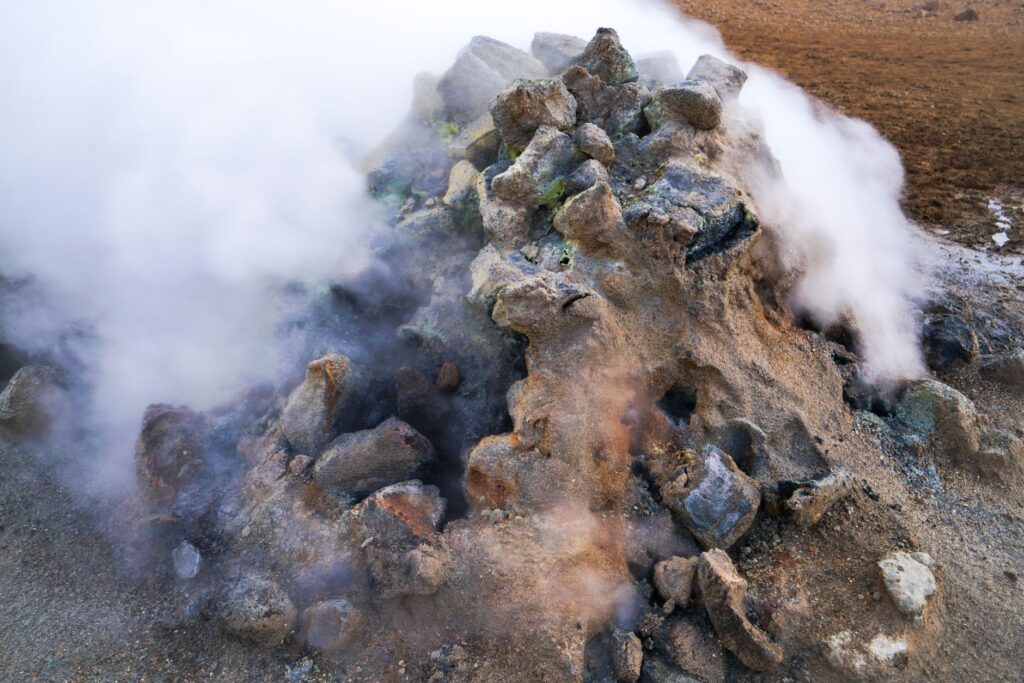
When evening descends over the lava fields of Reykjanes and the oblique light of the Arctic sun paints the steam columns escaping from the earth in ochre and violet, the landscape regains its ancient mystery. At bus stops powered by geothermal energy, the faces of travelers and local residents reflect in windows misted by the residual heat of the subsurface, sharing a common refuge against the Atlantic wind. In this outskirt where geology dictates its own rules with equal parts violence and beauty, mobility has ceased to be an act of technical domination over the territory and has become a form of profound listening. Traversing ash paths in silence, propelled by the same force warming the bowels of the island, the journey transforms into an exercise in absolute respect for the fragility of a world in constant birth.