
The Spanish Mediterranean coastline has faced a complex paradox for decades: how to reconcile the seasonal overcrowding of sun-and-beach destinations with the preservation of fragile ecosystems that demand meticulous balance. On the warm shores of the Mar Menor, the town of Los Narejos, part of the Murcian municipality of Los Alcázares, has taken a step as subtle as it is disruptive in managing this challenge. The inauguration of a tourist information service operating twenty-four hours a day is not merely an improvement in traveler convenience, but a structural commitment to smart mobility, deseasonalization, and the decongestion of high-traffic arrival points. This initiative redefines the classic concept of the tourist office, transforming it into a permanent node of urban intelligence and environmental mediation.
For years, the visitor reception model was bound to rigid commercial hours that generated informational bottlenecks, unnecessary queues, and excessive reliance on private vehicles to resolve last-minute logistical doubts. By enabling round-the-clock assistance, local administrations seek to empower increasingly autonomous travelers who nevertheless demand growing immediacy. This informational deployment acts as a central nervous system capable of diverting massive flows toward alternative inland routes, promoting the use of public transport, and reminding visitors in real time of protection regulations for beaches and surrounding wetlands, establishing a direct dialogue between the tourist and the territory’s carrying capacity.
The Metamorphosis of the Coastal Model in the Mar Menor
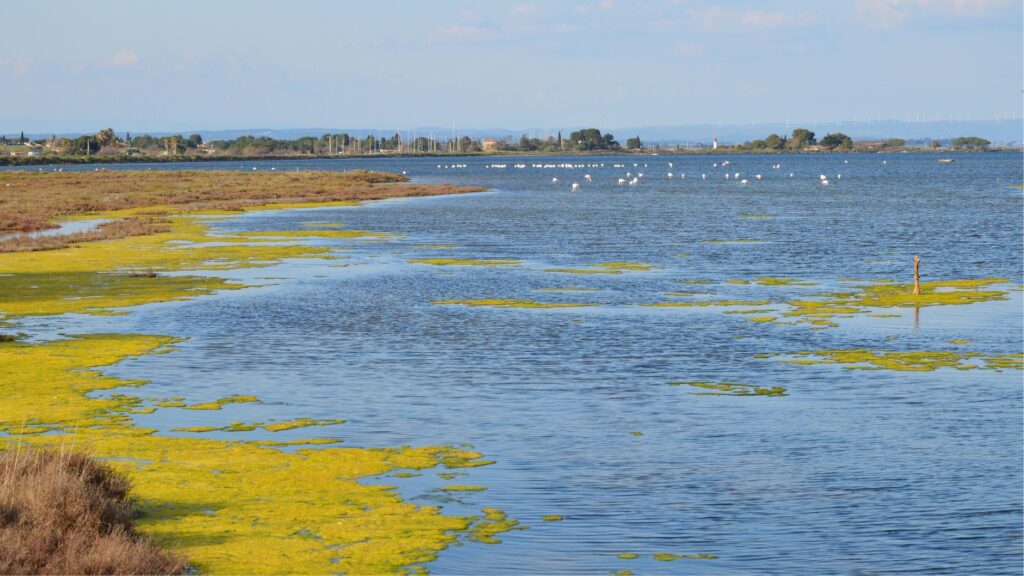
The geographical and hydrological context of the Mar Menor imposes strict rules. Europe’s largest saltwater lagoon is an open-air laboratory where human pressure directly clashes with the need for environmental recovery. Los Narejos, traditionally focused on nautical sports and family tourism, has experienced urban growth that demands urgent responses regarding sustainability. The saturation of waterfront areas and the acoustic and luminous impact during summer nights require cross-cutting interventions. The new permanent office thus stands as an active observatory that monitors the destination’s pulse, channeling visitors toward low-impact ecological practices.

The transition toward truly sustainable tourism depends not only on large green infrastructure, but on the micro-management of human behavior. When travelers arrive at their destination in the dead of night or experience an unforeseen change in their itinerary, the absence of institutional informational resources usually pushes them toward improvised solutions that are less respectful of the environment. Equipping the municipality with a permanently accessible resource reduces the footprint of disorientation. This service not only guides visitors on accommodations or cultural events, but acts as a megaphone for local conservation ordinances, reminding them of prohibitions against parking on dunes, respect for posidonia regeneration perimeters, and the rational use of drinking water during periods of water scarcity hitting the southeastern peninsula.
Architecture of Hospitality and Inclusive Technology
For a 24-hour information service to fulfill its purpose of social sustainability, its physical and digital design must be rigorously inclusive and energy-efficient. The new facilities in Los Narejos integrate advanced home automation solutions, photovoltaic solar panels for nocturnal self-sufficiency, and interactive touch terminals accessible to people with reduced mobility or visual diversity. This technological deployment avoids the excessive energy consumption associated with the climate control and permanent lighting of traditional large offices, opting instead for low-consumption totems and electronic ink screens that offer optimal visibility without light pollution in the urban environment.
The architectural integration of the information point with the promenade responds to a landscape design philosophy that prioritizes visual permeability and respect for the human scale of the seafaring neighborhood. Local and recycled materials have been used in its conditioning, minimizing the carbon footprint of the intervention. Technology does not seek to replace the human factor, but to complement it, allowing civic agents and tourism informants to concentrate on advising about ecotourism experiences, cycling routes in the Campo de Cartagena region, and guided visits to lagoon biodiversity interpretation centers, substantially enriching the visitor’s stay.
Soft Mobility and Decongestion of the Waterfront Front
One of the greatest environmental challenges in Los Narejos is the reliance on private vehicles during weekends and summer months, a phenomenon that clogs beach access points and generates unnecessary greenhouse gas emissions. From the new information service, active promotion is given to soft mobility: the use of bicycles, pedestrian travel, and the optimization of interurban bus lines connecting with Cartagena, Murcia, and the protected natural areas of the Salinas de San Pedro Regional Park.
- Real-time information on the availability of peripheral buffer parking lots to prevent cars from entering the coastal core.
- Active promotion of the network of bike lanes surrounding the lagoon, detailing solar charging points for personal mobility vehicles.
- Coordination with local companies renting unpowered boats and low-impact small sailing equipment.
- Dissemination of nocturnal public transport schedules to reduce accident rates and the use of private cars for short trips.
This traffic redirection strategy not only relieves road congestion, but transforms the urban experience, returning public space to pedestrians and reducing acoustic pollution in residential areas. The tourist ceases to be a passive agent who saturates resources and becomes an informed participant in the municipality’s sustainable mobility, understanding that each travel decision directly influences the health of the Mar Menor.
Circular Economy and the Proximity Commercial Fabric
The sustainability of a tourist destination is also measured by its capacity to retain economic value within the territory and foster proximity trade against the homogenization of large retail chains. The 24-hour information service in Los Narejos incorporates dynamic directories of the local economy into its digital and physical platforms: traditional food markets, esparto artisans, agro-ecological producers from the Campo de Cartagena, and restaurants certified with km 0 labels promoting the consumption of fish from the local fish market and produce from the Murcian orchard.

The true success of a destination does not lie in how many visitors it manages to attract in a weekend, but in how their presence strengthens the local economy without compromising the resources of future generations.
This informational mediation helps deseasonalize consumption, inviting weekend visitors to extend their stays or return in periods of lower influx. By directly connecting the traveler with small businesses in Los Alcázares, a regenerative tourism model is fostered where the traveler’s spending has a direct impact on the maintenance of the region’s ethnographic and natural heritage, closing the cycle of truly responsible tourism management.
Cultural Decentralization and Reinterpretation of the Territory
Beyond the undeniable appeal of its sandy beaches, Los Narejos and its surroundings treasure a rich historical and ethnological heritage that often goes unnoticed by conventional visitors focused exclusively on nautical leisure. The new continuous care tool fulfills a fundamental pedagogical function by uncovering the less visible layers of local identity: from the footprint of traditional trap-net fishing to the history of the nineteenth-century medicinal spas that popularized the thermal and saltwater baths of the area.
Detailed knowledge of the heritage deters overcrowding in the most fragile enclaves, distributing the flow of visitors toward the interior of the municipality, traditional windmill routes, and the surrounding dry-land landscapes. Interactive totems and QR codes accessible at any time of day offer multilingual narratives that contextualize the landscape, explaining why certain past agricultural or urban practices have forced the adoption of current environmental protection regulations. Cultural transformation of the traveler into an active ally of conservation depends on this type of tourist literacy.

Practical guide
How to get there: The core of Los Narejos is connected via the AP-7 highway and the RM-12 from Murcia and Cartagena. By public transport, regular bus lines operated by Movibus link with major cities in the Murcia Region. The nearest railway station with medium-distance connections is located in Balsicas-Mar Menor.
24h Information Service: Strategically located near the Los Narejos promenade (Los Alcázares), it combines daytime in-person assistance with interactive digital totems, permanent telephone support, and instant messaging channels operating twenty-four hours a day for logistical emergency and mobility inquiries.
Sustainable Mobility in the Area: The use of the local cycling network and the public bicycle rental system is recommended. For travel to nearby protected natural spaces, such as lagoons and salt flats, it is preferable to use public transport or walking to avoid overcrowding ecological parking lots.

Best Environmental Practices: Motor vehicle traffic on dune areas and unauthorized pedestrian promenades is strictly prohibited. Respect informative signs regarding the regeneration of native flora and minimize the use of single-use plastics during your stay on the shores of the Mar Menor.
The Invisible Beat of the Conscious Coast
The launch of this uninterrupted service in Los Narejos transcends administrative anecdote to become a symptom of tourist maturity. In a hyperconnected world where travelers demand immediate answers, the local administration has understood that sustainability can no longer be understood without permanent access to truthful and rigorous information. By offering an operational beacon twenty-four hours a day, the destination not only guides the steps of those arriving in search of rest, but quietly watches over the integrity of an ecosystem that does not tolerate improvisation. In the end, taking care of those who visit us and taking care of the territory that sustains us are two sides of the same coin, a silent pact ensuring the Mar Menor preserves its vital pulse for tomorrow.
Source in EN: Murcia Today / Google News (https://news.google.com/rss/articles/CBMinwFBVV95cUxOZUVOd0pYWlEwcDFEQnZMY0tlUnJfYTA4Z0JTeXJ2bUdfZnRVdkJzZDhHM0k2SzBpbmh1VmFxUF90RldNWFhYM0ZweHhiUEVDN2QyQ19Hd1BIekJuSHJaakNDSXhVcVJkWnR4NmJ0U2p5ZU5TRWV0Nk51WWphZ2pyaUxjR2w3SnNmWE5tb3R2TUpiREJxRTJrT1dBV0M0OUk?oc=5)