
Tectonic Violence and the Origin of a Unique Basin
The Banda Sea is no conventional body of water; it is a deep tectonic scar situated at the eastern edge of Indonesia, where the Eurasian, Pacific, and Australian tectonic plates converge. This titanic collision has sculpted one of Earth’s most complex and deepest oceanic basins, with trenches plunging over seven thousand meters in a relatively confined geographical space. The sea’s intense cobalt-blue surface conceals an extraordinarily active geology characterized by submarine volcanoes and dynamic fault lines that constantly reshape the seabed.
This extreme topography generates a singular oceanographic regime. Deep currents from the Pacific Ocean collide with these natural bathymetric barriers, triggering vertical upwelling phenomena that transport mineral nutrients from the abyss up to the photic layers. This steady nutrient flow feeds an exceptionally rich trophic chain, turning the Banda Sea into a global biological engine within the celebrated Coral Triangle, the worldwide epicenter of marine biodiversity.
Understanding this ecosystem requires looking far beyond the crystal-clear surface waters. The basin functions as a giant natural laboratory where tectonic pressure and thermal stability converge to host species found nowhere else on Earth. The region’s geological history, marked by isolation during historical climate shifts, has fostered unique speciation processes that continue to fascinate the international scientific community.
Biological Architecture and Coral Communities
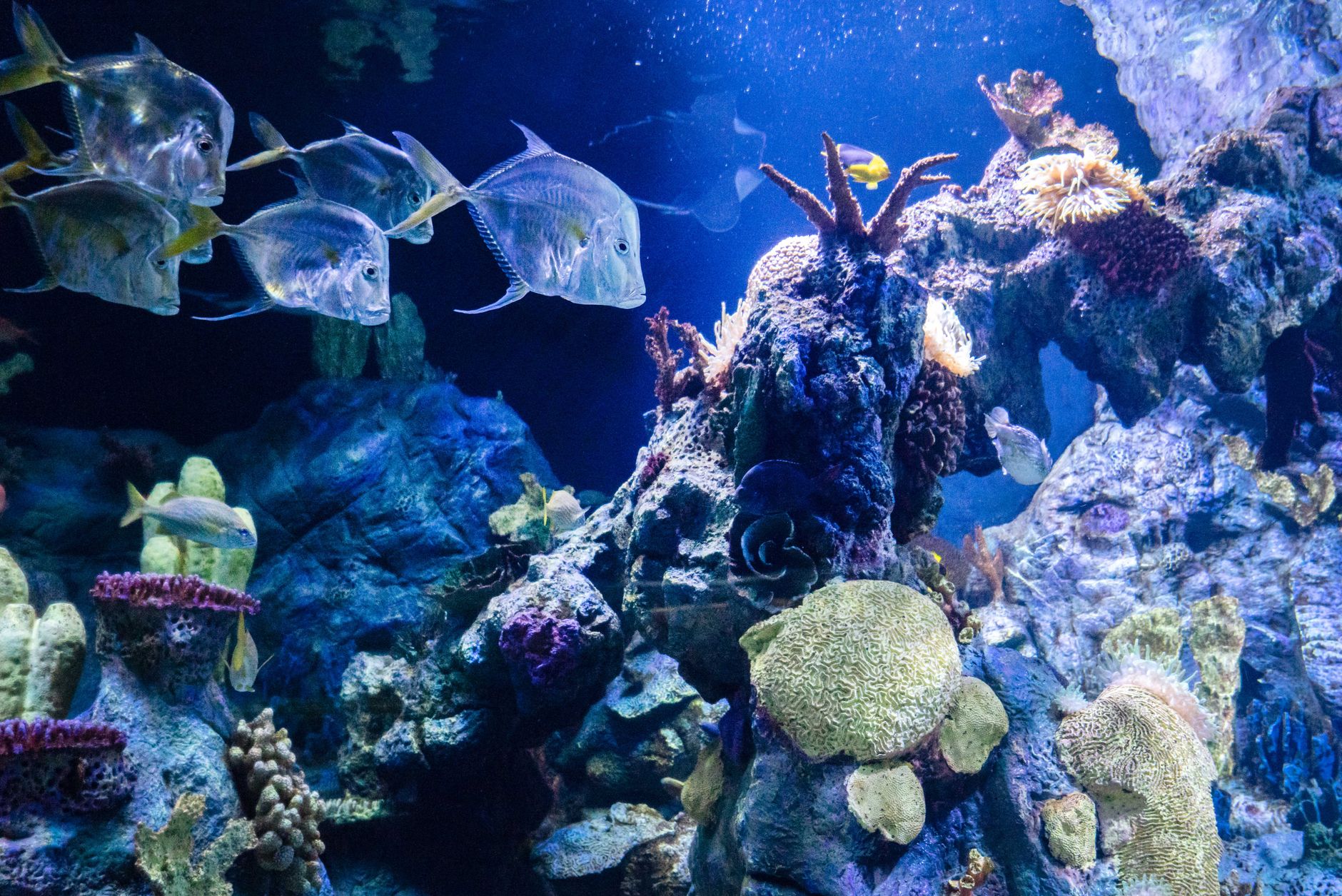
The reef walls surrounding the volcanic islands of the Banda archipelago exhibit a coral density difficult to replicate in other latitudes. Here, hard and soft corals compete for every centimeter of rocky substrate, creating complex three-dimensional labyrinths that shelter thousands of species of reef fish, crustaceans, and mollusks. The exceptional clarity of the waters, free from the industrial pollution affecting other parts of Southeast Asia, allows sunlight to penetrate to considerable depths, favoring the development of highly productive photosynthetic communities.

Among the corals proliferate dense groupings of giant sea fans and colossal barrel sponges, silent witnesses to centuries of environmental stability. These structures are not merely aesthetic elements; they are ecological engineers that modulate local currents and filter vast volumes of water, maintaining the purity of the marine environment. Scientific dives along these drop-offs reveal a flawless biological stratification, where every meter of depth defines a specialized microhabitat.
blockquote>The apparent fragility of Banda’s coral gardens contrasts with their millenary capacity to withstand seismic shocks and global thermal fluctuations, although this balance is today perilously threatened.
The health of these reefs depends critically on interconnection with coastal mangrove forests and surrounding seagrass meadows. These intertidal habitats act as authentic nurseries for the larval stages of numerous pelagic species, ensuring generational turnover in an ecosystem subjected to intense environmental and climatic pressure.
Pelagic Dynamics and Apex Predators
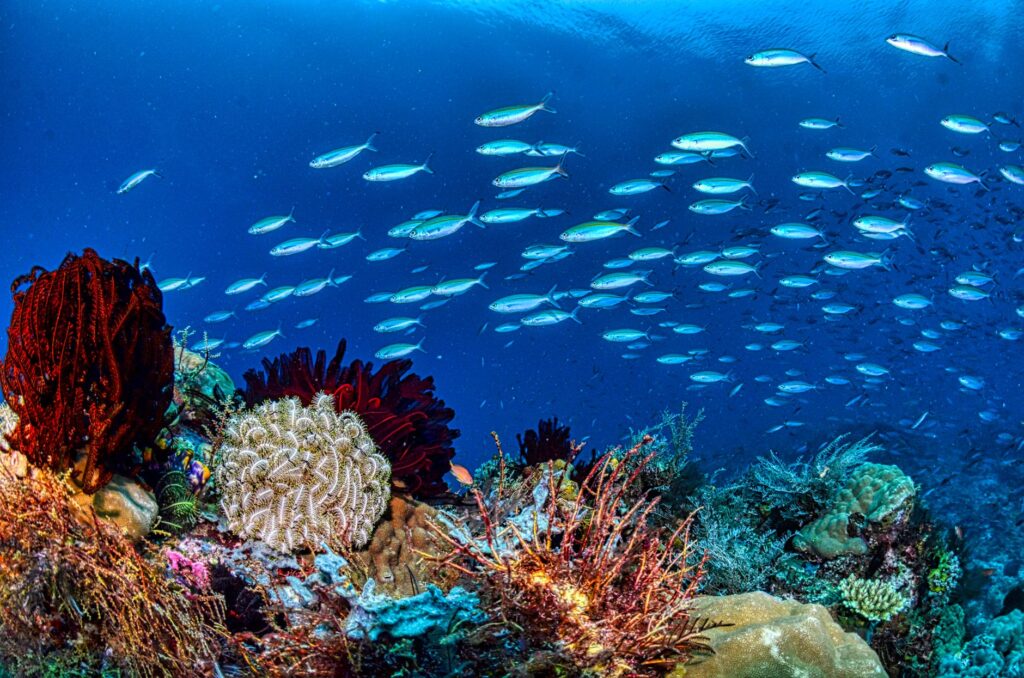
Beyond the coastal reefs, the open waters of the Banda Sea constitute a blue highway for marine megafauna. Ocean currents crossing the basin predictably attract large pelagics, including resident and migratory populations of hammerhead sharks, yellowfin tuna, and majestic reef manta rays. These animals find a privileged hunting ground in the rich waters of the inner sea thanks to an abundance of plankton and forage fish.
Cetacean sightings are also frequent along passage routes connecting the sea to the Indian Ocean. Sperm whales, pilot whales, and various dolphin species traverse these abyssal trenches, using submarine canyons to navigate and hunt cephalopods in the darkness of the deep. The presence of these apex predators is the most reliable indicator of structural ecosystem health, demonstrating that the trophic pyramid remains intact in the archipelago’s most remote zones.
However, the vastness of the open ocean does not exempt these species from vulnerability. Current speeds and the sheer scale of the area make patrolling and monitoring extremely difficult against illegal, unreported, and unregulated fishing operating on the outer limits of Indonesian marine protected areas.
Abyssal Endemism and Hidden Secrets
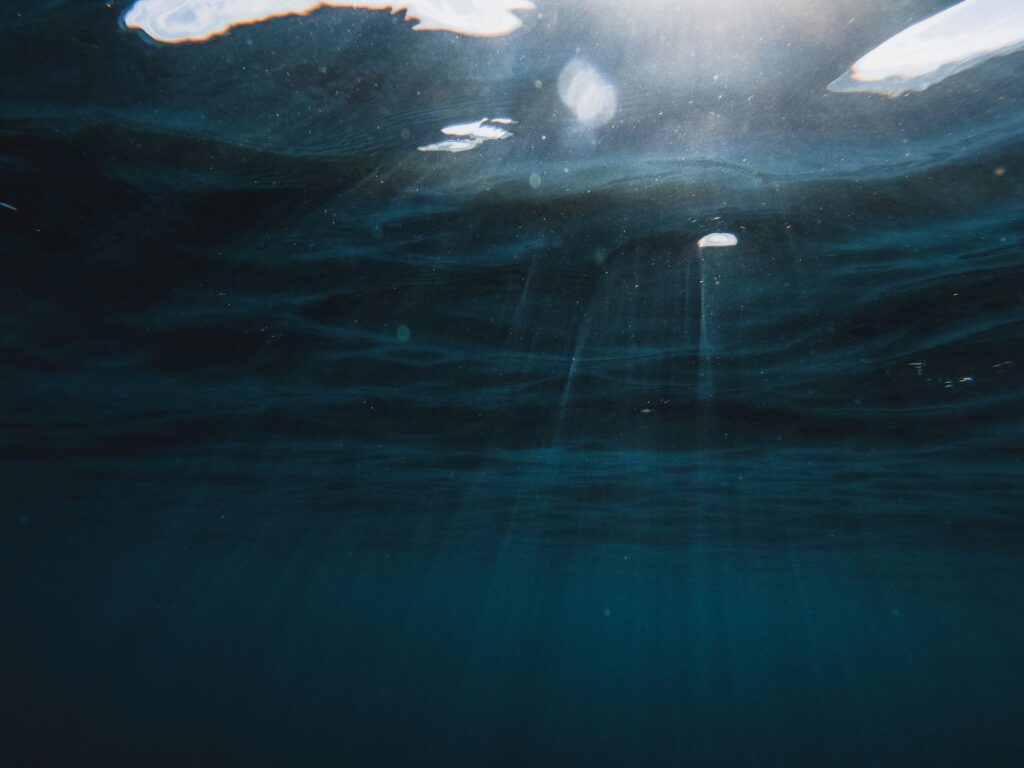
As the seabed plunges toward the abyssal plains of the Banda Basin, sunlight vanishes entirely, giving way to a realm of perpetual darkness, low temperatures, and crushing pressures. In this extreme environment, fauna has evolved extraordinary adaptations, such as bioluminescence and ultralow metabolisms allowing them to survive on minimal energy input.
Recent oceanographic expeditions have documented previously unknown species of deep-sea fish, dumbo octopuses, and complex cold-water coral reefs clinging to underwater volcanic slopes in these depths. These organisms rely on ‘marine snow’—organic matter slowly falling from surface layers—to sustain food webs completely disconnected from the solar cycle.
Studying these extreme habitats not only broadens understanding of terrestrial biodiversity, but also offers fundamental clues about life’s capacity to persist under conditions similar to those found on other oceanic worlds in the solar system. Preserving these abyssal zones is therefore an ecological and scientific priority on a global scale.

Marine Anthropology and Island History
The fate of the Banda Sea is inseparable from the human history of the islands outlining it, historically celebrated as the legendary Spice Islands. For centuries, the ruthless pursuit of nutmeg and mace drew navigators from across the globe, profoundly altering the region’s cultural and ecological fabric. Local communities have maintained generations of deep dependency and respect toward the sea, practicing artisanal fishing methods that have largely coexisted peacefully with biodiversity.
However, economic modernization and demographic pressure have introduced destructive fishing practices, such as explosives and cyanide use, which in past decades decimated extensive reef areas. Fortunately, community awareness and the rise of participatory management programs have reversed this trend in several key enclaves, restoring leadership to the traditional guardians of the sea.
blockquote>The true future of conservation in Banda lies in integrating the traditional ecological knowledge of local communities with modern scientific legislation and state protection plans.
Today, low-impact diving tourism and scientific expedition travel emerge as viable economic alternatives, provided they are managed under strict carrying capacity thresholds to prevent degradation of the most sensitive habitats.
The Climate Challenge and Ocean Acidification
Like all tropical seas on the planet, the Banda Sea faces the urgent threat of global climate change. The sustained rise in sea surface temperatures is triggering recurrent episodes of coral bleaching, a phenomenon where corals expel symbiotic microalgae providing color and energy, compromising long-term survival.
Compounding this warming is ocean acidification, driven by massive absorption of anthropogenic carbon dioxide. This chemical process reduces calcium carbonate ion availability, severely impairing the capacity of corals and other calcifying organisms to build and maintain protective skeletons. Climate models suggest these pressures will intensify in coming decades, testing the evolutionary resilience of the region’s marine ecosystems.
Facing this scenario, establishing biological corridors and expanding strict marine reserves emerge as the only effective tools to buy time and allow species to adapt or migrate toward more favorable waters.
Practical guide
Planning a rigorous expedition to the Banda Sea requires understanding its seasonality, logistical constraints, and the extreme remoteness of its most pristine enclaves.
How to get there
Primary access is achieved via domestic flights from Jakarta or Bali to Ambon Airport (AMQ). From Ambon port, the vast majority of routes toward the Banda Islands and outer trenches operate exclusively aboard liveaboard vessels.
Best time to visit
Months between October and December, as well as March to May, offer the most stable weather conditions, featuring calm seas and underwater visibility frequently exceeding thirty meters.
Requirements and permits
International travel insurance explicitly covering advanced scuba diving and emergency medical evacuation is indispensable, given the remoteness from complex hyperbaric chambers. Additionally, entry fees for local marine protected areas must be paid.
Recommended gear
Advanced recreational or technical diving gear is advised, along with 3 mm to 5 mm wetsuits due to cold deep currents, dive computers with gas integration, and mandatory surface marker buoys.
Blue Refuge at the Edge of the Ocean
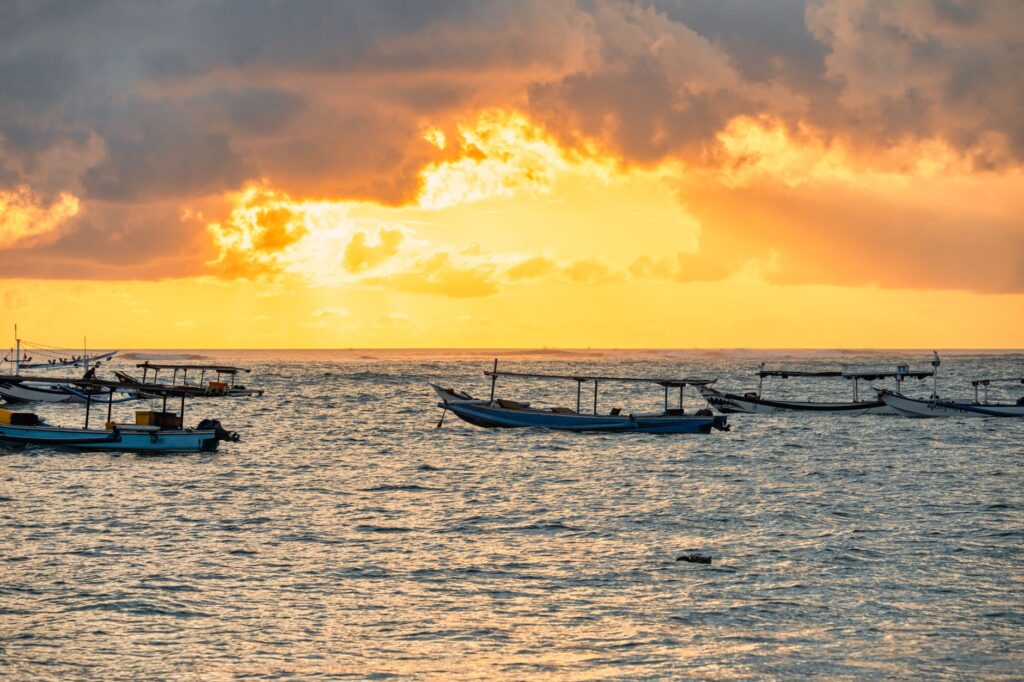
As evening falls, the surface of the Banda Sea calms, reflecting gold and violet tones of an endless tropical sky while biological activity below experiences a radical nighttime transformation. In this instant of apparent stillness, corals extend polyps to feed on plankton swept by currents, reminding us that life in this remote marine outpost follows an unrelenting course, oblivious to the outside world’s noise. Protecting this abyssal sanctuary is not merely a matter of preserving Indonesia’s biodiversity, but of safeguarding one of the purest and most valuable evolutionary archives left to the blue planet.