
At the southernmost tip of the African continent, where the Atlantic and Indian Oceans engage in an eternal dialogue of currents and temperatures, lies an ecosystem of breathtaking density and vitality. This is not a terrestrial jungle, but a vast submerged belt of giant algae known as the Great African Sea Forest. Dominated by the species Ecklonia maxima, this kelp forest stretches from the shores of Namibia to the temperate waters of Cape Agulhas, forming a biological barrier that sustains unparalleled biodiversity in the Southern Hemisphere.
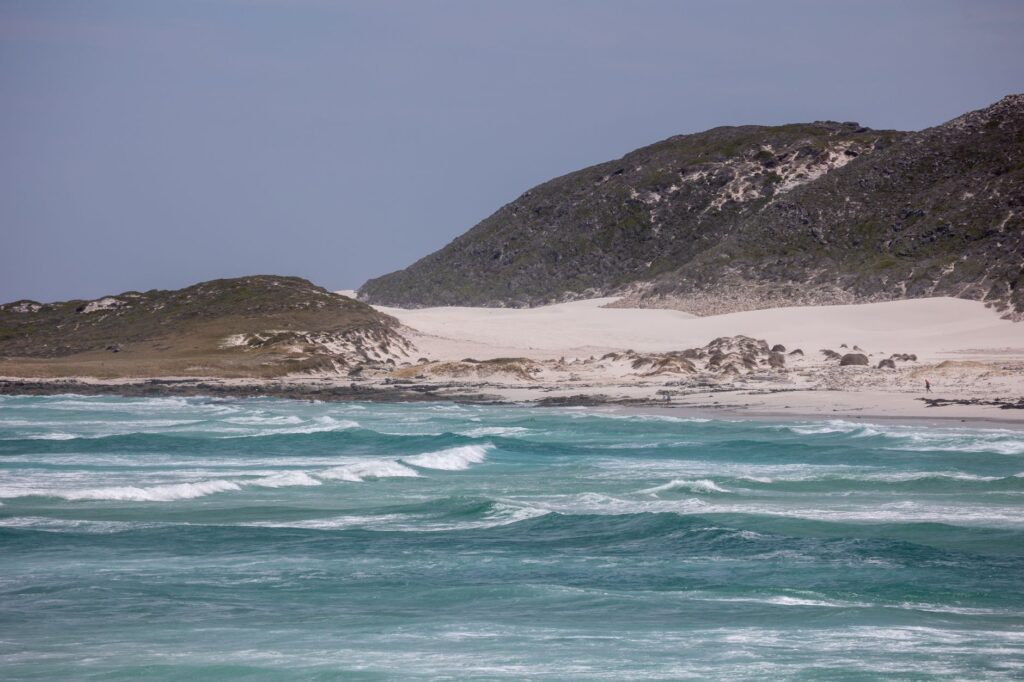
Unlike coral reefs, which depend on thermal stability and water clarity, these forests thrive in turbulence and cold. Their existence is a testament to biological resilience against the energy of the open ocean. For an observer looking out from the cliffs of the Cape Peninsula, only the tips of the golden fronds breaking the water’s surface betray the presence of a three-dimensional structure that reaches depths of up to thirty meters, creating a critical refuge for thousands of species, from the tiny nudibranch to the majestic broadnose sevengill shark.
The Biological Architecture of Sea Bamboo
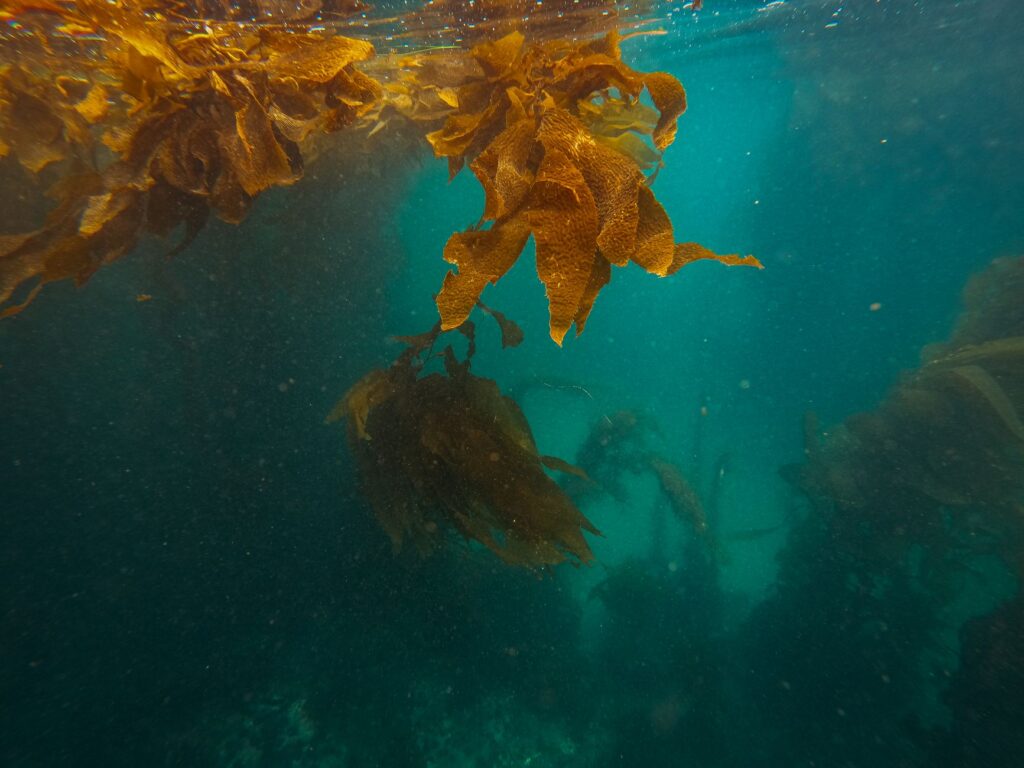
Kelp is not a plant in the strict botanical sense, but a complex form of brown algae that has evolved to maximize light capture in nutrient-rich waters. The predominant species in South Africa, sea bamboo, possesses a fascinating structure: a foot or holdfast that anchors with Herculean strength to the bedrock, a flexible stipe or trunk that can measure several meters, and a gas-filled bulb that allows the fronds to float near the surface where photosynthesis is most efficient.
This vertical arrangement transforms the seafloor into a cathedral of filtered light. Kelp growth is among the fastest in the biological kingdom, capable of increasing in length by several centimeters in a single day under optimal conditions. Such a high metabolic rate requires a constant supply of nitrates and phosphates, provided by the upwelling currents of the African west coast. The flexibility of the stipe is vital; it must withstand the constant battering of South Atlantic swells, bending without breaking before the energy of waves that have traveled thousands of kilometers unobstructed.
“The Great African Sea Forest is not just a biological refuge; it is a living infrastructure that protects our coastlines and regulates the chemical balance of the surrounding ocean.”
Beneath the canopy of these algae, an aquatic microclimate is generated where current speed is drastically reduced. This allows more fragile organisms to find a safe home. The forests act as natural nurseries for numerous species of commercially and ecologically important fish, providing shade, food, and protection from large pelagic predators patrolling the open waters.
The Engine of the Benguela Current
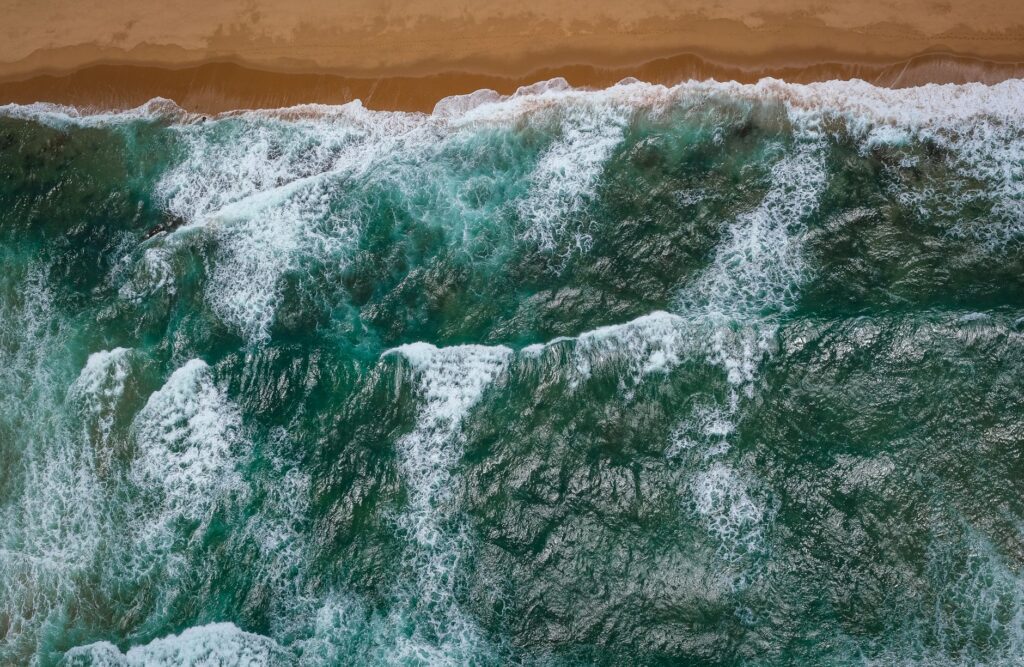
The existence of this ecosystem is intimately linked to the Benguela Current. This cold, nutrient-rich flow moves northward from the Southern Ocean along the western coast of South Africa. The phenomenon of upwelling, driven by dominant southeasterly winds, pushes surface waters offshore, allowing deep, mineral-laden waters to rise into the photic zone.
This process is the fuel that feeds the sea forest. Without this constant nutrient input, kelp could not maintain its growth rate or sustain the immense biomass of herbivores that depend on it. The interaction between the atmosphere and the ocean in this region is so precise that any alteration in wind patterns can have immediate consequences for the forest’s health. Current science closely monitors these dynamics, as climate change is altering the intensity and frequency of these winds, threatening the stability of the upwelling.
Furthermore, the Benguela Current acts as a thermal regulator. While the interior of the African continent can experience extreme temperatures, the waters of the sea forest remain in a constant range between 10 and 15 degrees Celsius. This stability is what allows temperate and cold-climate species to coexist at a latitude that would otherwise be much warmer due to the influence of the Agulhas Current on the eastern side.
Life Within the Canopy: A Biodiversity Hotspot
Exploring the interior of a kelp forest is to enter a world of complex interactions. Among the holdfasts, crustaceans, echinoderms, and mollusks hide, forming the base of the food web. One of the most iconic inhabitants is the abalone or perlemoen (Haliotis midae), a mollusk whose pearlescent shell is so coveted it has brought the species to the brink of crisis due to poaching. Abalone depend directly on the kelp debris that detaches and falls to the bottom.
In the mid-levels, schools of hottentot and galjoen—South Africa’s national fish—swim. But perhaps the most fascinating encounter is with the pajama shark (Poroderma africanum), a small, endemic shark with dark stripes that snakes through the algae with astonishing agility. These sharks are specialized predators that keep octopus and crustacean populations in check, ensuring no single species excessively dominates the ecosystem.
- Broadnose Sevengill Shark: A prehistoric predator that uses the kelp’s density to ambush its prey.
- Cape Clawless Otter: One of the few mammals that regularly ventures into these cold waters to hunt among the rocks.
- Nudibranchs: Small chromatic jewels that feed on the bryozoans growing on the kelp fronds.
- Common Octopus: A master of camouflage that uses the forest’s natural crevices to establish its dens.
The relationship between the octopus and the pajama shark has gained international prominence recently, showing that survival tactics in this environment are extremely sophisticated. The use of tools by octopuses, such as sea shells for protection, is a behavior that marine biologists are studying with increasing interest in the waters of False Bay.
A Critical Bastion of Blue Carbon
In the global fight against the climate crisis, the Great African Sea Forest emerges as an unexpected and potent ally. Much like tropical rainforests, kelp absorbs massive amounts of carbon dioxide through photosynthesis. However, its capacity for carbon sequestration, known as blue carbon, is in many ways more efficient than that of terrestrial ecosystems.
When kelp dies or is torn away during storms, a considerable portion of its biomass sinks into the deep ocean trenches, where the carbon remains trapped in sediments for centuries or millennia. This process prevents CO2 from returning to the atmosphere, helping to mitigate the greenhouse effect. Recent research suggests that kelp forests worldwide may sequester as much carbon as mangroves and seagrass meadows combined.
“To ignore the health of underwater forests is to forfeit one of the most powerful carbon capture tools that nature has designed over millions of years.”
South Africa has begun to integrate the protection of these forests into its blue economy policies. It is not just about biological conservation, but about valuing the ecosystem services these algae provide to humanity. Protecting these marine areas not only secures biodiversity but ensures the continuity of this carbon cycle vital for regional and global climate stability.
Vulnerabilities in a Warming Ocean
Despite its robust appearance, the sea forest is vulnerable. The primary threat is rising water temperatures. Kelp is a cold-water species; if temperatures exceed certain thresholds for sustained periods, the algae suffer thermal stress, lose their reproductive capacity, and eventually die. Marine heatwaves are becoming increasingly frequent, and their effects on the South African coast are already visible in some peripheral zones of the ecosystem.
Overfishing is the other major challenge. The massive extraction of top predators alters the community structure. Without sharks or large fish, sea urchin populations can demographically explode. Urchins feed on kelp holdfasts, and in excessive densities, they can transform a lush forest into a barren rock desert, a phenomenon known as urchin barrens. This imbalance has already occurred in other parts of the world, such as California and Tasmania, and South Africa is struggling to prevent this pattern from repeating in its waters.
Additionally, coastal pollution from the urban centers of Cape Town and other coastal towns introduces excess nutrients (eutrophication) and chemical contaminants that can weaken the structural health of the algae. Managing wastewater and urban runoff is, therefore, a key piece in the conservation of this submarine sanctuary.
Conservation Frontiers and Citizen Science
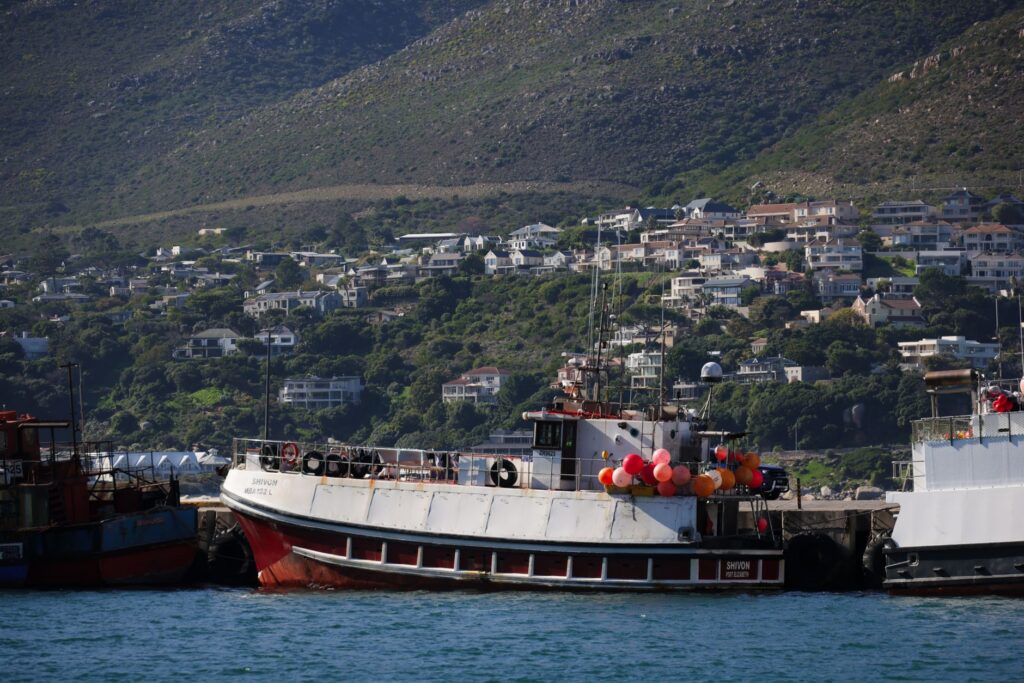
The response to these threats has come from close collaboration between scientists, governments, and civil society. Organizations like the Sea Change Project have worked tirelessly to raise the public profile of the sea forest, transforming it from a dark, feared place into a source of national pride. Environmental education and outreach have been fundamental in helping citizens understand that what happens beneath the surface directly affects their quality of life.
Citizen science also plays a crucial role. Recreational divers and underwater photographers collaborate in monitoring key species and early detection of diseases or changes in forest density. This data, collected on a large scale, allows researchers to have a real-time view of the ecosystem’s health that would be impossible to obtain with limited academic resources alone.
The creation of more extensive and better-monitored Marine Protected Areas (MPAs) is the long-term goal. Currently, areas like the Table Mountain National Park include strips of kelp forest under protection, but connectivity between these areas must be reinforced to allow for the genetic flow of species and their ability to adapt to a changing environment.
Practical Guide
For those interested in experiencing this ecosystem firsthand, the Cape region of South Africa offers the best opportunities. However, due to the extreme water conditions, it is essential to follow certain technical and safety recommendations.
Location and Access: The best dive sites are found in False Bay (Simon’s Town and Miller’s Point) and along the Atlantic coast of the Cape Peninsula (Oudekraal). Many of these sites are shore-accessible, but the use of local guides who know the currents and safe entry points among the rocks is highly recommended.
Required Equipment: The water ranges between 10°C and 16°C. A wetsuit of at least 7mm, preferably with a hood and gloves, is essential. For underwater photography, wide-angle lenses are recommended to capture the vastness of the stipes, along with powerful lights, as the kelp’s density blocks a significant portion of sunlight.
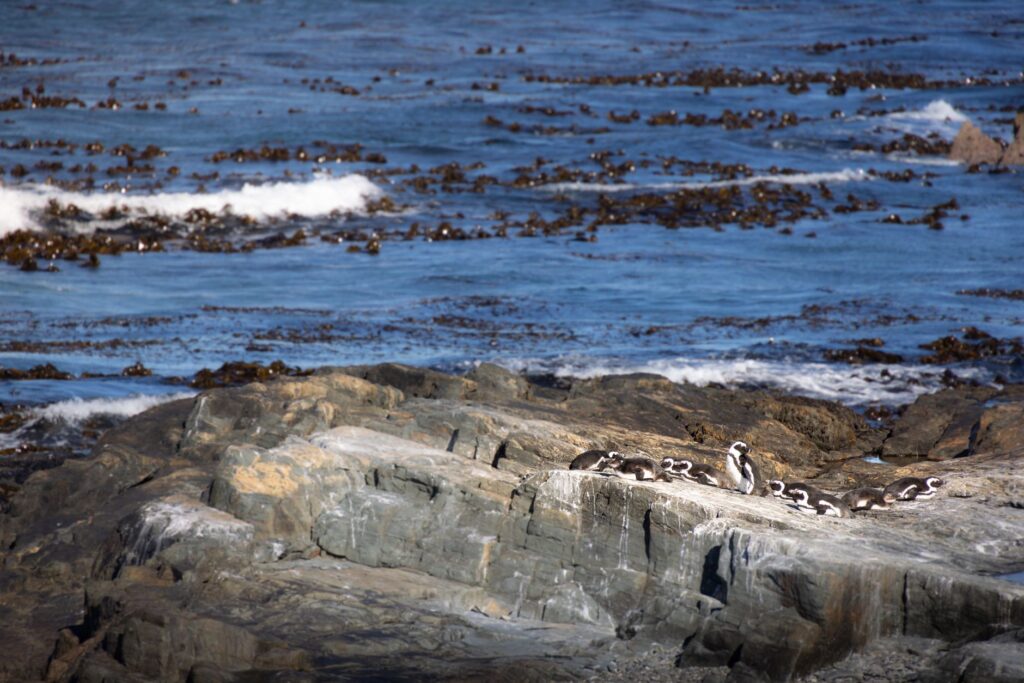
Best Time to Visit: The austral summer months (November to March) offer clearer waters on the False Bay side, while winter can be better for the Atlantic coast, although storms may limit visibility. It is vital to check weather conditions and swell alerts before any aquatic activity.
Permits and Regulations: To engage in diving or snorkeling within South Africa’s Marine Protected Areas, a permit is required, which can be purchased at local post offices. It is strictly forbidden to collect any living organism or kelp remains without specific scientific authorization.
The Silent Pulse of the Kelp
Diving into the Great African Sea Forest is an experience that transcends the purely biological; it is an exercise in humility before the majesty of nature. Underwater, the sound of the outside world disappears, replaced by the rhythmic snapping of crustaceans and the dull roar of waves breaking on the surface. It is a place of melancholy beauty, where light filters in golden beams that dance to the beat of the algae’s perpetual motion.
In this liquid silence, one understands that we are witnesses to a fragile but extraordinarily ancient balance. Every swaying frond, every creature finding refuge in the shadows, is part of a symphony of survival that has persisted for eons. Protecting this sanctuary is not just an ecological imperative, but an act of respect toward one of the last wild corners of our planet—a place where the ocean still keeps its deepest secrets and where life, in all its complexity, continues to flourish in the cold embrace of the south.