
Imperial Origins and the Alignment in the Mist
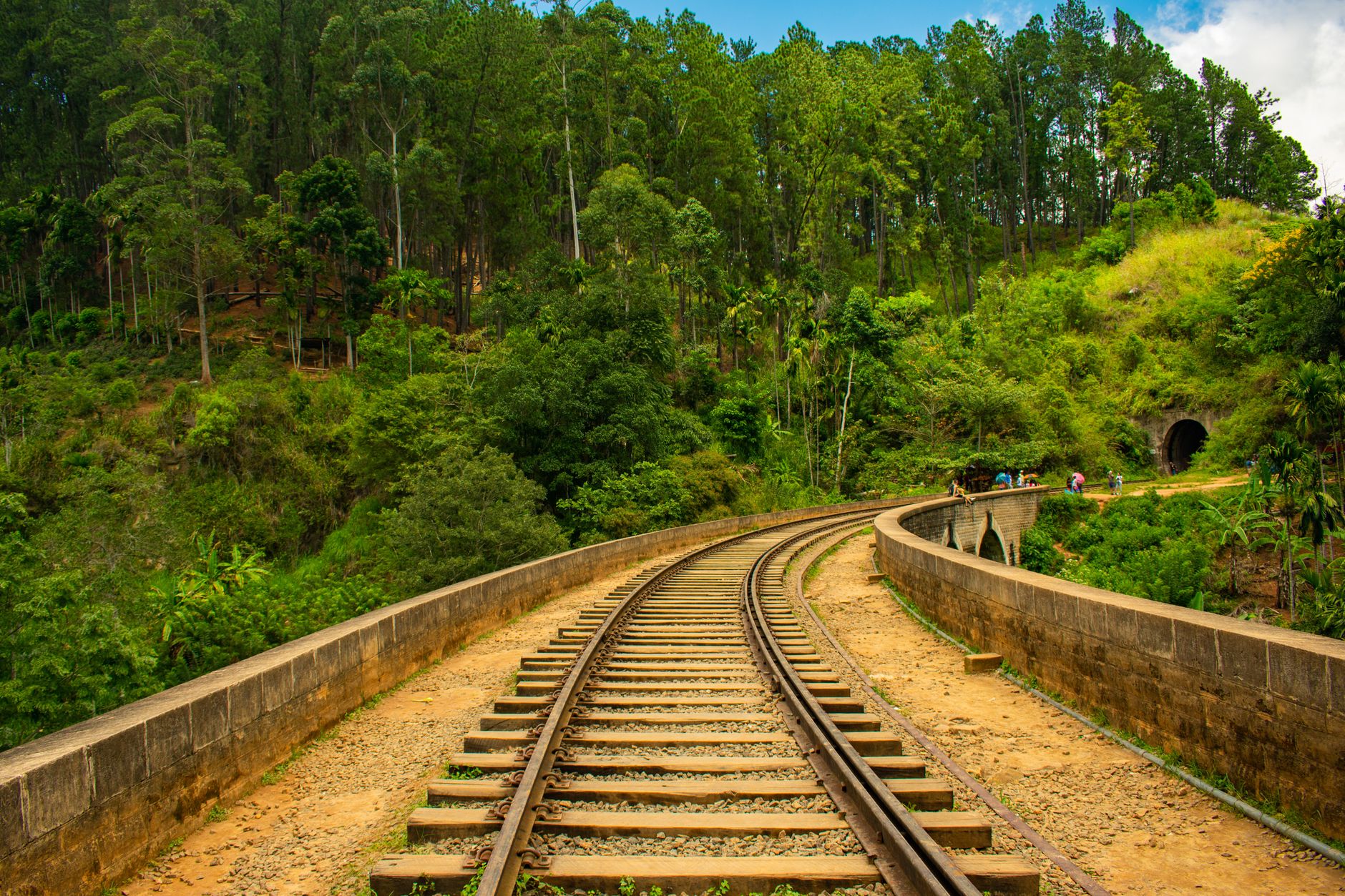
The history of railway connectivity in the mountainous center of Sri Lanka stems from the strictly mercantile logic of the late 19th century. Under British colonial administration, the urgent need to transport large volumes of coffee—and subsequently tea—from the highland plantations to the port of Colombo spurred one of the most daring engineering feats in South Asia. British engineers faced a monumental geographical obstacle: bridging deep chasms, unstable slopes, and vertical rock formations covered by dense tropical rainforest.
The alignment began to take shape in the 1860s, requiring a massive labor force composed primarily of Tamil plantation workers brought from southern India under exceptionally harsh conditions. Every kilometer of track won from the mountain represented a triumph of cartography and mathematical calculation over nature. The original steam locomotives had to contend with continuous gradients, sharp curves of reduced radius, and a climate characterized by torrential monsoon rains that tested the stability of embankments and the strength of the steel.
Today, this corridor not only survives as a living testament to industrial archaeology, but operates as the vital artery sustaining the social and economic cohesion of the central region. Local populations, smallholder farmers, and the steady flow of travelers depend on a system that retains much of its original infrastructure, prudently adapted to the operational demands of the 21st century.
The Architecture of Viaducts and Mortarless Ingenuity
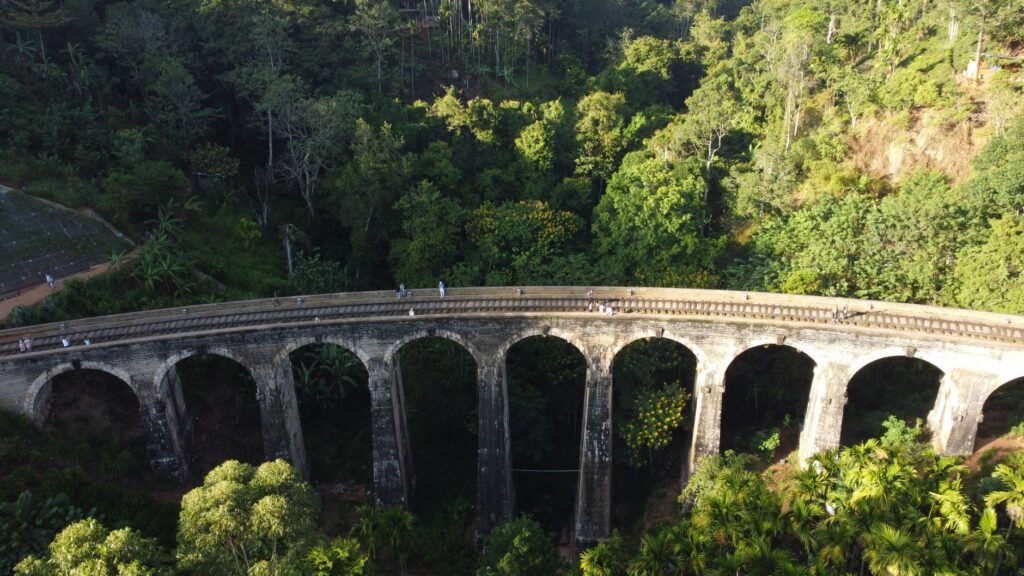
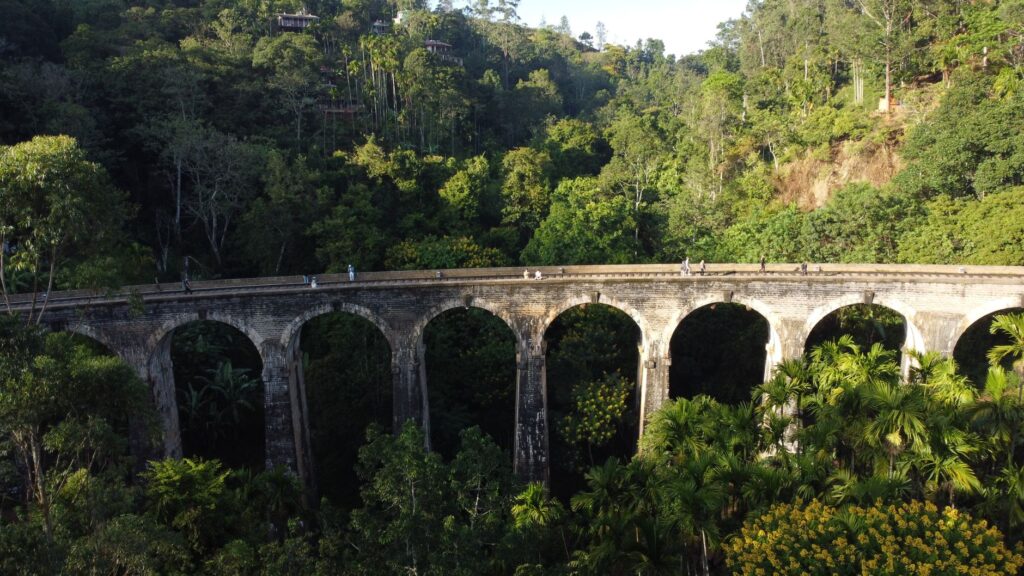
One of the most celebrated construction milestones of this railway network is the iconic Nine Arch Bridge, located near Demodara. This structure defies traditional architectural conventions for a fundamental reason: it was erected entirely from cut stone blocks and brick, without using a single steel beam. In a context marked by metal shortages during the First World War, local builders and British engineers resorted to traditional masonry to raise symmetrical arcs that seem to blend organically with the dense forested valley surrounding them.
The stability of this stone mass rests on foundations set directly into the bedrock and a buttress system that distributes the weight of the trains with millimeter precision. A few kilometers away, the Demodara loop system introduces another fascinating engineering solution: a spiral layout where the track crosses itself after descending into a circular tunnel carved into living rock, allowing the train to gain the necessary altitude to approach the station without exceeding the maximum gradient limits permitted by the locomotives.
The railway in the Sri Lankan highlands is not merely a mode of transport, but an operational fossil where nineteenth-century physics continues to dictate the tempo of modern life.
These technical solutions demonstrate that the durability of colonial railway infrastructure lay in a profound understanding of local geology. Dry-stone retaining walls, hand-excavated subterranean drainage systems, and the use of indigenous materials have enabled the track to withstand decades of continuous vibration, extreme humidity, and tropical erosion without suffering major structural collapses.
Operational Logistics and the Daily Pulse of the Convoys
Managing rail transit through the Sinhalese highlands requires rigorous coordination and an absolute mastery of mechanical signaling. The line operates under a single-track regime with passing loops at key stations, compelling station masters to communicate via traditional telegraphs and physical route logbooks to prevent collisions in terrain where visibility is frequently reduced by dense morning fog.
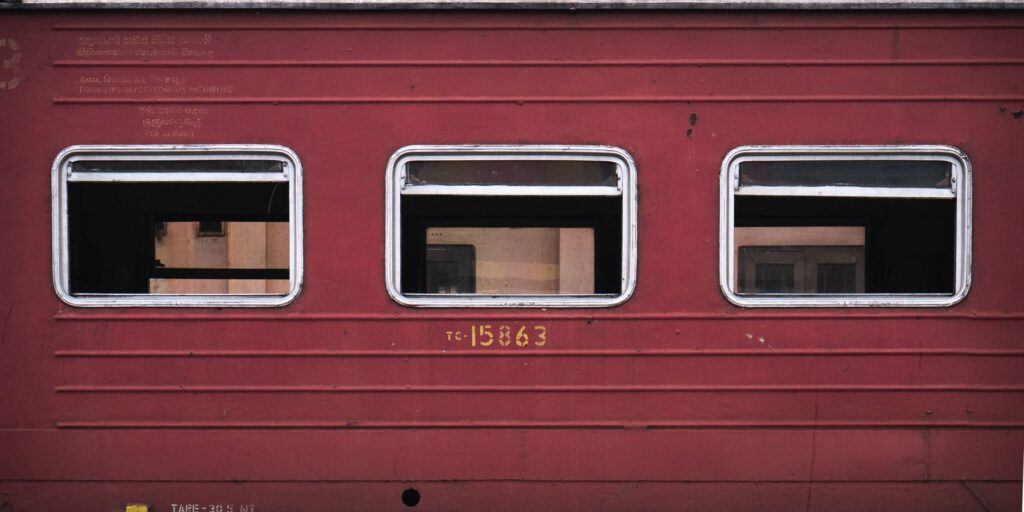
Contemporary trains combine recently manufactured diesel units with classic wood-and-steel carriages that retain compartmentalized cabins and drop-down windows. This mixed configuration responds to a functional duality: catering to the demand for routine local travel by residents—who use the regular services to transport goods, harvests, and commute to urban hubs like Badulla or Kandy—while absorbing an influx of international travelers seeking to experience the deliberate slowness of the journey.
- Mandatory use of analog communication systems in sections lacking radio coverage.
- Daily manual inspections of bolts, sleepers, and switch systems.
- Strict speed restrictions on historical bridges to minimize material fatigue.
- Logistical coordination with road transport at terminal stations for tea distribution.
Punctuality in this tropical alpine corridor is an exercise in patience and adaptation. Minor landslides caused by heavy rainfall or the occasional crossing of wildlife compel engine drivers to modulate their speed with expertise built on decades of accumulated experience, passed down from generation to generation among local railwaymen.
Human Geography: The Train as a Meeting Space
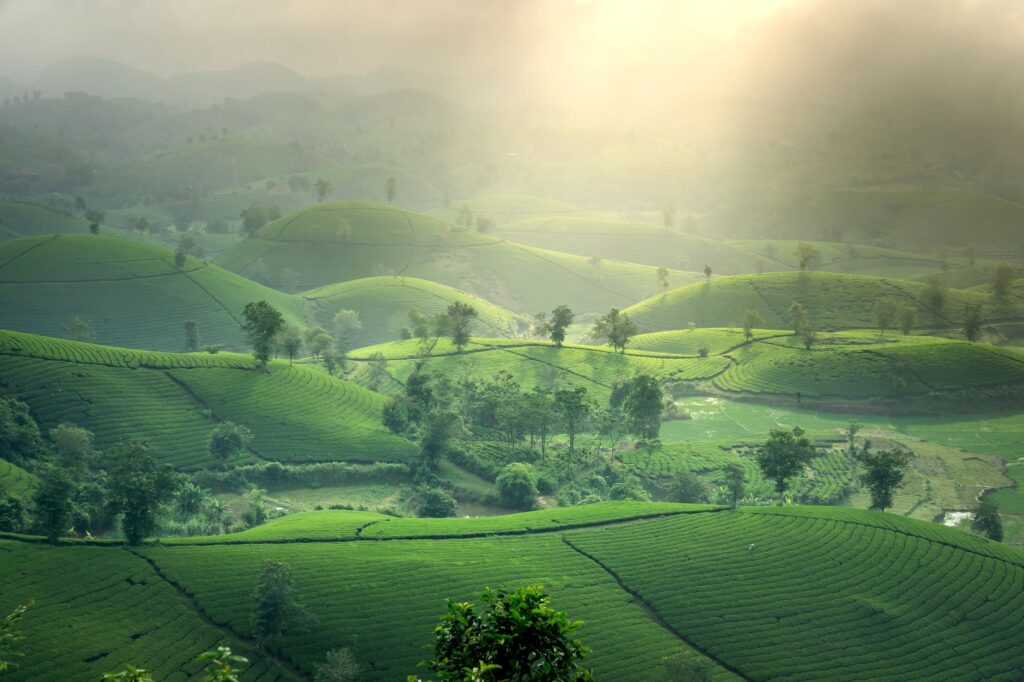
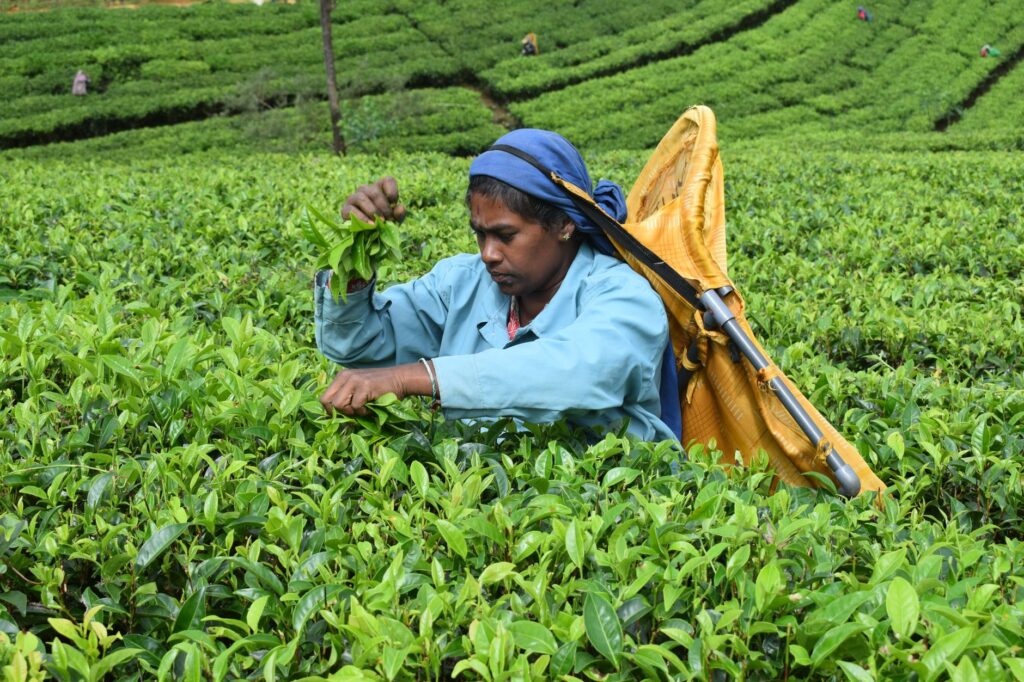
Beyond its technical value, the rail journey constitutes a first-rate anthropological experience. As it crosses the tea-producing districts, the landscape changes radically: mountain slopes transform into green carpets perfectly manicured by Camellia sinensis bushes, dotted by the colorful silhouettes of Tamil women picking tea leaves amidst early morning mists.
Inside the carriages, the atmosphere is a faithful reflection of Sinhalese society. Street vendors walk the aisles offering local specialties served on newspaper sheets, such as spicy fish rolls (seeni sambol) and freshly fried samosas, while passengers share varnished wooden benches and engage in fluid conversations transcending language barriers. The open carriage doors—an iconic image of the route—function as mobile balconies from which to contemplate the vastness of the valleys, waterfalls tumbling from peaks, and terraced gardens growing temperate climate vegetables.
This constant flow of people and goods reinforces the economic autonomy of rural communities. Intermediate stations act as informal public squares, where the arrival of the train sets the rhythm of the day and stimulates small-scale local commerce, cementing the railway as the backbone of community identity in the highlands.
Practical guide
Planning a journey through the Sri Lankan highlands railway network requires understanding its operational and logistical particularities. The essential aspects for organizing the trip rigorously are detailed below:
Main Routes and Recommended Sections
The most celebrated segment extends between the towns of Kandy and Badulla, crossing the nerve center of Ella. The complete journey takes approximately six to seven hours, though many travelers choose the intermediate stretch between Hatton and Ella to concentrate the most spectacular views of the viaducts and tea plantations.
Ticket Types and Advance Booking
There are three distinct classes. First class offers air conditioning and reserved seating in panoramic carriages, though it reduces interaction with the environment by lacking open windows. Second and third classes feature wooden or basic padded benches, compartmentalized with total freedom to lean out of doors. First-class tickets and reserved second-class seats must be secured weeks or months in advance through official ticket offices or authorized agencies; unreserved second- and third-class tickets are purchased on the day of travel at the station, requiring early arrival to secure a spot.
Logistical and Seasonal Advice
The time of year radically shapes the experience. The months from January to Mayo offer more stable and dry weather, ideal for photography and valley visibility. Between October and December, northeast monsoons can cause delays due to water accumulation and minor track slips. It is essential to pack light warm clothing, as temperatures drop noticeably with altitude gain during evening hours and early mornings.
Silence on the Rails
When the last glint of tropical sun filters through the eucalyptus trees and bathes the steel rails in a golden patina, the mountain reclaims its ancestral silence. The metallic clatter of wheels over track joints slowly fades into the distance, leaving behind the image of a world where time seems measured by the leisurely rhythm of locomotives. In this corner of the Indian Ocean, past engineering is not a lifeless museum piece, but a living organism that continues to unite communities, bridge chasms, and carry the collective memory of a people upon a thin line of steel.