


The Pulse of a Giant Undergoing Metamorphosis
Travelers touching down at Montreal Pierre Elliott Trudeau International Airport during this cycle will experience far more than the traditional Canadian greeting: they will encounter the daily friction between modernization urgency and the stark reality of urban roadway congestion. With passenger demand far outstripping the terminal’s original capacity projections, the aviation complex has transformed into a massive worksite where cranes, detours, and informational signage form an inescapable part of the daily environment. The core journalistic question rising from this scenario is not merely logistical, but structural: How can a top-tier international transport node double its ground-absorption capacity without collapsing entirely in the process?
The central thesis of this transformation suggests that the current access crisis is not an isolated operational failure, but rather the unavoidable price a modern metropolis must pay to align its air infrastructure with twenty-first-century demands. While excavators redesign the primary approach arteries, both airport authorities and municipal governments struggle to coordinate a public transit network capable of offsetting private vehicle deficiencies. Nevertheless, the persistent gap between paper planning and field execution continues to generate daily friction for airlines, ground operators, and, above all, the millions of passengers navigating the facilities.
Chronicle of a Foretold Congestion on the Island of Montreal
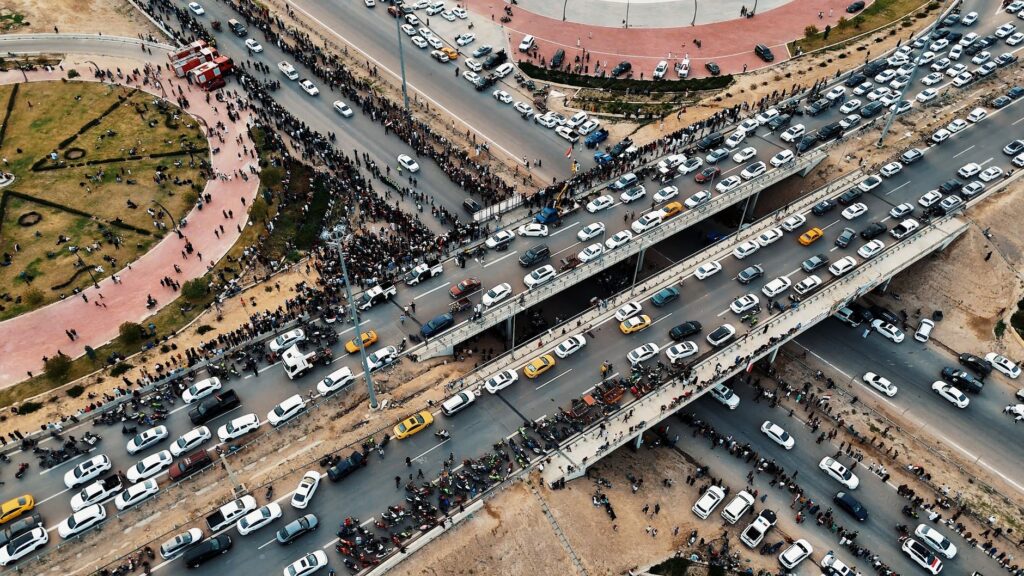
Located in the Dorval sector, Montreal’s airport has always presented a unique geographic challenge: its terrestrial connectivity relies on a limited number of high-speed corridors that inevitably converge at the same bottleneck junctions. The construction works slated for this period merely magnify these historical vulnerabilities. The volume of vehicles attempting daily access to departures and arrivals zones frequently overwhelms available lanes, compelling authorities to implement drastic traffic mitigation measures that disrupt traveler routines.

Data compiled from urban mobility reports indicate that transit times from downtown can easily double or triple during peak hours. This reality has forced airlines to revise their recommended check-in and security lead times, officially advising passengers to arrive at least three hours before international flights. The lack of fluidity within the main circulation loop impacts airport express buses, taxis, and rideshare services alike, generating a domino effect that undermines overall flight punctuality.
The Direct Impact on the Passenger Experience
For the average traveler, the airport journey begins long before crossing the terminal’s sliding doors. It starts the moment a taxi or bus halts at provisional approach lanes specifically engineered around excavation pits. The user’s patience is tested from the very moment they must navigate signposted paths featuring temporary walkways and safety barriers.
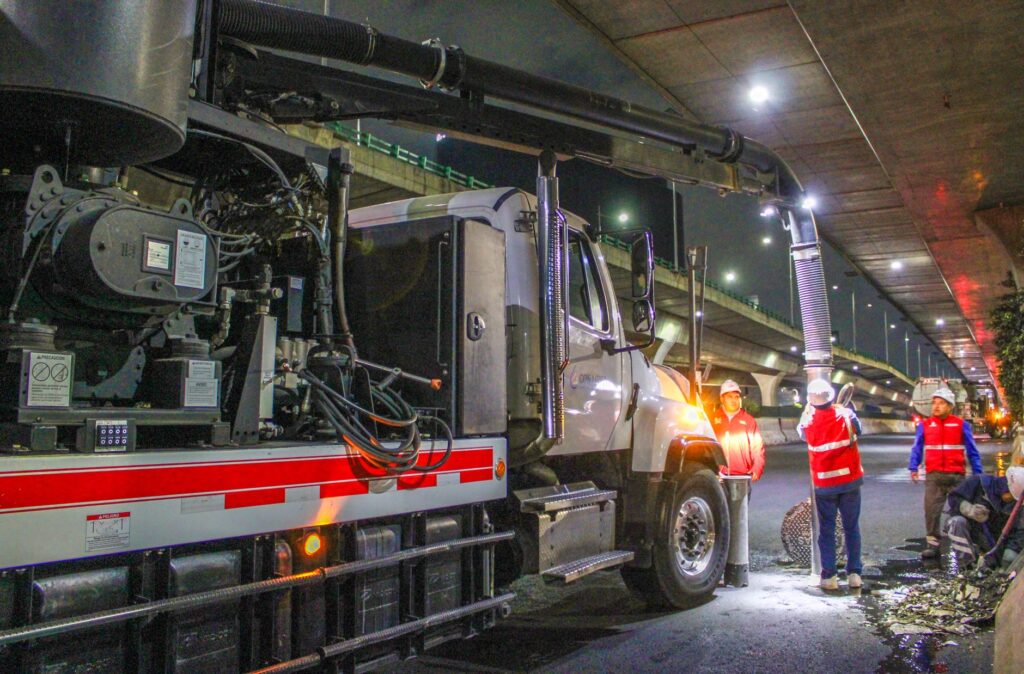
Added to this are localized bottlenecks within check-in halls, where temporary relocations of counters and reduced operational footprints complicate the smooth flow of luggage and travelers. The airport administration has deployed a substantial contingent of ground assistance personnel, easily identified by their high-visibility vests, whose primary mission is to guide disoriented passengers and prevent blockages at security checkpoint entrances.
The Rail Alternative and the Public Transit Dilemma
Facing chronic gridlock on urban highways, the spotlight has inevitably shifted toward mass transit solutions. Integrating Montreal-Trudeau into regional rail and heavy metro networks has been a subject of intense political and technical debate for decades. Currently, the pressure on urban bus routes connecting the Côte-Vertu metro station to the airport is reaching critical levels, exposing the seams of a system that urgently requires high-capacity heavy rail integration.
Urban mobility experts argue that exclusive reliance on the 747 express bus service remains wholly inadequate for absorbing sustained growth in air travel.
True modernization of an international airport is measured not merely by the size of its boarding lounges, but by the efficiency and resilience of its umbilical cord to the host city.
Promises of future rapid rail connections generate optimism, yet delivery timelines constantly clash with the bureaucratic and technical delays inherent to large-scale engineering projects within established metropolitan areas.
Interinstitutional Coordination and Communication Challenges
One of the most stubborn hurdles in managing this infrastructure project has been maintaining seamless communication among diverse stakeholders: airport management, the Quebec Ministry of Transport, the City of Montreal, and construction contractors. The overlapping of active work zones near the airfield has occasionally resulted in unannounced lane closures that fail to provide users with adequate advance warning.

To counter this informational deficit, specific digital platforms have been launched to offer real-time updates regarding traffic conditions and parking availability. Traffic information digitalization has emerged as the primary line of defense to prevent vehicular gridlock from completely paralyzing daily airport operations, allowing drivers to react before getting trapped in Dorval traffic jams.
Mitigation Strategies and Airport Traffic Management
To cope with massive vehicle volumes, management has redesigned internal circulation flows by strictly segregating commercial vehicles, public buses, and private passenger cars. Waiting zones located away from the terminal buildings, popularly known as cell phone waiting lots, allow drivers to idle off-site until passengers are curb-ready, thereby keeping primary arrival lanes clear.
Furthermore, financial penalties for improper parking or exceeding maximum time limits in quick-drop zones have been increased. Although unpopular, these punitive measures have proven effective in deterring motorists who previously used terminal roadways as long-term parking, thus freeing up valuable linear footage for continuously moving traffic.
The Challenge of Long-Term Parking
The temporary loss of parking spaces due to land occupation by construction machinery has strained availability for travelers choosing to leave personal vehicles at the airport. Remaining garage rates have trended upward, and online advance reservation has become practically mandatory to secure a spot at reasonable rates.
Such space constraints force thousands of citizens who traditionally relied on personal cars for business or leisure trips to reconsider their commuting habits. The shift toward shared mobility modes and public transport is turning into an imperative necessity rather than a voluntary choice, permanently altering travel culture toward the aerodrome.
Practical guide

Planning a trip involving Montreal Pierre Elliott Trudeau International Airport this year requires meticulous attention to logistical details and transit timeframes. The following essential recommendations will help navigate the construction layout successfully:
- Lead Time: Arrive at the terminal at least three hours prior to international departures and two and a half hours for domestic flights. Terrestrial access queues can introduce unexpected delays.
- Public Transit: Preferentially use the 747 express bus service from Berri-UQAM metro station or plan your route using official metropolitan transit apps to avoid gridlock.
- Pick-up Zones: If picking up passengers, exclusively utilize cell phone waiting lots until travelers have retrieved luggage and are ready at the curb.
- Parking: Reserve parking stalls weeks in advance via the official airport website to guarantee availability and bypass steep dynamic pricing.
- Live Information: Check traffic alerts and road detour maps on official airport digital channels prior to departing from home or hotel.
Future Outlook and Conclusion
The 2026 horizon at Montreal-Trudeau symbolizes an unavoidable crossroads for Canadian aviation. Current disruptions, though severe and a constant source of friction, form the foundational bedrock upon which a system capable of handling forecasted global mobility growth in coming decades is being built. This transition does not come without operational costs, social strains, and daily headaches for users.
At the end of this long tunnel of concrete and detours, the ultimate objective remains providing Montreal with an international gateway worthy of its economic and cultural weight. The adaptability demonstrated by passengers, airlines, and local operators will determine whether this ambitious transformation is remembered as a successfully conquered chaos or as a missed opportunity in critical infrastructure management.
Source in EN: The Traveler – Montreal Trudeau Airport 2026 Construction Traffic Guide (https://news.google.com/rss/articles/CBMijgFBVV95cUxOSElJcDhrU0NNdHNMekVnb0k0V2taZmQxUlRmbzRxRXRhUWxFdkp6QVdpZDN1d3hBTEZHQWljc3VYUGRhbTdYMFZURjh6MXJtMnFIMlh5S1JfQTZRel85RmpnUUFDXzVqazlWY1FUalhhWGs2UlFhLWZnbFpheC1ObU1vNFJ2TDZOeVRaNDl3?oc=5)


