
High Altitude as a Territory of Cereal Resistance
In the heart of the Pyrenees, where peaks exceed two thousand meters and winter imposes its law of silence and frost, human survival depended for centuries on the ability to transform the sparse resources of the earth into lasting sustenance. The Andrian valleys, celebrated today for their ski slopes and commercial hustle, guard beneath their Pyrenees crust a stony and silent agricultural memory. Here, the cultivation of rye did not respond to a culinary choice, but to a biological necessity: this rustic cereal was the only one capable of completing its life cycle in acidic, meager soils whipped by freezing winds.
Walking today along the paths connecting the traditional stone cabins of Ordino or Canillo is stepping into a landscape where each dry-stone terraced field tells a story of titanic effort. The farmers of yesteryear had to clear impossible slopes, hauling soil on mule back and raising retaining walls to hold a substrate constantly threatened by summer storms and spring snowmelt. This collective effort gave rise to a gastronomic culture where bread was not a simple accompaniment, but the gravitational axis around which daily existence revolved.
The Architecture of Communal Fire and Dry Stone
The baking process in Andorra possessed a deeply communal dimension. Stone ovens, strategically located in village centers or shared among several high-mountain cabins, were the true social heart of the valleys during autumn months. Lighting the oven required complex logistics for procuring black pine and oak firewood, whose slow combustion had to heat the vaulted structure until reaching the optimal baking temperature without fracturing the stone.
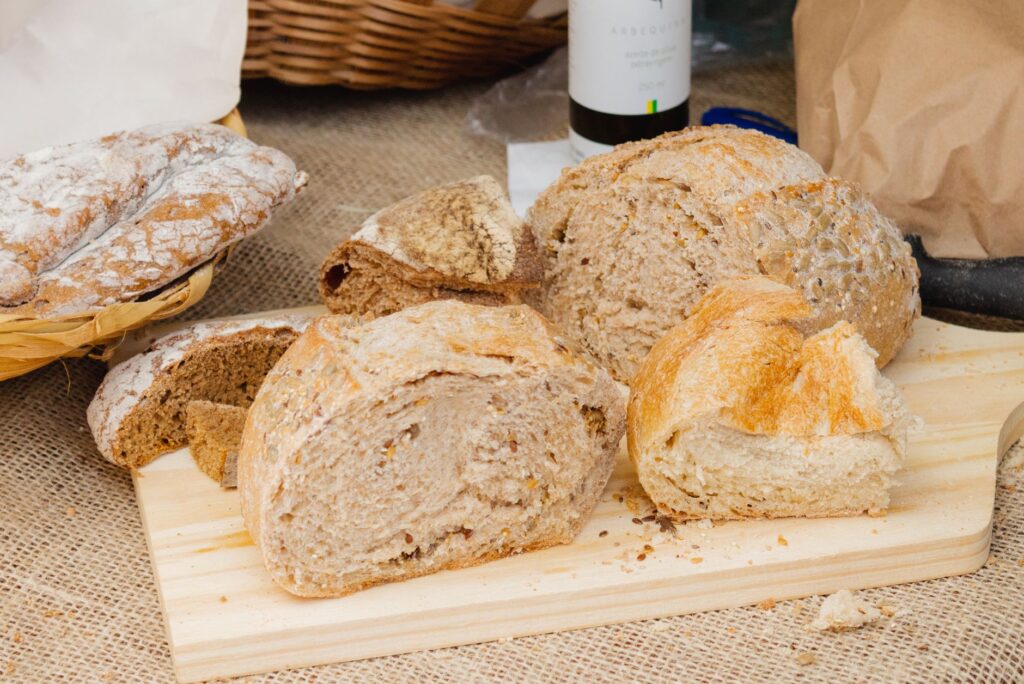
The architecture of these structures responded to millennia of empirical wisdom. The local slate flagstones, known in the country as lloses, accumulated heat homogeneously and radiated it slowly for hours. The flour, ground in watermills that harnessed the rushing force of the Valira rivers, was mixed with spring water and sourdough jealously preserved from one bake to the next. The result was a dense bread with a dark, compact crumb capable of staying fresh for weeks in the cold stone pantries.
High-altitude bread does not seek lowland lightness; its density is the compressed memory of stone, cold, and time paused in the Pyrenees.
Around these ovens, a code of neighborhood reciprocity was also structured. No one baked alone; turns were established through rigorous community agreements that prevented the waste of residual heat. While the main rye bread occupied the center of the hearth, the corners were used to introduce small lard cakes or seasonal preparations that enriched the monotonous diet of long winter isolation months.

Watermills and Patient Milling
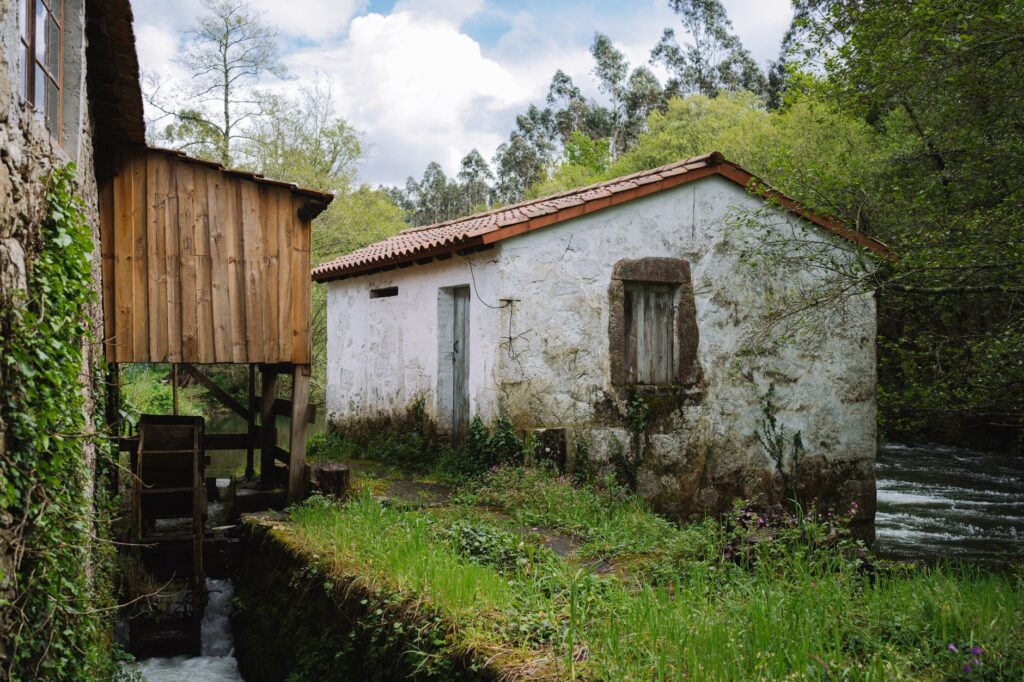
The sound of water striking the wooden paddles of hydraulic mills set the pace of rural development in Andorra well into the twentieth century. Remnants recovered and restored with ethnographic care in parishes like La Massana or Encamp recall how river energy was channeled through stone irrigation ditches to turn heavy granite millstones tasked with crushing the grain without burning it. Slow friction ensured that the rye germ retained its essential oils and characteristic aromatic profile.
Unlike modern industrial milling, the traditional system separated the grain into few fractions, maintaining a stone-ground flour rich in bran that gave the final bread a rough yet extraordinarily nutritious texture. Millers were respected and often feared figures; their knowledge of river currents and dressing the millstones—a craft requiring precise chiseling to ensure grain cutting—determined the quality of all the bread in the valley.
This respect for time and origin is reflected today in the work of a few local bakers and associations attempting to recover nearly extinct native cereal varieties. Working with mountain rye means renouncing chemical improvers and rapid fermentations; the dough demands patience, long hours of resting in cool rooms, and a deep understanding of the ambient humidity descending from snow-capped peaks.

The Edible Landscape: Herbs, Broths, and Foraging
The culture of bread in Andorra was never understood in isolation, but as the foundation upon which subsistence recipes were structured. Stale loaves, which hardened due to low temperatures and alpine air dryness, found a second life in mountain garlic soups, country broth casseroles, and shepherd’s breadcrumbs enriched with pork belly and wild mushrooms harvested in autumn beech forests.
In the mountain cabins, where transhumant livestock farming and subsistence farming marked the annual rhythm, resourcefulness was an inviolable rule. Nothing was wasted. Hard crusts were grated to thicken game stews or used as a base for toasts spread with lard and wild forest berry jams. This high-mountain cuisine, devoid of artifice, stands out today for its profound nutritional honesty and direct connection with the natural environment.
The use of local aromatic herbs such as wild thyme, savory, and hellebore gathered in high pastures brought balsamic notes to dishes combining the heft of game meat with the sobriety of cereal. Each recipe functioned as an edible map of the valley, where ingredients spoke of the altitude at which they had been gathered or hunted.
The Survival of Heritage in Contemporary Tables
Today, Andorra’s gastronomy is experiencing a renaissance seeking to reconcile culinary avant-garde with the deepest rural memory. Young chefs and local artisans are rescuing grandmother’s old recipes, not as a museum nostalgia exercise, but as a proposal for sustainability and identity in a territory heavily strained by mass tourism and urban development.
This recovery movement ranges from the rehabilitation of old mills to the organization of participatory workshops where new generations learn to knead with rye flour and light old communal stone ovens. Eating traditional bread in Andorra has thus become a conscious act, a way of traveling with the palate through the centuries and understanding that the true wealth of these valleys lies not only in their postcard landscapes, but in the tenacity of those who inhabited them.

Preserving the memory of communal ovens and ancestral rye varieties is the ultimate act of cultural sovereignty in the high valleys of Andorra.
Far from conventional gastronomic circuits, the route of traditional ovens and restored cabins offers the curious traveler an unforgettable anthropological immersion. It is a reminder that contemporary haute cuisine owes much to the silent wisdom of those shepherds and bakers who, with hands in flour and eyes set on snow-capped peaks, wrote the edible history of the Pyrenees.
Practical guide
- Getting there: Andorra is connected by road from Spain (via La Seu d’Urgell and the N-145) and from France (through the Envalira mountain pass or its namesake tunnel). The nearest international airports are Barcelona-El Prat and Toulouse-Blagnac, both located about a three-hour drive away.
- When to go: Late spring and autumn are the ideal seasons to explore mountain routes and visit rural villages without crowds, while enjoying the changing colors of Pyrenees forests.
- Recommended accommodation: For a complete immersion, staying in small restored mountain stone cabins operating as rural tourism in the high parishes of Ordino, Canillo, or La Massana is highly recommended.
- Ethnographic points of interest: El Molí del Clot in Santa Coloma, the Cal Pal Flour Mill Museum in Ordino, and the historic dry-stone complexes distributed along the Principality’s royal paths.
- Gastronomic tip: Look for 100% high-mountain rye bread in local markets and traditional bakeries, and enjoy it accompanied by local cured pork meats and artisanal raw goat and sheep milk cheeses.
Epilogue in the Twilight of the Last Bakery
When evening falls over the Andrian valleys and smoke begins to rise timidly from the stone chimneys of the cabins, time seems to recover its original cadence. Inside the workshop, the residual heat of the stone oven dispels the biting cold outside, enveloping everything in an atmosphere of stillness and contemplation. The last loaves of rye remain on the table, with their toasted, rugged crust mimicking the texture of the surrounding mountains.
Upon slicing a piece, the dense, earthy aroma floods the room, immediately connecting the present with centuries of anonymous effort that built this Pyrenean refuge. There is no artifice in this moment; only the simple miracle of flour, water, and fire transformed into sustenance. In that bite rests the indisputable essence of a territory that refuses to forget where it comes from, proving that true travel elegance consists of knowing how to listen to the quiet voices of the earth.