
A Sea Without Coastal Borders
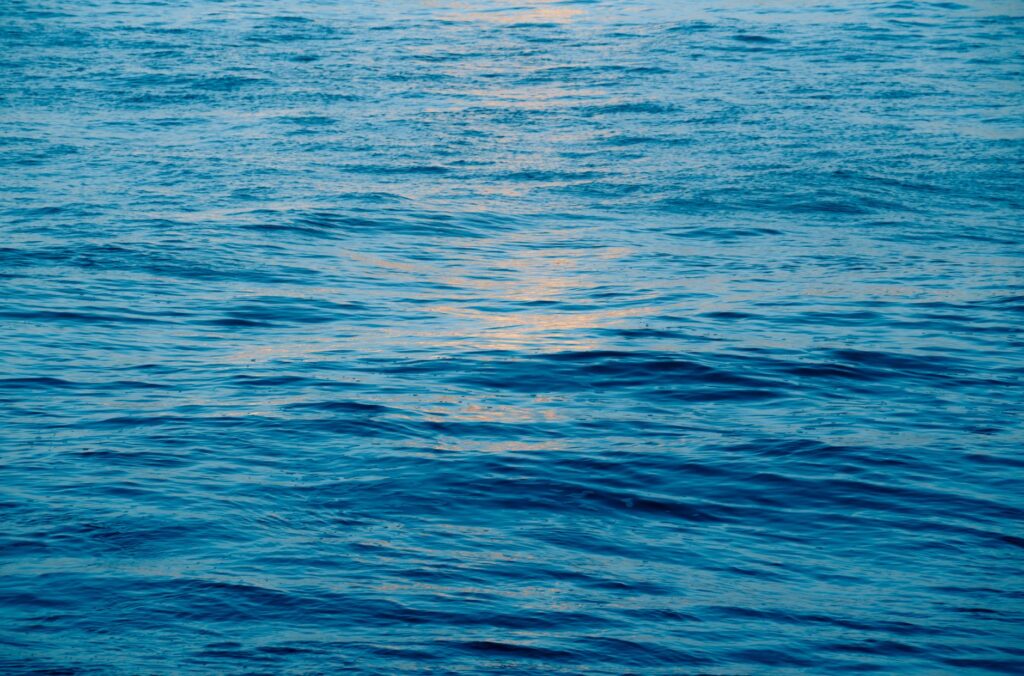
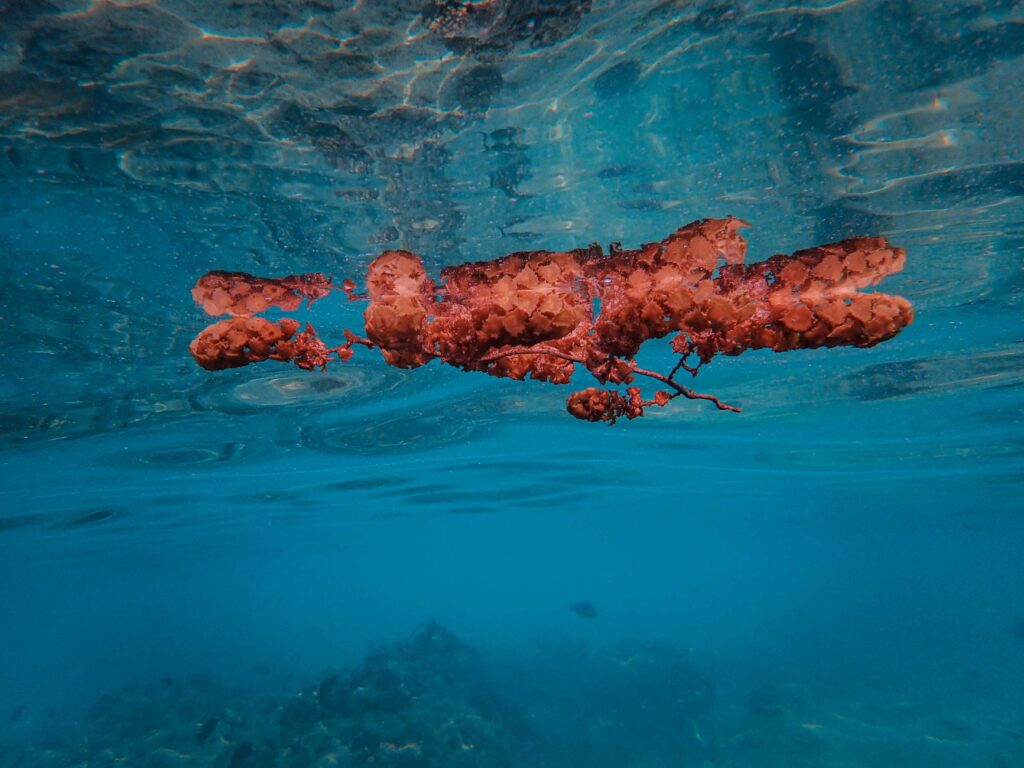
The North Atlantic conceals a geographical and ecological paradox unique on our planet: a vast aquatic expanse not confined by continental landmasses, but by a complex system of rotating currents known as the subtropical gyre. The Sargasso Sea encompasses millions of square kilometers of cobalt-blue waters, characterized by extraordinary clarity and profound apparent tranquility. Far from being a marine desert, this pelagic basin functions as a self-sustaining floating ecosystem, where life organizes around dense mats of brown algae of the genus Sargassum drifting freely on the surface.
Understanding this oceanic domain requires abandoning traditional notions of coastal geography. Here, the seabed lies more than four thousand meters deep, while the surface is dominated by a dense vegetal carpet that never touches the ocean floor during its life cycle. The Gulf Stream to the west, the North Atlantic Current to the north, the Canary Current to the east, and the North Equatorial Current to the south act as invisible walls enclosing this habitat, turning it into a refuge of biodiversity adapted to the high seas and absolute isolation.
Genesis and Dynamics of the Subtropical Gyre
The existence of the Sargasso Sea is governed by fluid physics and the Earth’s rotation. The movement of large surface currents generates a centrifugal force that pushes water toward the center of the gyre, accumulating a giant whirlpool of warm, stable water. This physical phenomenon causes the sea surface in this region to be slightly elevated relative to the surrounding Atlantic, an almost imperceptible gradient sufficient to stabilize the water column and inhibit vertical nutrient mixing.
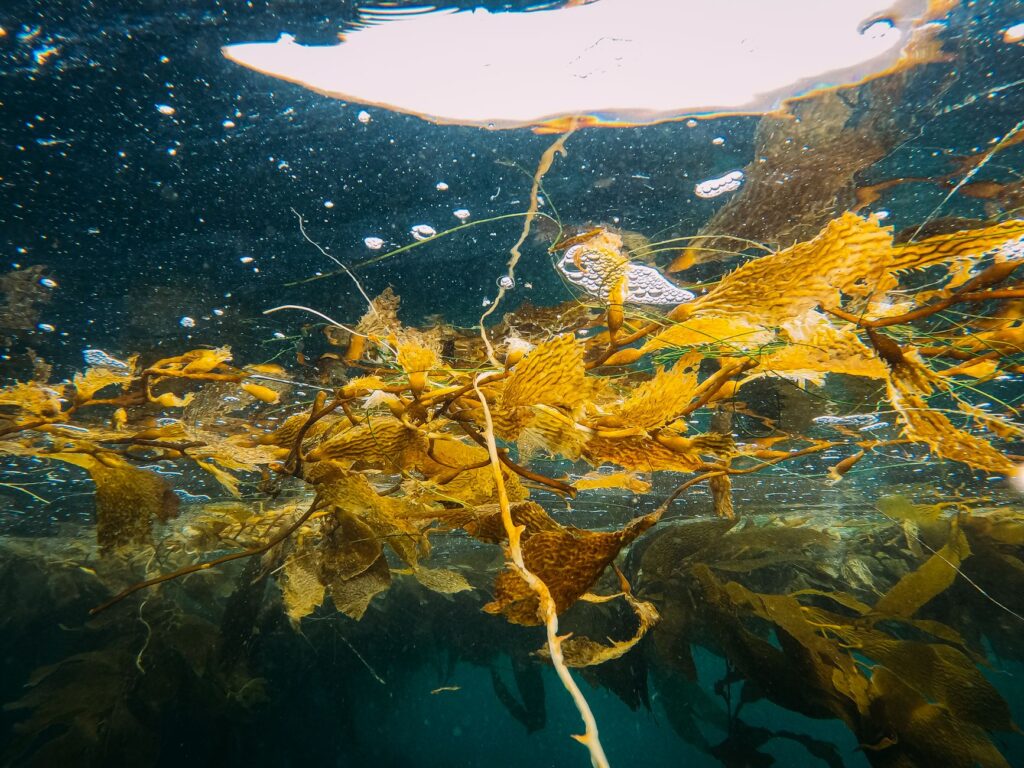
The scarcity of inorganic nutrients in surface layers, stemming from the lack of continental emergence and deep upwellings, has forced local organisms to develop extraordinary evolutionary adaptations. The algae Sargassum natans and Sargassum fluitans do not reproduce via spores fixed to rocky substrates like their coastal relatives, but rather vegetatively through continuous fragmentation. This uninterrupted growth in the open ocean sustains a complex and specialized food web that defies the supposed sterility of oligotrophic oceanic waters.
Floating Architecture and Endemic Biodiversity
The floating formations of sargassum act as drifting coral reefs, offering shelter, shade, and food in the middle of the oceanic immensity. Among the golden mazes of these algae lives a highly specialized fauna characterized by surprising cryptic adaptations. The sargassum fish (Histrio histrio), swimming crabs (Portunus sayi), and shrimp species specific to these communities exhibit color patterns and morphologies that mimic the leaves and gas vesicles of the algae with millimeter precision.
The Sargasso Sea is the only marine ecosystem in the world whose existence depends entirely on current dynamics and the persistence of a floating plant habitat that never touches solid ground.
In addition to resident invertebrates and fish, the floating canopy serves as a critical nursery for the larval stages of numerous pelagic species of high ecological and commercial value, including tunas, marlins, and sea turtles. Newly hatched hawksbill turtles, for instance, find vital protection against predators in these algal mats during their first months of life, using the vegetal network as a floating feeding and dispersal platform driven by winds and surface currents.
The Great Mystery of Eel Migration
One of the most fascinating chapters of marine biology is inextricably linked to this Atlantic corner. For centuries, the origin of European eels (Anguilla anguilla) and American eels (Anguilla rostrata) remained an undecipherable enigma for natural science. Today, it is known that both mature adults from European rivers and American rivers undertake a trans-Atlantic oceanic journey of thousands of kilometers to converge precisely in the depths of the Sargasso Sea for reproduction.
Mature females and males spawn in the mesopelagic layers of this basin, dying after completing the reproductive cycle. From the eggs emerge transparent leaf-shaped larvae, called leptocephali, which begin a long return journey driven by the Gulf Stream. European larvae take up to three years to cross the ocean to reach the continent’s estuaries, while American larvae complete the journey in a few months. This phenomenon underscores the role of the Sargasso Sea as the reproductive heart of one of the animal kingdom’s most complex migrations.
Anthropogenic Threats in International Waters
Despite its apparent remoteness and isolation, the Sargasso Sea is not immune to the pressure of global human activity. The accumulation of plastics and microplastics transported by the same current systems defining its boundaries has turned the subtropical gyre into one of the largest zones of floating waste concentration on the planet. Abandoned fishing nets, known as ghost gear, become entangled in sargassum mats, turning into death traps for turtles, seabirds, and fish.
Likewise, climate change and the warming of North Atlantic surface waters are altering the growth and distribution dynamics of the algae, generating massive stranding episodes of sargassum on the coasts of the Caribbean and the Gulf of Mexico, a complex ecological and socioeconomic phenomenon contrasting with the natural stability of the open ocean ecosystem. Compounding this are the potential impacts of commercial shipping, hydrocarbon spills, and unregulated industrial fishing in the vicinity of the gyre.
Legal Conservation on the High Seas
One of the greatest challenges for the effective protection of the Sargasso Sea lies in its international legal status. Much of its surface is located in international waters beyond the jurisdiction of any coastal State, which severely complicates the enforcement of binding environmental regulations. To address this vacuum, the Sargasso Sea Commission was established in 2014, a pioneering diplomatic effort driven by various island governments and international organizations to achieve recognition and protection of this ecosystem through intergovernmental agreements.
Current conservation strategies focus on drafting marine spatial management plans addressing maritime traffic, plastic pollution, and extractive fishing. However, the legal fragility of the high seas continues to demand greater international cooperation and a firm commitment to safeguard this coastless sea, whose ecological stability is fundamental to the overall health of the Atlantic Ocean.
Practical guide
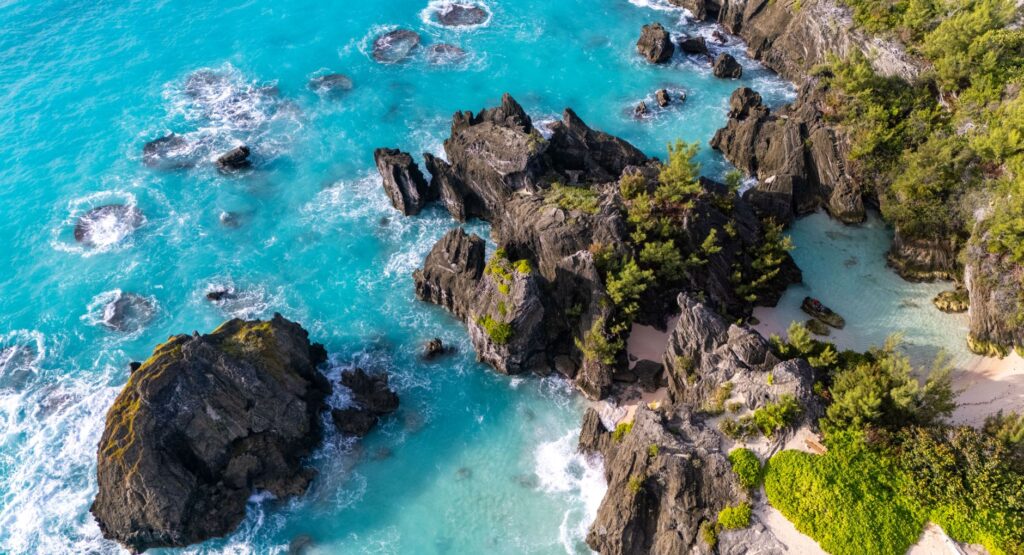
How to observe and study the ecosystem: Due to its remoteness from continental shores and the absence of inhabited islands at its core—with the exception of the Bermuda archipelago on its western margin—direct access to the Sargasso Sea is restricted to oceanographic scientific expeditions and specialized nautical voyages. Bermuda functions as the most viable logistical gateway for researchers and naturalists interested in the region’s natural history.
Logistics and access from Bermuda: L.F. Wade International Airport (BDA) in Bermuda offers regular air connections with major cities on the US East Coast and Europe. From the island, various marine research organizations and scientific ecotourism operators organize occasional excursions on authorized vessels for observing pelagic fauna and monitoring sargassum mats in surrounding waters.
Best time for scientific expedition: The months between May and October offer the most stable meteorological conditions in the North Atlantic, with calmer seas and optimal underwater visibility for photography and surface research. Nonetheless, oceanic navigation always requires flexibility due to the inherent instability of tropical systems and summer storms.
Requirements and best practices: Any approximation or sampling initiative in the area must strictly adhere to international conventions on high seas protection. The extraction of living specimens or the alteration of floating sargassum mats without the relevant scientific permits issued by competent authorities and international marine regulation bodies is strictly prohibited.
Final reflection on the blue horizon
The Sargasso Sea remains on maps as an elusive territory, a vast domain of golden and blue waters where time seems measured by the slow rhythm of currents and the silent heartbeat of biodiversity adapted to the oceanic void. Far from the bustle of traditional trade routes and everyday human presence, this floating sea embodies the resilience and fragility of major planetary equilibria. Protecting its circular currents and drifting algae forests is not merely an exercise in biological conservation, but an urgent recognition that Earth’s health depends as much on its firm continents as on the mysterious immensity of its open waters.