
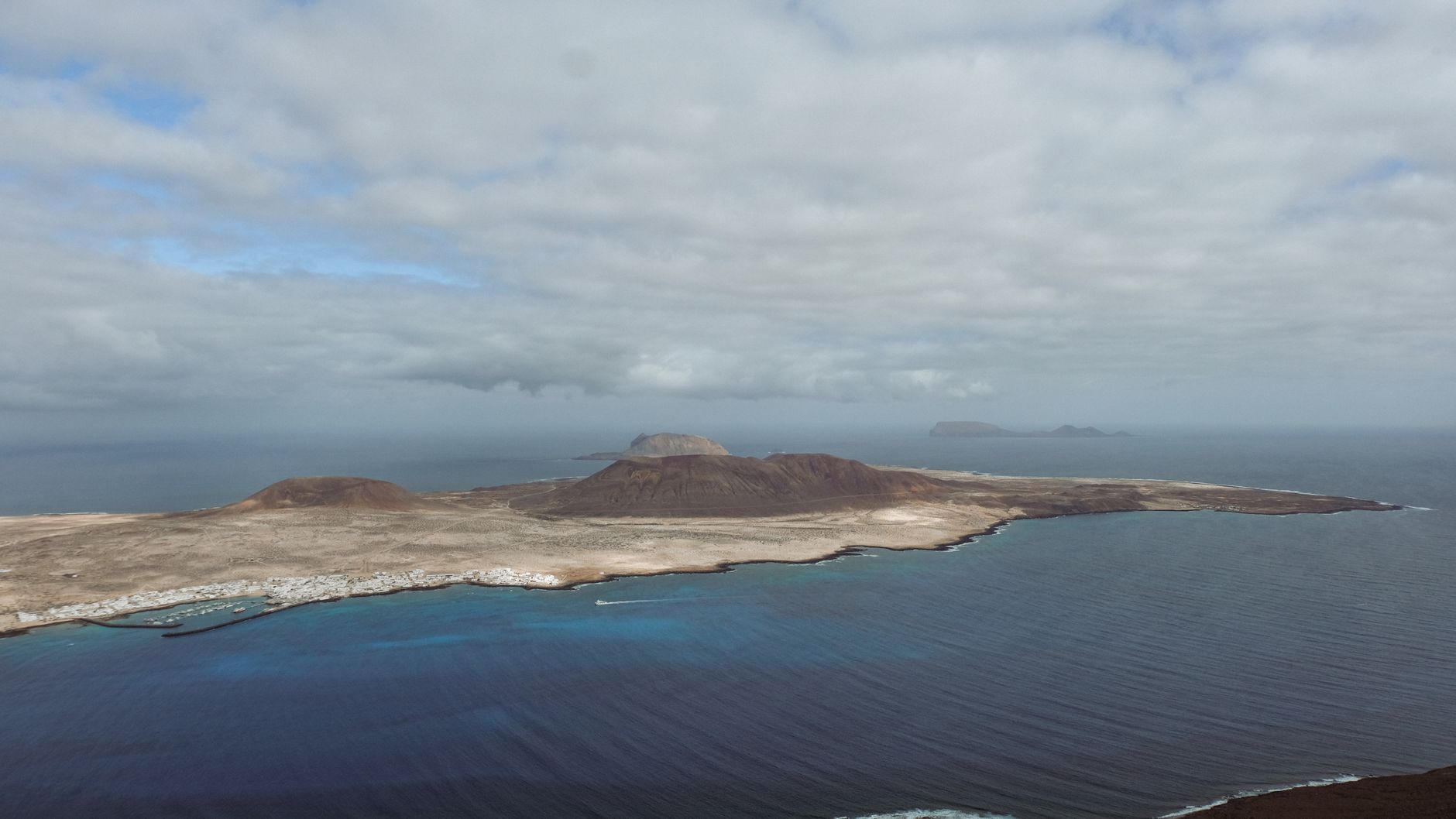

Introduction to Scotland’s Northern Frontier
At the northernmost tip of Great Britain, where the North Sea converges with the indomitable waters of the Atlantic Ocean, lies the Orkney archipelago. Comprising some seventy islands—of which barely two dozen are inhabited—this collection of landmasses represents one of the most unique and demanding mobility scenarios in Western Europe. Daily life in these latitudes does not rely on impersonal mega-infrastructure, but rather on a microscopic, fragile web of ferries, short-haul air links, and secondary roads that withstand the constant battering of the elements. Understanding how residents and visitors move around here is an exercise in logistical engineering where nature dictates the rules and the margin for operational error is practically nonexistent.
Far from being a mere tourist amenity, transportation in Orkney is the umbilical cord ensuring social cohesion, the supply of essential goods, and the economic viability of communities exposed to isolation. From open-deck ferries ploughing through the currents of the Pentland Firth to the celebrated island-hopping air services operated by Loganair, each journey embodies a complex choreography of schedules adapted to tides, reduced visibility, and gale-force winds. This report examines the operational pulse of a territory where connectivity is less a service and more a daily conquest over the environment.
The Relentless Dynamics of Pentland Firth Ferries
Main access to the archipelago is typically achieved across the Pentland Firth, one of the most treacherous stretches of water on the European continent. Marine currents in this channel can exceed ten knots, generating monumental whirlpools and cross-seas that test the structural integrity of any vessel. The companies operating the primary maritime routes, such as Pentland Ferries and NorthLink Ferries, manage fleets specifically adapted to withstand these extreme conditions, combining conventional roll-on/roll-off ferries with high-speed catamarans.

Operating in these waters demands millimetric precision from ship crews. Captains must calculate departure times meticulously to exploit or counteract spring tides, preventing the sheer force of the water from pushing hulls toward the submerged reefs dotting the coasts of Caithness and Mainland. Aboard, the experience differs radically from cruise navigation: comfort takes a back seat to robust functionality, featuring reinforced lashing systems and lounges designed to minimize seasickness for passengers accustomed to the harsh Scottish climate.
Short-Hop Aviation: The Inter-Island Air Link
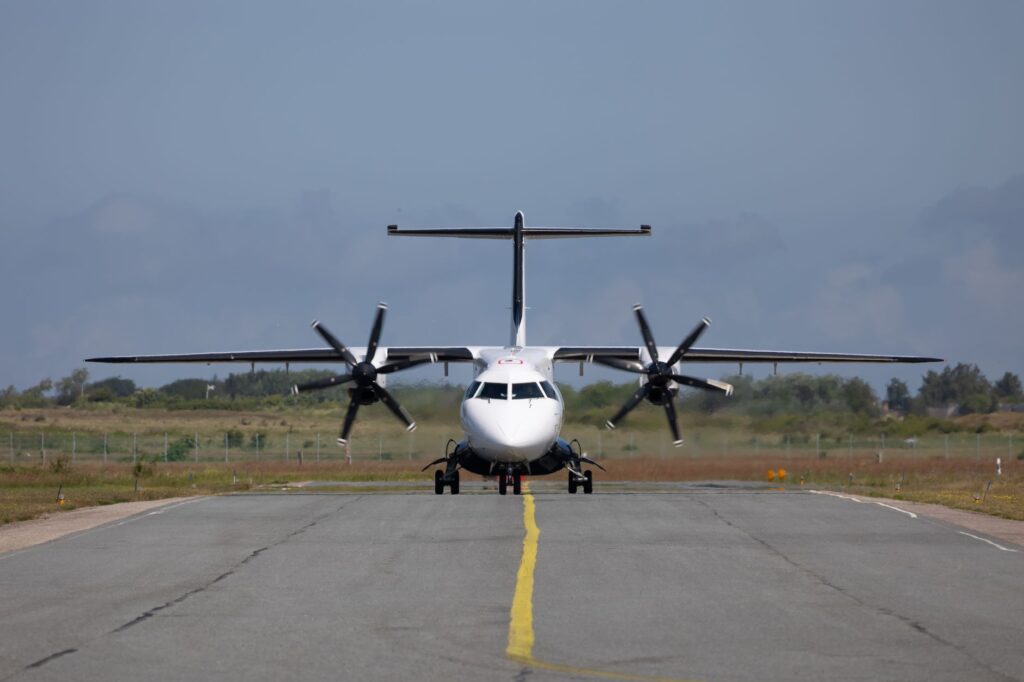
While maritime transport connects the archipelago to the Scottish mainland and larger islands, communication with the northernmost islands—such as Westray, Papa Westray, Sanday, Stronsay, and Eday—relies on one of the most fascinating and brief aviation routes on the planet. Continuously operated by regional carriers under public service obligations, these flights utilize small twin-turboprop aircraft capable of operating on short airstrips, many of which are surfaced with grass or compacted gravel.
Punctuality in the Orkney skies is not measured in minutes, but in the pilots’ ability to read the horizon before sea mists swallow the airfield beacons.
The most famous example of this network is the flight between Westray and Papa Westray, globally recognized for holding the record of the world’s shortest scheduled commercial flight, with an official duration under two minutes in favorable wind conditions. Yet, reducing these flights to viral curiosities undermines their true function: for local residents, the plane is the equivalent of an urban bus route. They transport everything from urgent mail and medical samples to teachers and technicians working on itinerant schedules across the northern isles.

Port Infrastructure and the Tidal Challenge
The backbone of Orkney’s internal maritime transport rests on piers managed by the Orkney Islands Council. Ports like Stromness, St Margaret’s Hope, and Kirkwall are not mere docking basins; they function as logistical hubs where livestock trucks, delivery vans, fuel tankers, and passengers converge. The architecture of these quays has had to evolve to integrate adjustable hydraulic ramps capable of compensating for drastic tidal variations, which frequently exceed four meters between low and high water.
Maintaining these facilities demands constant investment. Persistent salt spray, winter storm impacts, and metal fatigue necessitate ongoing underwater inspection programs and structural reinforcements. Any failure in a landing ramp immediately paralyzes the supply chain of a smaller island, highlighting the systemic vulnerability of an island economy dependent on such specific links.
The Churchill Barriers: When War Rewrote Geography
One of the most remarkable features of Orkney’s overland transport system is the Churchill Barriers. Built during the Second World War by Italian and British prisoners of war, these four causeways connect the mainland with the islands of Burray, South Ronaldsay, Lamb Holm, and Glimps Holm. Their original purpose was purely strategic: to close the eastern approaches of the Scapa Flow naval base to prevent German submarine incursions.
Over the decades, these military structures transformed into public asphalt roads, fully integrated into the archipelago’s road network. Today, they allow vehicles to drive uninterrupted across the sea, eliminating the need for ferries on that specific route. However, their direct exposure to eastern gales turns the crossing into an awe-inspiring experience during winter storms, when waves crash violently against concrete blocks, occasionally forcing local authorities to temporarily close passage for safety reasons.
The Invisible Logistics of Daily Supply
Behind the idyllic postcard of Orkney’s Neolithic landscapes and sea cliffs operates an implacable logistical machinery. Everything consumed in the archipelago—from supermarket fresh produce to components for wind farms and aquaculture operations—must travel through the bottleneck of intermodal transport. Articulated lorries leaving Scottish motorways at Scrabster or Gills Bay are loaded onto ferries and, once ashore, redistributed via smaller local fleets capable of navigating narrow single-track roads with passing places.

This incessant flow of goods is planned weeks in advance. Local haulage companies operate with tight safety margins, knowing that a spell of gale-force storms can suspend ferry departures for three or four consecutive days. Under such circumstances, fresh goods grow scarce on shelves, and emergency services coordinate contingency plans to ensure heating fuel and critical medicines reach the most remote islands.
In recent years, the archipelago has become a pioneering global testbed for decarbonizing maritime transport and sustainable mobility. Capitalizing on abundant wind and tidal energy, Orkney spearheads projects aimed at powering ferries with green hydrogen and hybrid electrification systems in its harbors. These initiatives seek to reduce heavy fossil-fuel dependency in a sector consuming large volumes of marine gasoil.
Practical guide
How to Get There
Access to Orkney is primarily achieved via two routes: by ferry from Scrabster (near Thurso) to Stromness with NorthLink Ferries, or from Gills Bay to St Margaret’s Hope with Pentland Ferries. By air, Loganair operates daily scheduled flights from major Scottish airports including Edinburgh, Glasgow, Aberdeen, and Inverness to Kirkwall.

Getting Around the Islands
For inter-island transport, Orkney Ferries manages a regular network of passenger and vehicle ferries connecting Mainland to the northern and southern isles. Inter-island flights between the northern islands are operated exclusively by Loganair from Kirkwall. Advance booking is essential, especially during the summer months.
Logistical Tips
Weather conditions dictate 100% of mobility in Orkney. Travelers are strongly advised to check operational alerts from transport operators on the morning of travel. Maintaining itinerary flexibility is the single best tool to avoid disruptions caused by wind-related cancellations or heavy swells.
The Human Pulse of Travel at the Northern Edge
Traveling through Orkney teaches one to shed modern haste; here, movement is not a mechanical trámite to get from point A to point B, but an act of respectful negotiation with the rhythm of the sea and wind.
At the end of the journey, when the ferry docks smoothly in Stromness harbor and the engines cease their metallic roar, one realizes that Orkney’s transport system is far more than a sum of ships, planes, and roads. It is a community of professionals—captains, mechanics, air traffic controllers, and sailors—keeping a fragile balance alive amidst the Atlantic expanse. In this Scottish outpost, every port arrival and every landing on a grass strip is tangible proof of human tenacity against the relentless force of nature.


