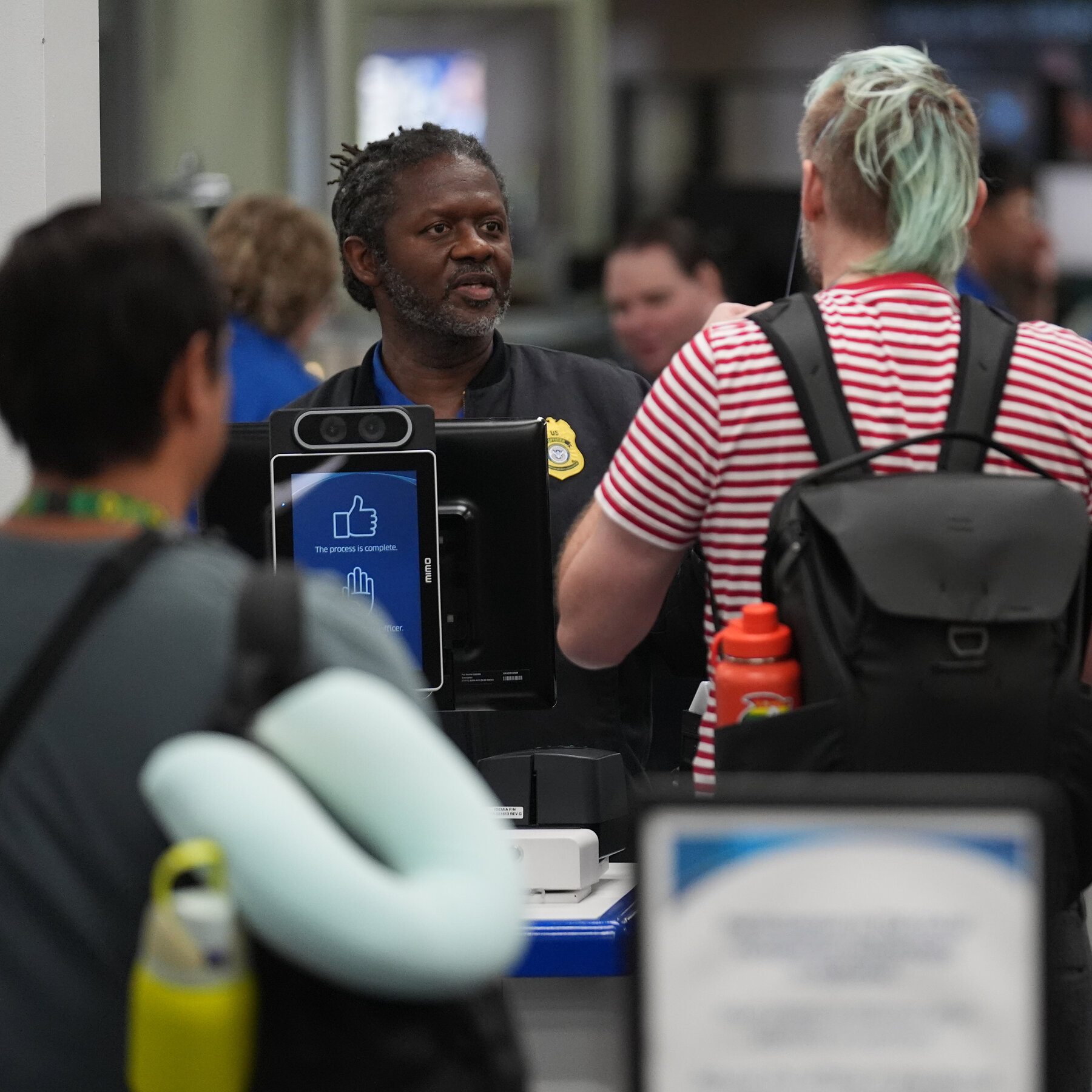
For exactly twenty years, the gesture has been almost mechanical, a ritual of bureaucratic submission that every traveler performs before crossing the threshold of airport security: quickly gulping down the last drop of water or watching, with resignation, as a nearly full bottle falls to the bottom of a transparent trash bin. This systematic discarding of liquids, introduced as a temporary emergency measure in the mid-2000s, became one of the most universal and frustrating constants of global aviation. However, the winds of change are blowing from Washington, promising to restore a small but significant dose of normalcy to the chaotic flow of airport terminals.
The United States Transportation Security Administration (TSA) is currently evaluating a historic reform that would allow passengers enrolled in the trusted traveler program TSA PreCheck to pass through security checkpoints carrying standard-sized water bottles and other liquids. This transition, which will initially be rolled out as a pilot program at selected airports, represents not only a logistical relief for millions of people but also the culmination of a long and costly technological race. Behind this policy shift lies not a lower perception of risk, but the maturation of scanning systems capable of seeing what was previously invisible to both the human eye and conventional machines.
The Origins of a Twenty-Year Restriction
To understand the magnitude of this change, it is essential to travel back to the summer of 2006. In August of that year, British intelligence authorities thwarted a terrorist plot aiming to detonate liquid explosives aboard several transatlantic flights bound for North America. The conspirators planned to use hydrogen peroxide and other chemical components disguised in common soft drink bottles, assembling the devices mid-flight. The global response was immediate, drastic, and, as time would prove, nearly permanent.
Overnight, all liquids were banned from aircraft cabins. Weeks later, the rule was eased under the strict 3-1-1 guideline: containers of no more than 100 milliliters (3.4 ounces) placed inside a single clear, resealable plastic bag. What began as a provisional safeguard to buy time while adequate detection technology was developed ended up becoming institutionalized, shaping airport design, traveler consumption habits, and the personal care product industry itself for two decades.
«The liquid ban was an analog response to a complex chemical threat. For years, the only way to guarantee safety was a blanket prohibition—a rudimentary method that technology is finally allowing us to transcend.»
The impact of this restriction extended far beyond passenger inconvenience. It profoundly altered the flow of airports, turning inspection areas into bottlenecks where average wait times doubled due to forgotten items, arguments over expensive cosmetics, and the physical need to separate toiletries from carry-on luggage. The prospect of dismantling this system marks the beginning of a new era in air travel facilitation.
The Silent Revolution of Computed Tomography
The true catalyst for this reform is not administrative benevolence, but the arrival of next-generation Computed Tomography (CT) scanners at security checkpoints. Unlike traditional two-dimensional X-ray systems, which offer a flat, overlapping silhouette of bag contents, the new CT scanners generate high-resolution three-dimensional images that operators can rotate 360 degrees.
These devices utilize sophisticated threat-detection algorithms that instantly calculate the density and atomic number of materials inside the luggage. The system can differentiate with pinpoint accuracy between water, harmless cosmetics, and potentially dangerous chemical compounds, even if they are mixed or semi-hidden inside electronic devices. This analytical capability eliminates the need for passengers to remove liquids from their bags, dramatically accelerating the inspection process.
Deploying these scanners has been a slow and expensive process. Each computed tomography unit represents a million-dollar investment and requires physical reconfiguration of security lanes, as well as extensive training for TSA personnel. However, as these machines become the standard at major U.S. airports, the technical justification for maintaining the liquid ban begins to fade, paving the way for much more dynamic and personalized security screening policies.
The Environmental Toll of an Outdated Rule
Beyond passenger convenience, the liquid restriction has exacted a silent but devastating ecological toll. Every day at thousands of security checkpoints worldwide, tons of single-use plastic bottles are confiscated and incinerated, many purchased just minutes before reaching the terminal. This constant stream of plastic waste flagrantly contradicts the sustainability commitments that the aviation industry and airports themselves claim to promote.
The ability to pass through security with reusable stainless steel or tempered glass water bottles filled with liquid would not only drastically reduce solid waste generation at terminals, but also alleviate the carbon footprint associated with transporting, cooling, and discarding millions of plastic mineral water bottles. For airports seeking strict green certifications, this regulatory reform could be one of the most significant waste management milestones of the decade.
The Paradox of Hydration Stations
In recent years, airports have tried to mitigate this issue by installing purified water refilling stations immediately after security checkpoints, inviting passengers to carry empty bottles to fill once they pass inspection. While this measure has been well received, it remains a logistical band-aid that perpetuates travel friction. The new TSA policy would eliminate this paradox, allowing water to accompany the traveler seamlessly from their home to the boarding gate.
The Economics of Bottled Water Behind the Gate
The TSA’s announcement also promises to shake up the commercial economy of airports. For twenty years, the retail concessions located past security have enjoyed a de facto monopoly on passenger hydration. The price of a bottle of mineral water on the airside of a terminal can be triple or quadruple its value in a conventional supermarket, making it one of the most lucrative—and criticized—revenue sources for airport operators.
Allowing tap or mineral water from the outside to enter freely will force terminal convenience stores and restaurants to rethink their pricing strategies. While bottled water is unlikely to disappear entirely from shelves, direct competition with water brought from home by PreCheck passengers will level the playing field, restoring some financial balance to a travel experience that many users perceive as artificially expensive.
«Water in airports stopped being a basic resource and became a luxury good due to regulatory constraints. Returning water to carry-on luggage is also about returning a basic right to the passenger.»
Industry analysts suggest that airport concessionaires will have to diversify their offerings toward higher-value products, such as gourmet grab-and-go meals, wellness experiences, or tech accessories, to offset the expected drop in basic beverage sales. This shift could transform the commercial landscape of terminals, making it more diverse and less dependent on the captive sale of essential goods.
The Psychological Friction of Airport Security
The experience of flying is intrinsically linked to certain levels of anxiety. The security process, with its winding queues, the rush to partially undress, and the watchful eyes of officers, is often the peak of this stress. The liquid ban adds a layer of constant cognitive tension: the fear of having forgotten a small bottle at the bottom of a bag, the guilt of seeing a beloved product thrown away, or the physical discomfort of dehydration during long delays.
Permit passengers to keep their water is not just a physical improvement, but a profound psychological relief. By reducing the number of false alarms caused by forgotten liquids, it also decreases shouting, delays, and general tension in security lanes. A calmer and more predictable security environment not only benefits travelers but also improves working conditions for TSA officers, who can focus on real threats rather than acting as mineral water confiscators.
PreCheck as a Testing Ground for Future Aviation
The decision to initially limit this benefit to TSA PreCheck members is a well-founded strategic move. This program, which requires pre-registration, background checks, and a fee, functions as a low-risk filter that processes frequent, pre-screened travelers. This allows the TSA to test the new liquid policy in a controlled environment, assessing the impact on processing times and staff efficiency before considering a wider expansion.
PreCheck has established itself as the premier laboratory for aviation security innovation in North America. It was here that biometric lanes, facial recognition, and the elimination of shoe and light jacket removal rules were first tested. If the water pilot program proves successful and demonstrates that CT technology can maintain safety standards without slowing down operations, it is highly likely we will see a gradual adoption of this measure for the general public in the coming years.
Practical guide
- Verify your eligibility: This relaxation of rules will apply exclusively to passengers using TSA PreCheck lanes at participating airports equipped with certified CT scanning technology.
- Keep your containers: Travelers will be allowed to carry reusable water bottles (stainless steel, glass, or plastic) filled with liquid, as well as other standard commercial non-alcoholic beverages.
- Understand the pilot limits: The program is in a progressive rollout phase. It is essential to check departure airport signage or TSA updates before assuming water is permitted in a specific lane.
- The international flight rule: Keep in mind that these measures apply at departure checkpoints within the U.S. If you are connecting at foreign airports, you will likely have to comply with traditional local rules, which still strictly enforce the 100ml limit.
- Cooperate with officers: Even if water is permitted, security officers retain the authority to request additional inspections of any liquid if the scanner generates an analytical alert or doubt.
Returning to a More Humane Way of Travel
Commercial aviation over the last two decades has been characterized by a progressive loss of comfort in favor of security that is necessary but often dehumanizing. Terminals became spaces of systematic distrust where travelers were stripped of their most basic belongings before being allowed to board. The possibility of keeping something as elemental as water represents a subtle but powerful return to dignity in travel.
When the first water bottles legally and seamlessly pass through security scanners, it won’t just validate a massive technological investment. It will close a chapter of restrictions that defined an entire generation of travelers, reminding us that the most valuable technical progress is that which works silently to restore our freedom to move through the world with a little more ease and humanity.
Source: NYT Travel